CNC can be slower than traditional tools when you’re working on simple, one-off tasks due to its setup time. With traditional tools, you can jump right in and make quick decisions based on tactile feedback. However, CNC shines in complex designs and high-volume production, where precision and efficiency take center stage. Understanding when to choose each method is key to project success. There’s a lot more to uncover about optimizing your tool choices.
Key Takeaways
- CNC machines may be slower for simple, one-off tasks due to setup time compared to immediate use of traditional tools.
- Traditional tools allow for quick adjustments and tactile decision-making, enhancing speed in hands-on craftsmanship.
- High initial setup and maintenance costs for CNC can impact project timelines, especially for smaller jobs.
- For high-volume production, CNC often outpaces traditional methods due to its efficiency and precision in repetitive tasks.
- Balancing CNC and traditional techniques can optimize workflow, making it faster for complex projects requiring both approaches.
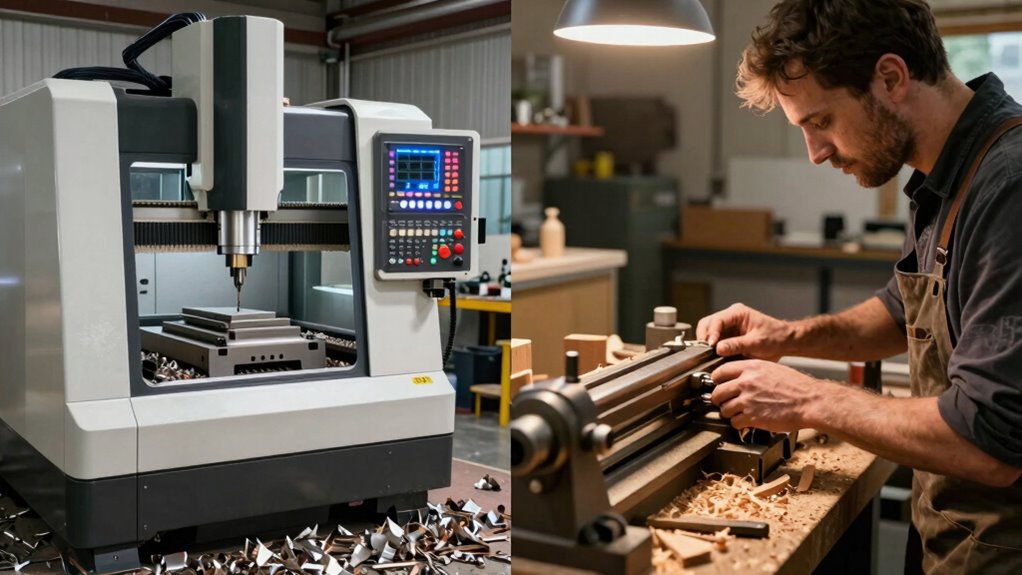
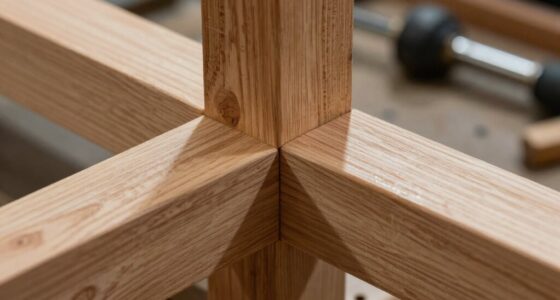
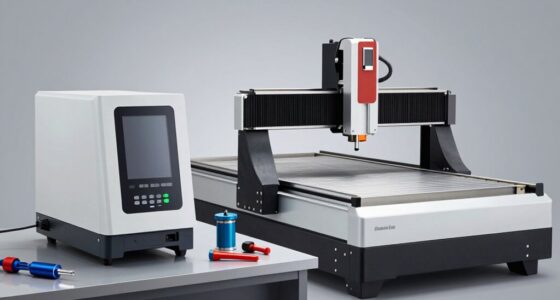
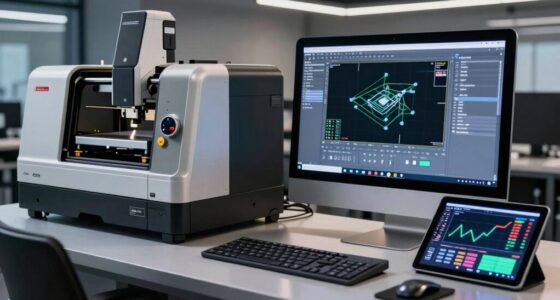
CNC tools shine when you need to replicate complex designs quickly. However, the setup time can be a drawback. If you’re working on a simple or one-off project, the time spent programming the CNC might outweigh the benefits. In such cases, traditional tools allow you to jump straight into the work, cutting down on the initial setup and getting you right to the task. You’ll find that sometimes, the tactile feel of traditional craftsmanship can lead to quicker decision-making and adjustments on the fly.
CNC excels in replicating complex designs, but for simple projects, traditional tools offer faster setup and immediate action.
Cost efficiency also plays a role in determining which method to use. While CNC machines can reduce material waste through precise cuts, the initial investment and maintenance costs can be high. If you’re just starting out or working with a limited budget, traditional tools might be more accessible. You can invest in a set of hand tools that allow you to work flexibly, and if you’re careful, you can minimize material waste as well. Additionally, manual craftsmanship often allows for more nuanced control in delicate or detailed work. Understanding the material properties can help you decide which tools will produce the best results for your specific project. Recognizing the limitations of CNC in certain applications can help you choose the most suitable approach for your work.
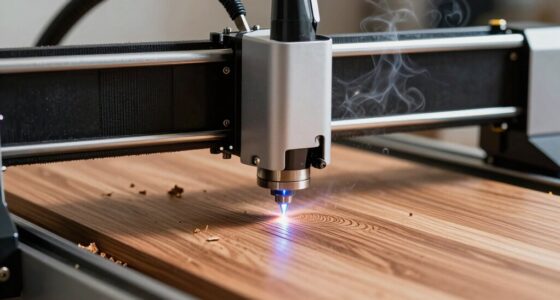
Being aware of machine capabilities can also influence your decision, especially when precision and speed are critical. On the other hand, if you’re dealing with high-volume production or intricate designs, CNC’s precision can save you time in the long run, even if it feels slower at the outset. In these instances, the efficiency gained from reduced errors and consistent results outweighs the initial setup. Moreover, automation capabilities of CNC machines can significantly enhance productivity for repetitive tasks.
Ultimately, knowing when to choose CNC or traditional tools can greatly impact your project’s success. By balancing the benefits of CNC precision with the immediacy of traditional craftsmanship, you can create a workflow that’s efficient, effective, and tailored to your specific needs.
As an affiliate, we earn on qualifying purchases.
Frequently Asked Questions
What Materials Are Best Suited for CNC Machining?
CNC machining works best with a variety of materials. You’ll find CNC materials like machining plastics, metal alloys, and different wood types are ideal for precision tasks. Composite materials also perform well, offering versatility. When you use these materials, you can optimize your cutting speeds for efficiency. Keep in mind that each material has its own unique properties, so choosing the right one is essential for achieving the best results.
How Does CNC Accuracy Compare to Traditional Methods?
CNC accuracy often surpasses traditional methods, don’t you think? With CNC precision, you achieve tighter tolerances and more consistent results, making it ideal for intricate designs. While traditional techniques might offer acceptable tolerances, they can’t match CNC’s ability to replicate parts with exacting details time after time. Whether you’re working on prototypes or high-volume production, CNC machining guarantees your specifications are met with remarkable accuracy and reliability.
What Are the Maintenance Requirements for CNC Machines?
CNC machines need regular maintenance to guarantee peak performance. You should focus on machine upkeep by cleaning, lubricating, and checking for wear on parts. Implement troubleshooting strategies to address issues promptly, like monitoring for unusual noises or vibrations. Regularly inspect and calibrate your machine to maintain accuracy. By staying proactive with these maintenance tasks, you’ll enhance the machine’s lifespan and efficiency, reducing downtime and costly repairs.
Can CNC Machines Handle Small Batch Production Effectively?
Absolutely, CNC machines can handle small batch production effectively. Think of them like a modern-day blacksmith—precision and efficiency are key. You’ll find that their small batch efficiency often outweighs the initial setup costs. While traditional tools might seem cheaper upfront for small runs, CNC’s automation reduces labor time and minimizes errors, making it a cost-effective choice in the long run. So, you’ll likely save time and money with CNC for small batches.
How Do I Choose Between CNC and Traditional Tools for My Project?
To choose between CNC and traditional tools for your project, consider project complexity first. If your design is intricate, CNC might be better. Next, think about budget considerations—CNC can be pricier. Assess your skill level; traditional tools may suit you if you’re more hands-on. Finally, evaluate design flexibility: CNC offers precision for changes, while traditional tools allow for more immediate adjustments. Balancing these factors will help you make the best decision.
As an affiliate, we earn on qualifying purchases.
Conclusion
In the world of machining, CNC may offer precision, but traditional tools often shine in speed and flexibility. While CNC excels in repetitive tasks, it can falter when quick adjustments are needed, leaving you yearning for the hands-on feel of a lathe or mill. Embrace the best of both worlds: rely on CNC for intricate designs, yet don’t underestimate the efficiency of traditional methods when time is of the essence. Balance is key in your toolkit’s success.
As an affiliate, we earn on qualifying purchases.
As an affiliate, we earn on qualifying purchases.