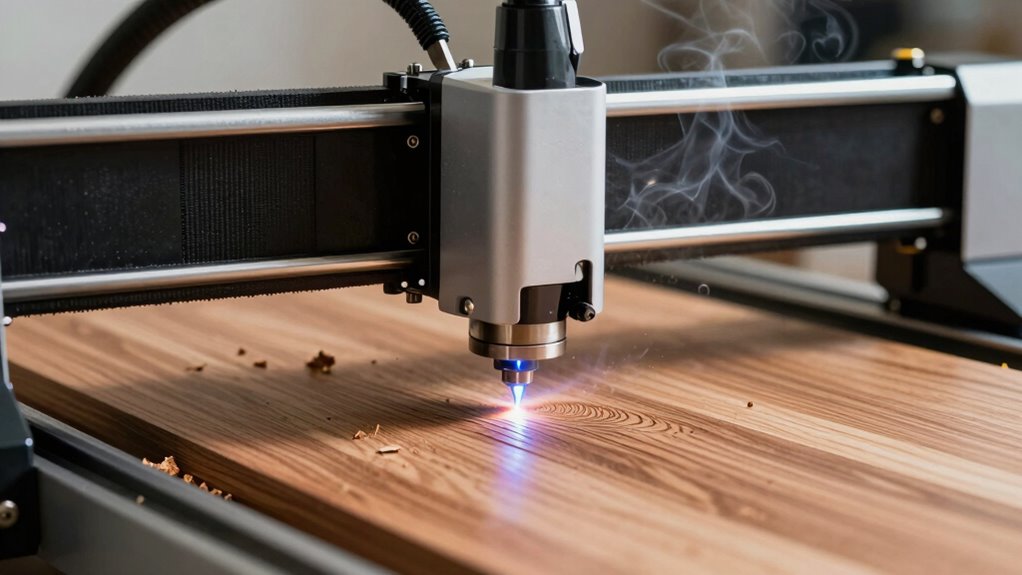

When choosing a laser engraver for wood, ventilation is essential for your safety, equipment longevity, and project quality. Proper airflow removes harmful fumes and dust created during engraving, preventing buildup that can damage the machine. It also reduces fire risks and keeps your workspace clean. Picking a model with integrated or external exhaust options ensures smooth operation and durability. Stick with quality systems and safety practices, and you’ll enjoy professional results and a safer workspace. Want to learn more?

Get business pricing on tools and workshop supplies
- Business-only prices and quantity discounts
- Tax-exempt purchasing
- Multiple users, one account, clear invoices
Key Takeaways
- Proper ventilation removes harmful fumes and dust, ensuring a safer workspace during wood engraving.
- Integrated or external exhaust systems protect equipment from debris buildup, extending laser engraver lifespan.
- Ventilation enhances air quality, promoting health and comfort for users during prolonged engraving sessions.
- Effective airflow prevents fire hazards caused by accumulated wood dust and debris within the machine.
- Choosing laser engravers with good ventilation features simplifies maintenance and ensures consistent engraving quality.
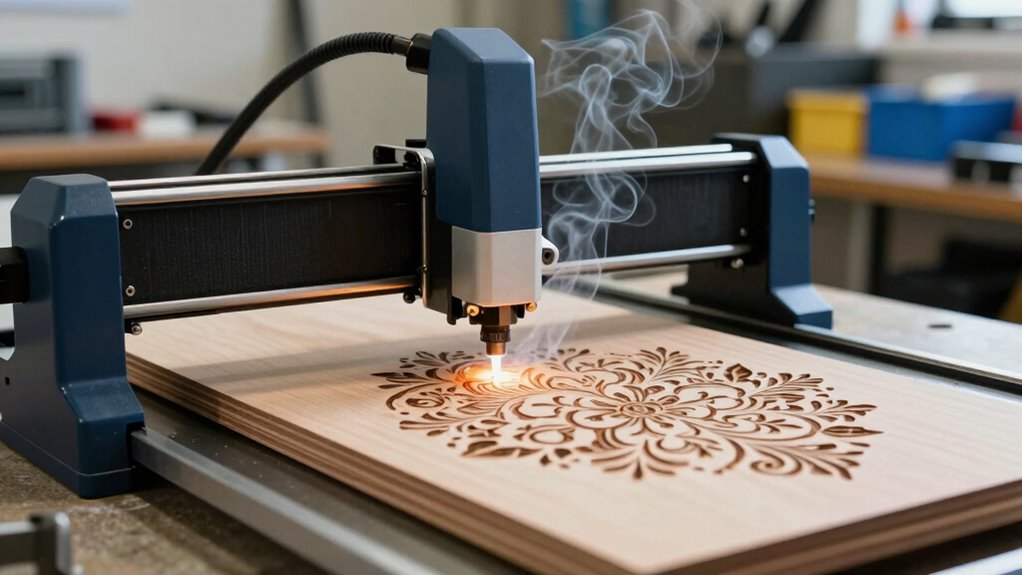
Laser engravers have revolutionized woodworking by offering precise, detailed, and customizable designs that were once difficult to achieve with traditional tools. With this advanced technology, you can craft intricate patterns, personalized gifts, or detailed signage with ease. However, as you explore the benefits of laser engraving, it’s crucial to prioritize safety precautions, especially when working with wood. Wooddust and fumes generated during engraving can pose health risks if not properly managed. That’s why ventilation systems are critical components to consider when purchasing a laser engraver for wood. Good ventilation helps remove airborne particles and fumes, ensuring your workspace remains safe and comfortable.
Proper ventilation is essential for safety and maintaining your laser engraver’s performance when working with wood.
Proper ventilation is not just about health; it also affects the longevity of your machine. Fumes and dust can settle on internal components, leading to buildup that may impair the engraver’s performance over time. To keep your equipment running smoothly, you should incorporate regular maintenance tips into your routine. This includes cleaning filters, checking air assist systems, and ensuring exhaust fans work efficiently. Maintaining good airflow minimizes fire hazards, as accumulated dust can ignite if not properly managed, especially during prolonged engraving sessions.
When selecting a laser engraver, think about models that come with integrated ventilation options or compatibility with external exhaust systems. These systems help capture and vent out harmful fumes before they disperse into your workspace, making it safer for you and anyone else around. Additionally, always follow safety precautions outlined by the manufacturer. Use appropriate personal protective equipment like safety glasses, and never leave the machine unattended while in operation. Proper training on how to operate your laser engraver safely can prevent accidents and ensure you follow best practices.
In terms of maintenance tips, keep the laser bed clean and free of debris, as buildup can interfere with the precision of your engravings. Regularly inspect and replace worn-out filters and exhaust hoses. Also, ensure your ventilation system is functioning correctly before starting each session, so fumes don’t accumulate unexpectedly. Remember, a well-ventilated workspace isn’t just about avoiding discomfort; it’s an indispensable part of responsible and safe woodworking with laser engravers. Ensuring proper ventilation systems can significantly reduce the risk of fire hazards and health issues associated with airborne particles. Incorporating air quality management practices into your routine can further enhance safety and efficiency during engraving sessions. Additionally, choosing a model with reliable filtration capabilities can help maintain a cleaner workspace and prolong your machine’s lifespan.
laser engraver with integrated ventilation
As an affiliate, we earn on qualifying purchases.
As an affiliate, we earn on qualifying purchases.
Frequently Asked Questions
What Safety Gear Is Recommended When Using Laser Engravers?
When using laser engravers, you should wear personal protective equipment like safety goggles to shield your eyes from harmful laser rays and fumes. Additionally, consider respiratory masks to protect against smoke and particulates. Always follow fire safety measures, such as keeping a fire extinguisher nearby and avoiding flammable materials. This gear guarantees your safety while operating the engraver, reducing risks associated with laser use.
How Do I Choose the Right Ventilation System for My Workspace?
To choose the right ventilation system, focus on airflow optimization and dust extraction capabilities. You want a system that effectively removes smoke, fumes, and wood dust, ensuring a safe workspace. Consider the size of your area and the engraver’s output, then select a ventilation setup that matches these needs. Proper airflow and efficient dust extraction keep your workspace clean, safe, and compliant with health standards.
Can Ventilation Systems Be Integrated Into Existing Laser Engraver Setups?
Yes, ventilation systems can be integrated into your existing laser engraver setup. You should check the ventilation system compatibility with your current equipment, guaranteeing it fits your workspace and meets safety standards. Many ventilation units are designed for easy integration, allowing you to upgrade without significant modifications. Proper integration helps maintain a safe environment, improves air quality, and ensures your laser engraver operates efficiently and safely.
What Maintenance Does a Ventilation System Require?
Think of your ventilation system as the lungs of your workspace, essential for clean air. You need to regularly check air filter maintenance, replacing filters when they’re clogged, to keep air fresh. Duct cleaning is equally important, removing dust and debris that can block airflow. By maintaining these components, you guarantee your system runs efficiently, protecting your health and prolonging equipment life.
Are There Portable Ventilation Options for Small-Scale Laser Engraving?
Yes, there are portable solutions for small-scale laser engraving that include dust filtration. These compact units are designed to be easily moved around your workspace, making them ideal for limited spaces. They effectively capture dust and fumes created during engraving, ensuring a cleaner environment. When choosing a portable ventilation option, look for models with strong dust filtration capabilities to keep your workspace safe and your equipment in top condition.
external exhaust system for laser engraver
As an affiliate, we earn on qualifying purchases.
As an affiliate, we earn on qualifying purchases.
Conclusion
Remember, choosing a laser engraver isn’t just about precision; it’s also about ensuring a safe and pleasant environment. Proper ventilation might seem like a minor detail, but it quietly safeguards your workspace’s harmony. When you prioritize good airflow, you’re not just protecting your health — you’re nurturing your craft’s longevity. Embrace ventilation as a silent partner in your woodworking journey, and let your creative spirit flourish without compromise.
laser engraver dust collection system
As an affiliate, we earn on qualifying purchases.
As an affiliate, we earn on qualifying purchases.
As an affiliate, we earn on qualifying purchases.
Evergreen bestsellers Picks
bestsellers
As an affiliate, we earn on qualifying purchases.