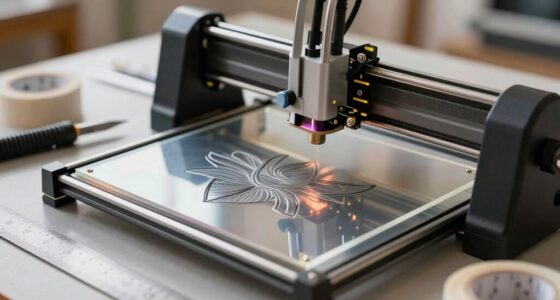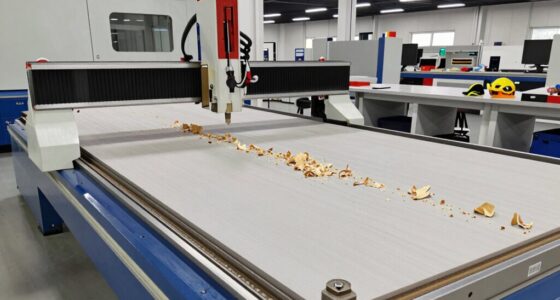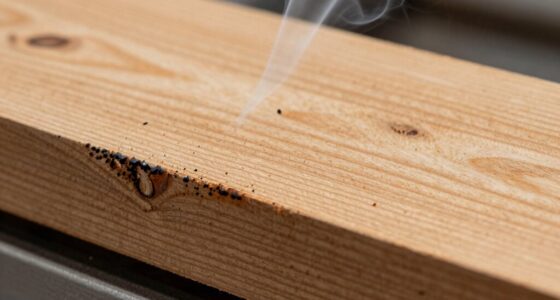
Even with CNC technology’s precision, you can’t overlook wood movement. Wood expands and contracts with humidity and temperature changes, which can cause joints to misalign or weaken over time. Understanding how different wood types react enhances your assembly techniques, ensuring durability and aesthetic appeal. Integrating this knowledge into your designs lets you create functional, lasting pieces. You’ll soon discover more ways to harmonize CNC accuracy with the realities of wood.

Get business pricing on tools and workshop supplies
- Business-only prices and quantity discounts
- Tax-exempt purchasing
- Multiple users, one account, clear invoices
Key Takeaways
- CNC precision allows for intricate designs, but wood movement can affect joint integrity if not planned for properly.
- Different wood species react uniquely to humidity and temperature, influencing how they move and fit together.
- Traditional and CNC joinery techniques must accommodate wood movement to ensure longevity and stability in structures.
- Thoughtful design using CNC can incorporate features that allow for expansion and contraction while maintaining aesthetic appeal.
- Balancing CNC accuracy with an understanding of wood behavior enhances both functionality and the overall quality of the finished piece.

When you explore CNC joinery, understanding wood movement becomes essential. CNC precision allows for incredibly detailed cuts, but if you don’t consider how wood expands and contracts, you might end up with joints that don’t fit properly. Wood isn’t static; it’s a living material that responds to changes in humidity and temperature. This means that even with the best design flexibility offered by CNC technology, you’ve got to plan for these changes to guarantee your projects hold up over time. Recognizing wood behavior patterns during the design process can help you anticipate and mitigate potential issues before they arise.
Material considerations are critical here. Different types of wood behave differently under changing environmental conditions. For instance, hardwoods like oak might move less than softwoods like pine, but both can warp or crack if not accounted for in your design. When you select materials, think about the environment your finished piece will inhabit. If it’s in a humid basement, you’ll want to choose woods that can tolerate such conditions without compromising your assembly techniques. Being aware of wood movement tendencies can help you select the most suitable species for your project.
Material choices are crucial; different woods react uniquely to humidity, influencing design and durability. Select wisely for lasting results.
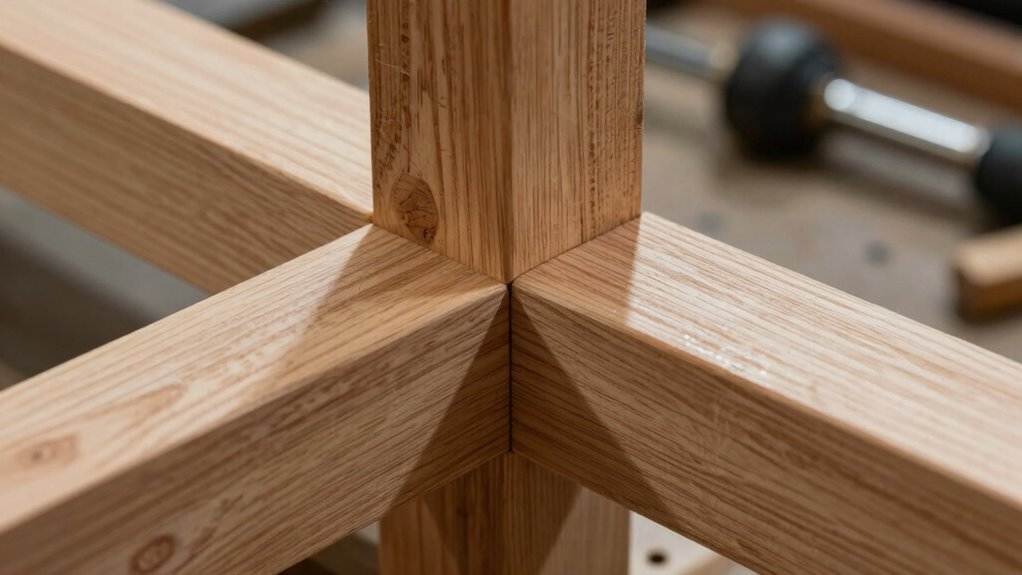
Speaking of assembly techniques, the way you join pieces together can also affect how they respond to wood movement. Traditional joinery methods might not age well if they’re not designed with movement in mind. CNC joinery gives you the ability to create intricate interlocking joints that can accommodate movement. By using techniques like slip joints or dovetails, you can allow for expansion without sacrificing strength or aesthetics. Incorporating movement considerations into your joinery design can significantly improve the lifespan of your projects.
Moreover, the design flexibility afforded by CNC technology enables you to incorporate features that enhance durability. For example, you can create grooves and channels that provide room for movement, while still maintaining a visually appealing product. This approach not only improves the longevity of your work but also elevates its craftsmanship. Understanding wood behavior patterns during the design process can help you anticipate and mitigate potential issues before they arise.
In essence, while CNC joinery brings a level of accuracy that manual methods can’t match, you can’t ignore the fundamental characteristics of wood. Balancing CNC precision with a thoughtful approach to wood movement guarantees your projects are not just beautiful but also functional over time. It’s all about harmonizing technology with nature. So, as you dive deeper into CNC joinery, keep wood movement at the forefront of your planning. This way, you’ll create pieces that stand the test of time, embracing both innovation and the inherent qualities of your chosen materials.
wood movement allowance for furniture joints
As an affiliate, we earn on qualifying purchases.
As an affiliate, we earn on qualifying purchases.
Frequently Asked Questions
How Does Humidity Affect Wood Movement in Joinery?
Humidity notably affects wood movement in joinery, especially with seasonal changes. As moisture levels rise, wood absorbs water, causing it to swell; when humidity drops, it dries out and contracts. This fluctuation can lead to gaps or misalignments in your joinery. To maintain stability, you should consider the humidity in your environment and choose materials wisely, ensuring your projects withstand these natural shifts without compromising their integrity.
What Types of Wood Are Most Stable for CNC Joinery?
For CNC joinery, consider hardwoods like maple, oak, and cherry due to their stability and durability. Their tight grain structure offers significant advantages, reducing the risk of warping. Plywood options, especially those with a veneer surface, are also excellent choices, as they minimize movement thanks to their layered construction. By selecting these materials, you’ll achieve a strong, reliable joinery that stands up to environmental changes without compromising the integrity of your projects.
Can CNC Machines Handle Irregularly Shaped Wood Pieces?
Absolutely, CNC machines can handle irregularly shaped wood pieces like a sculptor shaping clay. Their CNC capabilities shine when maneuvering material constraints, offering you design flexibility that traditional methods can’t match. You’ll find that even the quirkiest shapes can be transformed into stunning creations. Just guarantee you’ve accounted for the wood’s natural characteristics, so you can truly release the full potential of your unique designs. Embrace the challenge and let your creativity flow!
What Finishes Help Minimize Wood Movement?
To minimize wood movement, you should consider using finishes like polyurethane, varnish, or shellac. These finish types create moisture barriers that help seal the wood, reducing its ability to absorb or release moisture. You can also apply a penetrating oil, but it may not offer the same level of protection. Remember, the right finish will depend on your project and the environment, so choose wisely to maintain stability in your wood pieces.
How Do I Select the Right Wood for My Project?
To select the right wood for your project, focus on wood characteristics like grain pattern, density, and moisture content. Different types of wood behave uniquely, affecting durability and appearance. Consider your joinery techniques, too—some woods bond better with certain joints. For example, hardwoods work well for fine joinery, while softwoods are great for larger structures. Always test samples to see how they react with your chosen finishes and joinery methods.
As an affiliate, we earn on qualifying purchases.
Conclusion
In the world of CNC joinery, ignoring wood movement is like sailing a ship without adjusting the sails—the winds of change can lead to disaster. By considering wood’s natural tendencies, you guarantee your creations remain sturdy and beautiful over time. Embracing this thinking not only enhances your craftsmanship but also respects the material’s unique character. So, keep those principles in mind; they’re the compass guiding your projects toward lasting success.
wood expansion and contraction spacers
As an affiliate, we earn on qualifying purchases.
As an affiliate, we earn on qualifying purchases.
wood movement tolerant dovetail jigs
As an affiliate, we earn on qualifying purchases.
As an affiliate, we earn on qualifying purchases.
Halloween Picks
halloween
As an affiliate, we earn on qualifying purchases.