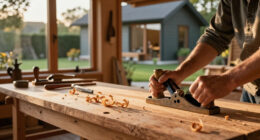
Setting joiner knives requires precise alignment with the outfeed table to guarantee peak surface quality. Start by checking the knife height, making sure it’s flush with the outfeed. Misalignment can lead to snipe, ruining your workpieces. Regularly maintaining sharp knives reduces friction and waste. Remember to check each knife’s angle to maintain consistency in cuts. Proper adjustments are key to performance. You’ll discover valuable insights on enhancing your setup for better results.

Get business pricing on tools and workshop supplies
- Business-only prices and quantity discounts
- Tax-exempt purchasing
- Multiple users, one account, clear invoices
Key Takeaways
- Proper alignment of joiner knives with the outfeed table prevents snipe and enhances the quality of cuts.
- Knives must be flush with the outfeed surface for consistent surface finishes.
- Regular checks on knife height and alignment are essential to maintain optimal performance.
- Consistent knife angles, parallel to the fence, ensure clean and precise cuts.
- Documenting adjustments helps track changes and improve future alignment accuracy.
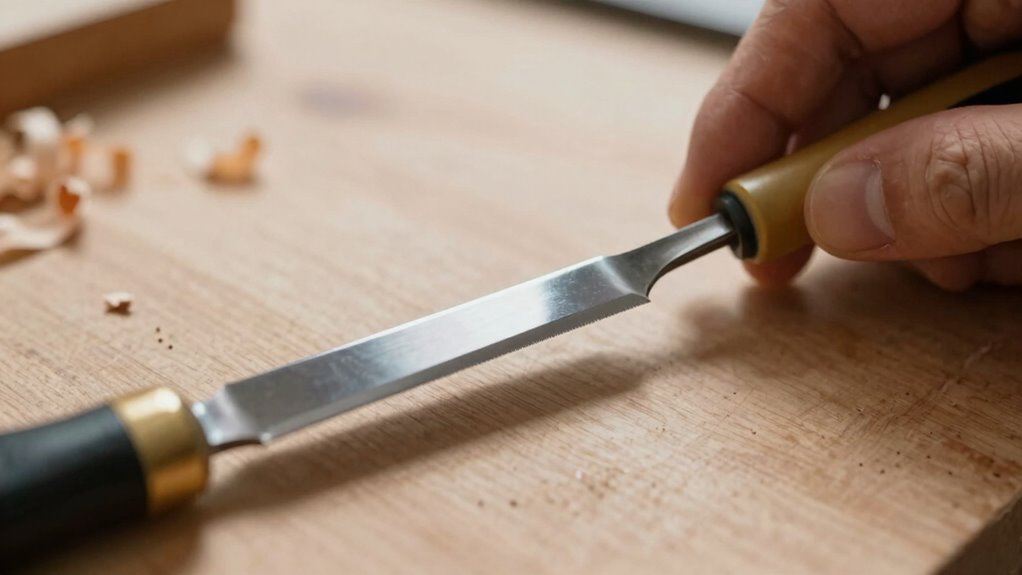
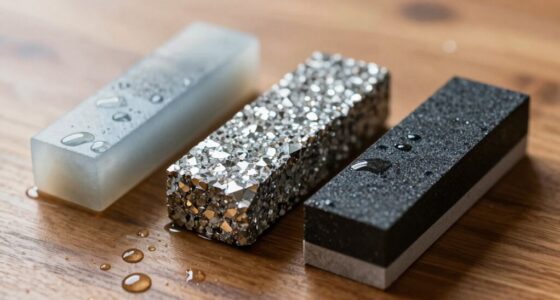
To get started, verify that your joiner knives are sharp. Knife sharpening is an essential part of blade maintenance. Dull blades can create more issues than you might expect, such as increased friction and excessive waste. Before you even think about alignment, make certain your knives are in top condition. A sharp knife cuts cleanly, reducing the risk of splintering and other surface imperfections. Regular maintenance will keep your knives performing at their best.
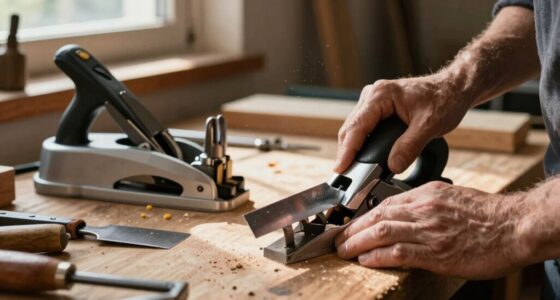
Once your knives are sharp, it’s time to set them properly. Begin by checking the height of each knife. They should all be at the same height relative to the outfeed table. You can use a straightedge or a ruler to verify accuracy. This step is vital because if one knife is higher or lower, it can lead to uneven cuts. Adjusting the height may require loosened set screws, so be prepared to make fine-tuned adjustments.
Ensure each knife is set to the same height relative to the outfeed table for smooth, even cuts.
After you have them set at the right height, it’s important to check the alignment with the outfeed table. The knives should be flush with the outfeed surface. If your knives are not aligned correctly, you might end up with snipe, which can ruin your workpiece. Aligning the knives not only enhances the quality of the cut but also improves the overall efficiency of your joiner.
Don’t underestimate the significance of checking the knife’s angle as well. A slight misalignment can affect the cut’s quality. Make sure each knife is parallel to the fence. If you’re unsure, take a piece of scrap wood and run it through the joiner to check for consistency. You’ll see the results immediately, and it’ll help you fine-tune your setup.
Products Worth Considering

Ring Alarm 14-Piece Wireless Security System Kit

Levoit Eleva 300X HEPA Air Purifier for Home and Bedroom

Google Nest Cam Indoor Security Camera, 3-Pack
As an affiliate, we earn on qualifying purchases.
Frequently Asked Questions
How Often Should I Replace Joiner Knives?
You should replace your jointer knives every 20 to 40 hours of use, depending on the type of wood you’re working with and the quality of your knives. Regular knife maintenance is key; sharpen them frequently to extend their life. If you notice tear-out or rough surfaces, it’s time for a replacement. Keeping a close eye on their performance will help you determine the best replacement frequency for your specific needs.
Can I Sharpen Joiner Knives Myself?
Yes, you can sharpen joiner knives yourself. Using proper sharpening techniques, like honing or grinding, can extend their life and improve performance. Make certain you’ve got the right tools and a steady hand. Regular knife maintenance is key; clean them before and after sharpening to prevent rust and wear. If you’re unsure, consider practicing on old knives first to build your confidence before tackling your main set. Happy woodworking!
What Materials Are Joiner Knives Made From?
Joiner knives are typically made from high-quality steel grades, often enhanced with knife coatings for durability. Picture a knight’s sword, forged from the finest metals to withstand battles. Just like that sword, your joiner knives need the right materials to perform effectively. These steel grades provide sharpness and strength, while coatings reduce friction and wear, ensuring smooth cuts and a longer lifespan. Investing in quality materials makes all the difference in your woodworking projects.
Are There Different Types of Joiner Knives?
Yes, there are different types of joiner knives. You’ll find various knife types designed for specific joiner profiles, like straight, spiral, and helical knives. Each type offers unique cutting characteristics and surface finishes. Straight knives are common for general use, while spiral and helical knives reduce chatter and provide smoother results. Choosing the right knife type for your project can greatly impact the quality of your finished surfaces.
How Do I Know if My Joiner Knives Are Dull?
You’ll know your joiner knives are dull by using knife inspection techniques. Check for a rough surface finish on your workpiece; if it feels uneven or fuzzy, your knives might need sharpening. Also, inspect the edges for nicks or wear. If you notice any of these surface finish indicators, it’s time to sharpen or replace your knives. Regular checks will keep your jointer performing at its best and improve your results.
Conclusion
To sum up, setting your joiner knives with precision can drastically enhance your surface quality. Did you know that proper alignment can reduce snipe by up to 80%? That means you’re not just saving time but also getting smoother, professional-grade results. So, take a few extra moments to make certain those knives are aligned just right. It’s a small step that makes a big difference in your woodworking projects. Happy crafting!