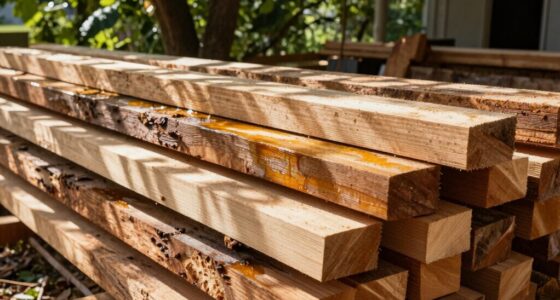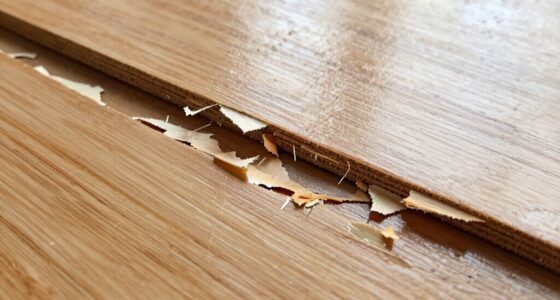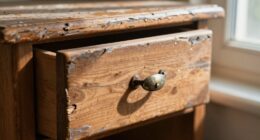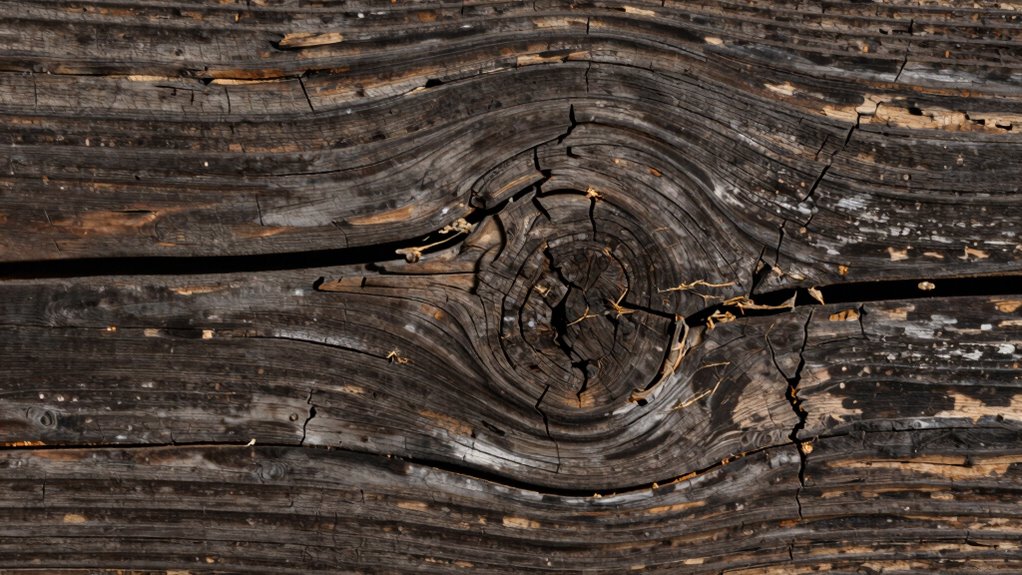
Checks, splits, and end cracks in your home’s materials can reveal what’s happening beneath the surface. Small checks and surface cracks might be natural from drying or temperature changes, but larger or widening splits often point to structural issues or moisture problems. End cracks at logs or beams could signal shrinkage or moisture intrusion. Recognizing these signs early helps you prevent costly repairs. Keep exploring to learn what your cracks might really be telling you.

Get business pricing on tools and workshop supplies
- Business-only prices and quantity discounts
- Tax-exempt purchasing
- Multiple users, one account, clear invoices
Key Takeaways
- Checks, splits, and end cracks often indicate moisture changes or uneven drying in wood and other materials.
- Widening or growing cracks suggest structural issues or foundation movement that require professional inspection.
- Cracks at the ends of logs or beams typically result from moisture intrusion and shrinkage over time.
- Natural cracks may be harmless, but persistent or severe cracks can signal underlying structural problems.
- Early detection and proper repair of these cracks help prevent further damage and costly repairs.
As an affiliate, we earn on qualifying purchases.
What Are Checks, Splits, and End Cracks?
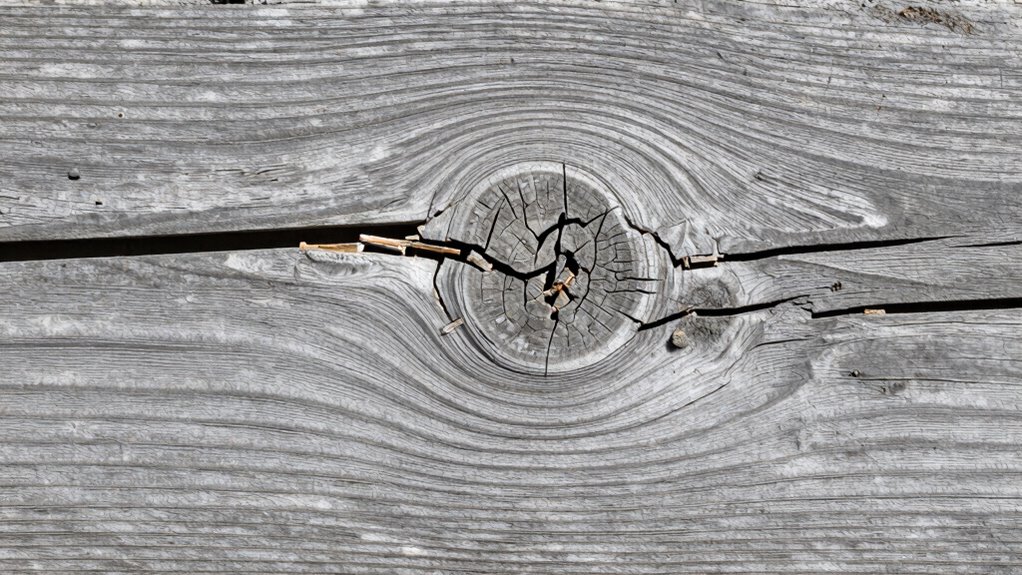
Have you ever noticed small lines or cracks running through a piece of wood? These are called checks, splits, and end cracks, and they often indicate underlying problems. Checks are cracks that form along the grain, usually from uneven drying or moisture changes. Splits extend deeper into the wood, sometimes reaching the core, often caused by rapid drying or stress. End cracks appear at the ends of beams or logs, often due to moisture intrusion and shrinkage. While some of these cracks are natural, they can also signal foundation issues if moisture intrusion is ongoing, weakening the structure. Recognizing these signs early helps prevent more serious damage and costly repairs. Keeping track of wood cracking patterns can also provide insights into the wood’s age and health. Keep an eye out for these cracks—they’re telling you something important about your wood’s health.
As an affiliate, we earn on qualifying purchases.
How Can You Recognize Serious Cracks in Your Home?

While small checks and cracks might seem minor, recognizing when cracks become serious is vital for maintaining your home’s safety. Look for large, widening, or uneven cracks, especially if they run through walls or foundation surfaces. Signs of foundation issues include cracks that appear suddenly or grow over time, often accompanied by sticking doors or uneven floors. Moisture problems can cause cracks to widen or develop new splits, especially in basement or crawl space walls. Pay attention to patterns; vertical or diagonal cracks are more concerning than hairline, horizontal cracks. Here’s a quick guide:
| Crack Type | Location | Warning Sign |
|---|---|---|
| Wide cracks | Foundation | Indicates possible settlement |
| Vertical | Walls | Potential structural issue |
| Diagonal | Floors | Foundation shifting |
| Horizontal | Basement | Moisture or water pressure |
| Multiple cracks | All areas | Urgent foundation inspection |
Additionally, understanding the contrast ratio of your home projector can help you assess the image quality, especially in dark room settings.
As an affiliate, we earn on qualifying purchases.
What Causes Cracks and Splits in Concrete, Wood, and Walls?
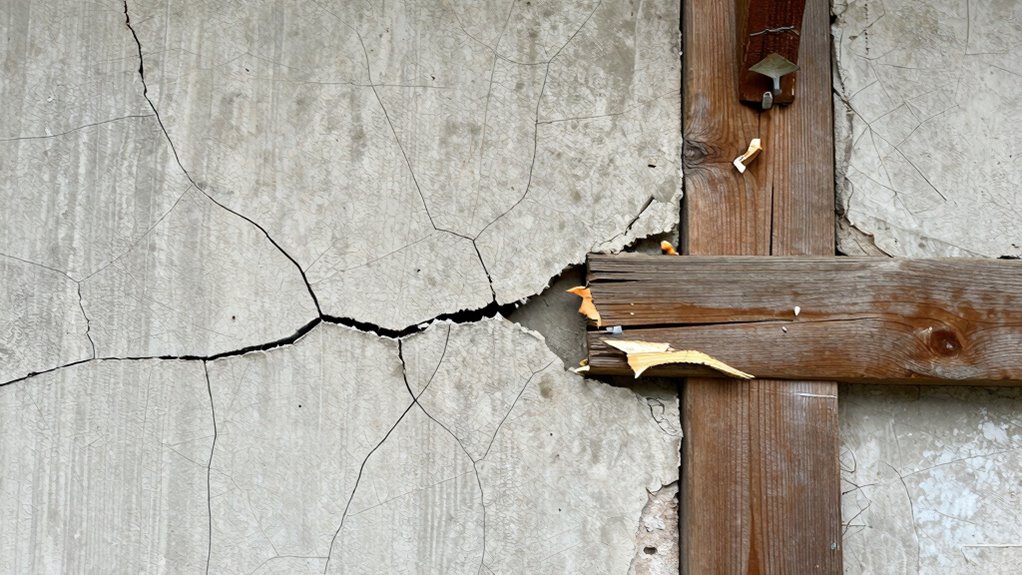
Cracks and splits in concrete, wood, and walls often result from a combination of environmental factors, material properties, and structural stresses. One common cause is material expansion due to temperature fluctuations, which causes materials to expand and contract. Moisture intrusion also plays a significant role; when water seeps into cracks or porous surfaces, it can weaken the structure and lead to splitting as materials swell or deteriorate. In concrete, repeated freeze-thaw cycles exacerbate this process, creating internal stresses. In wood, moisture changes cause swelling or shrinking that results in splits. Walls and other structures can crack when these natural movements exceed the material’s capacity to accommodate them, especially if proper moisture barriers or expansion joints are absent. Additionally, innovative cloud-based monitoring solutions are increasingly used to detect early signs of structural stress, helping prevent such damage.
structural crack inspection tools
As an affiliate, we earn on qualifying purchases.
As an affiliate, we earn on qualifying purchases.
How to Prevent and Fix Cracks in Your Structures

Preventing and fixing cracks in your structures starts with understanding the root causes and taking proactive steps to address them. Ensuring foundation stability is key; a solid foundation minimizes settlement and movement that lead to cracks. Regular inspections help identify early signs of trouble before they worsen. To prevent cracks caused by material expansion, manage moisture levels around your building and use appropriate expansion joints. Properly curing concrete and selecting flexible materials can also reduce stress from temperature fluctuations. If you notice small cracks, fill them promptly with suitable repair compounds to prevent water infiltration and further damage. Taking these steps helps maintain your structure’s integrity, reducing the risk of cracks developing into larger, costly problems over time. Additionally, understanding building movement and how it impacts your structure can help you implement effective preventative measures.
When to Call a Professional About Cracks
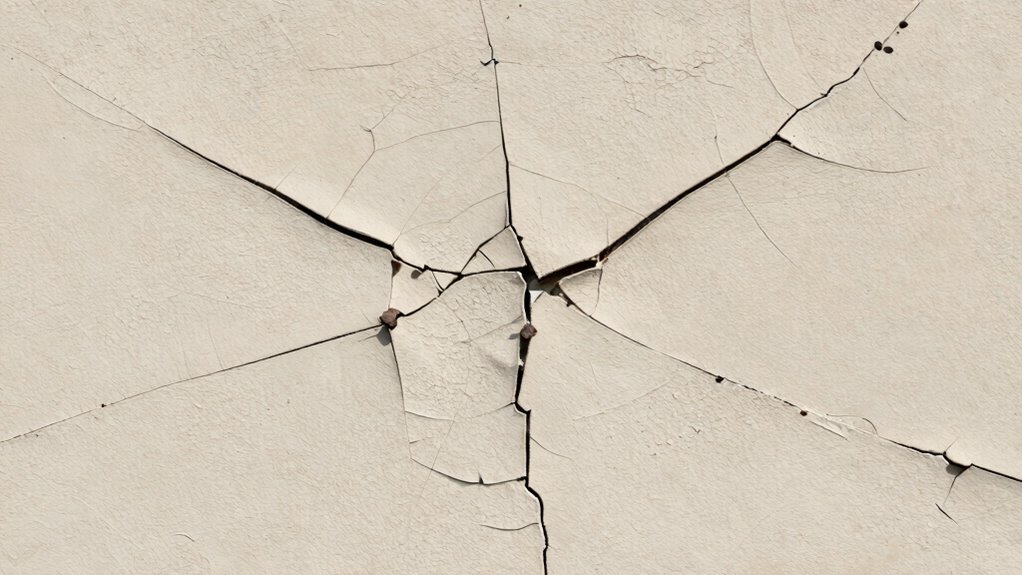
Recognizing when to seek professional help is essential to maintaining your structure’s safety and integrity. While DIY assessments can help identify minor issues, some cracks signal bigger problems. If you notice cracks that are wide, growing, or appear suddenly, it’s time to call in an expert. Homeowner dilemmas like persistent cracking, cracks over doorframes, or those accompanied by sticking windows are warning signs.
Cracks that grow, appear suddenly, or worsen over time require professional inspection for safety.
Imagine cracks that:
- Run diagonally across a wall, widening over time
- Appear after a heavy storm or earthquake
- Are accompanied by uneven flooring or doors that won’t close
- Juice extraction techniques can sometimes be relevant if moisture intrusion contributes to cracking.
Don’t ignore these signs. When cracks look severe or progress quickly, professional evaluation guarantees your home’s safety and prevents costly repairs down the line.
Frequently Asked Questions
Can Cracks Indicate Structural Failure or Just Cosmetic Issues?
Cracks can indicate either cosmetic issues or structural failure, depending on their severity. Small, superficial cracks are usually cosmetic and don’t pose a risk, but larger or expanding cracks may signal structural problems. You should assess crack severity carefully. If cracks are wide, deep, or worsening over time, it’s best to consult a professional to determine if structural repair is necessary, ensuring your safety and the building’s integrity.
Are There Specific Seasons That Worsen Cracking Problems?
A stitch in time saves nine, so you’ll want to pay attention to seasonal changes. Cracking often worsens during extreme weather impact, especially in winter and summer when seasonal expansion causes materials to contract or expand rapidly. These seasonal shifts put stress on your structure, making cracks more likely. To prevent significant damage, inspect and address cracks promptly, especially during seasonal shifts when weather impact is at its peak.
How Long Does It Typically Take to Repair Different Types of Cracks?
Repair durations vary depending on the crack type and severity. Small surface cracks may take just a few hours or a day, while larger or more complex splits could need several days. Timing estimates depend on the materials used and the extent of damage. You should plan for a few days for most repairs, but always consult a professional for precise timing estimates tailored to your specific situation.
Are DIY Crack Repairs Effective or Should They Always Be Professional?
DIY crack repairs can work for small, superficial issues, but they often fall short due to DIY pitfalls like improper sealing or insufficient materials. You should consider professional help for larger or deeper cracks to guarantee safety and long-term stability. Safety concerns arise because improper repairs can lead to further damage or structural risks. Trust experts when in doubt, as they have the skills and tools to do the job right.
What Are the Hidden Dangers Associated With Unseen or Minor Cracks?
Did you know that 90% of minor cracks can lead to significant foundation issues if left unchecked? Unseen or small cracks may seem harmless, but they can hide serious dangers like foundation instability and water intrusion. These hidden problems weaken your home’s structure over time, causing costly repairs. Ignoring them risks compromising your safety and property value, so it’s best to address even minor cracks promptly before they escalate.
Conclusion
Understanding what checks, splits, and end cracks mean helps you catch potential problems early. Think of your home’s cracks like warning lights on a dashboard—they signal you to pay attention before things get worse. By recognizing the signs and knowing when to act or call a pro, you protect your home’s integrity. Addressing cracks is like tending a garden—you need to nurture it now to prevent bigger issues later.
Fall yard work Picks
leaf blowers
As an affiliate, we earn on qualifying purchases.