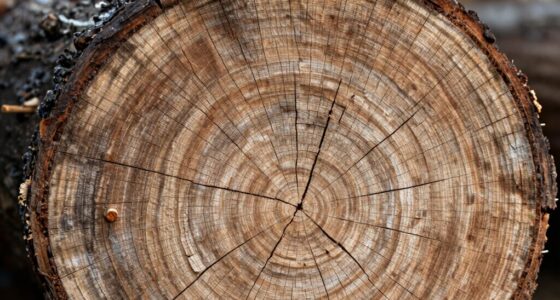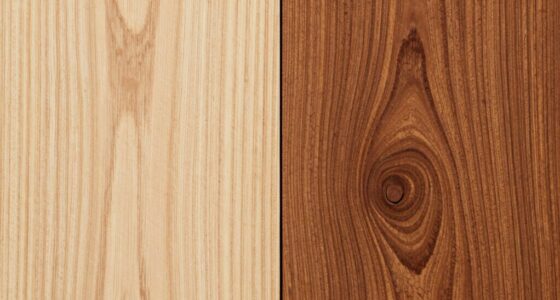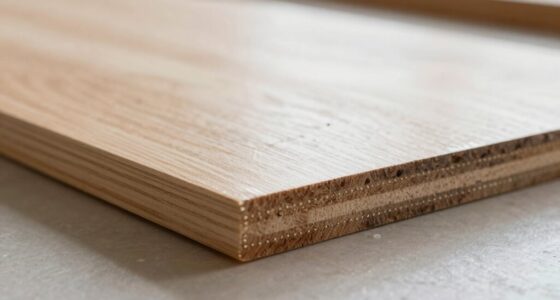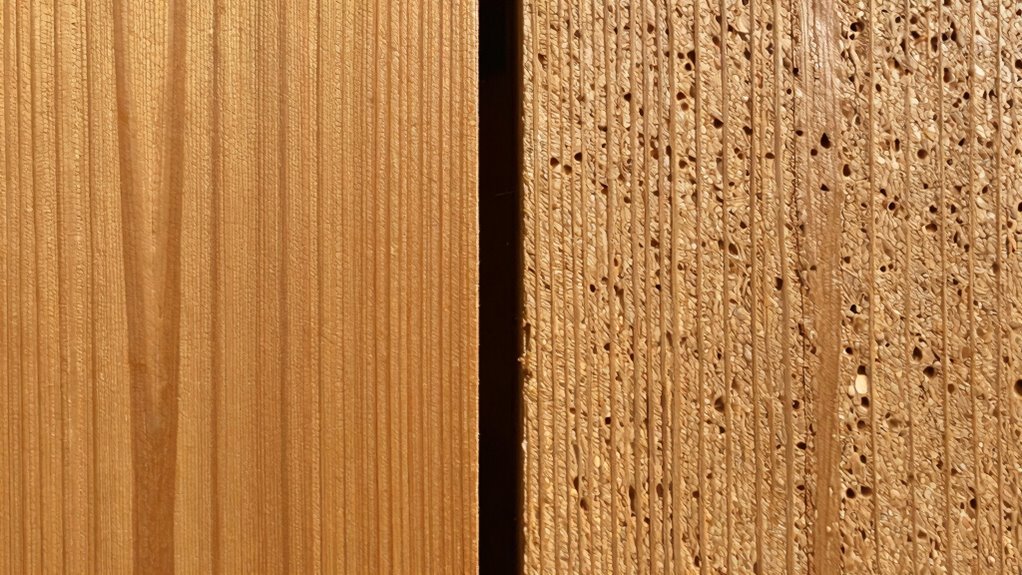
The difference in how two boards feel comes down to their wood density, which measures how much mass is packed into a given volume. Dense woods are heavier, stronger, and feel solid, while lighter woods are easier to handle and feel softer. Factors like species, growth conditions, and moisture content influence density. Understanding these aspects helps you choose the right wood for your project, and exploring more reveals how density impacts durability and finish quality.

Get business pricing on tools and workshop supplies
- Business-only prices and quantity discounts
- Tax-exempt purchasing
- Multiple users, one account, clear invoices
Key Takeaways
- Higher density woods feel heavier and more solid due to greater mass per volume.
- Denser woods have tighter, more uniform grain patterns, affecting tactile sensation.
- Moisture content influences perceived weight; drier wood feels lighter even if density is similar.
- Variations in grain and finish can alter how two boards with similar density feel.
- Growth conditions and species determine density, causing differences in how boards feel.
As an affiliate, we earn on qualifying purchases.
What Is Wood Density and Why Is It Important?
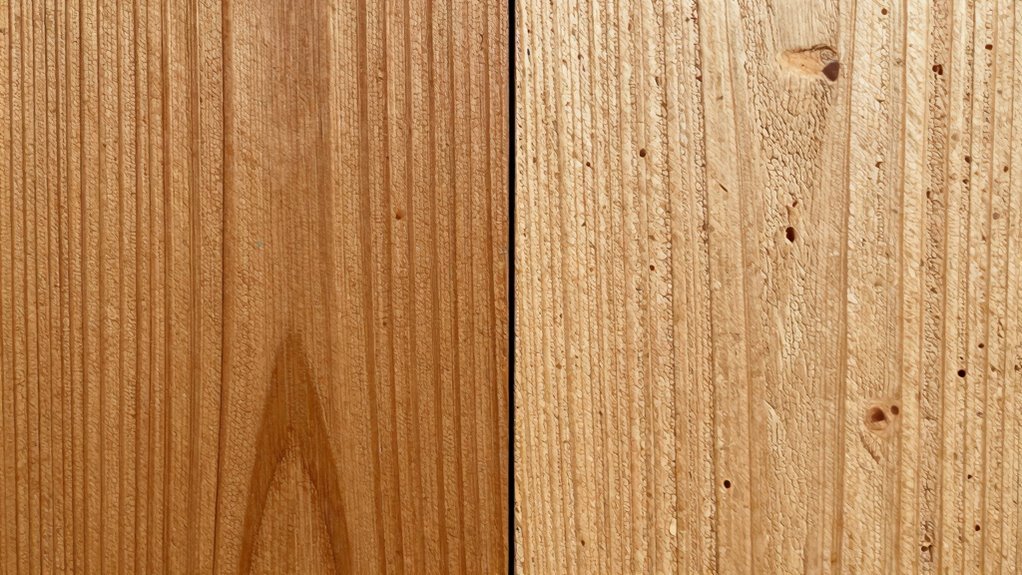
Have you ever wondered why some types of wood feel heavier or more solid than others? It all comes down to wood density, which measures how much mass is packed into a given volume. Factors like grain patterns influence density because tighter, more uniform grains typically result in denser wood. Moisture content also plays a vital role; wetter wood weighs more and can seem heavier, but its density changes as it dries. Understanding wood density helps you choose the right type for your project, whether you need a sturdy, lasting material or something lightweight. Denser woods are often stronger and more durable, making them ideal for furniture or flooring. Recognizing these elements helps you make informed decisions when selecting wood for any purpose. wood density is also affected by the species and growth conditions of the tree, which can further influence its suitability for specific applications.
hardwood vs softwood for furniture
As an affiliate, we earn on qualifying purchases.
As an affiliate, we earn on qualifying purchases.
What Factors Influence Wood Density (Species, Growth Conditions, and More)
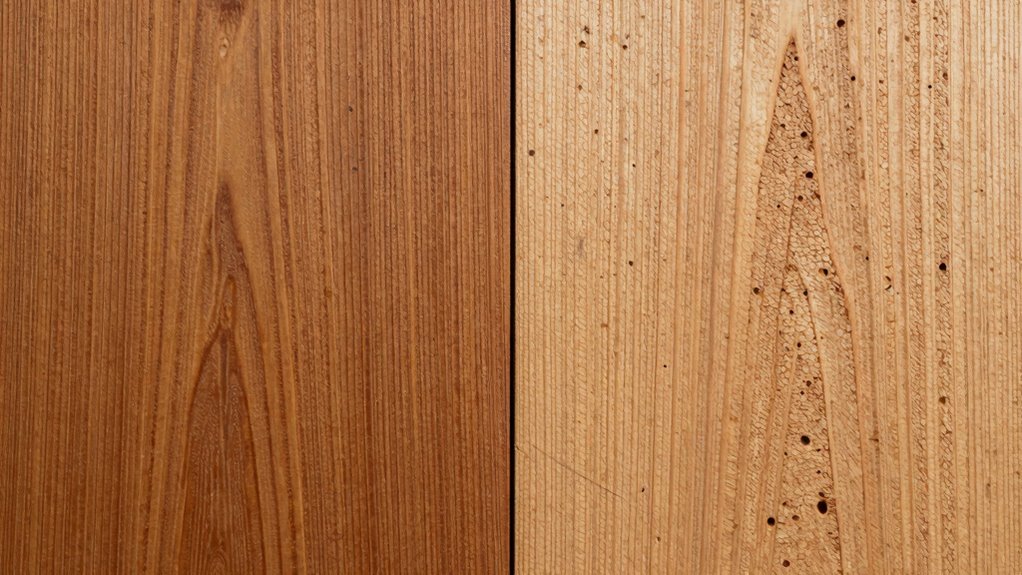
Various factors influence wood density, including the tree species and the environment where it grows. Your choice of species can lead to significant differences in density due to natural variation. Growth conditions also play a vital role, as factors like climate, soil quality, and water availability affect cell development and wood structure. Faster growth often results in lighter, less dense wood, while slower growth tends to produce denser material. Other influences include age and part of the tree, with heartwood typically being denser than sapwood. Recognizing species variation and environmental impacts helps you understand why two boards from different sources can feel so different. Additionally, wood anatomy influences how dense the material feels and reacts to different conditions.
As an affiliate, we earn on qualifying purchases.
How Can You Measure and Identify Wood Density?
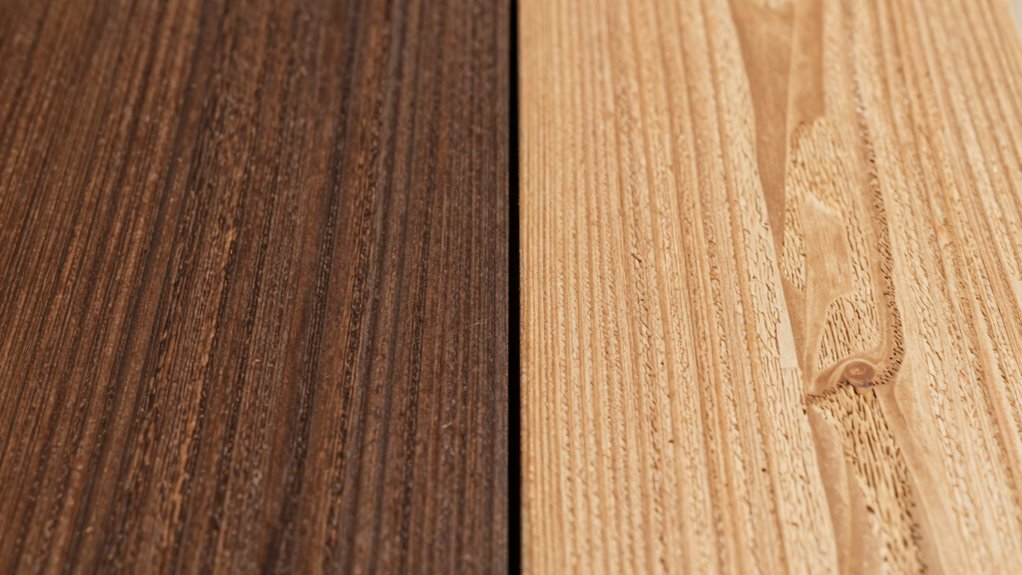
You can measure wood density using simple tools like a scale to weigh the sample and water displacement to find its volume. Additionally, you can identify density through visual inspection and tactile cues, such as weight and texture. Combining these methods helps you accurately determine the wood’s density. Understanding sustainable transportation concepts like electric vehicles can also inform choices about eco-friendly building materials, including wood.
Using a Scale
To accurately measure wood density, using a scale is one of the most straightforward methods. You start by weighing the wood sample with a precise scale, guaranteeing accuracy in your scale measurement. Then, determine the volume of the sample through geometric calculations or displacement methods. This allows for an effective density comparison by dividing the weight by the volume. To enhance accuracy, consider the following:
- Use a digital or analytical balance for precise measurement
- Record measurements multiple times to ensure consistency
- Ensure the wood sample is free of moisture or debris that could affect weight
- Calculate density by dividing the mass by the volume for reliable comparison
- Be aware of the specific wood species as it can influence density values and application suitability
This method provides a clear insight into the wood’s density, helping you differentiate between soft and hard woods effectively.
Water Displacement Method
The water displacement method offers a practical way to measure wood density by directly evaluating its volume. To do this, you’ll submerge a sample of the wood in water and measure how much water it displaces. Beforehand, verify your wood’s moisture content is stable, as high or uneven moisture levels can skew volume readings. Environmental factors like temperature and humidity also influence water displacement results, so perform measurements in a controlled setting. As you record the displaced water, you get an accurate estimate of the wood’s volume, which, combined with its weight, reveals its density. This method allows you to compare different woods reliably, provided you account for moisture content and environmental influences that can affect the measurements. Additionally, understanding the use of European cloud servers can help in processing and storing measurement data securely and efficiently.
Visual and Tactile Cues
Visual and tactile cues offer quick, practical ways to assess wood density without specialized equipment. You can examine the grain pattern; tighter, fine grains often indicate higher density, while wider, open grains suggest lower density. Color variation also provides clues—denser woods tend to have a richer, deeper hue, whereas lighter shades often mean less dense material. Feel the weight and texture of the wood: a heavier, solid feel usually correlates with higher density. Additionally, observe the surface for uniformity; consistent grain and color hint at stable, dense wood, while irregularities may signal variability. Using these cues, you can make an educated estimate of wood density, enabling better selection for your projects without needing tools or lab tests. Recognizing visual and tactile cues can significantly improve your ability to identify wood density quickly and accurately.
wood grain pattern identification
As an affiliate, we earn on qualifying purchases.
As an affiliate, we earn on qualifying purchases.
Which Woods Are Denser? Popular Species and Their Ratings
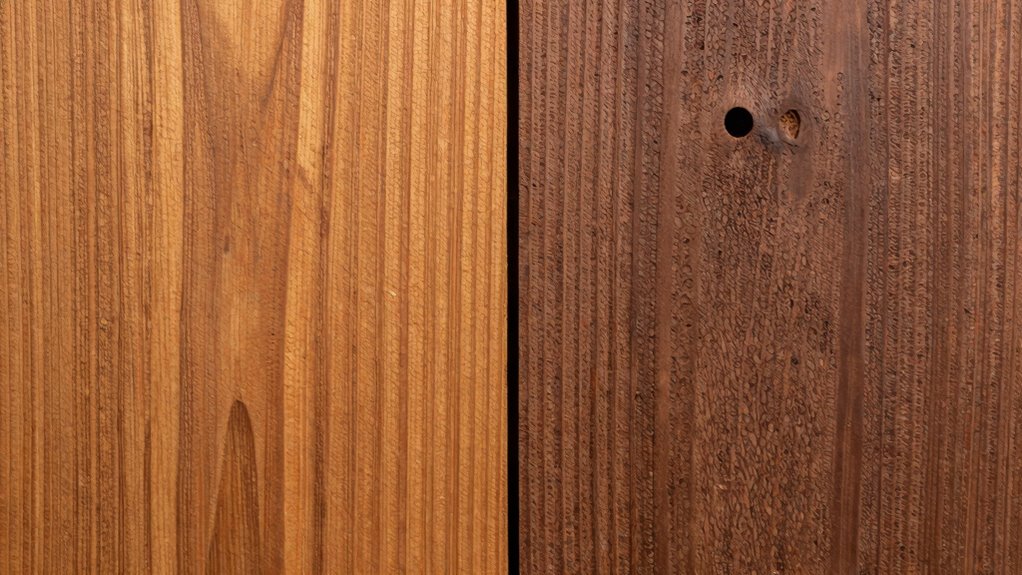
When comparing different wood species, some are noticeably denser than others, affecting their strength, durability, and suitability for projects. Wood density variations depend on species and growth conditions, measured through techniques like oven-drying or water displacement. For example, hardwoods generally have higher density ratings than softwoods. Here’s a quick look:
| Species | Average Density (kg/m³) | Common Use |
|---|---|---|
| Balsa | 160 | Model-making |
| Oak | 700 | Furniture, flooring |
| Teak | 660 | Marine applications |
| Maple | 750 | Cutting boards, tools |
Knowing these ratings helps you choose the right wood for your project based on its density and intended use. Being aware of wood density can also inform you about its resistance to wear and environmental factors.
How Does Wood Density Affect Feel and Performance?
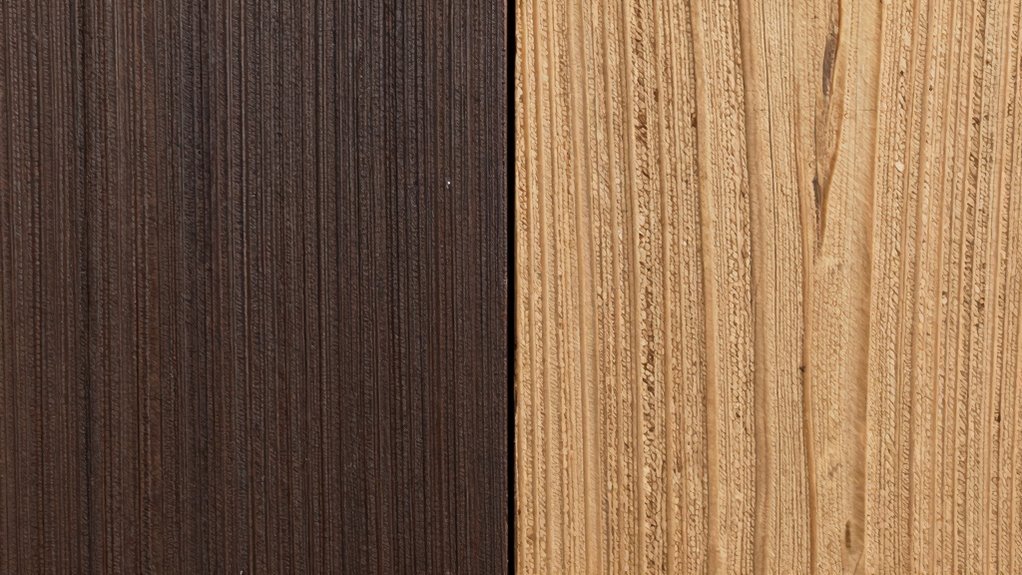
Have you ever noticed how some woods feel heavy and solid while others are lightweight and soft? This difference in feel and performance stems from wood density. Higher-density woods tend to have a tight, uniform grain pattern, making them sturdy and durable. These woods often display subtle color variation, giving a refined appearance. Conversely, lower-density woods feel lighter and may have a more open, coarse grain pattern, affecting stability and strength. The grain pattern influences how the wood responds to shaping and finishing, while color variation can impact aesthetic choices. Key points include:
Different woods vary in weight, grain pattern, and color—affecting durability, appearance, and workability.
- Denser woods feel more substantial and resistant to dents
- Grain pattern affects tool marks and finish quality
- Light woods may feel more flexible and softer
- Color variation enhances visual interest and character
Choosing the Right Wood Density for Your Project Goals
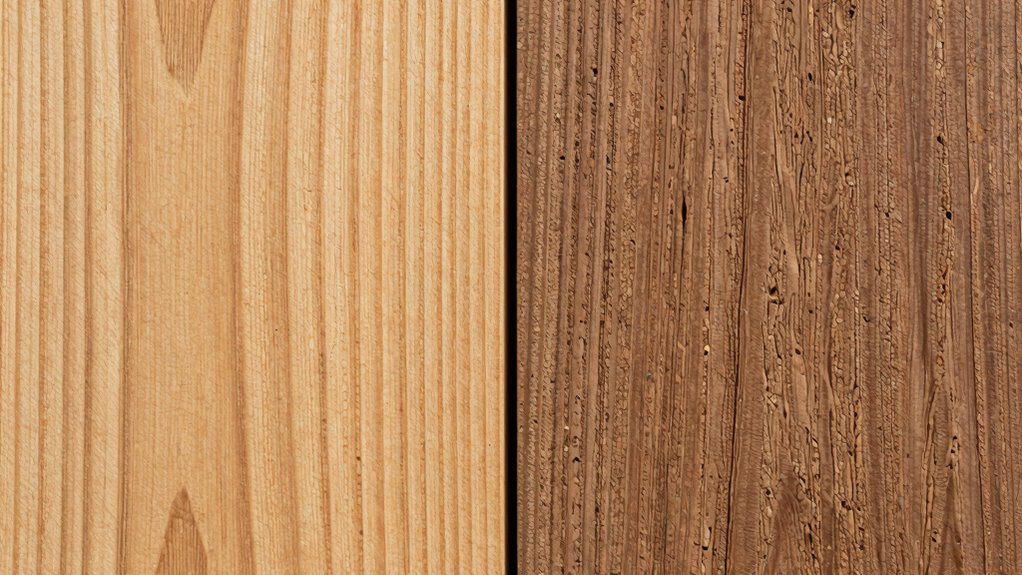
When selecting wood for your project, consider how density impacts strength and durability to guarantee your piece lasts. Think about workability and flexibility if you need easy handling or shaping, especially for intricate designs. Don’t forget that wood’s aesthetic and finish qualities can vary with density, affecting the final look and feel you want to achieve. Additionally, understanding wood density markets can help you make informed choices about the types of wood best suited for your specific needs.
Strength and Durability
Choosing the right wood density is essential for ensuring your project meets its strength and durability requirements. Higher-density woods typically provide greater resistance to wear, impact, and environmental factors, making them ideal for structural or outdoor applications. Lower-density woods, while more lightweight and easier to work with, may lack longevity in demanding conditions. Consider how grain patterns influence strength—tight, straight grains often enhance durability, while irregular patterns might weaken the wood. Additionally, color variations can signal differences in density and treatment, affecting longevity. To select appropriately, evaluate these factors in relation to your project’s purpose, ensuring your choice balances resilience with aesthetic appeal. Grain patterns indicating strength potential. Impact resistance linked to density. Environmental durability considerations. Color variations as density indicators.
Workability and Flexibility
Selecting the right wood density also impacts how easily you can work with the material and how flexible it remains during construction. Denser woods tend to be harder to cut and shape, but they offer stability for intricate grain patterns. Conversely, lighter woods are usually easier to carve and sand, making them ideal for projects requiring detailed work. Flexibility is also influenced by density; softer woods bend and bend more easily, which is useful for curved designs. Additionally, wood with a consistent grain pattern simplifies machining and results in a smoother finish. Keep in mind that color variation can signal density differences, affecting workability. Choosing the right density ensures your project is manageable and meets your flexibility needs without sacrificing the desired grain pattern or appearance.
Aesthetic and Finish
The right wood density can dramatically influence the overall aesthetic and finish of your project. Denser woods often feature a tighter, more uniform wood grain, providing a sleek, polished look. Less dense woods may display more pronounced grain patterns and natural color variation, adding character and warmth. When selecting wood, consider how the grain and color will enhance your design. Denser woods tend to hold finishes better, resulting in a smoother surface, while lighter woods can highlight natural variations, creating visual interest. Your choice affects not just appearance but also the tactile feel and longevity of the finish. Additionally, understanding wood density can help you better anticipate how the wood will respond to different finishing techniques and environmental conditions.
How Density Impacts Durability, Workability, and Finishing
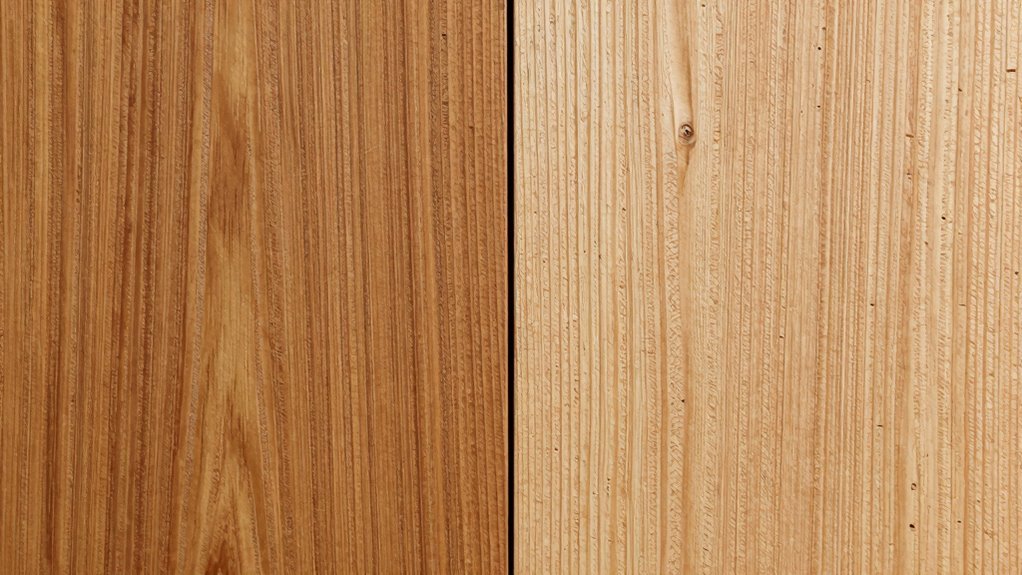
Density plays a vital role in determining how wood performs in various applications. Heavier, denser woods tend to be more durable, resisting dents and wear, but can be harder to work with. Lighter woods are easier to cut and shape but may lack longevity. Grain patterns and color variations influence how the wood responds to finishing, especially in dense species where the grain can be tight and uniform. The table below highlights how density affects durability, workability, and finishing:
| Aspect | Impact of Density |
|---|---|
| Durability | Higher density usually means better resistance to damage |
| Workability | Lower density woods are easier to cut and shape |
| Finishing | Dense woods may require more preparation for smooth finish |
Frequently Asked Questions
How Does Wood Density Influence Acoustic Properties?
Wood density directly affects its acoustic properties by influencing sound resonance and vibration transmission. Higher density wood tends to produce clearer, more sustained sound because it transmits vibrations more effectively, creating richer resonance. Conversely, lower density wood dampens vibrations, resulting in a softer, less resonant tone. As you choose wood for musical instruments or acoustic panels, consider its density to achieve the desired sound quality and resonance.
Can Changes in Moisture Content Alter a Wood’s Density?
Yes, changes in moisture content can alter a wood’s density. When moisture impact increases, the wood absorbs water, causing a density fluctuation as it becomes heavier and less stiff. Conversely, drying reduces moisture, decreasing density and making the wood lighter and more rigid. These fluctuations can affect how the wood performs in various applications, especially in acoustic or structural settings where stability and consistency matter.
Are There Eco-Friendly Methods to Modify Wood Density?
You can use eco-friendly methods like sustainable treatments and bio-based modifications to change wood density. These techniques involve applying natural resins, plant-based oils, or biodegradable chemicals that alter the wood’s internal structure without harming the environment. By choosing these sustainable options, you effectively increase or decrease wood density while reducing ecological impact, making your project both eco-conscious and durable.
How Does Wood Density Vary Within a Single Tree?
Within a single tree, wood density varies subtly, like a quiet conversation across growth rings. You’ll notice density gradients, with some areas denser due to slower growth, and others lighter from faster expansion. Growth rings mark these shifts, revealing the tree’s history. This natural variation means that even in one trunk, parts can feel quite different, adding character and strength to the wood you work with.
Is There a Standard Classification System for Wood Density?
Yes, there is a standard classification system for wood density, which helps you understand and compare different types of wood. These density standards categorize wood based on its specific gravity, usually measured at 12% moisture content. Wood classification systems, like the Janka hardness scale or specific gravity ratings, allow you to assess the density easily, ensuring you select the right wood for your project.
Conclusion
Just like the hero’s journey shapes their destiny, understanding wood density guides your woodworking adventure. Knowing how each board feels and performs helps you choose the perfect piece for your project, ensuring it stands the test of time. Whether you’re crafting a delicate veneer or a sturdy table, your choices echo the wisdom of the ages—like selecting the right armor for your quest. Embrace this knowledge, and let your creations tell their own legendary story.
Fall yard work Picks
leaf blowers
As an affiliate, we earn on qualifying purchases.