Reaction wood forms naturally in trees as a response to stress, causing uneven internal grain patterns. This type of wood, either tension or compression, makes boards prone to warping or twisting, no matter how careful you are. Internal forces pull in different directions, creating unpredictable movement. If your boards keep moving despite stabilization efforts, reaction wood is likely the cause. Keep exploring to learn how to identify and work with reaction wood to your advantage.

Get business pricing on tools and workshop supplies
- Business-only prices and quantity discounts
- Tax-exempt purchasing
- Multiple users, one account, clear invoices
Key Takeaways
- Reaction wood causes internal stresses that lead to warping regardless of drying or processing methods.
- Its irregular grain patterns produce uneven shrinkage, resulting in persistent movement.
- Reaction wood’s natural tension or compression makes boards prone to twisting over time.
- Identifying reaction wood through grain irregularities helps predict movement issues.
- Properly selecting or orienting lumber can reduce, but not eliminate, reaction wood-related movement.
As an affiliate, we earn on qualifying purchases.
What Is Reaction Wood and How Does It Form?
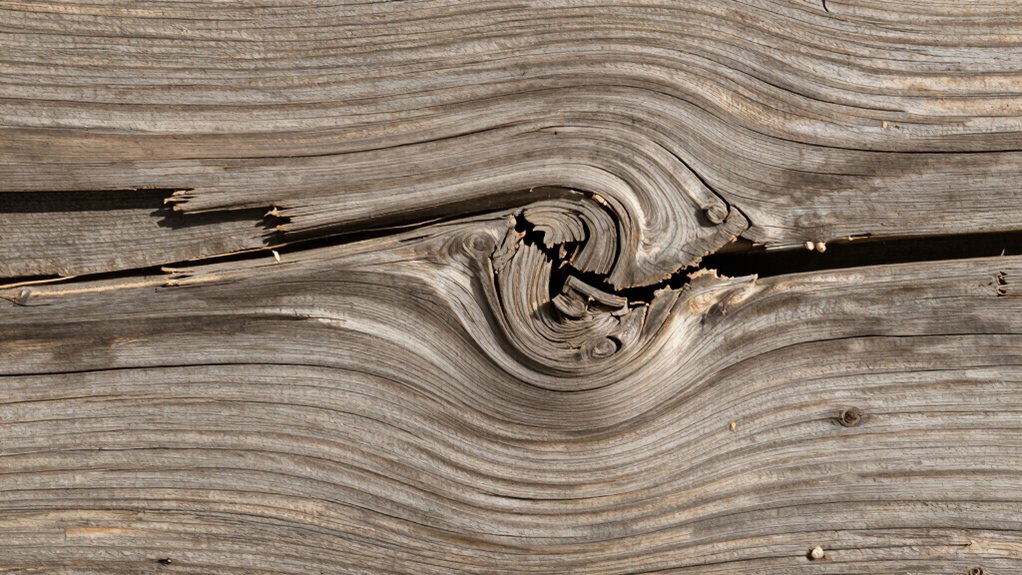
Have you ever noticed that some trees grow with a noticeable curve or twist? That’s often due to reaction wood forming as the tree responds to environmental stresses or uneven growth. Reaction wood causes grain irregularities, which can lead to wood curvature, making the lumber less uniform. When a tree leans or bends, it produces specialized wood on the opposite side to support that change. This form of reaction wood is a natural response to mechanical stress, helping the tree stay upright or adapt to its environment. As a result, the wood develops unique features, such as tension or compression wood, which contribute to irregular grain patterns. These irregularities influence how the wood behaves and how it should be processed or used in projects. Additionally, understanding traditional holistic health practices can help in managing the care and preservation of trees and wood products.
As an affiliate, we earn on qualifying purchases.
What Are the Types of Reaction Wood in Trees and Lumber?
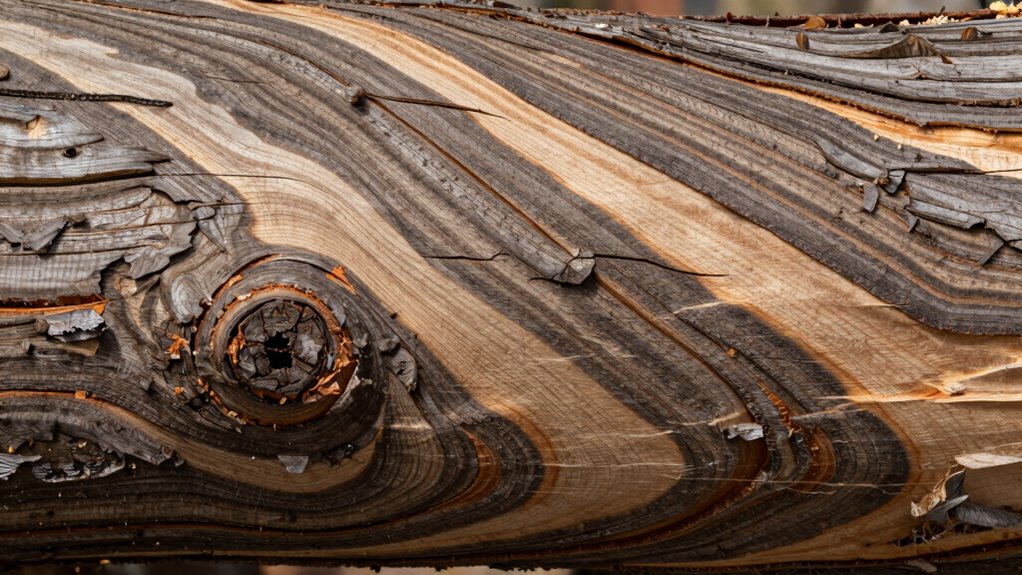
Did you know that there are two main types of reaction wood, each forming on different sides of a leaning or stressed tree? These are tension wood and compression wood. Tension wood develops on the upper side of a leaning tree or branch and helps pull it upright. Compression wood forms on the lower side and pushes against the lean. Growth anomalies caused by environmental factors like wind, gravity, or uneven soil conditions trigger these responses. These reaction wood types have distinct characteristics that affect lumber quality. Tension wood often contains more tension fibers, making it prone to warping, while compression wood is denser and can cause twisting. Recognizing these types is essential for understanding how environmental stress influences wood behavior and stability. European cloud innovation is increasingly integrating sustainable solutions to monitor forest health and growth conditions, helping manage and mitigate the formation of reaction wood.
As an affiliate, we earn on qualifying purchases.
How Does Reaction Wood Cause Boards to Warp or Twist?
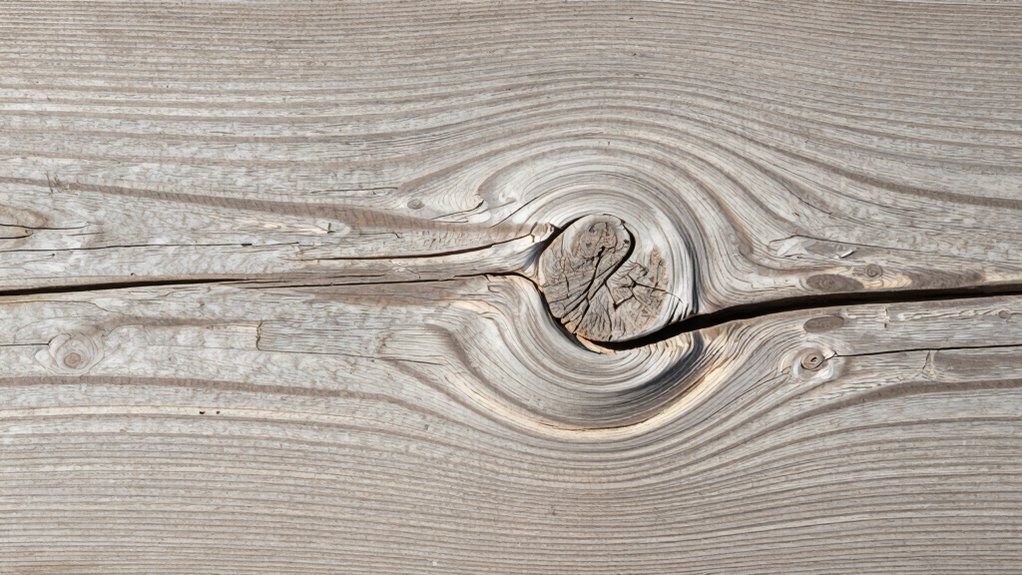
Reaction wood causes boards to warp or twist because its uneven internal structure creates imbalanced forces as the wood dries and is worked. This unevenness leads to grain distortion, where the fibers don’t align properly, causing the board to bend or twist unexpectedly. The internal tension from reaction wood pulls the wood in different directions, making it difficult to achieve stable, flat surfaces. These stability issues arise because the reaction wood’s abnormal growth pattern resists uniform drying and processing. As a result, your boards may develop curves, cupping, or warping over time, even if you follow proper techniques. Recognizing how the internal forces of reaction wood influence the grain helps you understand why some boards are more prone to movement, despite your best efforts to stabilize them. Additionally, understanding the logistics of large-scale events can give insight into how environmental factors like humidity and temperature fluctuations further exacerbate these issues.
grain irregularity identification tools
As an affiliate, we earn on qualifying purchases.
As an affiliate, we earn on qualifying purchases.
How Can You Spot Reaction Wood in Your Lumber?
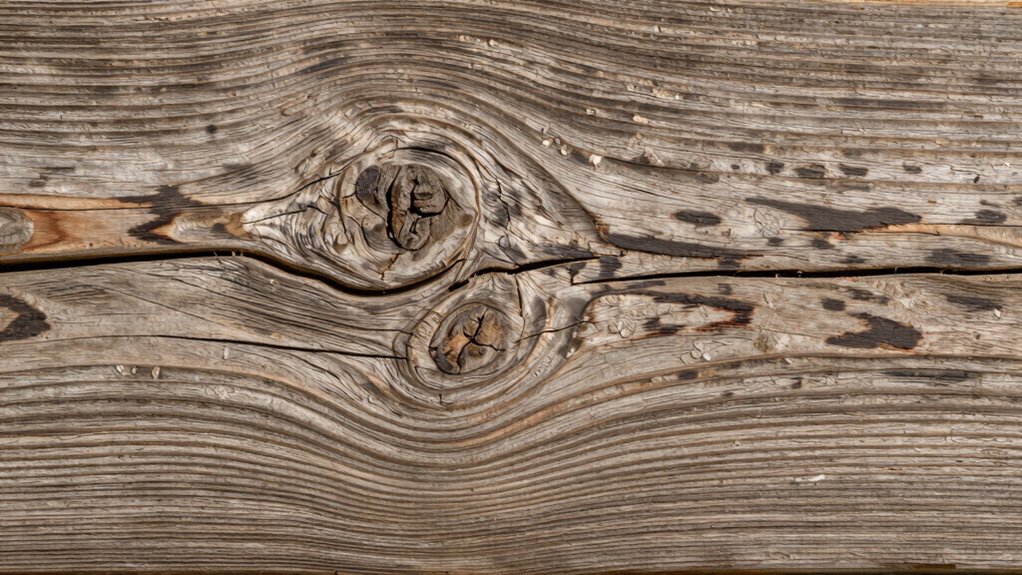
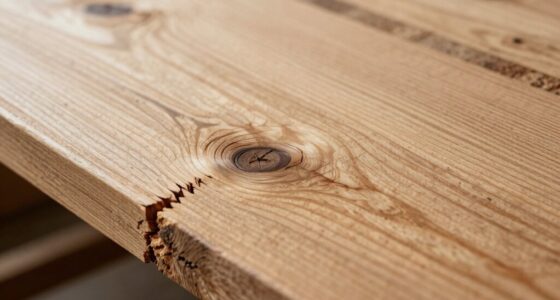
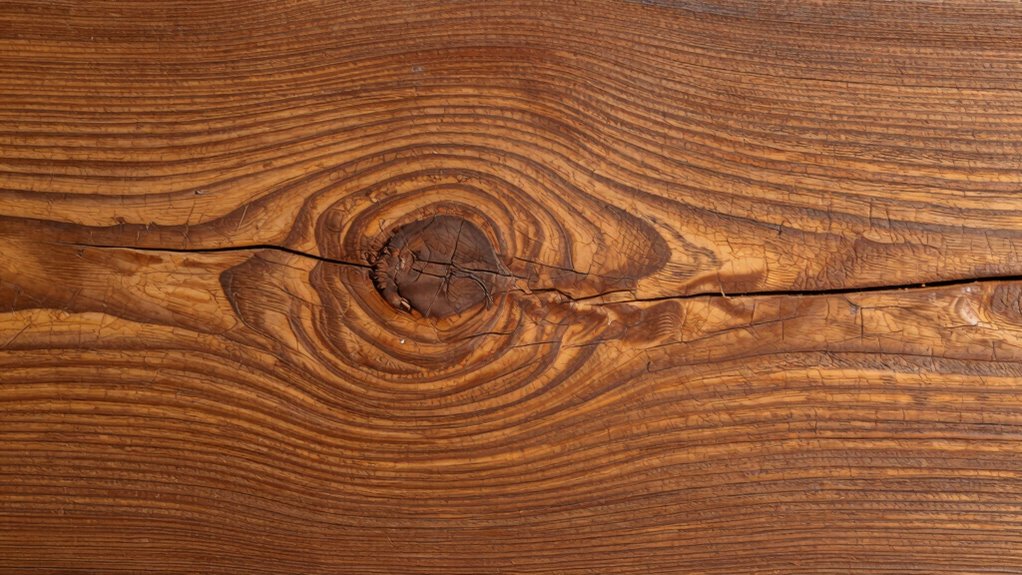
Identifying reaction wood in your lumber starts with closely examining the grain patterns and overall appearance of the boards. Look for grain irregularities, which often indicate the presence of reaction wood. This type of wood may display unusual twists, curves, or uneven grain flow that differ from normal growth patterns. Defect identification is key—reaction wood can appear as darker, denser areas or zones that seem out of place. You might notice:
- Crooked or spiraled grain patterns
- Uneven density or color variations
- Areas that feel stiffer or more brittle
- Visible knots or unusual growth rings
These signs help you distinguish reaction wood from normal lumber, allowing you to make better decisions before using or processing the wood further. Additionally, understanding the presence of reaction wood can aid in predicting how the wood might behave during drying or further processing.
How Can You Minimize or Use Reaction Wood to Your Advantage?
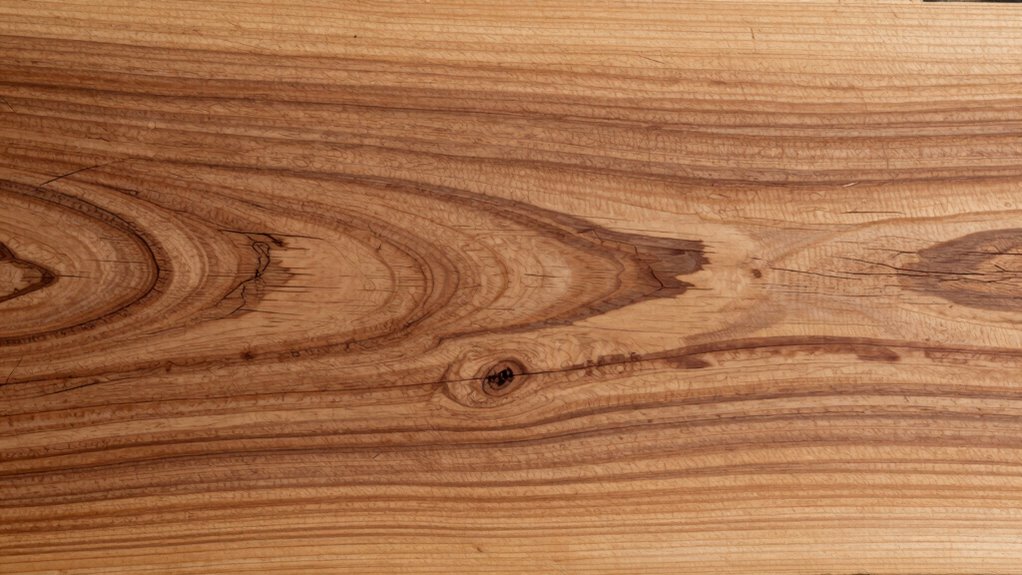
So, how can you turn reaction wood from a problem into an advantage? By understanding grain orientation, you can decide how to work with reaction wood rather than against it. Aligning your lumber so that the grain runs parallel to your project’s stress points minimizes warping and cracking. When necessary, lumber treatment options like kiln drying or applying stabilizers can reduce reaction wood’s effects, making the wood more stable. If you’re aware of reaction wood’s tendencies, you can select pieces with minimal reaction wood or strategically place problematic areas where they won’t impact structural integrity. Sometimes, reaction wood’s unique grain can add character, giving your project a distinctive look. Recognizing the science behind at‑home beauty tech devices allows you to better understand how to care for and use them effectively. Using these strategies helps you control movement and leverage reaction wood’s natural qualities to your advantage.
Frequently Asked Questions
Can Reaction Wood Be Completely Eliminated During Processing?
Reaction wood can’t be completely eliminated during processing because it’s a natural response of the tree. You can minimize its effects through proper wood treatment and drying techniques, which help reduce stress and uneven movement. However, some reaction wood may still cause boards to move over time. The best approach is to select well-processed wood and use appropriate drying methods to limit movement as much as possible.
Does Reaction Wood Affect the Structural Strength of Lumber?
Reaction wood can weaken your lumber’s structural strength, especially if it causes uneven grain orientation. Studies show that reaction wood increases variability in wood density, making some areas stronger while others are weaker. This unevenness affects load-bearing capacity, so even if you can’t eliminate reaction wood, knowing its impact helps you select better, more stable boards for your projects. Always inspect grain patterns to guarantee quality and strength.
Are Certain Tree Species More Prone to Reaction Wood?
Yes, certain tree species are more prone to reaction wood due to their species susceptibility and growth patterns. For example, fast-growing hardwoods like oak and poplar tend to develop more reaction wood, which can cause movement in your boards. Softwoods like pine are generally less susceptible. Understanding these differences helps you anticipate movement and choose the right species for your project, ensuring better stability and performance.
How Does Climate Influence the Formation of Reaction Wood?
Did you know that extreme climate conditions can increase reaction wood formation by up to 30%? Climate impact markedly influences wood formation, prompting trees to produce more reaction wood as they struggle to maintain stability. Droughts, high winds, and temperature fluctuations cause stress, leading trees to develop this specialized wood. As a result, your boards may warp or twist, regardless of your efforts to prevent movement, because climate directly affects how wood responds over time.
Can Reaction Wood Be Safely Used in Furniture or Construction?
You can use reaction wood in furniture or construction, but be aware it may cause issues over time. Its grain orientation can lead to warping or twisting, affecting the structural integrity and aesthetic impact. If you choose to incorporate reaction wood, guarantee proper drying and stabilization. When properly managed, it can add unique character, but always consider potential movement to avoid future problems in your project.
Conclusion
Understanding reaction wood helps you manage board movement effectively. Did you know that up to 20% of lumber can be affected by reaction wood, causing unpredictable warping or twisting? By recognizing its signs and adjusting your processing or usage, you can reduce waste and improve project outcomes. Embracing reaction wood’s unique qualities might even turn challenges into creative advantages. Stay vigilant, and you’ll turn even tricky boards into valuable assets for your woodworking projects.
Fall Picks
fall essentials
As an affiliate, we earn on qualifying purchases.