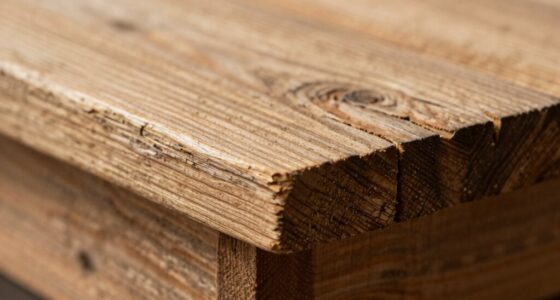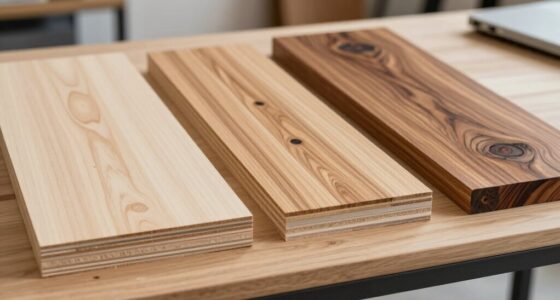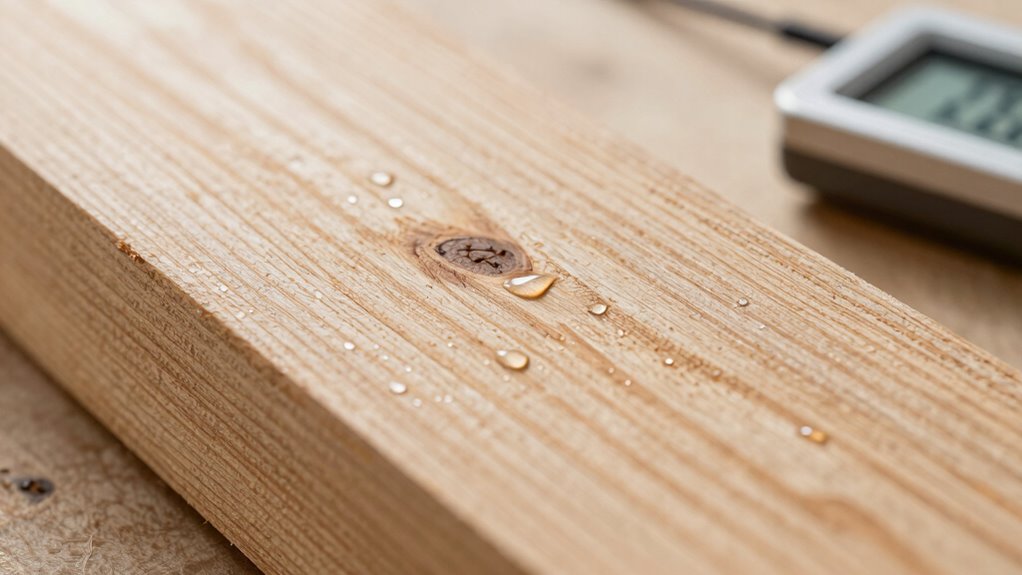

Understanding moisture content is key to preventing warping in your projects. It’s the percentage of water held in your materials, especially wood, that affects their stability. Too much moisture causes swelling or cracking, while too little can make materials brittle. Monitoring this number with a moisture meter helps you keep materials at ideal levels. If you want to learn how to control and measure moisture effectively, there’s plenty more to discover.

Get business pricing on tools and workshop supplies
- Business-only prices and quantity discounts
- Tax-exempt purchasing
- Multiple users, one account, clear invoices
Key Takeaways
- Moisture content indicates the amount of water in materials, critical for preventing warping and cracking.
- Maintaining optimal moisture levels (e.g., 6-12% for wood) ensures stability and durability of construction materials.
- Proper measurement with calibrated moisture meters provides accurate readings to guide drying or humidifying processes.
- Interpreting moisture readings helps identify issues like surface moisture or internal imbalance that could cause warping.
- Controlling environmental conditions and using moisture barriers help maintain ideal moisture levels, protecting projects from deformation.
As an affiliate, we earn on qualifying purchases.
Why Moisture Content Is Critical for Your Building Projects
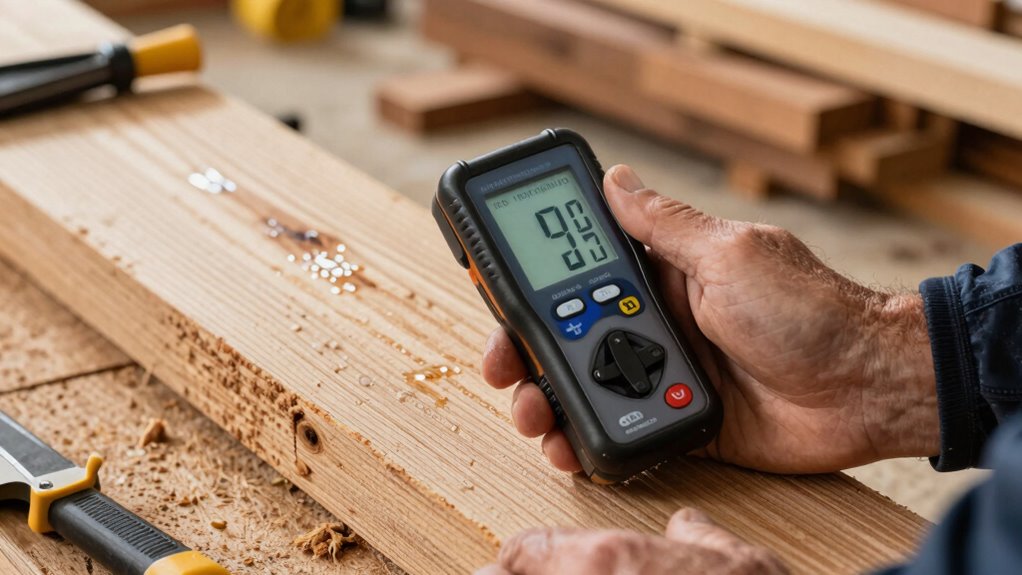
Understanding the moisture content in building materials is essential because it directly affects the durability and stability of your construction. Accurate moisture measurement helps you determine whether materials are suitable for use, preventing future issues like warping or cracking. When moisture levels are too high, materials can weaken, leading to compromised material stability and potential structural failure. Conversely, overly dry materials may be brittle and prone to damage. Additionally, using at‑home moisture meters can provide quick and reliable readings, facilitating better decision-making during construction. Proper material testing ensures you are using materials within their optimal moisture ranges, which is crucial for long-term performance. Monitoring moisture content with proper calibration ensures the readings are accurate and reliable. Regular inspections can help identify moisture issues early before they cause significant damage. By monitoring moisture content carefully, you guarantee your materials are within ideal ranges, maintaining their integrity throughout the building process. This proactive approach minimizes unexpected delays and costly repairs, ultimately saving you time and money. Proper moisture management is a critical step in ensuring your project’s long-lasting strength and safety, especially as climate variations can influence moisture levels significantly.
As an affiliate, we earn on qualifying purchases.
How Moisture Affects Wood Stability and Durability

Moisture levels considerably influence the stability and durability of wood in your building projects. When wood absorbs moisture, it expands, causing warping, cracking, or twisting that can compromise structural integrity. Conversely, drying out too much makes wood brittle and prone to splitting. To minimize these issues, moisture barriers are essential; they prevent excess moisture from reaching the wood, helping maintain consistent moisture levels. Proper moisture control reduces wood expansion and contraction, ensuring your project remains stable over time. Without effective barriers, fluctuations in humidity can accelerate wear and decrease the lifespan of wood components. Understanding how moisture affects wood’s behavior enables you to select suitable materials and implement strategies that keep moisture in check, safeguarding your project’s durability and long-term performance. Additionally, monitoring moisture content with moisture meters allows DIYers to make informed decisions during construction and maintenance. Recognizing the impact of humidity fluctuations on wood helps in planning appropriate environmental controls to further protect your projects. Maintaining optimal environmental conditions is crucial for preserving wood’s integrity and preventing long-term damage. Being aware of wood’s moisture equilibrium can help you create better storage and drying practices to avoid issues before they arise. Implementing proper ventilation techniques also plays a vital role in regulating moisture levels and maintaining wood stability over time.
handheld moisture content tester
As an affiliate, we earn on qualifying purchases.
As an affiliate, we earn on qualifying purchases.
What Are the Ideal Moisture Levels for Different Materials
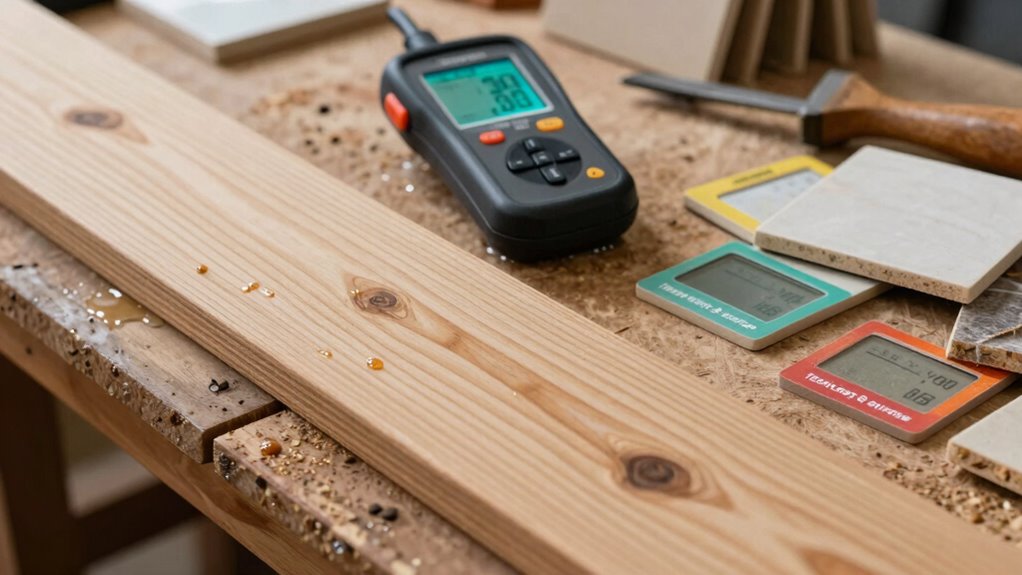
Maintaining the right moisture levels is essential for guaranteeing ideal performance and longevity of different materials. For wood, the ideal moisture content typically ranges between 6% and 12%, depending on your environment. Keeping it within this range prevents warping, cracking, and decay. Consistent moisture levels are vital to prevent materials from absorbing or losing moisture too rapidly, which can lead to structural issues. Proper moisture measurement techniques are crucial for accurate assessments and effective project management. Additionally, understanding the environmental conditions that influence moisture content helps in planning and adjusting storage or construction practices accordingly. Being aware of material-specific standards ensures that you maintain appropriate moisture levels tailored for each material type. Concrete, on the other hand, should have a moisture level that allows proper curing without excess water, generally around 3% to 5%. Too much moisture in concrete can weaken its strength and cause surface issues, while too little can hinder proper curing. Knowing these ideal levels helps you avoid problems like warping, cracking, or compromised durability. Regularly monitoring moisture content ensures materials stay within their best ranges, ultimately extending their lifespan and maintaining structural integrity.
As an affiliate, we earn on qualifying purchases.
How to Measure Moisture Content With a Moisture Meter
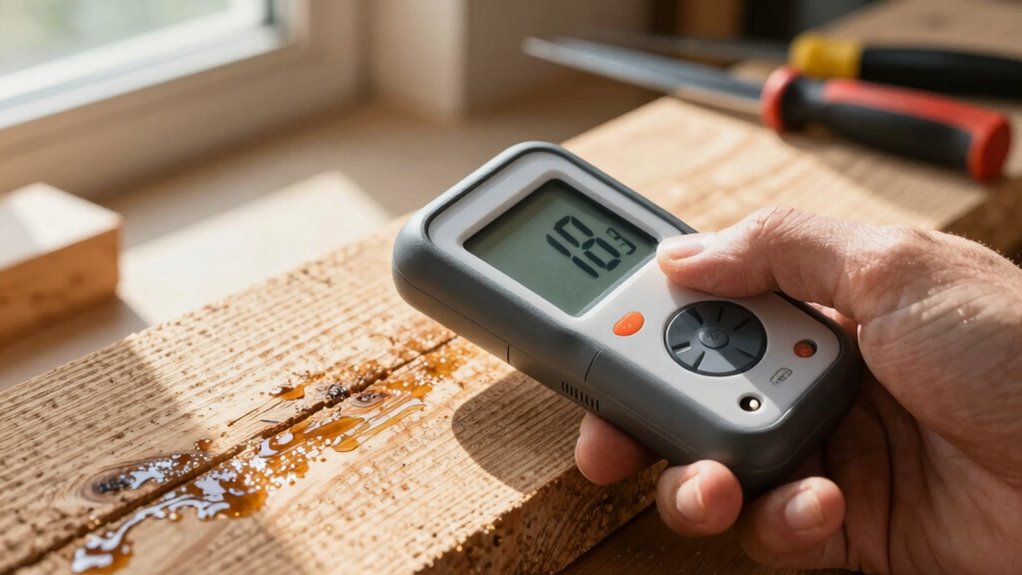
To get accurate moisture readings, you need to make certain your moisture meter is properly calibrated before use. Make sure your sample is prepared correctly to avoid skewed results, and then interpret the readings carefully to determine moisture levels. Paying attention to these steps helps you measure moisture content reliably and accurately. Additionally, understanding simple systems for moisture measurement can streamline the process and improve your results. Proper calibration and understanding of piercing care and hygiene can also help prevent issues like infection that might affect your project’s integrity. Maintaining instrument calibration and following best practices ensures consistent, trustworthy measurements over time. Utilizing modern technology in moisture measurement can further enhance accuracy and efficiency.
Proper Meter Calibration
Proper calibration of your moisture meter is essential to guarantee accurate readings. Without it, your measurements could be off, risking project delays or damage. To ensure calibration accuracy, regularly check your meter against a known moisture standard or calibration sample. Follow the manufacturer’s instructions for calibration procedures, and perform this process whenever you notice inconsistent readings. Regular calibration and diligent maintenance help prevent measurement errors, giving you confidence in your moisture readings. This consistency is indispensable for making informed decisions about material suitability and preventing costly mistakes. Additionally, understanding the importance of reliable backup power can help ensure your tools remain operational during critical calibration or measurement tasks. Being aware of power supply considerations can further minimize disruptions during essential measurements and calibration. Maintaining your equipment’s accuracy and reliability ensures consistent results and supports safe, effective cooking or project completion. Incorporating routine calibration checks into your maintenance schedule can help detect issues early and extend the lifespan of your moisture meter. Moreover, proper environmental conditions during calibration can significantly influence measurement precision and should be carefully managed.
Correct Sample Preparation
Before measuring moisture content with a moisture meter, you need to prepare your sample properly to guarantee accurate readings. Proper sample preparation involves selecting a representative portion of your material, avoiding surface moisture or debris, and ensuring it’s at room temperature. Break down larger samples into small, uniform pieces to improve consistency. Keep in mind that moisture calibration is essential—calibrate your meter with a standard sample similar to your material to ensure accuracy. Dry or wet spots can distort readings, so mix the sample thoroughly before testing. Always follow the manufacturer’s guidelines for sample size and preparation techniques. Proper sample preparation minimizes errors, giving you reliable moisture readings that help prevent issues like warping or cracking in your projects.
Interpreting Moisture Readings
Once you’ve prepared your sample correctly, the next step is to interpret the moisture readings from your meter accurately. Look closely at how the moisture content aligns with the wood grain; readings can vary between the surface and the interior due to moisture migration. If the meter indicates high moisture levels near the surface but lower inside, it suggests ongoing moisture movement, which could lead to warping or swelling over time. Consistent readings across different areas show stable moisture levels. Understanding these patterns helps you determine if the wood is ready for use or needs further drying. Accurate interpretation guarantees you select wood with appropriate moisture content, reducing risks of future warping and ensuring your project remains stable and durable.
Common Mistakes When Checking Moisture Levels (and How to Avoid Them)
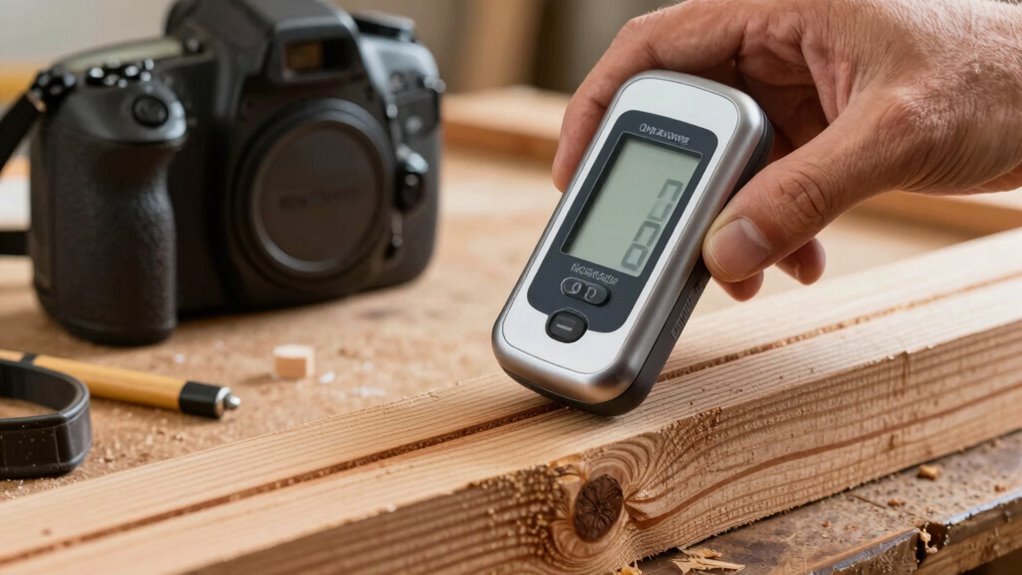
Checking moisture levels seems straightforward, but many people make simple errors that can lead to inaccurate results. One common mistake is falling for moisture myths, like believing that a quick visual check or feeling the material’s weight is enough. These myths can cause you to underestimate or overestimate moisture content. Measurement mistakes often happen when you use the wrong type of meter for your material or measure in inconsistent locations. Additionally, not calibrating your tools regularly can give false readings. To avoid these errors, follow the manufacturer’s instructions carefully, test multiple spots for consistency, and keep your equipment calibrated. Accurate moisture checks are essential for a successful project, so don’t rely on assumptions—use precise methods and avoid common measurement mistakes.
How to Adjust and Control Moisture During Your Project
Controlling moisture levels during your project guarantees the materials perform as expected and reduces the risk of issues like warping, mold, or cracking. To do this effectively, you need to manage ambient humidity and use moisture barriers when necessary. For example, installing a moisture barrier can prevent ground moisture from affecting wood, reducing wood expansion and contraction. Additionally, monitoring moisture content regularly helps you make adjustments before problems arise. You can use dehumidifiers or humidifiers to maintain ideal conditions. Here’s a quick overview:
| Action | Tool/Method | Result |
|---|---|---|
| Use moisture barriers | Plastic sheeting | Protects against moisture |
| Control humidity | Dehumidifier/Humidifier | Maintains stable moisture level |
| Monitor moisture | Moisture meter | Prevents wood expansion issues |
| Adjust environment | Ventilation | Reduces excess moisture |
Troubleshooting Moisture Content Issues: Fixing High or Low Levels
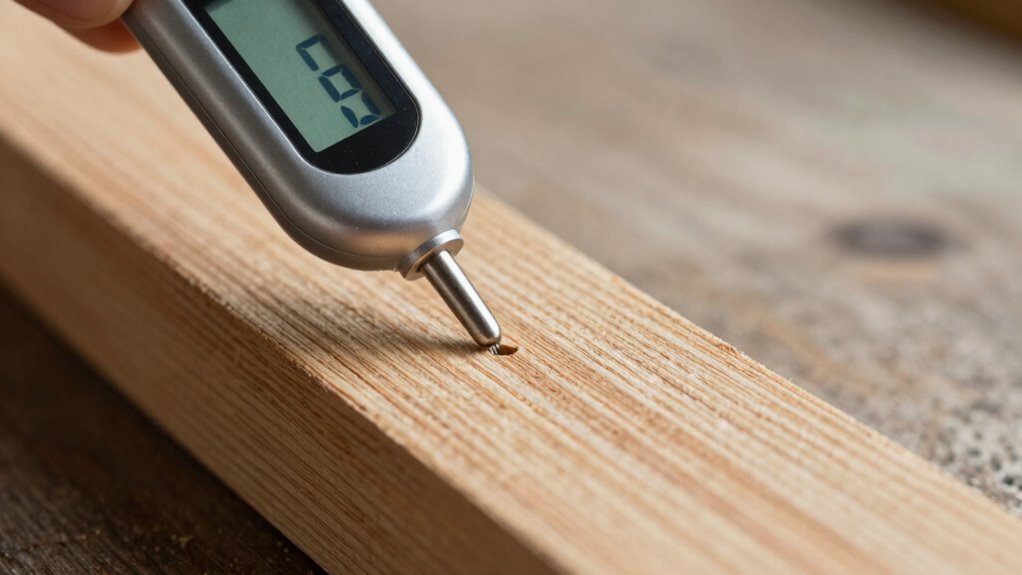
When your moisture levels are off, adjusting them quickly can save your project. Using proper storage methods helps maintain the right moisture balance over time. Keep a close eye on your environment to prevent persistent issues with high or low moisture content.
Adjust Moisture Levels
To effectively fix moisture content issues, you need to adjust the moisture levels based on whether they’re too high or too low. If moisture is too high, focus on improving humidity control and increasing ventilation to reduce excess moisture. For low moisture levels, you may need to add humidity or eliminate drying factors. Using moisture barriers can help regulate moisture transfer between environments and materials.
Consider these steps:
- Use a dehumidifier or humidifier to fine-tune humidity levels
- Install moisture barriers to prevent unwanted moisture infiltration or loss
- Ensure proper ventilation to maintain consistent moisture levels throughout the project area
Use Proper Storage
Using proper storage methods is essential for maintaining ideal moisture levels in your materials. You should focus on humidity control and storage conditions to prevent moisture fluctuations. Store your materials in a dry, climate-controlled environment where humidity stays consistent. Avoid areas with high humidity or drastic temperature changes, as these can cause your materials to absorb or lose moisture. Use sealed containers or plastic wraps for added protection, especially if storage conditions are less stable. Elevate materials off the ground to reduce exposure to damp floors. Regularly monitor the environment and adjust humidity levels as needed. Proper storage not only preserves your materials’ moisture content but also helps prevent warping, cracking, or other moisture-related issues during project execution.
Frequently Asked Questions
How Does Climate Influence Moisture Content in Building Materials?
Climate impact markedly influences moisture variability in building materials. When you work in humid or rainy climates, materials absorb more moisture, increasing warping risk. Conversely, dry conditions cause them to lose moisture, leading to cracking or shrinking. You need to monitor moisture content carefully, especially in fluctuating climates, to prevent warping. Proper sealing, ventilation, and choosing climate-appropriate materials help you manage moisture levels and ensure project stability.
Can Moisture Content Vary Within a Single Piece of Wood?
Yes, moisture content can vary within a single piece of wood due to a moisture gradient. As the wood dries, the outer layers often lose moisture faster than the core, creating differences that lead to wood shrinkage and potential warping. This uneven moisture distribution causes internal stresses, emphasizing the importance of controlling moisture content. You need to monitor and manage these variations to prevent project problems and ensure stable, smooth surfaces.
What Tools Are Best for Quick Moisture Level Assessments?
You should use moisture meters for quick moisture level assessments. These handy tools offer rapid testing, giving you instant readings of a wood’s moisture content. Pin-type moisture meters penetrate the wood to measure internal moisture, while pinless meters scan the surface. Both are essential for ensuring your project’s wood stays stable and warping is avoided. Keep these tools on hand for efficient, accurate moisture checks during your woodworking or construction projects.
How Often Should Moisture Levels Be Checked During Construction?
Like a trusty pocket watch, you should check moisture levels regularly during construction. For most projects, perform moisture measurement at least weekly, or more often if conditions change substantially. Consistent moisture monitoring helps you catch issues early, preventing warping or structural problems. Keep an eye on environmental factors, and adjust your inspections accordingly. Staying vigilant ensures your project stays on track, avoiding costly delays and guaranteeing ideal wood stability.
What Are the Long-Term Effects of Improper Moisture Control?
If you ignore proper moisture control, you risk moisture migration inside your building materials, leading to long-term issues like wood warping, mold, and decay. These problems compromise structural integrity and indoor air quality. By managing moisture levels, you prevent decay and ensure durability. Consistent moisture monitoring helps catch issues early, saving you from costly repairs and guaranteeing your project remains stable and safe over time.
Conclusion
Think of moisture content as the heartbeat of your project—keeping it steady prevents warping and ensures lasting strength. Picture your wood or materials as a calm lake, reflecting a stable environment. By measuring and controlling moisture levels, you’re guiding your project safely across the finish line, avoiding costly twists and cracks. Stay vigilant, adjust as needed, and watch your craftsmanship stand strong, just like a perfectly still pond—resilient and true.
Fall yard work Picks
leaf blowers
As an affiliate, we earn on qualifying purchases.