To prevent bad pairings, you need to match your compressor’s PSI and CFM ratings with your nailer’s demands. If the pressure or airflow isn’t sufficient, you’ll face jams, misfires, or uneven fastening. Using an undersized compressor can damage your tools and slow your project. Ensuring the right specifications will improve performance and extend your equipment’s life. Keep these basics in mind, and you’ll be on your way to smooth, efficient nailing—there’s more to discover on how to get it just right.

Get business pricing on tools and workshop supplies
- Business-only prices and quantity discounts
- Tax-exempt purchasing
- Multiple users, one account, clear invoices
Key Takeaways
- Match compressor PSI and CFM ratings with the nailer’s specified requirements for optimal performance.
- Ensure the compressor can supply sufficient airflow (CFM) to prevent jams and misfires during use.
- Regularly maintain the compressor to keep consistent pressure and airflow, avoiding performance issues.
- Use tools compatible with your compressor’s PSI and CFM to prevent premature wear and equipment failure.
- Troubleshoot airflow and pressure stability to quickly identify and resolve pairing mismatches.
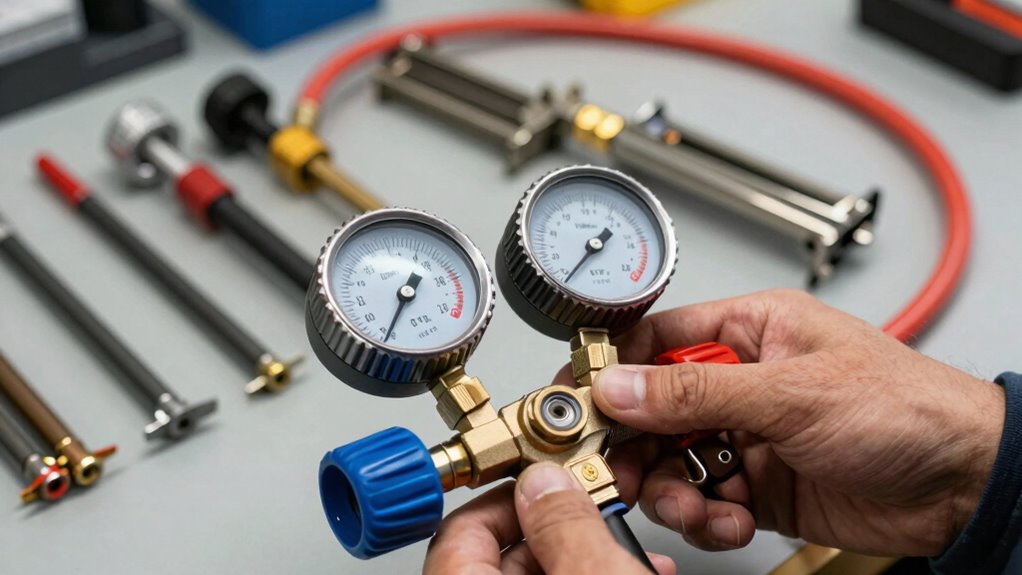
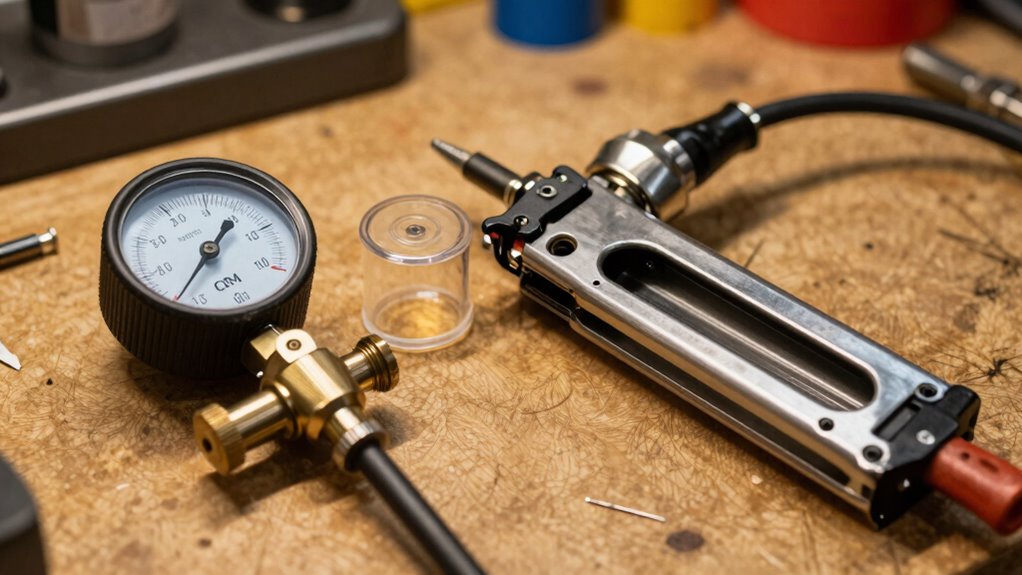
Understanding PSI, CFM, and nailer demand is essential if you’re aiming for efficient and effective fastening projects. When working with pneumatic tools, knowing how your air compressor’s specifications align with your nailer’s requirements can make or break your project’s success. If your compressor can’t deliver the right pressure or airflow, your nailer won’t perform properly, leading to jams, misfires, or inconsistent nailing. To prevent these issues, you need to understand what PSI and CFM mean for your setup. PSI, or pounds per square inch, measures the pressure your compressor can generate, while CFM, or cubic feet per minute, indicates the volume of air it can supply at a given pressure. Your nailer’s demand depends on these two factors—if your compressor can’t meet the required CFM at the proper PSI, your tool won’t operate at peak performance.
Matching your compressor to the nailer’s demand is fundamental. For example, a professional framing nailer might require higher CFM and PSI than a finish nailer. Using an undersized compressor not only hampers performance but also puts unnecessary strain on your equipment, which can lead to premature wear or failure. Regular air compressor maintenance becomes indispensable here. Properly draining moisture, inspecting hoses for leaks, and ensuring filters are clean will keep your compressor running smoothly, providing consistent airflow and pressure. This consistency is essential for achieving clean, accurate fastenings and avoiding delays caused by equipment malfunction. Additionally, understanding air compressor specifications can help you select the right tools for your projects, ensuring optimal performance and safety. Moreover, understanding airflow requirements is crucial for troubleshooting when your compressor isn’t meeting your nailer’s demands, preventing potential performance issues. Keeping an eye on air pressure stability can further enhance your project’s efficiency by reducing the likelihood of tool malfunctions.
As an affiliate, we earn on qualifying purchases.
Frequently Asked Questions
How Do Temperature and Altitude Affect PSI and CFM?
Temperature and altitude substantially influence PSI and CFM. As temperature rises, air expands, which can decrease PSI and reduce CFM if not adjusted. At higher altitudes, thinner air causes pressure drops, requiring altitude adjustments to maintain ideal PSI and CFM levels. You should monitor and modify your equipment accordingly, considering temperature effects and altitude adjustments to prevent underperformance or damage. Proper calibration ensures consistent results regardless of environmental changes.
Can Different Nailer Brands Require Different Pressure Settings?
Just like a secret handshake, nailer brands often have their own requirements, meaning you may need different pressure settings for each. Nailer compatibility varies, so using brand-specific settings guarantees peak performance and prevents damage. Always refer to the manufacturer’s guidelines to find the right PSI for your tool. Ignoring these differences is like trying to fit a key into the wrong lock—you risk poor results or even equipment harm.
How Often Should I Calibrate My Air Compressor?
You should calibrate your air compressor regularly to guarantee peak performance and prolong its lifespan. Typically, a good rule of thumb is to check and calibrate it every 3 to 6 months, depending on usage. Regular maintenance scheduling helps prevent issues, keeps your compressor running efficiently, and extends its lifespan. If you notice inconsistent pressure or performance, calibrate sooner to avoid unnecessary wear and tear.
Are There Safety Concerns With Over-Pressurizing a Nailer?
Think of your nailer like a boat; over-pressurizing is like overloading it with cargo—dangerous and unnecessary. Over-pressurization risks include damaging your nailer and compromising safety, which could lead to misfires or injuries. To keep everyone safe, always follow the manufacturer’s recommended PSI settings. Proper nailer safety means respecting these limits, avoiding over-pressurization, and ensuring your tool works efficiently without risking damage or harm.
What Accessories Improve Air Efficiency for Pneumatic Tools?
To improve air efficiency for pneumatic tools, you should focus on proper air filter maintenance and hose length optimization. Regularly clean or replace filters to guarantee clean airflow, reducing pressure drops. Keep hoses as short and straight as possible to minimize air loss and maintain consistent pressure. These steps help your tools perform better, last longer, and save you energy and cost over time.
pneumatic nailer compressor combo
As an affiliate, we earn on qualifying purchases.
As an affiliate, we earn on qualifying purchases.
Conclusion
By paying close attention to PSI, CFM, and nailer demand, you’re gently steering clear of potential mismatches that could toss a wrench in your project. Think of it as fine-tuning your tools, ensuring they work together harmoniously. When you understand these basics, you’re less likely to encounter surprises and more likely to enjoy smooth, efficient results. It’s a subtle dance of knowledge that keeps your craftsmanship flowing seamlessly without missing a beat.
As an affiliate, we earn on qualifying purchases.
high CFM air compressor for nail guns
As an affiliate, we earn on qualifying purchases.
As an affiliate, we earn on qualifying purchases.
Fall yard work Picks
leaf blowers
As an affiliate, we earn on qualifying purchases.