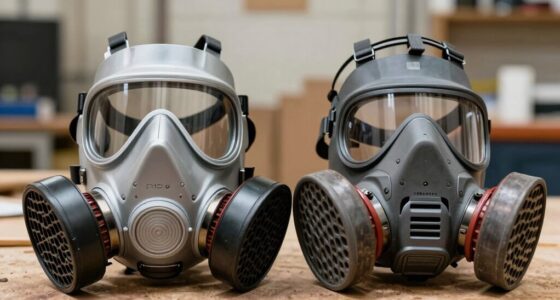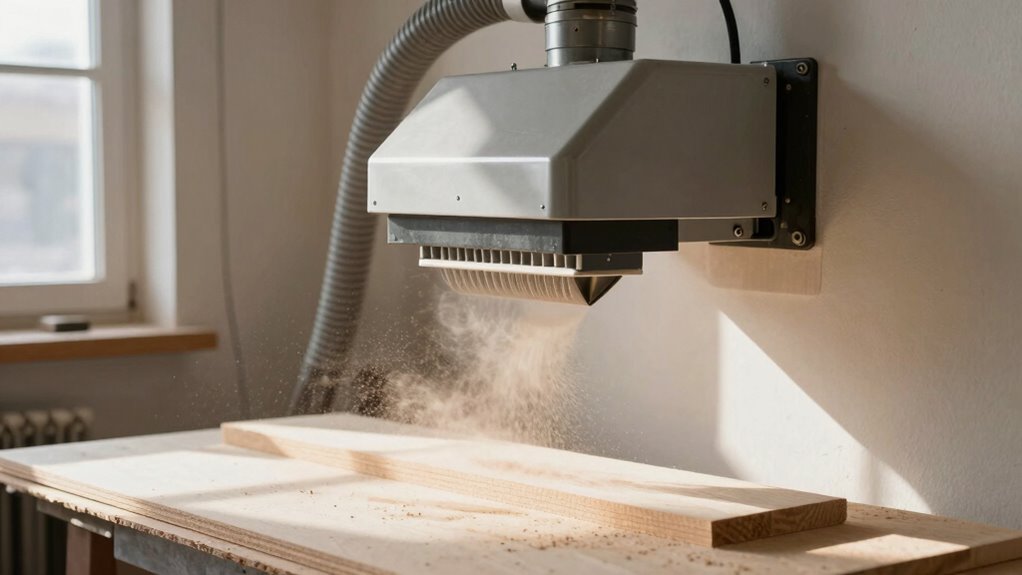

To cut exposure during sanding, focus on small upgrades like sealing dust barriers, improving ventilation, and regularly cleaning dust hotspots. Use efficient dust extractors and portable vacuums near your work area to capture airborne particles early. Wear proper masks and PPE to protect yourself, especially when working with different materials. Keep equipment maintained and check for leaks or blockages. For more tips on making your sanding space safer, you’ll find helpful insights if you continue exploring.
Listen free for 30 days with Audible
Thousands of audiobooks and originals — cancel anytime.
As an affiliate, we earn on qualifying purchases.
Key Takeaways
- Install local exhaust ventilation or portable dust extractors near sanding zones to capture dust at its source.
- Use sealed dust barriers with proper negative pressure systems to contain dust and prevent spread.
- Regularly maintain and replace filters in dust collection equipment to ensure optimal airflow and filtration efficiency.
- Opt for high-quality, properly fitted masks like N95 or half-face respirators to reduce inhalation of airborne dust particles.
- Incorporate simple airflow adjustments, such as repositioning vents or adding fans, to improve dust dispersion and minimize hotspots.
As an affiliate, we earn on qualifying purchases.
Why Dust Control Matters During Sanding Projects
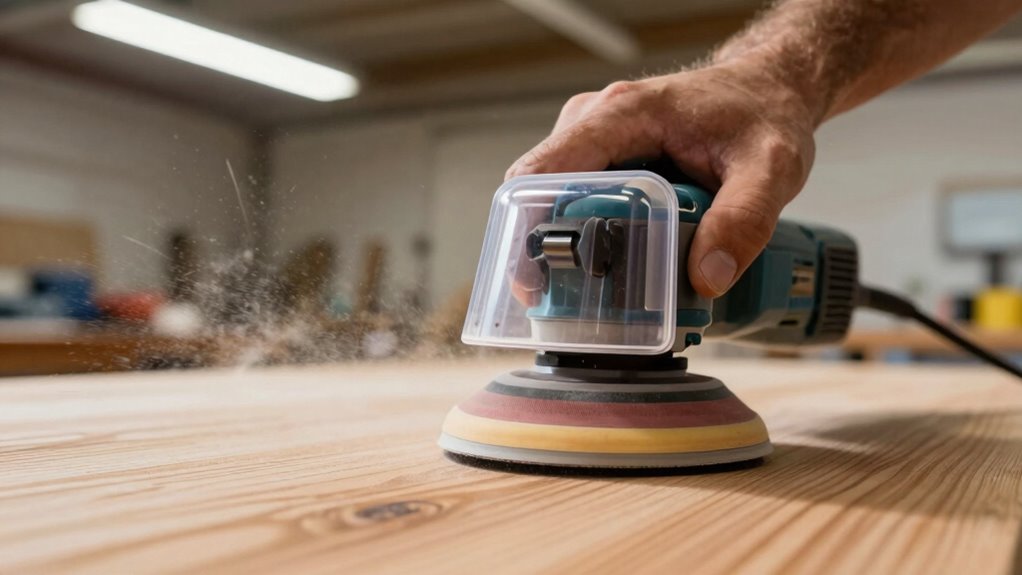
Why does dust control matter so much during sanding projects? Because dust particles become airborne easily, posing health risks and reducing visibility. Fine dust can linger in the air, settling on surfaces and infiltrating your lungs if not managed properly. Effective air filtration helps remove these tiny particles, preventing them from spreading throughout your workspace. Without proper dust control, you risk inhaling harmful dust, which can cause respiratory issues over time. Additionally, dust can interfere with your work, creating a mess and making cleanup more difficult later. Prioritizing dust control keeps your environment safer and cleaner, allowing you to work more efficiently. Investing in good air filtration systems and dust collection methods minimizes exposure, protecting your health and ensuring a smoother sanding process. Modern kitchen technology offers innovative solutions like connected air purifiers and smart dust collection tools that enhance safety and efficiency in your workspace.
As an affiliate, we earn on qualifying purchases.
How to Assess Your Workspace for Dust Hotspots
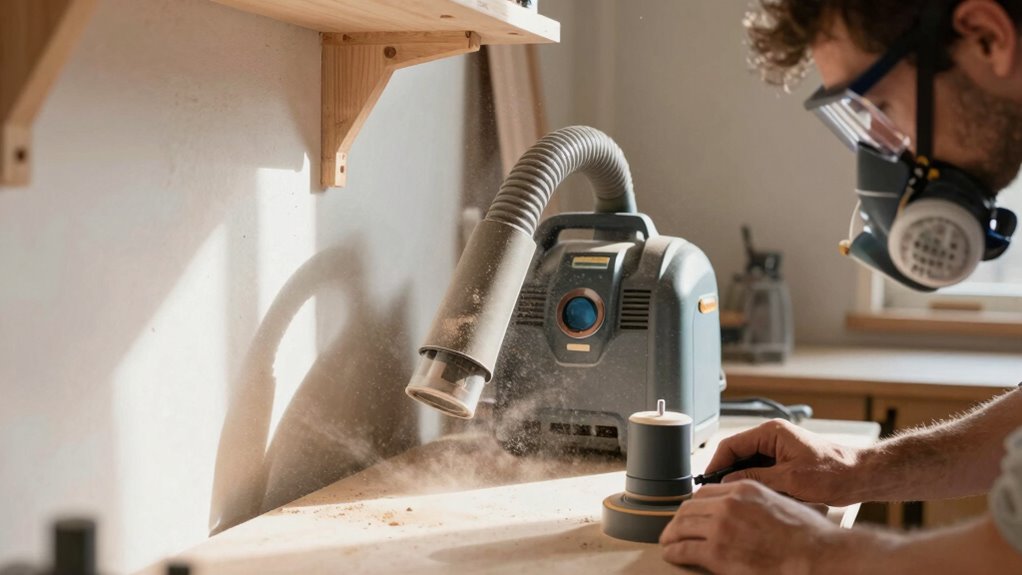
Start by spotting where dust tends to collect and settle, so you can focus your efforts. Keep an eye on airflow patterns to see how dust moves around your workspace, and check your equipment and surfaces for build-up. This assessment helps you identify hotspots and improve your dust control strategy effectively. Incorporating knowledge about air quality maintenance can further optimize your efforts.
Identify Dust Accumulation Zones
To effectively control sanding dust, you need to identify where it tends to settle and accumulate. Dust hotspots often hide in overlooked areas, increasing your exposure risk. Start by observing:
- Vacuum placement – Position vacuums near high-traffic dust zones to quickly capture debris before it spreads.
- Surface cleaning – Regularly wipe down surfaces where dust naturally settles, like shelves or ledges.
- Hidden corners and crevices – Check behind equipment, under workbenches, and in corners where dust can hide unnoticed.
- Monitoring contrast ratios – Pay close attention to areas where dust may obscure surfaces or reduce clarity, as contrast ratio affects overall visibility and cleanliness.
Proper vacuum placement and consistent surface cleaning help prevent dust buildup, making your workspace safer and cleaner. Recognizing these hotspots is key to effective dust management.
Monitor Airflow Patterns
Monitoring airflow patterns in your workspace reveals how dust moves and settles. By observing these patterns, you can identify areas where dust accumulates or lingers, creating hotspots. Airflow supervision helps you determine if your current ventilation setup effectively directs dust away from breathing zones and work surfaces. To optimize ventilation, consider using smoke tests or airflow meters to visualize how air circulates around your workspace. Adjust vents, fans, or barriers to improve air movement, ensuring dust doesn’t settle in hidden corners. Proper airflow management minimizes dust exposure, making your workspace safer. Regularly evaluating airflow patterns allows you to refine your ventilation system, reducing airborne dust and enhancing overall dust control. Incorporating energy-efficient ventilation strategies aligned with sustainable practices can further improve airflow performance. This proactive approach is essential for creating a healthier, cleaner environment for your sanding projects.
Examine Equipment & Surfaces
Examining your equipment and surfaces is vital for identifying dust hotspots that can compromise air quality. Poor equipment maintenance and neglected surface preparation can lead to dust buildup, increasing exposure risks. To assess your workspace effectively, consider these key steps:
- Inspect all tools and machinery regularly for dust accumulation and wear.
- Check surfaces where dust tends to settle, like workbenches and ledges, and clean them thoroughly.
- Identify areas where dust becomes airborne during sanding, and evaluate if proper containment measures are in place.
- Regularly review Dust Control Strategies to ensure your workspace remains safe and compliant.
Addressing these hotspots ensures your workspace remains safe. Maintaining equipment and preparing surfaces properly reduces dust generation, helping you breathe easier and work more efficiently. Regular assessments are essential in creating a healthier environment.
As an affiliate, we earn on qualifying purchases.
Which Equipment Is Best for Dust Control?
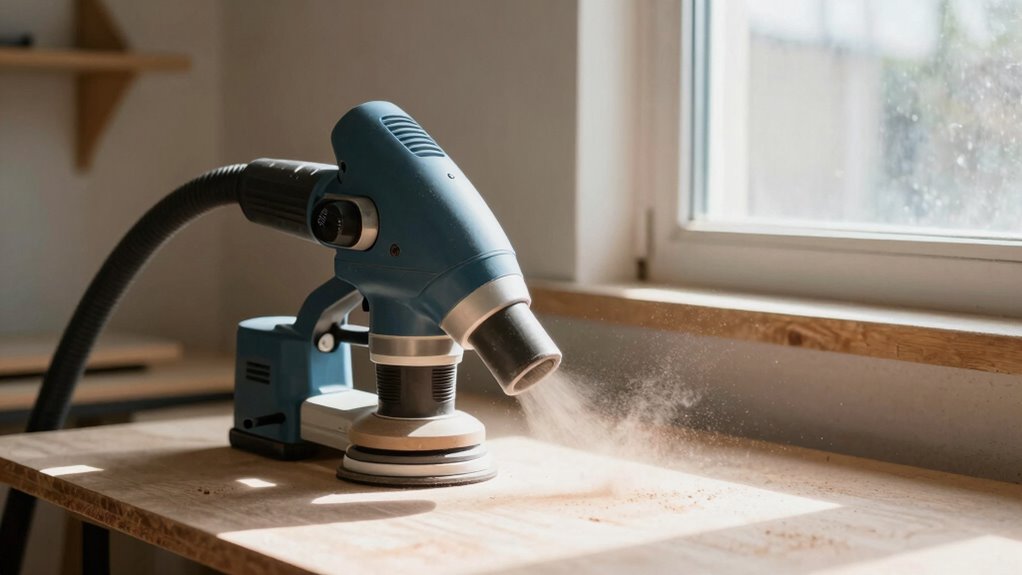
Choosing the right equipment is essential for effectively controlling sanding dust. Air filtration systems, like HEPA vacuums and portable air scrubbers, are highly effective at capturing airborne particles before they spread. Dust extraction attachments on sanders can also considerably reduce dust at the source. When selecting equipment, consider ease of use and compatibility with your workspace. Regular equipment maintenance ensures filters stay clean and functioning at their best, which keeps dust levels down. Properly maintained air filtration devices prevent clogging and maintain airflow, boosting their efficiency. Investing in reliable, well-maintained equipment not only protects your health but also keeps your workspace cleaner. Additionally, understanding free floating dust behavior helps you choose the most effective control methods. By choosing the right tools and maintaining them diligently, you create a safer environment while reducing dust exposure during sanding projects.
air filtration system for workshop
As an affiliate, we earn on qualifying purchases.
As an affiliate, we earn on qualifying purchases.
How to Set Up Effective Dust Extraction Systems
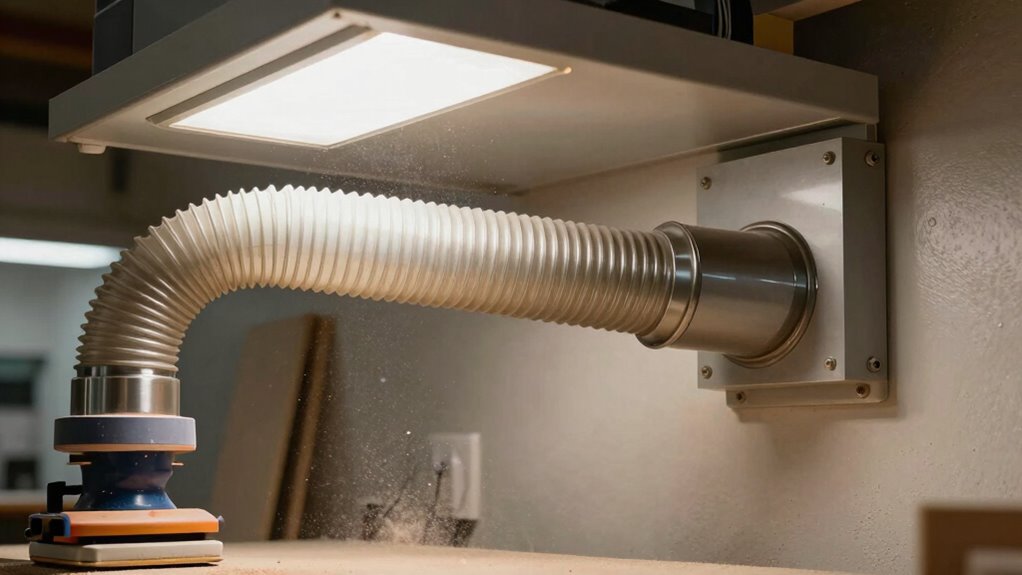
To set up an effective dust extraction system, start by evaluating your workspace and identifying the main sources of dust. Once you know where dust is most concentrated, focus on these critical steps: 1. Make certain your filters are clean and well-maintained to prevent airflow blockages that reduce efficiency. 2. Optimize airflow by adjusting duct sizes and intake locations, making sure dust-laden air moves swiftly to the collector. 3. Regularly check and replace filters as needed to maintain peak performance, reducing dust exposure and protecting your health. Incorporating high-quality and durable Suprem fabric in your workplace furnishings can also help minimize dust accumulation and improve overall air quality.
Using Portable Dust Extractors to Keep Your Area Clean
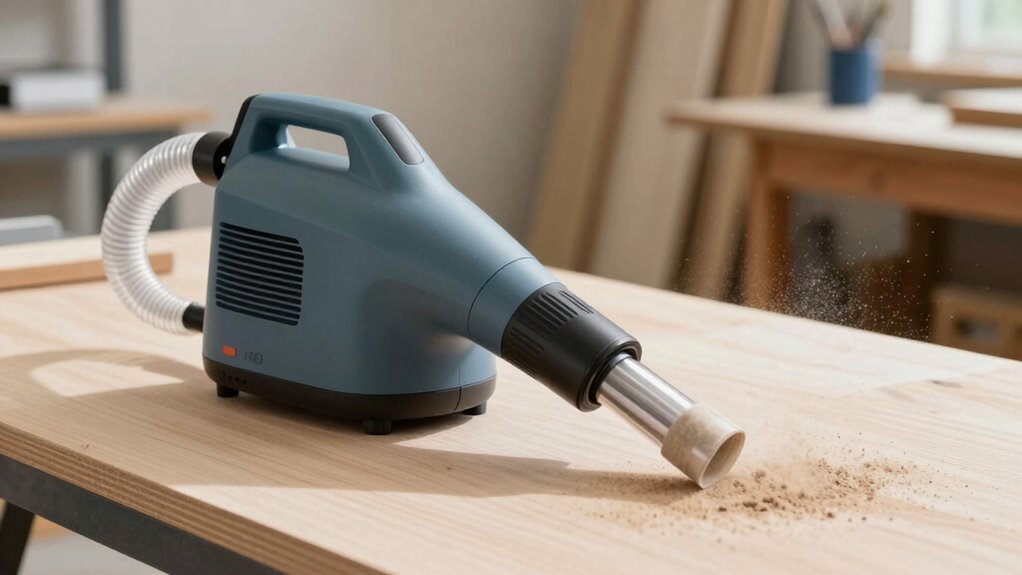
Portable dust extractors are an essential tool for maintaining a clean and safe workspace, especially when working in different areas or on small projects. These units help you quickly clear dust from your work area, preventing buildup that can harm your health and compromise your work quality. By using portable extractors, you improve dust containment, reducing airborne particles and minimizing exposure. They’re easy to move, so you can position them close to your sanding site for maximum efficiency. Regular use of these extractors keeps your workspace tidy and safe, making cleanup faster and more effective. Investing in a quality portable dust extractor is a small upgrade that considerably cuts down dust exposure, protecting your health while maintaining productivity. Effective dust control not only safeguards your well-being but also contributes to better sleep by reducing airborne irritants.
How to Set Up Dust Barriers and Contain Dust
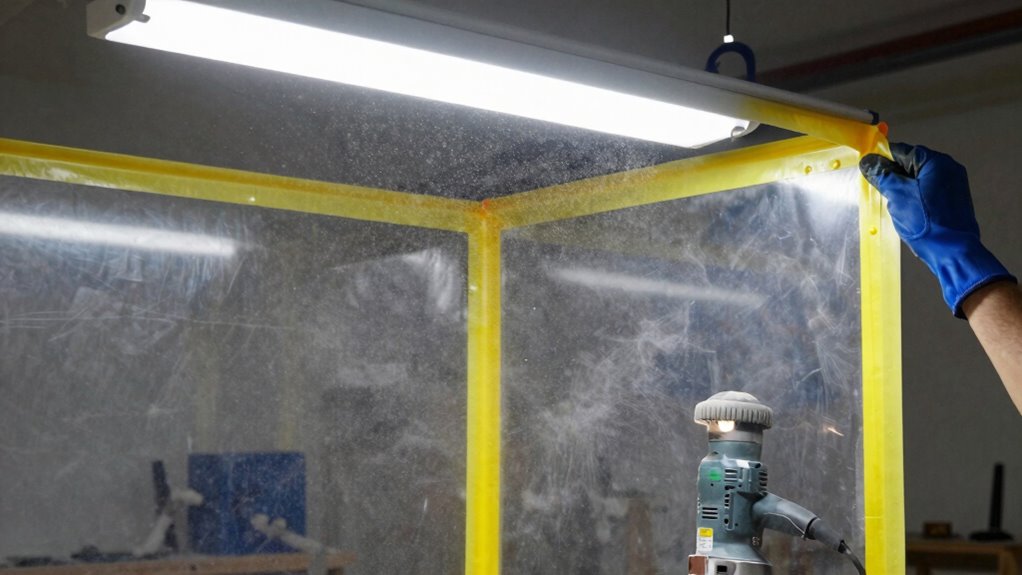
Setting up effective dust barriers is essential for preventing airborne particles from spreading beyond your work area. Proper dust barrier setup and containment strategies protect your health and keep your workspace clean. To maximize effectiveness, focus on these key steps:
- Seal all gaps and openings in your barriers to prevent dust escape.
- Use plastic sheeting or temporary walls to create a physical barrier around your sanding zone.
- Maintain negative pressure with portable exhaust systems to contain dust within the designated area.
Protect Yourself With the Right Dust Masks and Ppe
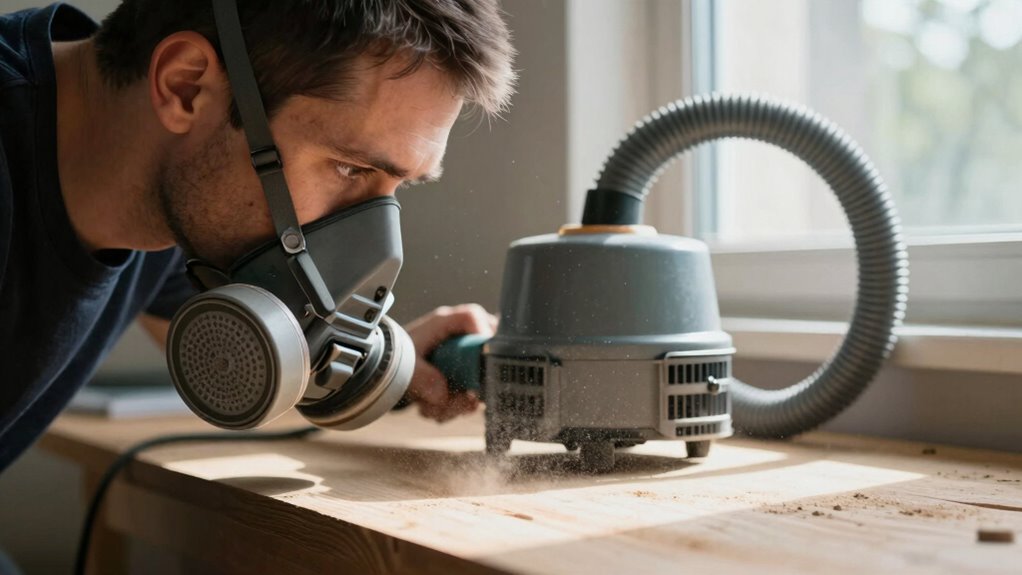
Using the right dust masks and PPE is essential to protect yourself from airborne particles. You need to choose the correct type of mask and verify it fits properly to keep dust out effectively. Additionally, consider other PPE tips to stay safe during sanding projects. For added safety, select vetted dust masks that meet safety standards for optimal protection.
Types of Dust Masks
Are you choosing the right dust mask to protect yourself from harmful sanding dust? The key is understanding the different types of masks available. First, N95 masks meet respirator standards, offering reliable mask filtration for most sanding particles. Second, half-face respirators provide a higher level of protection, especially for prolonged exposure, with replaceable filters. Third, full-face respirators shield your eyes and face, ideal for heavy-duty sanding tasks. Knowing the mask filtration capabilities and respirator standards helps you select equipment that keeps dangerous dust out. Remember, a mask is only as good as its fit and filtration, so choose wisely to stay safe and breathe easy during your projects. Proper air quality considerations and maintenance of your protective gear are essential for effective dust control.
Proper Mask Fit
A proper fit is essential to guarantee your dust mask provides maximum protection. To achieve this, use effective fitting techniques, making certain the mask seals tightly against your face without gaps. Adjust the straps so the mask stays secure but isn’t uncomfortable. Check the seal by inhaling gently; if you feel air escaping, readjust the mask or straps. Consistent mask maintenance is also key—regularly inspect your mask for wear, tears, or dirt that could compromise its fit and filtration. Avoid touching the inside of the mask to prevent contamination. Remember, even the best mask won’t protect you if it doesn’t fit properly. Taking the time to fit your mask correctly ensures you’re breathing cleaner air while sanding and reduces your exposure to harmful dust particles.
Additional PPE Tips
Choosing the right dust mask and personal protective equipment (PPE) is vital to effectively safeguard yourself during sanding. To maximize protection, keep these tips in mind:
- Regularly inspect and maintain your respirator to ensure a proper seal and peak filtration. Replace filters as recommended to prevent dust buildup.
- Store PPE in a clean, dry place to prevent contamination and damage, so it’s ready when you need it.
- Always replace worn or damaged masks immediately—don’t compromise your safety with faulty gear. Proper respirator maintenance and PPE storage are essential for long-lasting protection. By taking these small steps, you’ll reduce dust exposure and protect your health, making sanding safer and more effective.
Managing Dust When Sanding Different Materials
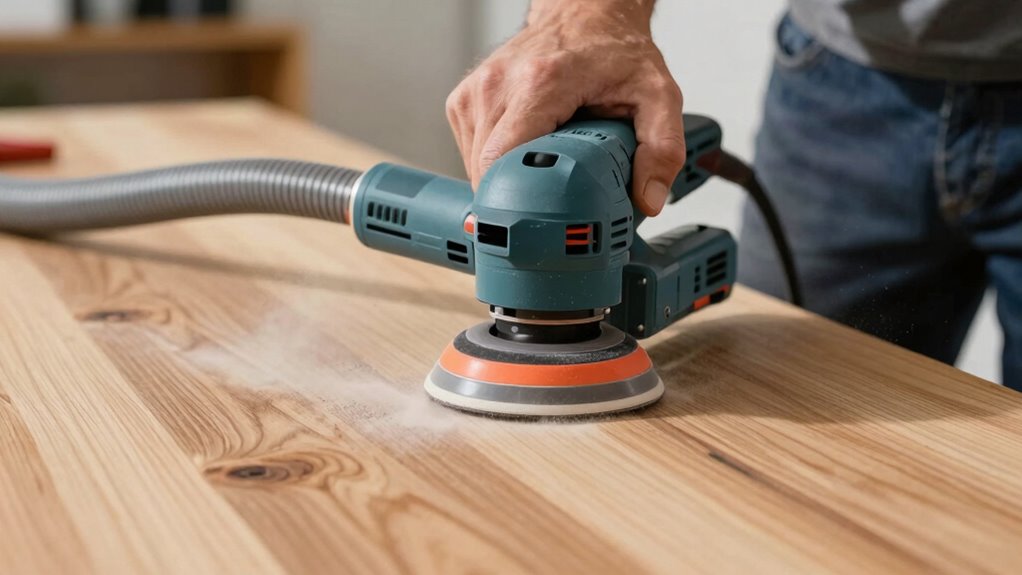
When sanding different materials, managing dust effectively requires tailoring your approach to each surface’s specific properties. Start with proper material preparation to minimize dust creation—clean surfaces and remove debris beforehand. Your sanding techniques should vary: for soft woods, use gentle strokes; for dense materials, apply steady pressure. Adjust your tools and methods based on the material’s hardness and grain. For example, when sanding drywall, use fine-grit sandpaper and keep the dust collection system close. When working with hardwoods, employ dust extraction attachments to capture particles at the source. Recognizing these differences helps you select the right techniques and preparation steps, reducing airborne dust and protecting your health. Properly managing dust per material guarantees safer, cleaner sanding projects.
How to Maintain and Troubleshoot Your Dust Control Equipment
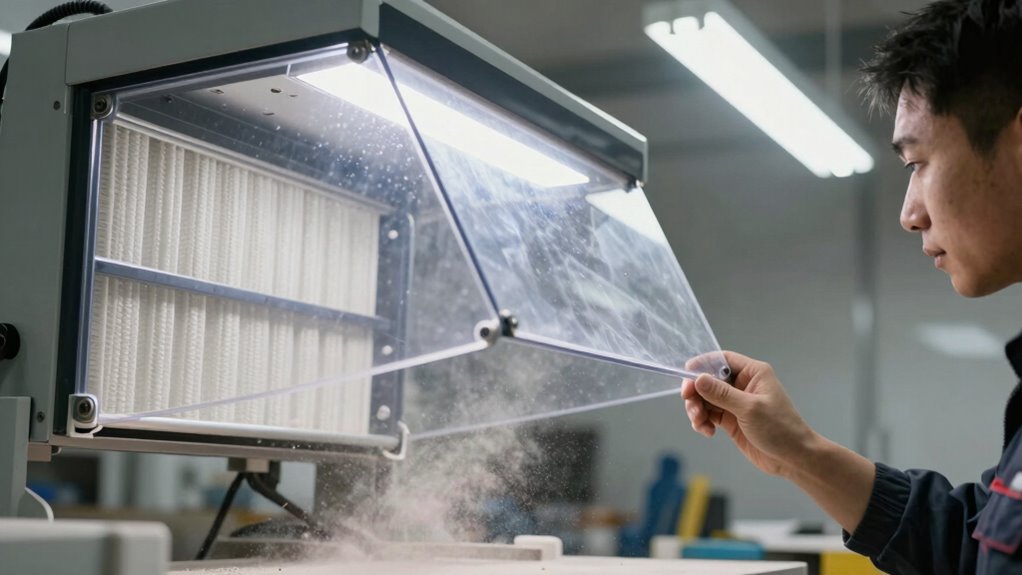
Regular maintenance is essential to keep your dust control equipment functioning effectively and prevent costly breakdowns. When you prioritize filter maintenance, you ensure dust particles don’t bypass the system, reducing health risks and extending equipment life. To troubleshoot airflow issues:
- Check for clogged filters and replace them promptly to restore proper airflow.
- Inspect ductwork for blockages or leaks that could hinder dust extraction.
- Verify that fans and blowers are operating at the correct speed and are free of debris.
Simple Habits to Reduce Dust Spread and Improve Air Quality
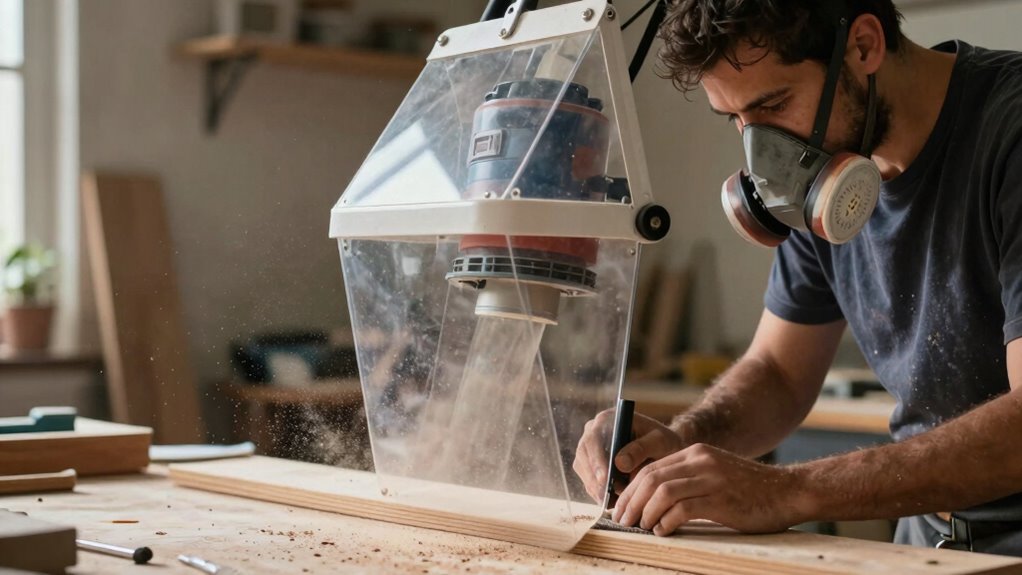
Implementing simple habits can markedly reduce dust spread and enhance air quality in your workspace. Start by always keeping dust control equipment well-maintained to ensure effective dust mitigation. When sanding, use a vacuum attachment or dust extraction system to capture dust at the source. Regularly clean surfaces with a damp cloth to prevent dust buildup, which can become airborne easily. Avoid dry sweeping, as it stirs dust into the air; instead, opt for wet sweeping or vacuuming. Keep doors and windows closed during sanding to contain dust and improve air quality. Wearing proper respiratory protection also helps reduce inhalation of airborne particles. Small, consistent habits like these considerably cut dust spread, creating a safer environment and better air quality for everyone.
Frequently Asked Questions
How Often Should Dust Control Equipment Be Inspected and Serviced?
You should inspect and service your dust control equipment regularly, ideally before each use and at least weekly for ongoing maintenance. Consistent inspection frequency guarantees equipment functions properly, preventing dust exposure. Keep an eye on filters, hoses, and seals, and perform equipment maintenance promptly when issues arise. Regular inspections help extend equipment lifespan and maintain effective dust control, reducing health risks from sanding dust exposure.
What Are the Most Common Mistakes When Setting up Dust Barriers?
When setting up dust barriers, you often make mistakes like inadequate sealing or poor placement, which compromise effectiveness. To avoid this, focus on proper dust barrier installation by ensuring all gaps are sealed tightly. Additionally, invest in worker training so everyone understands the importance of correct setup and maintenance. Doing these things helps cut dust exposure, keeps your workspace safer, and maximizes the efficiency of your dust control measures.
Can DIY Solutions Effectively Reduce Dust Exposure During Sanding?
Yes, DIY solutions can effectively reduce dust exposure during sanding if you implement them correctly. You can use plastic sheeting to seal off work areas, attach vacuum attachments to sanders, and set up makeshift barriers to contain dust. These DIY dust reduction strategies help minimize airborne particles, making your workspace safer. Just guarantee your solutions are secure and properly maintained to maximize their effectiveness and protect your health.
How Can I Measure the Effectiveness of My Dust Control Efforts?
You can measure your dust control efforts by using air quality monitoring devices to track airborne dust levels in your workspace. Personal dust exposure monitors are also helpful, as they provide real-time data on what you’re breathing in during sanding. Regularly checking these readings allows you to see if your dust control measures are effective or need adjustments, ensuring a safer environment.
Are There Specific Regulations or Standards for Sanding Dust Management?
You should know that specific regulations and standards for sanding dust management do exist to guarantee safety and regulatory compliance. Agencies like OSHA set permissible exposure limits and recommend best practices, including proper ventilation and dust extraction systems. While standards vary by region, following these guidelines helps protect your health and keeps you compliant. Always stay updated on local regulations and industry safety standards to effectively manage sanding dust.
Conclusion
Just like Icarus kept his wings close, you must stay vigilant with dust control. Small upgrades can make a big difference in protecting your health and workspace. By evaluating hotspots, using the right equipment, and adopting simple habits, you shield yourself from unseen hazards. Remember, avoiding dust isn’t just a matter of comfort — it’s your wings against long-term damage. Stay proactive, and let safety be your guiding star.
Fall Picks
fall essentials
As an affiliate, we earn on qualifying purchases.