
This checklist is for DIY woodworkers planning dust collection for a home shop, whether you are setting up a system or reviewing what you already use. It covers the main equipment categories and notes where a named pick is included.

Get business pricing on tools and workshop supplies
- Business-only prices and quantity discounts
- Tax-exempt purchasing
- Multiple users, one account, clear invoices
The sections follow the dust collection setup: collector, room air filtration, separator, vacuum, hoses, and vacuum dust bags. Some slots offer advice only; others name a specific product to consider.
Use each section to check your shop’s tools, connections, and cleanup routine. Confirm fit and compatibility with the equipment you own before buying, and treat the look-for points as a practical checklist rather than a substitute for manufacturer specifications.
Dust Collector
A dust collector is the central system choice for many woodworking shops, so start by listing the machines you want to connect and how you expect to route dust away from them. A collector that does not suit your shop layout or tool connections can be awkward to use, even if it appears capable on paper.
A common mistake is choosing equipment before checking the dust ports and hose paths on the tools. Measure the connection openings, note which tools may run at the same time, and plan where ducting or hoses need to travel. Check the collector maker’s stated compatibility and requirements against that list instead of assuming that a connector will fit.
Think through where the collector will sit and how you will access its collection container for routine emptying. Leave room for the connections and service access described by the manufacturer. This checklist has no named collector pick, so compare options against your actual tools, available space, and intended setup before settling on one.
What to look for:
- List the tools the collector needs to serve
- Measure tool ports and planned connection sizes
- Check manufacturer compatibility information
- Plan hose or duct routing through the shop
- Allow access to the collection container
Shop Air Filtration Unit
A shop air filtration unit is a room-level consideration in a dust collection checklist. The named pick is the DeWalt Air Filtration System Dust Collector for Woodworking DWXAF101. Consider how a unit will fit into your shop routine and where you can place it according to its instructions.
A common buying mistake is treating air filtration as a replacement for connecting dust-producing tools to collection equipment. Keep the roles of each device clear as you plan: review the product’s stated use and compare it with the tasks and layout in your shop. Do not assume that a model’s name alone establishes its coverage, capacity, or suitability for a particular room.
Before buying, check the manufacturer’s installation guidance, dimensions, and operating requirements. Consider whether the planned location leaves room for mounting or placement and whether the controls and maintenance points will remain accessible. Confirm those details for the DWXAF101 and your shop rather than relying on a generic fit assumption.
What to look for:
- Read the product’s stated intended use
- Check unit dimensions and installation instructions
- Plan an accessible placement in the shop
- Review operating and maintenance requirements
- Compare the guidance with your room layout
DeWalt Air Filtration System Dust Collector for Woodworking DWXAF101

The DeWalt DWXAF101 is a 2-stage air filtration dust collector designed for woodworking workshops. It features a HEPA filter, multiple operating modes, a built-in timer, and easy ceiling mounting for space efficiency, ensuring cleaner air and easy maintenance.
Pros:
- Effective 2-stage filtration capturing over 95% of small particles
- Space-saving ceiling mount design
- Multiple modes and timer settings for customizable operation
- Easy maintenance with washable filters and indicator
Cons:
- May be more expensive than basic dust collectors
- Requires ceiling mounting space and setup
- Specific to woodworking dust, limited versatility
Best for: Woodworkers considering a named shop air filtration unit
Not ideal for: Buyers who have not checked placement requirements
Bottom line: Review the DWXAF101’s instructions and fit for your shop before deciding.
Dust Separator
A dust separator can be part of a dust collection workflow, and this checklist names the Festool CT CYCLONE Dust Separator CT-VA-20. Before choosing it, identify the equipment you plan to connect and check the product documentation for the intended connections and use.
A common mistake is assuming that a separator will connect directly to every vacuum or collection system. Compare the connection sizes and compatibility stated by the manufacturer with your existing equipment. Check what components are needed for your arrangement and avoid relying on the product name to answer fit questions.
Also consider where the separator will sit in your setup and whether you can reach the parts that need attention during use. Read the CT-VA-20’s instructions for its configuration and maintenance, then compare that information with your available space and routine. These checks help you assess the named pick against your own equipment rather than assuming it suits every shop.
What to look for:
- Confirm intended equipment and use
- Compare stated connections with your vacuum or system
- Check whether additional components are required
- Plan placement within the collection setup
- Review configuration and maintenance instructions
Festool CT CYCLONE Dust Separator CT-VA-20
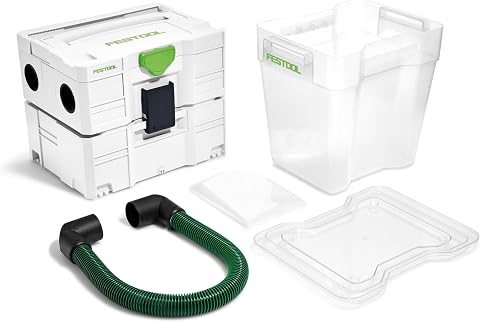
The Festool CT CYCLONE Dust Separator enhances dust extraction efficiency by pre-separating large debris and coarse dust before reaching the main filter. Compact and portable, it fits seamlessly into the Festool Systainer system and is compatible with all CT dust extractors, reducing filter and bag replacements while maintaining high suction power.
Pros:
- Increases dust extraction efficiency and reduces filter/bag replacements
- Compact, lightweight, and easy to transport
- Compatible with all CT dust extractors and fits in Festool Systainer system
- Meets OSHA Table 1 compliance when used with certified extractors
Cons:
- Requires compatible HEPA-certified dust extractor for OSHA compliance
- May be less effective with very fine dust without proper filtration
Best for: Woodworkers evaluating a named dust separator
Not ideal for: Setups with unverified connections
Bottom line: Confirm the CT-VA-20 matches your equipment and planned arrangement.
Shop Vacuum
A shop vacuum can support portable cleanup and collection tasks in a woodworking space. This checklist has no named vacuum pick, so begin with the tools and jobs you expect it to handle, then compare those needs with each manufacturer’s specifications.
A common mistake is choosing a vacuum without checking how its inlet and accessories connect to the tools on hand. Measure or identify the tool and hose connections, and confirm compatibility rather than assuming similar-looking parts will fit. Review the maker’s stated intended use and operating guidance for the kinds of tasks you have in mind.
Consider where you will store and use the vacuum, how its collection container is accessed, and what maintenance the manufacturer specifies. If you plan to pair it with a separator or dust bags, verify that combination against the relevant product instructions. A little planning around connections and upkeep can make the chosen vacuum easier to integrate into your shop.
What to look for:
- List intended cleanup and tool-connection tasks
- Check inlet and accessory compatibility
- Review stated use and operating guidance
- Consider storage and container access
- Confirm pairing guidance for separators or bags
Dust Collection Hoses
This section’s named pick is the 25 Ft. Urethane Dust Collection Vacuum Hose with 4-inch Diameter. Hose choice matters because the connection needs to suit both the equipment and the route through your shop. Check the listed diameter against the ports or adapters in your planned setup.
A common mistake is focusing on hose length while overlooking the connection ends and routing. The named product specifies 25 feet and a 4-inch diameter; verify that those dimensions work with your collector, tools, and available path. Check the maker’s details for end fittings and compatibility rather than assuming that the diameter alone guarantees a direct fit.
Map the route before buying: account for where the hose needs to reach and whether its path will interfere with normal shop use. Review any product guidance on handling and use. If your tools have different port sizes, identify the adapters required and confirm them separately. These checks help determine whether this hose suits your specific layout.
What to look for:
- Confirm the 4-inch diameter suits your ports
- Check the listed 25-foot length against your route
- Verify end fittings and adapter needs
- Review compatibility with tools and collector
- Plan a hose path that works in your shop
25 Ft. Urethane Dust Collection Vacuum Hose with 4" Diameter

This 25-foot urethane vacuum hose features a 4-inch diameter, offering superior puncture and abrasion resistance. Suitable for dust collection, cold air supply, vapor recovery, and woodworking applications, it performs well in various temperature environments.
Pros:
- High puncture and abrasion resistance
- Suitable for multiple industrial applications
- Made in the USA
Cons:
- Specific to 4-inch diameter hoses, limited size options
- No detailed price information
- No customer ratings provided
Best for: Setups that match the listed hose dimensions
Not ideal for: Tools with incompatible ports or routing needs
Bottom line: Check the hose diameter, length, and end fittings against your actual setup.
Vacuum Dust Bags
The listed pick is the Shop-Vac 12 Gallon 6.0 Peak HP Stainless Steel Wet/Dry Vacuum, Heavy D. Since this section concerns vacuum dust bags, first confirm exactly what the product listing identifies and whether it is the bag or a vacuum intended to use one. The supplied name alone does not establish bag compatibility.
A common mistake is buying bags by vacuum size or brand name without checking the model and bag fit. Find the vacuum model you own and consult its manufacturer guidance for compatible bags, if applicable. Compare the bag’s stated dimensions and attachment details with that guidance before ordering, especially when a listing title is abbreviated.
If you are considering the named Shop-Vac product, verify the complete model information and the bag requirements in its documentation. Check how bags are installed and whether the instructions cover your intended use. The key is confirming the specific vacuum-to-bag match, not assuming that a 12-gallon label or a shared brand name is enough to establish compatibility.
What to look for:
- Confirm the complete product and model identification
- Check manufacturer guidance for compatible bags
- Match bag dimensions and attachment details
- Verify fit with the exact vacuum model
- Review installation and use instructions
Shop-Vac 12 Gallon 6.0 Peak HP Stainless Steel Wet/Dry Vacuum, Heavy Duty
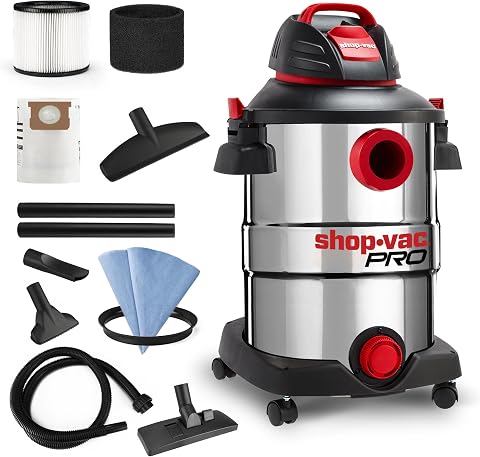
This heavy-duty Shop-Vac features a 12-gallon stainless steel tank and a powerful 6.0 HP motor, suitable for large cleaning jobs. It offers versatile wet and dry suction, blowing functions, and includes multiple attachments for various cleaning tasks.
Pros:
- Powerful 6.0 HP motor for heavy-duty cleaning
- Versatile 3-in-1 wet/dry suction and blower functions
- Large 12-gallon stainless steel tank for extended use
- Includes comprehensive accessories for various cleaning needs
Cons:
- Relatively heavy at 10.8 kg, may be cumbersome to move
- Noise level of 80 dB could be loud during operation
Best for: Owners checking bag fit for a specific vacuum
Not ideal for: Buyers relying only on gallon size or brand
Bottom line: Verify the complete model and its specified bag compatibility before purchasing.
Use a budget-first buying order by starting with the equipment you already own: list tool ports, identify needed connections, and map the shop layout. Then prioritize the pieces that address your immediate setup needs, checking each manufacturer’s compatibility and maintenance information before adding accessories.
Work through the checklist one slot at a time and keep a note of measurements and model details as you go. With careful fit checks and a clear plan for your tools, you can build a dust collection setup that makes sense for your woodworking space.
Halloween Picks
halloween
As an affiliate, we earn on qualifying purchases.