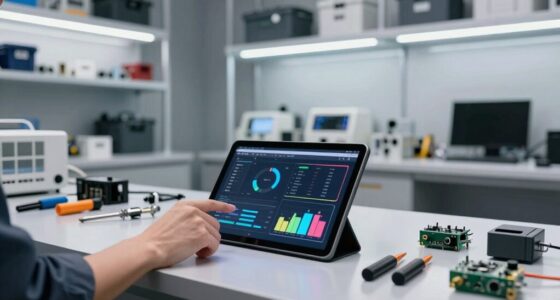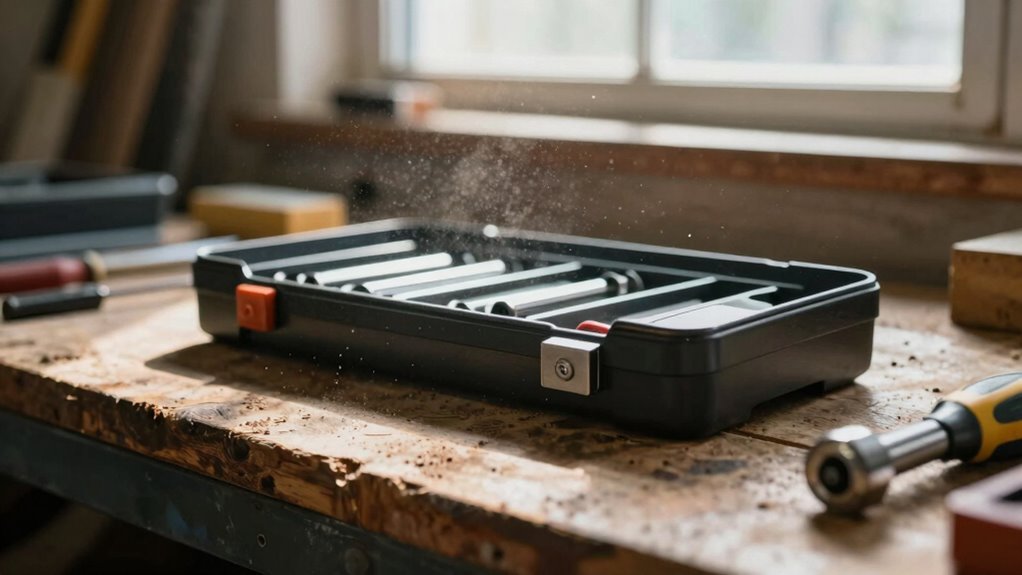

Fine dust considerably impacts how you evaluate every tool purchase because it poses serious health risks and affects air quality. You realize that dust control features, like built-in filters or vacuum attachments, become just as important as performance. Prioritizing tools with effective dust extraction helps protect your lungs and workspace cleanliness. By considering dust emissions, you make smarter choices for long-term health and safety—discover how these factors influence your tool selections in the details ahead.

Get business pricing on tools and workshop supplies
- Business-only prices and quantity discounts
- Tax-exempt purchasing
- Multiple users, one account, clear invoices
Key Takeaways
- Fine dust exposure impacts health, prompting consumers to prioritize tools with dust control features.
- Dust emissions influence workspace safety, leading to preference for tools with integrated extraction systems.
- Awareness of long-term health risks encourages selection of eco-friendly, low-dust tools.
- Improved ventilation and filtration become essential considerations alongside tool performance.
- Responsible purchasing now emphasizes dust reduction to promote safety, cleanliness, and environmental sustainability.
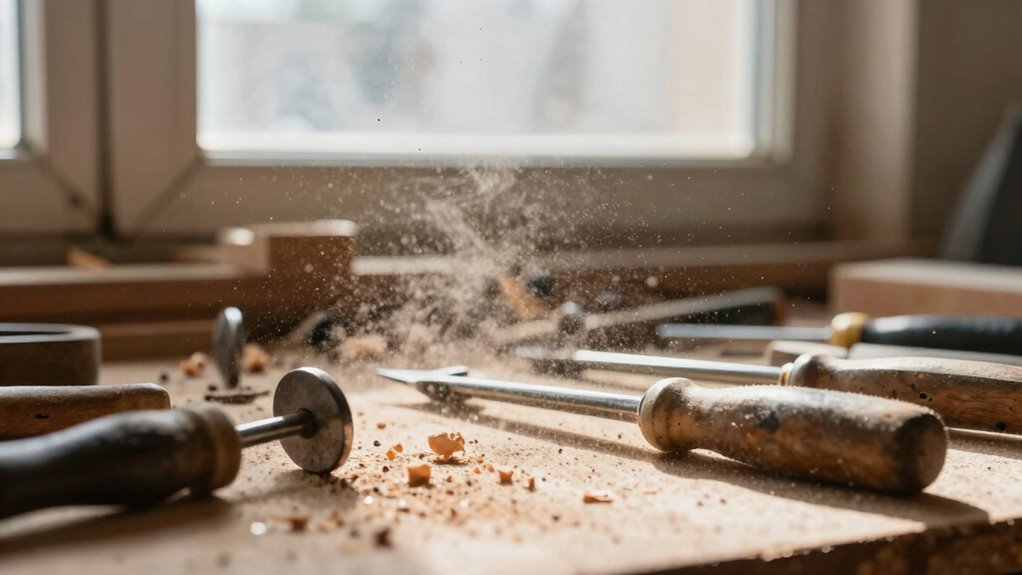
Have you ever considered how the rising presence of fine dust influences your decisions when buying tools? It might seem unrelated at first, but the quality of the air you breathe plays a vital role in how you evaluate every purchase. Fine dust particles, tiny as they are, can considerably impact air quality, especially when you’re working with tools that generate dust or debris. As awareness of environmental and health issues grows, you start to realize that the tools you choose aren’t just about performance or price—they’re also about how they affect your health and the air you breathe daily.
When you think about the health impact of fine dust, it’s impossible to ignore the long-term consequences. Fine dust particles can penetrate deep into your lungs, leading to respiratory problems, allergies, and even cardiovascular issues over time. This knowledge influences your buying decisions because you’re no longer just considering how well a tool works; you’re also factoring in how the dust it produces might harm your health or worsen air quality in your workspace. You might look for tools equipped with dust extraction systems or filters that minimize airborne particles, making your environment safer and cleaner.
This shift in perspective means you’re more attentive to product features that prioritize air quality. Instead of focusing solely on speed or power, you now prioritize tools that reduce dust emissions. This could mean opting for vacuum attachments, integrated dust collection systems, or tools with built-in filters. You realize that investing in these features isn’t just about convenience—it’s about protecting your health and maintaining a cleaner, safer workspace. After all, prolonged exposure to fine dust can cause chronic health issues, so making thoughtful choices becomes essential for your well-being.
Moreover, understanding the connection between air quality and health impacts pushes you to think about the environment you create around your workspace. You might invest in better ventilation systems or air purifiers to further reduce dust and improve air quality. These considerations lead to more responsible purchasing habits because you’re not only concerned with immediate results but also with long-term health and environmental sustainability. This awareness encourages you to seek tools that produce less dust overall, aligning your purchases with a commitment to healthier living and working conditions.
Additionally, recognizing the importance of air quality makes you more aware of airborne particles and their effects, prompting you to prioritize tools with features that address these concerns. These considerations lead to more responsible purchasing habits because you’re not only concerned with immediate results but also with long-term health and environmental sustainability. You might also start to consider dust control technology as a critical factor when evaluating tools, ensuring that your workspace remains safer and healthier. Furthermore, understanding Biodiversity preservation can motivate you to choose eco-friendly tools that minimize environmental impact. Being aware of air pollutant sources helps you identify and select tools that are designed to emit fewer harmful emissions, further aligning your choices with a sustainable mindset.
Furthermore, developing an awareness of air quality can influence your overall approach to workspace design, encouraging the integration of ventilation and filtration solutions. In all, the presence of fine dust reshapes your approach to buying tools. It’s no longer just about efficiency or cost but about the broader implications for your health and the air quality of your workspace. Recognizing the health impact of fine dust makes you a more conscious consumer, one who values safety, cleanliness, and well-being just as much as performance.
dust extraction vacuum for power tools
As an affiliate, we earn on qualifying purchases.
As an affiliate, we earn on qualifying purchases.
Frequently Asked Questions
How Does Fine Dust Affect Long-Term Tool Durability?
Fine dust accelerates wear on your tools by causing dust accumulation in moving parts and mechanisms. This buildup can lead to overheating, corrosion, and decreased efficiency over time. To prevent this, you need to perform regular filter maintenance, ensuring dust is effectively removed and airflow stays unobstructed. By doing so, you extend your tools’ durability, maintain performance, and avoid costly repairs caused by fine dust-related damage.
Are There Specific Tools More Vulnerable to Fine Dust Damage?
Like Sherlock Holmes scrutinizing clues, you’ll find that tools with exposed motors or delicate electronics are more vulnerable to fine dust damage. These tools benefit from advanced air filtration systems and dust-resistant coatings, which act like a shield against tiny particles. Regular maintenance and selecting tools designed with dust protection in mind help preserve their longevity. Prioritizing these features ensures your investments stand the test of time amid dust’s silent assault.
How Can I Effectively Measure Fine Dust Levels at My Workspace?
To effectively measure fine dust levels at your workspace, you should use air quality monitoring devices designed for fine particulate detection. These tools provide real-time data on dust concentrations, helping you assess safety. Additionally, investing in dust filtration systems can reduce dust levels, protecting your tools and health. Regularly monitor air quality, and guarantee your filtration systems are maintained to keep dust levels within safe limits.
What Safety Gear Best Protects Against Fine Dust Exposure?
You should wear protective masks with respirator filters specifically designed for fine dust. Look for masks rated N95 or higher, as they efficiently filter out tiny particles. Make certain the respirator fits snugly to prevent leaks and provides adequate coverage. Regularly replace filters according to manufacturer instructions to maintain protection. This gear considerably reduces your inhalation of harmful dust, safeguarding your respiratory health during tool use.
Does Fine Dust Influence the Resale Value of Tools?
Yes, fine dust can influence a tool’s resale value. You’ll find that tools with better dust mitigation features and cleaner tool maintenance are more attractive to buyers. When you maintain your tools properly and include filters or dust collection systems, it shows you’ve prioritized performance and longevity. Tools kept free of dust build-up tend to retain value better, making them easier to sell and often fetching higher prices in the resale market.
As an affiliate, we earn on qualifying purchases.
Conclusion
So, next time you’re eyeing that shiny new tool, remember how fine dust has subtly turned your shopping habits upside down. Who knew that tiny particles could wield so much power over your purchasing decisions? Perhaps it’s time to thank the universe for reminding you to think twice—about dust and about your wallet. After all, in the grand scheme of things, a little fine dust might just be the most influential tool advisor you’ll ever meet.
dust collection system for woodworking
As an affiliate, we earn on qualifying purchases.
As an affiliate, we earn on qualifying purchases.
tools with built-in dust filters
As an affiliate, we earn on qualifying purchases.
As an affiliate, we earn on qualifying purchases.
Fall yard work Picks
leaf blowers
As an affiliate, we earn on qualifying purchases.