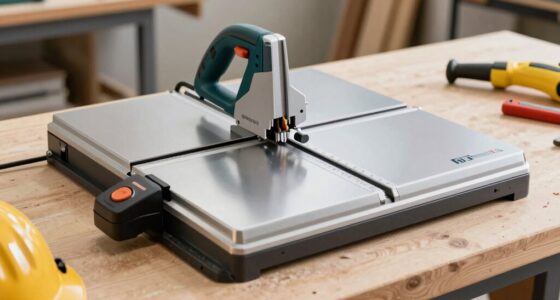
For most woodworkers, I’d start with the DEWALT DW788 as the best overall pick for its 20-inch capacity and variable-speed control. The WEN LL2156 stands out for buyers who want a larger 21-inch throat, while the SKIL SS9503-00 offers a more approachable 16-inch option with an LED work light. Choosing among woodworking scroll saws means weighing throat capacity and cut control against footprint, blade-changing convenience, and the features you’ll actually use. Larger saws can handle broader workpieces, but they take more bench space; smaller models are easier to place but limit reach. Read on for the full breakdown and advice on matching a saw to your projects.

Get business pricing on tools and workshop supplies
- Business-only prices and quantity discounts
- Tax-exempt purchasing
- Multiple users, one account, clear invoices
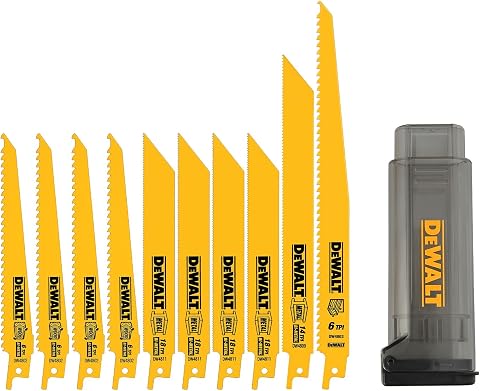
Complete the kit


Key Takeaways
- The DW788 leads for all-around capability: its 20-inch throat and variable speed offer a strong balance for intricate work and larger panels, while the 22-inch JET and BUCKTOOL models suit buyers who prioritize reach.
- Throat size is a practical constraint, not a quality score: the 16-inch WEN, SKIL, RYOBI, Garvee, and Shop Fox options can make more sense for smaller shops and typical fretwork.
- Blade handling separates convenient setups from basic ones: two-direction blade support on the WEN 3921 and the blade-access approach of the WEN 3922 can matter more during interior cuts than small differences in motor power.
- Work visibility and control are recurring strengths: several models add lights, variable speed, or foot switches, but buyers should match these features to their workflow rather than treating every add-on as equally useful.
- Longer-throat saws bring a footprint tradeoff: the 21- and 22-inch models offer more reach, while 16-inch saws are easier to fit into compact work areas and may be sufficient for most decorative projects.
| Garvee 16-Inch Variable-Speed Scroll Saw with LED Light and Dust Port |  | Best Compact Pick | Power source: Corded electric | Speed range: 500–1,600 SPM | Worktable tilt: 0–45° left | VIEW LATEST PRICE | See Our Full Breakdown |
| BUCKTOOL 22-Inch Variable-Speed Scroll Saw |  | Best for Large-Table Projects | Motor: 1/5 HP, 1.3 A | Power source: Corded electric, 120 V | Speed range: 360–1,550 RPM | VIEW LATEST PRICE | See Our Full Breakdown |
| WEN LL2156 21-Inch Variable-Speed Parallel-Arm Scroll Saw |  | Best for Two-Way Bevel Cuts | Model: LL2156 | Motor: 1.6 A, 192 W | Speed range: 550–1,600 strokes per minute | VIEW LATEST PRICE | See Our Full Breakdown |
| Shop Fox W1872 16-Inch Variable-Speed Scroll Saw with Foot Switch |  | Best for Hands-Free Speed Control | Motor: 1/6 HP, 120 V, 0.6 A | Blade speed: 550–1,600 SPM | Maximum cutting width: 16 in | VIEW LATEST PRICE | See Our Full Breakdown |
| Delta Power Tools 40-694 20″ Variable Speed Scroll Saw |  | Best Heavy-Duty Shop Platform | Motor: 1.3 A | Speed range: 400–1,750 SPM | Cutting capacity at 90°: 2⅛ in | VIEW LATEST PRICE | See Our Full Breakdown |
| DEWALT 18″ Scroll Saw with 1.6 Amp Motor, Variable Speed 500–1500 SPM, Die-Cast Aluminum Table and Front Bevel Scale |  | Best for Larger Detailed Work | Power source: Corded electric | Motor: 1.6 A | Speed: 500–1,500 SPM | VIEW LATEST PRICE | See Our Full Breakdown |
| JET 22-Inch Variable-Speed Scroll Saw with Foot Switch (JWSS-22B) |  | Best for Maximum Capacity and Hands-Free Control | Power source: Corded electric | Speed range: 400–1,550 SPM | Throat capacity: 22 in | VIEW LATEST PRICE | See Our Full Breakdown |
| WEN 16-Inch Variable-Speed Two-Direction Scroll Saw with Work Light (3921) |  | Best Value for Flexible Blade Setup | Power source: Corded electric | Speed: 400–1,600 SPM | Throat depth: 16 in | VIEW LATEST PRICE | See Our Full Breakdown |
| SKIL 1.2 Amp 16-Inch Variable Speed Scroll Saw with LED Work Light (SS9503-00) |  | Best for Visibility and Convenient Setup | Power source: Corded electric | Motor: 1.2 A | Wattage: 144 W | VIEW LATEST PRICE | See Our Full Breakdown |
| RYOBI SC165VS 16-Inch Corded Scroll Saw, 1.2 Amp |  | Best for Straightforward Woodworking Basics | Power source: Corded electric | Voltage: 120 V | Wattage: 144 W | VIEW LATEST PRICE | See Our Full Breakdown |
| PioneerWorks Variable Speed Scroll Saw 16-Inch With Extra-Large Adjustable Tilting Work Table for Woodworking |  | Best for a Roomy Work Surface | Blade length: 16 inches | Speed range: 400–1,600 strokes per minute | Maximum table tilt: 45 degrees | VIEW LATEST PRICE | See Our Full Breakdown |
| WEN 3922 16-Inch Variable Speed Scroll Saw |  | Best Value for Straightforward Shop Use | Throat depth: 16 inches | Speed range: 550–1,600 strokes per minute | Stroke length: 9/16 inch | VIEW LATEST PRICE | See Our Full Breakdown |
| WEN 16-Inch Variable Speed Scroll Saw with Work Light (3923) |  | Best for Beginners | Throat depth: 16 inches | Speed range: 550–1,600 strokes per minute | Stroke length: 9/16 inch | VIEW LATEST PRICE | See Our Full Breakdown |
| DEWALT DW788 20-Inch Variable-Speed Scroll Saw |  | Best Overall for Serious Detail Work | Throat depth: 20 inches | Motor: 1.3 A | Speed range: 400–1,750 strokes per minute | VIEW LATEST PRICE | See Our Full Breakdown |
| JET 18-Inch Variable-Speed Scroll Saw (JWSS-18B) |  | Best for Fast Blade Changes | Throat capacity: 18 inches | Speed range: 400–1,550 strokes per minute | Voltage: 120 V | VIEW LATEST PRICE | See Our Full Breakdown |
| woodworking scroll saw | Speed range | Weight | Warranty | Power source |
|---|---|---|---|---|
| Garvee 16-Inch Variable-Speed | 500–1,600 SPM | 26.8 lb | — | Corded electric |
| BUCKTOOL 22-Inch Variable-Spee | 360–1,550 RPM | — | — | Corded electric, 120 V |
| WEN LL2156 21-Inch Variable-Sp | 550–1,600 strokes per minute | — | — | — |
| Shop Fox W1872 16-Inch Variabl | — | — | — | — |
| Delta Power Tools 40-694 20" V | 400–1,750 SPM | — | — | — |
| DEWALT 18" Scroll Saw with 1.6 | — | 34.2 lb | 3-year limited | Corded electric |
| JET 22-Inch Variable-Speed Scr | 400–1,550 SPM | 68.2 lb | 5 years; 2 years for commercial or industrial use | Corded electric |
| WEN 16-Inch Variable-Speed Two | — | 25.5 lb | 2 years | Corded electric |
| SKIL 1.2 Amp 16-Inch Variable | — | 24.7 lb | 3-year limited | Corded electric |
| RYOBI SC165VS 16-Inch Corded S | — | 27 lb | 30-day limited | Corded electric |
| PioneerWorks Variable Speed Sc | 400–1,600 strokes per minute | — | — | Corded electric |
| WEN 3922 16-Inch Variable Spee | 550–1,600 strokes per minute | 24.9 pounds | Two years | — |
| WEN 16-Inch Variable Speed Scr | 550–1,600 strokes per minute | — | Two years | — |
| DEWALT DW788 20-Inch Variable- | 400–1,750 strokes per minute | 56 pounds | Three-year limited | — |
| JET 18-Inch Variable-Speed Scr | 400–1,550 strokes per minute | 54 pounds | Five years; two years for commercial use | — |
More Details on Our Top Picks
Garvee 16-Inch Variable-Speed Scroll Saw with LED Light and Dust Port
I’d choose the Garvee when a smaller, lighter saw matters more than a broad cutting capacity. At 26.8 pounds with a 16-inch throat, it is easier to place in a modest craft space than the 53.8-pound WEN LL2156 or the 70-pound Delta 40-694. Its 500–1,600 SPM speed range gives buyers room to adjust for different cutting tasks, while the table tilts left up to 45 degrees for bevel work. The dust port can connect to a vacuum, a useful way to manage debris during detailed cuts. The tradeoff is a left-only table tilt, so it is less flexible for bevel setups than the WEN LL2156, which tilts in both directions. I’d also look elsewhere if deeper capacity is a priority; the supplied data does not state a maximum cutting thickness.
Pros:- 500–1,600 SPM speed range accommodates different cutting tasks.
- Table tilts up to 45 degrees for left-side bevel cuts.
- Dust port can connect to a shop vacuum.
- At 26.8 pounds, it is lighter than the WEN LL2156 and Delta 40-694.
Cons:- Table tilts left only, limiting bevel setup flexibility.
- Maximum cutting thickness is not specified in the supplied product data.
Best for: Woodworkers and craft makers with a compact workspace who want variable speed, vacuum connection, and left-side bevel cuts for detail projects.
Not ideal for: Buyers who need bevels in both directions, a stated thick-stock capacity, or a saw with a worktable specified for larger panels.
- Power source:Corded electric
- Speed range:500–1,600 SPM
- Worktable tilt:0–45° left
- Dimensions:24.02 × 12.6 × 9.84 in
- Weight:26.8 lb
- Blade material:Stainless steel
- Included components:Scroll saw
Our verdict“I’d pick the Garvee for detailed work in a space-conscious shop, but choose a two-direction bevel model if angled cuts are a regular part of your projects.”
BUCKTOOL 22-Inch Variable-Speed Scroll Saw
The BUCKTOOL earns its place for buyers who want more table support and a 22-inch throat for larger woodworking pieces. Its 27 × 13-inch worktable is more expansive than the Garvee’s compact 16-inch format, and the arm bevels 30 degrees left and 45 degrees right. That asymmetry matters: the saw can handle angled work in either direction, but the available range depends on which way the cut is set up. The liftable arm also helps with blade changes and interior cuts, while the adjustable blower and dust port help keep the line visible. Compared with the WEN LL2156, it has a wider stated throat but lacks a listed cutting-thickness capacity. Its 5-inch blade limit and large overall dimensions make workspace planning part of the buying decision.
Pros:- 22-inch throat and 27 × 13-inch worktable support larger projects.
- Arm bevels up to 30° left and 45° right.
- Liftable arm aids blade changes and interior-cut setup.
- Adjustable dust blower and 1½-inch dust port support clearer work.
Cons:- Accepts 5-inch blades only.
- Large overall dimensions may be difficult to accommodate in a compact shop.
- Maximum cutting thickness is not stated in the supplied product data.
Best for: Woodworkers cutting larger patterns who need a broad work surface, right-and-left bevel capability, and easier access for interior cuts.
Not ideal for: Small-shop owners who lack room for a 36.9-inch-long machine, or buyers who need a documented cutting depth or blade lengths beyond 5 inches.
- Motor:1/5 HP, 1.3 A
- Power source:Corded electric, 120 V
- Speed range:360–1,550 RPM
- Worktable size:27 × 13 in
- Bevel range:30° left, 45° right
- Blade length:5 in
- Blade compatibility:10, 20, 25 TPI and 43, 47 TPI spiral blades
- Dust management:Adjustable dust blower and 1½-inch dust port
Our verdict“I’d choose the BUCKTOOL for larger patterns and two-direction bevel work, provided its footprint and 5-inch blade limit suit your shop.”
WEN LL2156 21-Inch Variable-Speed Parallel-Arm Scroll Saw
I’d rank the WEN LL2156 highly for projects where bevel flexibility and controlled interior cuts matter more than portability. Its steel table tilts 45 degrees left and 30 degrees right, giving it more direction flexibility than the Garvee, whose table tilts left only. The lift-and-lock upper arm and tool-free blade access reduce friction when a design calls for repeated interior cuts, and the air pump and dust port help clear the cutting area. It also states a 2-inch maximum cutting thickness, making its capacity easier to judge than the BUCKTOOL’s, whose supplied data omits that figure. The main compromise is bulk: at 53.8 pounds, this is a more settled shop machine than a saw to move between work areas. Its 2-inch limit also rules out thicker stock.
Pros:- Steel table bevels 45° left and 30° right.
- Lift-and-lock arm and tool-free blade access simplify interior cuts.
- Maximum cutting thickness is specified at 2 inches.
- Adjustable air pump and dust port help clear the cutting area.
Cons:- At 53.8 pounds, it is less convenient to move than the Garvee or Shop Fox W1872.
- Maximum cutting thickness is limited to 2 inches.
Best for: Detail-focused woodworkers who make interior cuts and bevels in both directions and want a clearly stated 2-inch cutting capacity.
Not ideal for: Buyers who need a lightweight or easily relocated saw, or who regularly cut material thicker than 2 inches.
- Model:LL2156
- Motor:1.6 A, 192 W
- Speed range:550–1,600 strokes per minute
- Stroke length:¾ in
- Maximum cutting thickness:2 in
- Table and bevel:Steel, 25⅝ × 16 in; 45° left, 30° right
- Blade length:5 in
- Weight and warranty:53.8 lb; two years
Our verdict“I’d choose the WEN LL2156 for a stationary detail-work setup that benefits from two-way bevels and easier interior-cut access.”
Shop Fox W1872 16-Inch Variable-Speed Scroll Saw with Foot Switch
The Shop Fox W1872 stands apart from the other 16-inch saw here through its foot-pedal speed control, which lets a woodworker adjust speed without taking a hand off the workpiece. That can be useful when following intricate curves, though it is a different convenience from the WEN LL2156’s lift-and-lock arm, which focuses on interior-cut access. The W1872 pairs the pedal with a 550–1,600 SPM range, an LED light, and a dust blower; its table also tilts from -5 to 45 degrees. The included miter gauge and rotary-tool attachment add options beyond basic scroll cutting. The tradeoff is a 16-inch cutting width, less reach than the BUCKTOOL’s 22-inch throat, and a pinless blade adapter that may not suit buyers relying on other blade setups.
Pros:- Foot-pedal speed control allows adjustments without reaching for a hand control.
- 550–1,600 SPM variable speed and a 16-inch cutting width.
- LED work light and dust blower support visibility at the cut.
- Includes a miter gauge, rotary-tool attachment, and pinless blade adapter.
Cons:- 16-inch cutting width is narrower than the BUCKTOOL’s 22-inch throat.
- Included blade adapter is for pinless blades.
- Its 2¼-inch maximum cutting thickness remains a limit for thicker stock.
Best for: Detail-focused makers who want to control cutting speed by foot while keeping both hands available to guide small workpieces.
Not ideal for: Buyers working on wider patterns who need more than a 16-inch cutting width, or those who want a setup not centered on the included pinless blade adapter.
- Motor:1/6 HP, 120 V, 0.6 A
- Blade speed:550–1,600 SPM
- Maximum cutting width:16 in
- Maximum cutting thickness:2¼ in
- Table tilt:-5° to 45°
- Blade stroke:9/16 in
- Dust port:1¼ in
- Weight and warranty:26 lb; two years
Our verdict“I’d pick the Shop Fox for small, intricate work where foot-controlled speed and included accessories matter more than a wide throat.”
Delta Power Tools 40-694 20″ Variable Speed Scroll Saw
The Delta 40-694 is the lineup’s most substantial shop-platform choice: its 70-pound weight and cast-iron table favor stable support over portability. The 16 × 24-inch table gives projects a broad resting area, while the saw’s 400–1,750 SPM range spans a wider speed range than the Garvee’s 500–1,600 SPM. Its adjustable upper arm and tool-free blade tensioning are aimed at repeatable fretwork and simpler blade changes, and the built-in blower helps keep the cut line visible. Compared with the WEN LL2156, the Delta offers a wider stated speed range and larger table, but it is heavier and gives up the WEN’s stated 2-inch cutting limit for its own 2⅛-inch capacity at 90 degrees. The 45-degree capacity drops to 1⅝ inches, so angled cuts reduce usable depth.
Pros:- Large 16 × 24-inch cast-iron table supports workpieces.
- 400–1,750 SPM speed range offers broad adjustment.
- Adjustable upper arm and tool-free blade tensioning aid blade changes and positioning.
- Built-in dust blower helps clear the cutting line.
Cons:- At 70 pounds, it is the heaviest option in this group and difficult to relocate.
- Bulky footprint needs a dedicated workshop area.
- Cutting capacity falls to 1⅝ inches at 45 degrees.
Best for: Dedicated workshop users making detailed fretwork who want a large cast-iron table, tool-free tensioning, and a heavier stationary machine.
Not ideal for: Woodworkers who need to move their saw often, have limited bench space, or regularly make deep cuts at a 45-degree angle.
- Motor:1.3 A
- Speed range:400–1,750 SPM
- Cutting capacity at 90°:2⅛ in
- Cutting capacity at 45°:1⅝ in
- Stroke length:¾ in
- Table size and tilt:16 × 24 in; 0–45°
- Blade length:20 in
- Weight and warranty:70 lb; five-year limited warranty
Our verdict“I’d choose the Delta for a dedicated shop prioritizing table support and fretwork setup, but not for a portable machine or frequent deep bevel cuts.”
DEWALT 18″ Scroll Saw with 1.6 Amp Motor, Variable Speed 500–1500 SPM, Die-Cast Aluminum Table and Front Bevel Scale
The DEWALT’s 18-inch throat gives it more room for broad panels and longer scroll patterns than the WEN 3921 and SKIL SS9503-00, both 16-inch options. Its 1.6-amp motor and variable speed are paired with a die-cast aluminum table, which is aimed at keeping the work steadier through intricate cuts. The front-mounted bevel scale and oversized controls also make adjustments easier to reach while setting up a project. Compared with the heavier JET JWSS-22B, this DEWALT is much easier to reposition at 34.2 pounds, though it gives up that saw’s 22-inch capacity and cast-iron mass. Its main compromise is portability: it is still a substantial benchtop tool, and its bevel range is asymmetric, from 45 degrees left to 15 degrees right.
Pros:- 18-inch throat accommodates larger workpieces than the 16-inch WEN and SKIL options.
- 1.6-amp motor and variable speed suit detailed cutting across different tasks.
- Die-cast aluminum table is designed to reduce vibration at the work surface.
- Front bevel scale and oversized controls make adjustments accessible.
Cons:- At 34.2 pounds, it is less convenient to move than lighter 16-inch saws.
- Bevel range is limited to 45 degrees left and 15 degrees right.
Best for: Woodworkers who regularly cut larger panels or long patterns and want more capacity than a 16-inch benchtop saw without moving to a 22-inch machine.
Not ideal for: Makers who need a lightweight saw to carry between workspaces or who need equal bevel travel in both directions.
- Power source:Corded electric
- Motor:1.6 A
- Speed:500–1,500 SPM
- Throat capacity:18 in
- Table material:Die-cast aluminum
- Cutting angle range:45° left to 15° right
- Weight:34.2 lb
- Warranty:3-year limited
Our verdict“Choose the DEWALT if added throat capacity and reachable controls matter more than compact storage or a wider bevel range.”
JET 22-Inch Variable-Speed Scroll Saw with Foot Switch (JWSS-22B)
The JET JWSS-22B is the capacity leader in this group: its 22-inch throat offers more room for large patterns than the DEWALT 18-inch and any of the 16-inch saws. The foot switch lets a user control operation without taking a hand away from the workpiece, while the upper mechanism clamps and tensions the blade in one step. A cast-iron table and 400–1,550 SPM speed range suit a dedicated shop where steadiness and control matter more than moving the tool around. That footprint comes at a clear cost in convenience: at 68.2 pounds, this is far less portable than the DEWALT, WEN 3921, or SKIL. The arm tilts for angled work, but buyers with limited bench space or occasional small-project needs may find its extra capacity unnecessary.
Pros:- 22-inch throat offers the largest workpiece capacity among these five saws.
- Foot switch supports hands-free operation while guiding material.
- One-step upper blade clamping and tensioning can simplify blade setup.
- Cast-iron table provides a substantial, stable work surface.
Cons:- At 68.2 pounds, it is difficult to move and needs a sturdy, permanent location.
- Its size and capacity may be excessive for small patterns and occasional use.
- Warranty coverage drops to two years for commercial or industrial use.
Best for: Dedicated-shop woodworkers cutting oversized patterns who want a foot switch and a stable cast-iron work surface.
Not ideal for: Apartment makers, mobile hobbyists, or anyone with limited bench space who mostly cuts small projects.
- Power source:Corded electric
- Speed range:400–1,550 SPM
- Throat capacity:22 in
- Table dimensions:12-7/8 × 23 in
- Arm tilt:40° left and 45° right
- Table material:Cast iron
- Weight:68.2 lb
- Warranty:5 years; 2 years for commercial or industrial use
Our verdict“Pick the JET when large workpieces and foot-controlled operation justify a heavy, dedicated-shop saw.”
WEN 16-Inch Variable-Speed Two-Direction Scroll Saw with Work Light (3921)
The WEN 3921 earns its place through useful flexibility rather than extra capacity. Its pinned and pinless blade compatibility gives hobbyists more choice in blade types, and the two-direction cutting setup can help handle workpieces that are awkward to feed through a conventional arrangement. The 400–1,600 SPM range, work light, air pump, and dust port make it a well-equipped choice for detail work. Compared with the DEWALT 18-inch, it has less throat capacity; compared with the SKIL SS9503-00, it adds the two-direction feature and states its speed range clearly. The tradeoff is its 2-inch maximum cutting thickness and 16-inch throat, which constrain larger or thicker stock. At 25.5 pounds, it is also easier to relocate than the JET JWSS-22B.
Pros:- Accepts both pinned and pinless blades for broader blade choices.
- Two-direction cutting can make some larger or awkward workpieces easier to position.
- Variable speed runs from 400 to 1,600 SPM.
- Includes a work light, air pump, and dust port.
Cons:- Maximum cutting thickness is limited to 2 inches.
- 16-inch throat is smaller than the DEWALT 18-inch and JET 22-inch capacities.
Best for: Hobby woodworkers who want pinned and pinless blade options, variable speed, and helpful visibility and dust-management features in a 16-inch saw.
Not ideal for: Woodworkers routinely cutting stock thicker than 2 inches or patterns that need the extra reach of an 18- or 22-inch saw.
- Power source:Corded electric
- Speed:400–1,600 SPM
- Throat depth:16 in
- Maximum cutting thickness:2 in
- Blade compatibility:Pinned and pinless
- Table bevel:Up to 45°
- Weight:25.5 lb
- Warranty:2 years
Our verdict“Choose the WEN 3921 for blade flexibility and shop-friendly features, not for thick stock or maximum reach.”
SKIL 1.2 Amp 16-Inch Variable Speed Scroll Saw with LED Work Light (SS9503-00)
The SKIL SS9503-00 is a practical pick for detail work where seeing the cut line and changing blades easily matter more than a larger throat. Its integrated LED light and dust removal system help keep the work area visible, while keyless blade changes and on-tool storage reduce setup interruptions. The tilting table supports angled cuts up to 45 degrees, making it more adaptable than a basic straight-cut saw. Compared with the WEN 3921, it shares the 16 × 10-inch table footprint but does not list a speed range or the WEN’s two-direction cutting feature. The stated 1.2-amp motor gives a useful power reference, yet buyers cannot compare its exact speed behavior from the supplied specifications. Its 24.7-pound weight is easier to manage than the JET, but it does not provide the DEWALT’s larger 18-inch throat.
Pros:- Integrated LED light and dust removal system support visibility near the cut.
- Keyless blade changes simplify routine setup.
- On-tool blade storage keeps spare blades close at hand.
- Table tilts up to 45 degrees for angled cuts.
Cons:- The supplied product data does not specify the variable speed range.
- 16-inch work capacity is less than the DEWALT 18-inch and JET 22-inch saws.
Best for: Detail-focused hobbyists who value a lit, clearer cut line and convenient blade changes on a compact 16-inch saw.
Not ideal for: Buyers who need a published speed range for material planning or require more cutting reach than a 16-inch saw provides.
- Power source:Corded electric
- Motor:1.2 A
- Wattage:144 W
- Work table size:16 × 10 in
- Table tilt:0–45°
- Weight:24.7 lb
- Blade changes:Keyless
- Warranty:3-year limited
Our verdict“Choose the SKIL for a well-lit, convenient 16-inch workstation, but look elsewhere if exact speed specifications or greater capacity are priorities.”
RYOBI SC165VS 16-Inch Corded Scroll Saw, 1.2 Amp
The RYOBI SC165VS covers the basics for wood-focused scrolling: it is corded, includes a blade, and has tool-free blade changes plus an integrated dust blower. Those conveniences make it simpler to get started than a bare-bones saw, though the product details provide less cutting guidance than the WEN 3921, which specifies a 400–1,600 SPM range and supports both pinned and pinless blades. The RYOBI’s stated 45-degree cutting angle adds some flexibility, but its data does not give a speed range or a clearly defined throat capacity, so buyers have less information for matching it to demanding patterns. It weighs more than the SKIL SS9503-00 and carries a notably short 30-day limited warranty, a meaningful drawback beside the longer coverage listed for the DEWALT and WEN.
Pros:- Tool-free blade changes simplify blade replacement.
- Integrated dust blower helps clear the cutting area.
- Includes a blade, hex wrench, and switch key.
- Listed 45-degree cutting angle supports angled work.
Cons:- The supplied specifications do not state a variable speed range.
- 30-day limited warranty is shorter than the coverage listed for the other saws here.
- Product data does not clearly specify throat capacity.
Best for: Woodworking beginners seeking a corded saw with basic included accessories and tool-free blade changes for straightforward projects.
Not ideal for: Buyers who want a clearly specified speed range, extensive blade compatibility details, or longer listed warranty coverage.
- Power source:Corded electric
- Voltage:120 V
- Wattage:144 W
- Blade length:16 in
- Cutting angle:45°
- Weight:27 lb
- Special features:Tool-free blade changes; integrated dust blower
- Warranty:30-day limited
Our verdict“Choose the RYOBI for basic wood scrolling and convenient blade changes, but favor the WEN or SKIL if clearer specifications and longer warranty coverage matter.”
PioneerWorks Variable Speed Scroll Saw 16-Inch With Extra-Large Adjustable Tilting Work Table for Woodworking
The PioneerWorks gives priority to a larger tilting table, making it a sensible pick for makers who want more room to steady a workpiece during angled or detailed cuts. Its 400–1,600 SPM range covers slower control for intricate work and faster cutting for less delicate tasks. Compared with the WEN 3922, it starts at a lower speed and advertises an extra-large table, while the WEN supplies a cast-iron base and specified cutting capacity of 2 inches. A dust port, hold-down shoe, and blade guard add practical workshop support, but the listed 0.9-amp power rating may limit progress in dense stock. The corded setup also keeps it tied to a fixed bench, and its short stated return guarantee offers less warranty detail than the WEN’s two-year coverage.
Pros:- Extra-large table tilts up to 45 degrees for angled work.
- Variable speed from 400 to 1,600 SPM suits varied cutting pace.
- Integrated dust port helps manage sawdust at the work area.
- Hold-down shoe and blade guard provide added workpiece control and protection.
Cons:- Listed 0.9-amp rating may struggle with dense wood.
- Corded design limits use away from an outlet.
- Product data gives a 30-day return guarantee rather than a longer stated warranty.
Best for: Woodworkers who prioritize a spacious tilting work surface for small to medium decorative projects and have a permanent bench setup.
Not ideal for: Users who regularly cut dense hardwood or want clearly specified thick-stock capacity; the listed 0.9-amp rating may feel limiting, and no maximum cutting thickness is provided.
- Blade length:16 inches
- Speed range:400–1,600 strokes per minute
- Maximum table tilt:45 degrees
- Power:0.9 A
- Power source:Corded electric
- Dimensions:25.98 × 12.8 × 14.17 inches
- Blade material:Alloy steel
- Features:Extra-large adjustable table, dust port, hold-down shoe, blade guard
Our verdict“Choose the PioneerWorks if table space and a low starting speed matter more than a documented thick-stock capacity or stronger listed motor.”
WEN 3922 16-Inch Variable Speed Scroll Saw
The WEN 3922 is a practical choice for a woodworker who wants the core scroll-saw functions without paying for a more elaborate blade-change system or larger throat. Its 16-inch throat, 2-inch cutting capacity, and 550–1,600 SPM speed range cover common fretwork and small-shop projects. The cast-iron base gives it a steadier footing than the PioneerWorks model’s steel table, while the WEN’s side panel and blade holder make blade access less awkward. An air pump and dust port help keep the cut line visible, though they do not remove the need for cleanup. The 45-degree table bevel adds angled-cut flexibility, but its 2-inch capacity and 16-inch reach fall short of the DEWALT DW788’s 20-inch throat. It is corded and weighs 24.9 pounds, so it is better treated as a bench tool than a portable saw.
Pros:- Variable speed from 550 to 1,600 SPM accommodates different cutting tasks.
- Cast-iron base provides a stable platform.
- Side panel and blade holder simplify blade access and storage.
- Air pump and dust port help clear the cut area.
Cons:- Maximum cutting thickness is limited to 2 inches.
- 16-inch throat is less suited to larger work than the DEWALT DW788’s 20-inch capacity.
- Corded operation requires a nearby outlet.
Best for: Hobbyist woodworkers seeking a capable 16-inch bench saw for fretwork, ornaments, and projects in stock up to 2 inches thick.
Not ideal for: Makers who need a longer throat for larger panels or who prioritize reduced vibration and faster blade changes over a simpler feature set.
- Throat depth:16 inches
- Speed range:550–1,600 strokes per minute
- Stroke length:9/16 inch
- Maximum cutting thickness:2 inches
- Table size:16.25 × 10 inches
- Maximum bevel:45 degrees
- Power:225 watts
- Weight:24.9 pounds
- Warranty:Two years
Our verdict“Pick the WEN 3922 for everyday small-shop scroll work when a stable base and useful dust-clearing features matter more than extra reach.”
WEN 16-Inch Variable Speed Scroll Saw with Work Light (3923)
The WEN 3923 suits newer scroll-saw users who benefit from a lit work area and a few included blade types rather than a larger cutting throat. Its work light, adjustable air pump, and dust port help keep the cut line visible, while the hold-down clamp steadies material during delicate work. The 16-inch throat and 2-inch maximum capacity match the WEN 3922, and both offer a 45-degree bevel and side-panel blade access. The 3923’s distinguishing advantage is its work light and pinned plus pinless blades, which give a beginner more setup options out of the box. By contrast, the DEWALT DW788 offers a 20-inch throat and a broader speed range, making it a better fit for larger or more demanding work. This WEN remains a corded, 2-inch-capacity saw, so it is not a growth path for oversized stock.
Pros:- Work light improves visibility around the blade.
- Adjustable air pump and dust port help clear the cutting area.
- Includes both pinned and pinless blades.
- Side panel and blade holder make blade changes and storage easier.
Cons:- Maximum cutting thickness is 2 inches.
- 16-inch throat limits capacity for larger workpieces.
- Corded operation restricts placement to areas near an outlet.
Best for: New scroll-saw owners learning controlled cuts on small projects who want a work light, air pump, and more than one blade style included.
Not ideal for: Experienced makers planning large panels, stock thicker than 2 inches, or work that benefits from the DEWALT DW788’s longer throat and broader speed range.
- Throat depth:16 inches
- Speed range:550–1,600 strokes per minute
- Stroke length:9/16 inch
- Maximum cutting thickness:2 inches
- Table dimensions:16.25 × 10 inches
- Maximum bevel:45 degrees
- Dust port diameter:1.5 inches
- Included blades:One 15 TPI pinned, one 18 TPI pinned, and one 18 TPI pinless
- Warranty:Two years
Our verdict“Choose the WEN 3923 as a beginner-friendly bench saw if lighting and included blade choices matter more than extra throat capacity.”
DEWALT DW788 20-Inch Variable-Speed Scroll Saw
The DEWALT DW788 earns the lead position for woodworkers who want a longer reach and controls shaped around frequent, precise cutting. Its 20-inch throat and reduced-vibration arm give larger workpieces more room while helping the blade track cleanly through detailed patterns. The speed range runs from 400 to 1,750 SPM, broader than the WEN 3922 and 3923, and the front-mounted controls are easier to reach during adjustments. Tool-free blade clamps also reduce setup friction when a project calls for repeated interior cuts. The tradeoffs are real: it weighs 56 pounds, making it a poor choice for a saw that must move between workspaces, and its 2-inch maximum cutting depth is no greater than the smaller WEN models. The JET JWSS-18B offers an 18-inch throat and a one-step blade mechanism, but the DEWALT reaches farther and bevels in both directions.
Pros:- 20-inch throat gives more room for larger workpieces than the WEN 16-inch models.
- Reduced-vibration arm supports controlled detail cuts.
- Tool-free blade clamps speed up blade changes.
- Cast-iron table bevels 45 degrees left and right.
Cons:- At 56 pounds, it is difficult to move frequently.
- Maximum cutting depth remains limited to 2 inches.
- Larger footprint requires dedicated workshop space.
Best for: Frequent scroll-saw users who cut detailed patterns in larger panels and want reduced vibration, accessible controls, and quick blade changes.
Not ideal for: Occasional users with limited bench space, anyone who needs a portable saw, or woodworkers cutting material thicker than 2 inches.
- Throat depth:20 inches
- Motor:1.3 A
- Speed range:400–1,750 strokes per minute
- Stroke length:3/4 inch
- Maximum cutting depth:2 inches
- Table:Cast iron; bevels 45 degrees left and right
- Weight:56 pounds
- Warranty:Three-year limited
Our verdict“Choose the DW788 for a stationary shop where longer reach and steady detailed cutting outweigh portability and thick-stock capacity.”
JET 18-Inch Variable-Speed Scroll Saw (JWSS-18B)
The JET JWSS-18B is aimed at makers who regularly change blades and want a stable, substantial platform without moving up to a 20-inch saw. Its standout feature is the 2-in-1 upper blade mechanism, which clamps and tensions in one step; that can make repeated setup changes less fiddly than the DEWALT DW788’s tool-free clamps. The JET also has a thick steel table and an 18-inch throat, giving it more reach than either WEN 16-inch model while keeping the work surface substantial. Its 400–1,550 SPM range offers controlled speed, though it tops out below the DEWALT’s 1,750 SPM. The arm tilts 45 degrees right but only 30 degrees left unless the dust port is removed, a meaningful limitation for angled work. At 54 pounds, it belongs on a fixed bench.
Pros:- One-step upper blade mechanism clamps and tensions the blade together.
- 18-inch throat exceeds the reach of the WEN 3922 and 3923.
- Thick steel table provides a stable work surface.
- Removable 2.5-inch dust port supports workshop dust collection.
Cons:- Arm tilt is limited to 30 degrees left unless the dust port is removed.
- At 54 pounds, it is not convenient to move often.
- Maximum speed of 1,550 SPM is below the DEWALT DW788’s 1,750 SPM.
Best for: Workshop woodworkers who change blades often and want an 18-inch throat with a stable steel table for detailed projects.
Not ideal for: Users who need equal 45-degree bevel capacity in both directions, a lightweight saw, or the DEWALT DW788’s higher maximum speed and 20-inch throat.
- Throat capacity:18 inches
- Speed range:400–1,550 strokes per minute
- Voltage:120 V
- Wattage:50 W
- Arm tilt:45 degrees right / 30 degrees left; 45 degrees left with dust port removed
- Table size:11 5/8 × 21 inches
- Dust port:2.5-inch removable
- Weight:54 pounds
- Warranty:Five years; two years for commercial use
Our verdict“Choose the JET JWSS-18B if frequent blade changes and a steady 18-inch platform matter more than left-side bevel range or portability.”

How We Picked
I compared these 15 woodworking scroll saws around the decisions that shape daily use: throat capacity, speed adjustment, blade access, table support and tilt, work visibility, and shop fit. I also looked at practical additions such as lights, dust ports, and foot switches, treating them as useful only when they address a real workflow need. Since listed features do not establish cut quality or reliability on their own, I avoid claiming test results or treating specifications as proof of performance.
The ranking favors well-rounded capability first, then recognizes saws with a distinct advantage for value, beginners, larger work, or compact setups. A model with a larger throat does not automatically outrank a smaller saw: added reach matters only if the buyer’s projects need it, and it can cost bench space. I also weigh usability features against possible limitations, so a focused pick may rank below the overall choice while still being the better match for a particular shop.
| woodworking scroll saw | Power source |
|---|---|
| Garvee 16-Inch Variable-Speed | Corded electric |
| BUCKTOOL 22-Inch Variable-Spee | Corded electric, 120 V |
| WEN LL2156 21-Inch Variable-Sp | — |
| Shop Fox W1872 16-Inch Variabl | — |
| Delta Power Tools 40-694 20" V | — |
| DEWALT 18" Scroll Saw with 1.6 | Corded electric |
| JET 22-Inch Variable-Speed Scr | Corded electric |
| WEN 16-Inch Variable-Speed Two | Corded electric |
| SKIL 1.2 Amp 16-Inch Variable | Corded electric |
| RYOBI SC165VS 16-Inch Corded S | Corded electric |
| PioneerWorks Variable Speed Sc | Corded electric |
| WEN 3922 16-Inch Variable Spee | — |
| WEN 16-Inch Variable Speed Scr | — |
| DEWALT DW788 20-Inch Variable- | — |
| JET 18-Inch Variable-Speed Scr | — |
Factors to Consider When Choosing Woodworking Scroll Saws
Before choosing a saw, I’d match the machine to the work and the way it will be used. These broader questions help avoid paying for capacity or accessories that won’t improve your projects.
How Much Throat Capacity Do Your Projects Need?
Throat capacity describes the distance from the blade to the rear frame, setting the maximum reach into a workpiece. It does not tell you how thick a board the saw can cut, and a bigger number alone does not guarantee cleaner cuts. For ornaments, small inlays, and many fretwork patterns, a 16-inch saw can be enough; larger panels or designs with cuts far from an edge may justify 20 inches or more. Think about the largest finished piece and the location of its interior cuts, not just the overall board dimensions. A common mistake is buying the longest throat available and then discovering the saw crowds the bench. If space is tight, prioritize reach you will use regularly.
Prioritize Blade Changes for Interior Cuts
Scroll saw projects often require removing and reinstalling the blade to cut inside a closed design. The ease of that task can affect pace more than a headline motor specification, especially on patterns with many enclosed openings. Check how the blade is secured, whether the machine accepts the blade style you prefer, and how accessible the clamps are around the work area. Pinless blades support fine-detail work, but compatibility and clamp setup vary, so verify the saw’s requirements before buying blades in bulk. Quick blade changes are useful only if they remain secure and repeatable. If your projects have few interior cuts, that convenience may matter less than table stability or footprint.
Choose Speed Control for Material and Detail
Variable speed lets you adjust the blade pace to the material, pattern, and comfort level. Slower settings can make delicate turns easier to manage, while a faster setting may suit straightforward cuts in suitable stock. Speed control cannot compensate for a dull or unsuitable blade, poor tension, or forcing the workpiece through a curve. Beginners sometimes focus on the highest speed range, though fine control at the lower end can be more helpful while learning. Match the control layout to where you stand and how you prefer to adjust the saw during a cut. If you mainly repeat one type of work, simple, accessible controls may matter more than an extensive feature list.
Evaluate Table Support, Tilt, and Work Visibility
A stable, appropriately sized table supports the work and helps keep the cut line under control. A tilting table is useful for bevels, but it may be less convenient than tilting the saw head on some designs because the workpiece angle changes relative to your hands and view. Check whether the bevel scale is easy to read and whether the table can support the pieces you commonly cut. A work light can improve visibility around a narrow blade, while dust collection may help keep the cut line clearer; neither replaces good shop lighting and dust management. Avoid choosing accessories by count alone. Favor the setup that makes your usual work easier to see and hold steadily.
Plan for Footprint, Noise, and Mounting
Scroll saws need a stable surface, clearance for the workpiece, and enough room to change blades and reach controls. A longer throat usually means a larger frame, so measure the bench and account for the space needed to feed wide stock. Vibration can make fine work harder and may transmit through a lightweight table; mounting the saw securely can help, but the bench itself needs to be steady. If you work in a shared room, check the machine’s operating sound and how dust will be handled in that space. Do not assume a compact saw can sit on any small surface without movement. A suitable stand or solid bench can matter as much as the saw’s footprint.
Spend for Workflow, Not a Longer Feature List
Paying more can make sense when the saw improves a task you repeat, such as frequent interior cuts, handling larger workpieces, or controlling the machine with a foot switch. It is less useful when the upgrade adds capacity you rarely need or conveniences that do not fit your habits. Factor in compatible blades, a dependable work surface, lighting, and dust control when comparing the complete setup. New users often benefit more from learning blade selection and tensioning than from buying the most elaborate machine. Experienced makers may value capacity and setup speed because those benefits compound across repeated work. Pick upgrades that remove a real bottleneck in your shop.
Frequently Asked Questions
Is a 16-inch scroll saw enough for most woodworking projects?
For many decorative projects, fretwork, and small inlays, a 16-inch throat provides enough reach. The deciding factor is how far an interior cut sits from the edge of the piece, not simply the board’s total width. If you routinely work on large panels or patterns with cuts deep into the center, a 20-inch or longer model gives more room to maneuver. Larger frames also take up more bench space, so added capacity has a real shop cost. I’d choose 16 inches if your current patterns fit comfortably and your work area is limited.
Should I choose a foot switch or a standard speed control?
A foot switch can let you start or stop the saw without moving your hands away from the work, which may suit a workflow that needs frequent pauses. It does not replace a clear, accessible speed control, and some woodworkers may prefer a hand-operated switch for predictable operation. Consider where the pedal will sit, whether it can be secured, and how you want to stop the machine quickly. The Shop Fox W1872 and JET JWSS-22B list foot-switch functionality, giving buyers options to compare against models without that feature. If you rarely pause mid-cut, blade access or table support may be a better priority.
Do I need a two-direction or quick-change blade system?
These features are most useful when patterns contain many enclosed areas that require repeated blade removal and reinstallation. A two-direction blade arrangement can provide another way to approach a cut, while quick-access designs may reduce setup interruptions. The benefit depends on how the blade clamps work with the blade type you plan to use, so confirm compatibility rather than assuming every blade fits. For projects made mostly from outside cuts, a specialized blade system may provide little practical advantage. Compare the WEN 3921 and WEN 3922 features with your pattern style before making them the deciding factor.
Is a larger throat always better for scroll saw work?
No. A longer throat offers more reach into larger workpieces, but it does not automatically improve precision, stability, or cut quality. The bigger frame can occupy more bench space, and capacity you never use adds little value. Buyers who make small ornaments or compact fretwork may find a 16-inch model easier to accommodate. Choose a longer throat when your projects regularly require reaching farther into a panel or turning a larger piece around the blade. Measure both your work and your available workspace before deciding.
What should a beginner prioritize besides variable speed?
I’d prioritize a stable work surface, straightforward blade changes, clear visibility, and controls that are easy to reach. Variable speed is helpful, but learning to select and tension the right blade has a larger effect on the result than relying on speed alone. A built-in light can make the cut line easier to follow, though good general lighting remains useful. Think about the projects you want to learn first and avoid paying for a large throat you may not use. A manageable 16-inch saw with practical work-area features can be a sensible starting point.
Conclusion
For a single saw to cover varied projects, I’d choose the DEWALT DW788 as best overall, with the WEN LL2156 a strong alternative when extra throat reach matters. The WEN 3921 is my best-value direction for buyers drawn to practical blade flexibility, while the JET JWSS-22B is the best premium-style fit for those seeking 22-inch capacity and a foot switch. Beginners with limited space should compare the SKIL SS9503-00 and the other 16-inch models for a manageable setup with useful visibility features. For compact shops, favor a 16-inch saw; for larger panels, look to the 20- and 22-inch group. The right choice is the one whose reach, blade handling, and footprint match the work you actually plan to make.
Halloween Picks
halloween
As an affiliate, we earn on qualifying purchases.