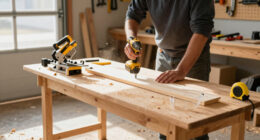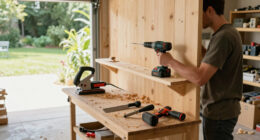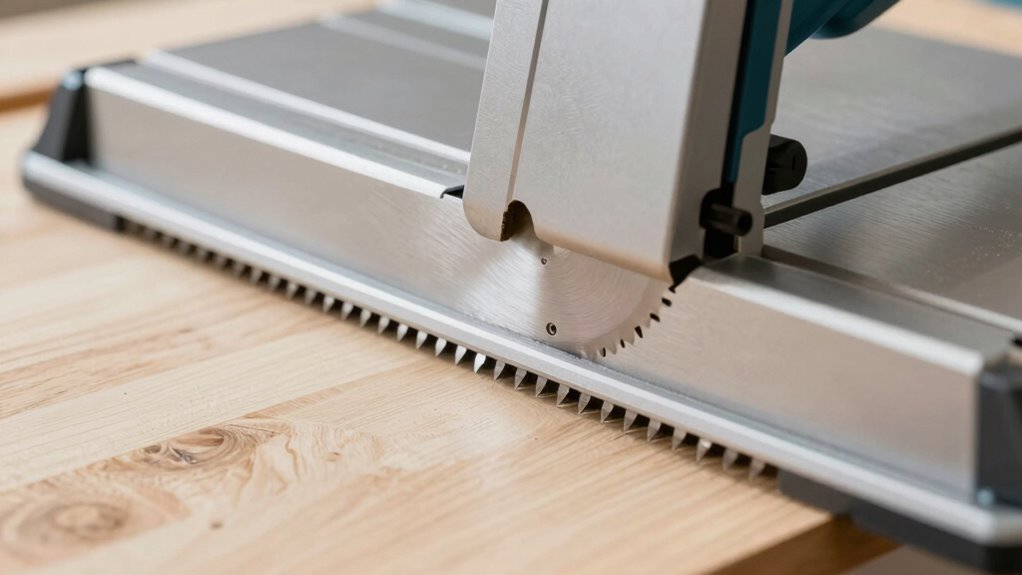
To cut cleaner on your table saw, you should set the blade just above the material’s thickness, usually about 1/8 inch higher. This guarantees a smooth, accurate cut with minimal tear-out. Proper alignment and gradual adjustments improve performance and safety. Regularly check your blade’s height and alignment for consistent results, and avoid common mistakes. If you want to learn how fine-tuning and troubleshooting can enhance your cuts, keep exploring the details.

Get business pricing on tools and workshop supplies
- Business-only prices and quantity discounts
- Tax-exempt purchasing
- Multiple users, one account, clear invoices
Key Takeaways
- Set the blade just above the material’s thickness, about 1/8 inch, for cleaner, precise cuts.
- Ensure the blade is properly aligned parallel to the miter slot to improve cut quality.
- Use measuring tools like rulers or digital gauges for accurate blade height adjustments.
- Regularly check for wobble and re-tighten the arbor nut to maintain stable, smooth operation.
- Fine-tune the height depending on cut type (rip, crosscut, or dado) for optimal results and minimal tear-out.
As an affiliate, we earn on qualifying purchases.
Why Blade Height Is Key to Cleaner Cuts on a Table Saw
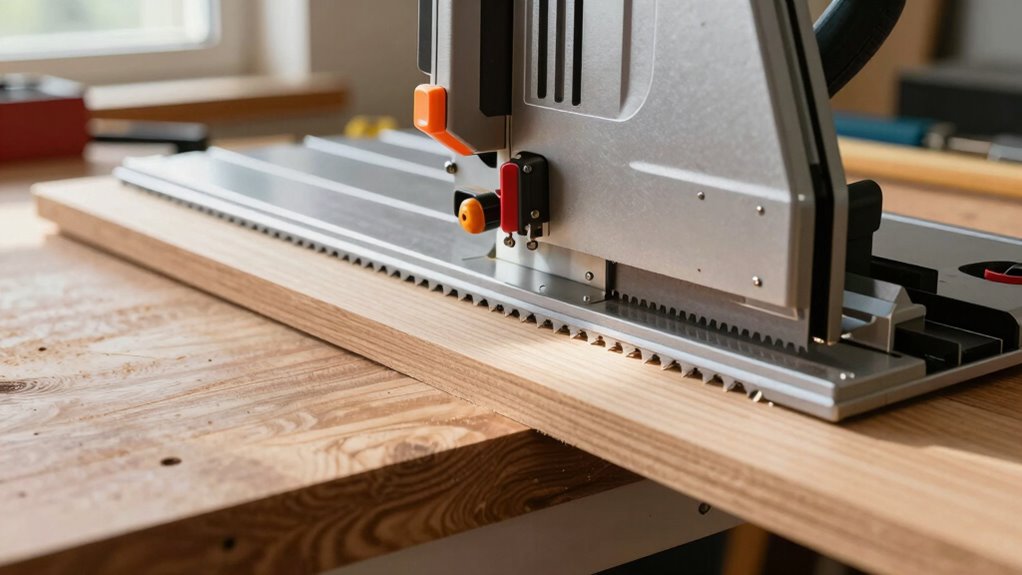
Adjusting the blade height correctly is essential for achieving cleaner cuts on your table saw. Proper blade alignment ensures the blade is straight and parallel to the miter slot, which directly impacts cut quality. When the blade is aligned well, you reduce wobbling and uneven cuts. Additionally, setting the right blade height minimizes dust buildup around the cut area. An ideal height allows dust collection systems to work more efficiently, pulling away debris and keeping your workspace cleaner. Smaller, cleaner chips result in smoother cuts and less tear-out. Remember, a correctly aligned blade not only improves cut precision but also enhances dust collection, making your woodworking safer and more efficient. Proper height adjustment is a fundamental step toward achieving professional results. Blade alignment plays a crucial role in maintaining consistent cut quality and safety during woodworking.
digital blade alignment tool for table saw
As an affiliate, we earn on qualifying purchases.
As an affiliate, we earn on qualifying purchases.
Essential Tools and Tips for Setting Your Blade Height Correctly
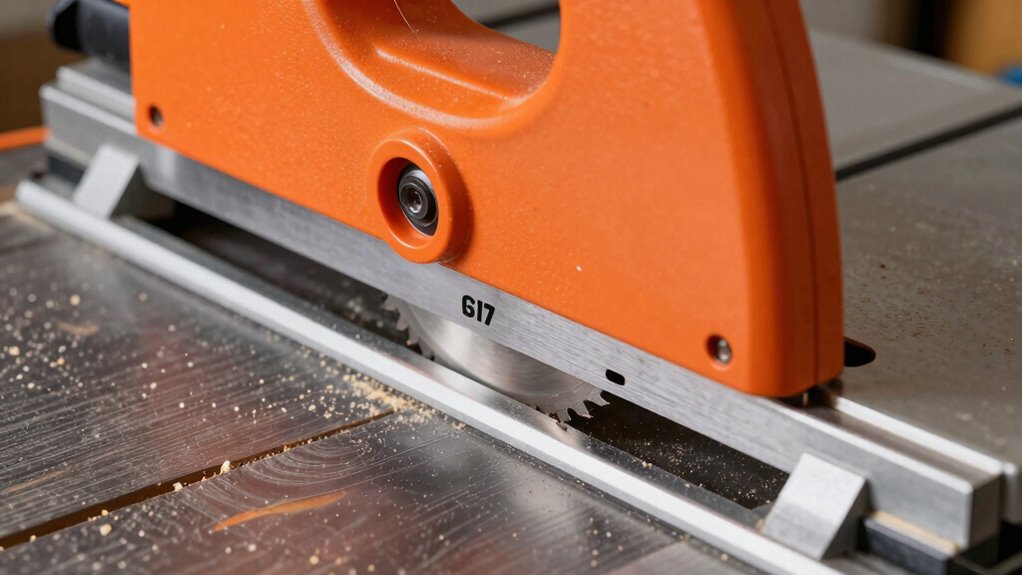
To set your blade height accurately, you’ll need the right tools and a clear process. Start with a reliable measuring tape or ruler to precisely adjust the blade. Use a square or a digital angle gauge to check blade alignment, ensuring the blade is perfectly perpendicular to the table surface. Before adjusting, inspect for blade wobble by manually spinning the blade or observing it while running at low speed; any wobble affects cut quality. Tighten the arbor nut securely to prevent movement. Always double-check your measurements and alignment after adjustments. Remember, a stable, well-aligned blade reduces wobble and ensures accurate height settings. Proper blade stability is essential for achieving cleaner cuts and safer operation on your table saw. Additionally, regularly inspecting and maintaining your saw’s components helps sustain cut quality over time, ensuring consistent performance. Ensuring that your table saw setup is correct can also prevent unnecessary wear and tear, further supporting high-quality cuts. Maintaining proper blade height and alignment not only improves cut precision but also extends the lifespan of your equipment. These tools and tips help you achieve cleaner cuts and safer operation on your table saw.
As an affiliate, we earn on qualifying purchases.
How to Adjust Blade Height on a Table Saw for Different Cuts
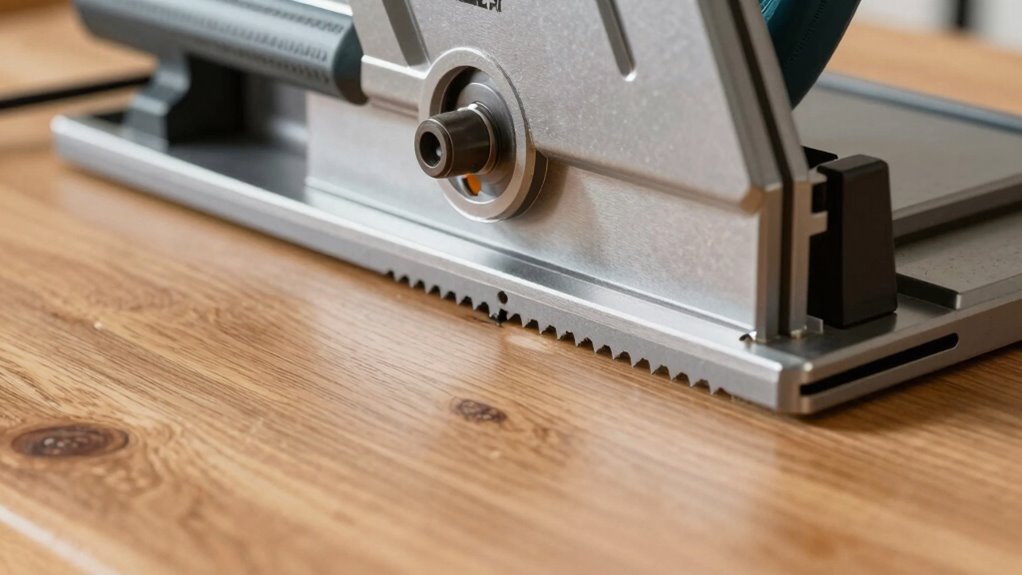
Ever wonder how to set your blade height for different cuts on a table saw? Adjusting the blade height depends on your desired cut angle and depth. To make precise cuts, consider the blade tilt and diameter, which influences the height setting. For dado cuts or beveled edges, tilt the blade accordingly before adjusting height. Use the following ideas:
| Cut Type | Blade Height Setting |
|---|---|
| Rip cut | Blade just above the material’s thickness |
| Crosscut | Slightly higher for clean cuts |
| Bevel cut | Tilt blade, then set height |
| Dado cut | Blade lower, wide setting |
| Fine finishing cut | Blade at ideal height for smoothness |
Proper adjustments ensure cleaner cuts and safety, so always double-check your settings before cutting. Additionally, understanding blade height adjustment techniques can help maintain the longevity of your saw and improve overall cutting accuracy. Knowing the safe operating procedures is crucial for preventing accidents and ensuring precise results. Being familiar with cut quality factors can also help you achieve cleaner and more accurate cuts. Moreover, ensuring proper blade alignment can further enhance the quality of your cuts and prolong the blade’s lifespan. Regularly inspecting and maintaining your saw components is essential for consistent cut performance.
As an affiliate, we earn on qualifying purchases.
Common Mistakes When Setting Blade Height and How to Avoid Them
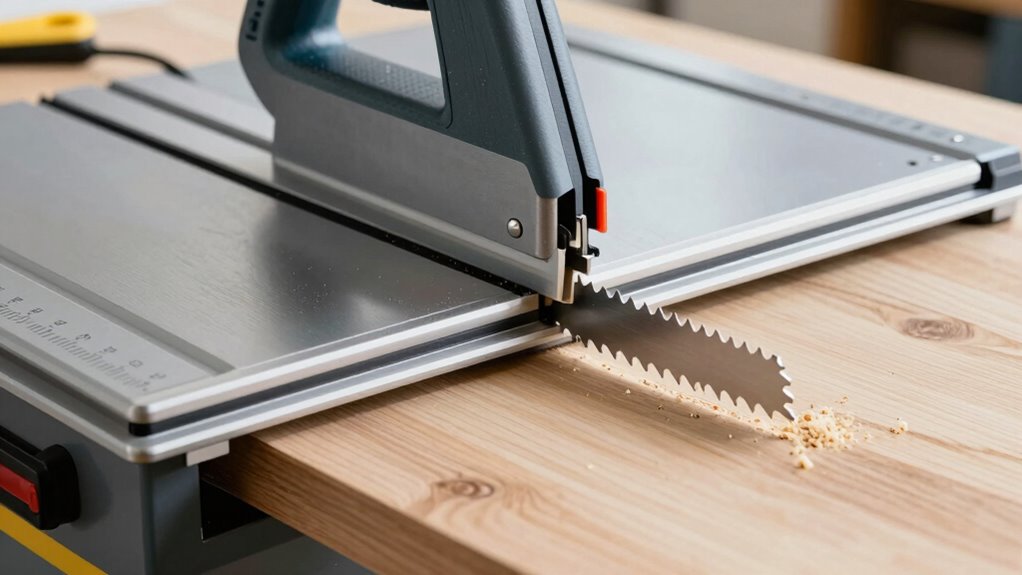
One common mistake is setting the blade height too high or too low without considering the specific cut requirements. This can lead to poor cut quality and increased risk of kickback. Poor blade alignment often results from neglecting proper height adjustment, causing uneven cuts and excessive wear on the blade. Additionally, an incorrect blade height can hinder dust collection, allowing sawdust to accumulate and impair visibility or clog the dust port. To avoid these mistakes, double-check your blade’s height against the material thickness, ensuring it is just above the surface for clean cuts. Regularly verify blade alignment to prevent wobbling, and maintain effective dust collection by keeping the system clear and properly adjusted. Proper setup promotes cleaner cuts and safer operation. Incorporating proper maintenance routines can also extend the lifespan of your blade and ensure consistent performance, especially by checking blade sharpness regularly to prevent dullness that affects cut quality. Paying attention to blade alignment and other adjustments is essential for achieving precise and safe cuts. Additionally, understanding wood movement and how it affects your cut can help in setting the blade height more accurately for different types of wood. Being aware of grain direction can further improve cut quality and reduce splintering.
How Blade Height Affects Safety and Blade Performance
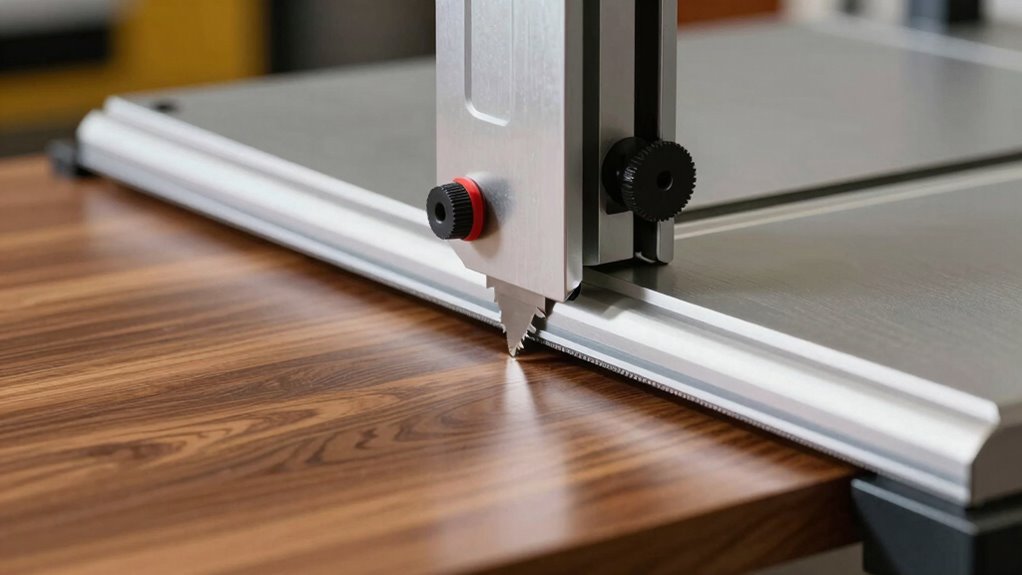
The height of your blade directly impacts both safety and performance when using a table saw. When set too high, the blade is more prone to blade vibration, which can cause uneven cuts and increase the risk of kickback. Proper blade alignment is essential; if the blade isn’t aligned correctly, it can lead to binding or binding, jeopardizing your safety. A blade set at the right height reduces unnecessary vibration, ensuring smoother operation and cleaner cuts. Additionally, a properly aligned blade minimizes stress on the saw’s motor and parts, extending its lifespan. Regularly checking and adjusting your blade height helps maintain optimal safety and performance. Ensuring consistent blade height can also contribute to cut quality, making your projects more precise. Moreover, adhering to the recommended blade height guidelines can prevent premature wear and potential damage to your equipment. Always double-check your blade height and alignment before each cut to guarantee safety and peak performance. Remember, a well-maintained blade height is your first line of defense against accidents and poor results. Proper blade height is a key factor in achieving precise and safe cuts.
Fine-Tuning Your Blade Height for Perfect Cuts
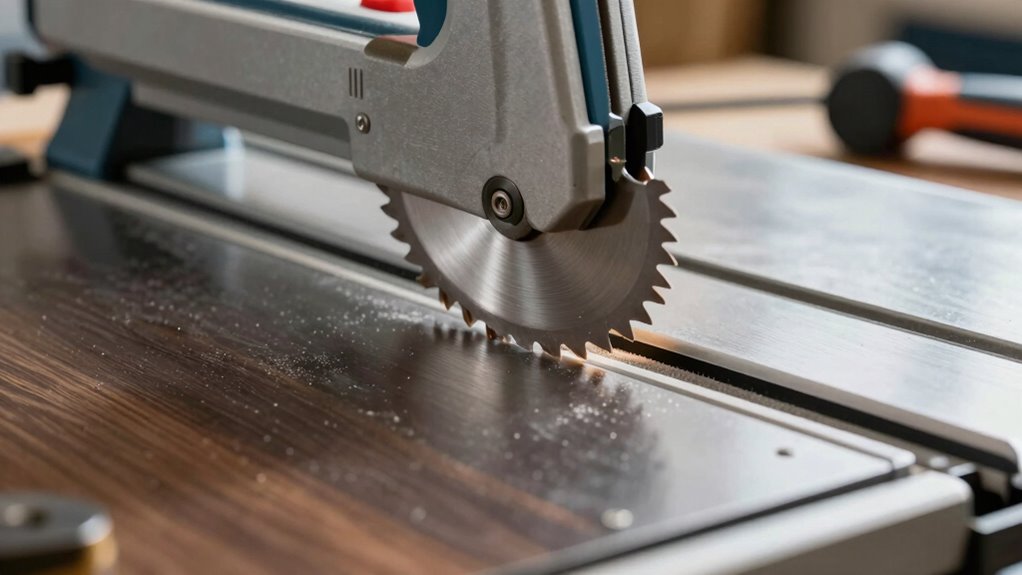
To get perfect cuts, you need to make precise adjustments to your blade height. Setting the right height guarantees your cuts are clean and accurate without risking safety. Focus on fine-tuning the blade for ideal cutting depth and precision. Additionally, understanding how to adjust blade height properly can greatly improve your woodworking results. Properly calibrating the blade ensures consistent and accurate cuts each time. Fine-tuning your blade height also involves checking safety considerations to prevent accidents during operation. Regularly maintaining your saw and ensuring it is well-calibrated contributes to cleaner, more precise cuts and safer operation.
Precise Blade Adjustment
Achieving perfect cuts with your table saw depends on carefully fine-tuning the blade height. Precise blade adjustment ensures smooth, accurate results and prevents issues like blade wobble or misalignment. To get this right:
- Check saw blade alignment by measuring the distance between the blade and miter slot at multiple points.
- Adjust the blade height gradually, ensuring it’s just above the material’s thickness.
- Confirm that the blade spins true without wobbling by observing its rotation.
- Recheck alignment after height adjustments to maintain consistency and ideal performance.
Optimal Cutting Depth
Fine-tuning your blade height for ideal cutting depth guarantees clean, accurate cuts every time. To achieve this, set the blade so it extends just slightly above the material’s thickness—about 1/8 inch higher. This ensures a narrow kerf width, reducing waste and providing cleaner cuts. Keep an eye on blade wobble; excessive wobble can enlarge the kerf and cause uneven cuts. Adjust the blade so it runs smoothly without wobbling, which helps maintain consistent depth and precision. Proper depth minimizes splintering and tear-out, especially on delicate surfaces. Remember, a blade set too high increases the risk of kickback and reduces accuracy. Fine-tuning your blade height with these factors in mind guarantees safer, cleaner, and more precise cuts every time.
Troubleshooting Blade Height Problems That Impact Cut Quality
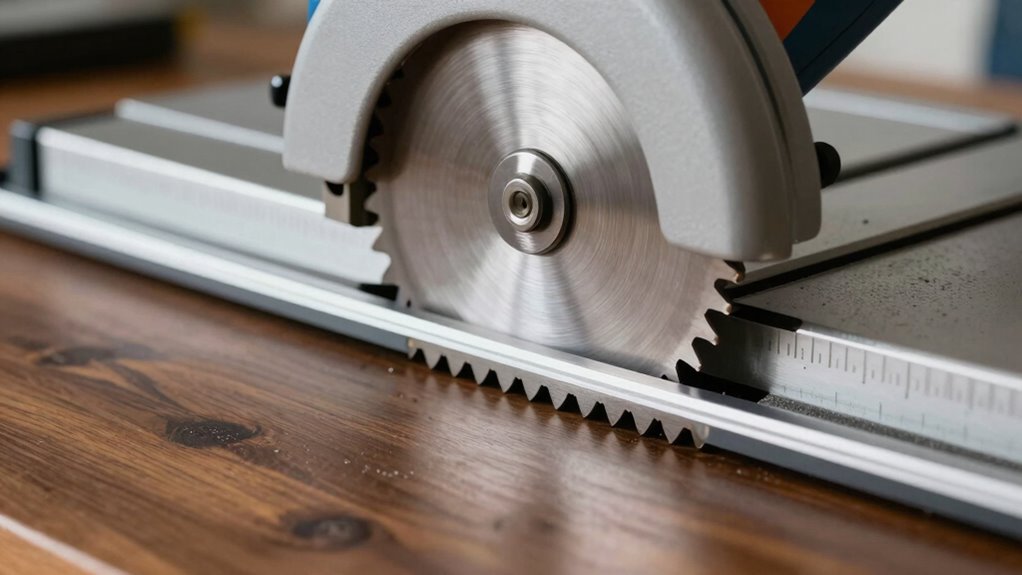
When your cuts start to seem uneven or rough, blade height is often the culprit. Improper blade height can cause rough cuts and poor dust collection, reducing cut quality. To troubleshoot, follow these steps:
Uneven or rough cuts often stem from incorrect blade height adjustments.
- Check blade alignment to ensure it’s parallel to the miter slot.
- Adjust the blade height to match the material thickness precisely.
- Clear dust buildup around the blade and in the dust collection system.
- Re-evaluate the blade height after adjustments, ensuring it’s set for ideal contact with the wood.
Maintaining proper blade height improves cut smoothness and dust extraction, preventing uneven edges. Regularly inspecting blade alignment and keeping your dust collection system clean are key to consistent, high-quality cuts.
Frequently Asked Questions
Can Changing Blade Height Affect the Longevity of the Blade?
Yes, changing the blade height can affect the blade lifespan and cutting efficiency. When you set the blade too high or too low, it puts extra stress on the blade, causing it to wear out faster. Properly adjusting the blade height guarantees smoother cuts and reduces unnecessary wear, helping you get longer-lasting blades. Always fine-tune your blade to match the material and cut for maximum performance and durability.
Does Blade Height Influence the Noise Level During Cutting?
Yes, blade height influences noise levels during cutting. When you raise the blade too high, it causes more blade vibration, which increases noise and can affect cutting accuracy. Lowering the blade reduces vibration, making cuts quieter and cleaner. Adjusting the height carefully helps you maintain ideal cutting performance and minimizes noise, ensuring safer operation and better results for your projects.
How Often Should I Check and Adjust My Blade Height?
You should check and adjust your blade height before each use, especially if you’ve transported the saw or changed blades. Incorporate this into your maintenance schedule to guarantee consistent cuts. Always follow safety precautions by disconnecting power before making adjustments. Regular checks help prevent accidents and improve cut quality. Adjust the blade height so it’s slightly above the material’s thickness for ideal performance and safety.
Is There a Recommended Blade Height for Cutting Different Materials?
You should adjust your blade height based on the material you’re cutting, generally setting it to about 1/4 inch above the stock. Always check blade alignment before use to verify safety and accuracy. For thicker materials, raise the blade slightly more, but never exceed the recommended height for safety precautions. Maintaining proper blade height helps achieve cleaner cuts and minimizes kickback risks.
Can Improper Blade Height Cause Uneven or Rough Cuts?
Yes, improper blade height can cause uneven or rough cuts. If your blade isn’t correctly aligned or set too high or low, it can lead to poor-quality cuts and even safety hazards. Always check your blade alignment and follow safety precautions when adjusting the height. Correct blade height ensures cleaner cuts, reduces kickback, and keeps you safe during your woodworking projects.
Conclusion
Getting your blade height just right isn’t just a small detail—it’s the secret to making cuts so clean, they’ll slice through your projects like a hot knife through butter. When you master this simple setting, you’ll transform your table saw into a precision instrument that impresses every time. Don’t settle for rough edges or dangerous mishaps—tune that blade height perfectly, and watch your woodworking dreams come to life with razor-sharp clarity!
Fall yard work Picks
leaf blowers
As an affiliate, we earn on qualifying purchases.