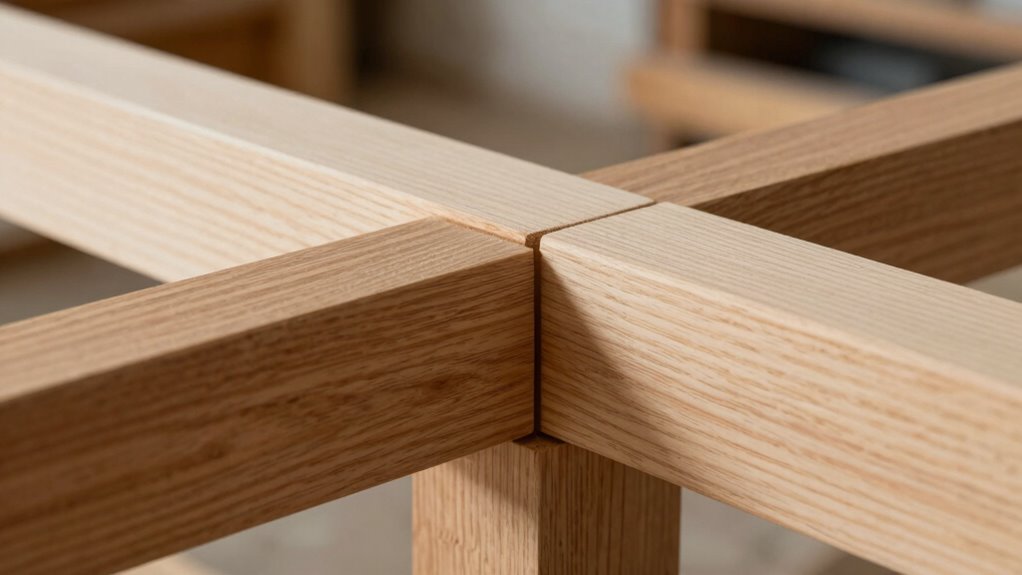
If you’re looking for a woodworking joint that’s both strong and simple, bridle joints are an excellent choice. They create a durable, right-angled connection that’s perfect for frames and load-bearing projects. Easy to cut with the right tools, these joints offer stability without complex techniques. Their versatility and reliability make them a smart option for many projects. Keep going, and you’ll uncover how to get the perfect fit and finish for your next build.

Get business pricing on tools and workshop supplies
- Business-only prices and quantity discounts
- Tax-exempt purchasing
- Multiple users, one account, clear invoices
Key Takeaways
- Bridle joints are strong, simple, and versatile woodworking joints ideal for furniture frames and structural connections.
- They feature a fitting tongue and mortise, providing excellent stability with precise, clean cuts.
- Various types, like through and halved bridle joints, suit different aesthetic and load-bearing needs.
- Proper measurement, marking, and cutting are essential for a tight, durable fit.
- They are a reliable alternative to more complex joints, combining strength, simplicity, and visual appeal.
As an affiliate, we earn on qualifying purchases.
What Is a Bridle Joint and How Does It Differ From Other Woodworking Joints
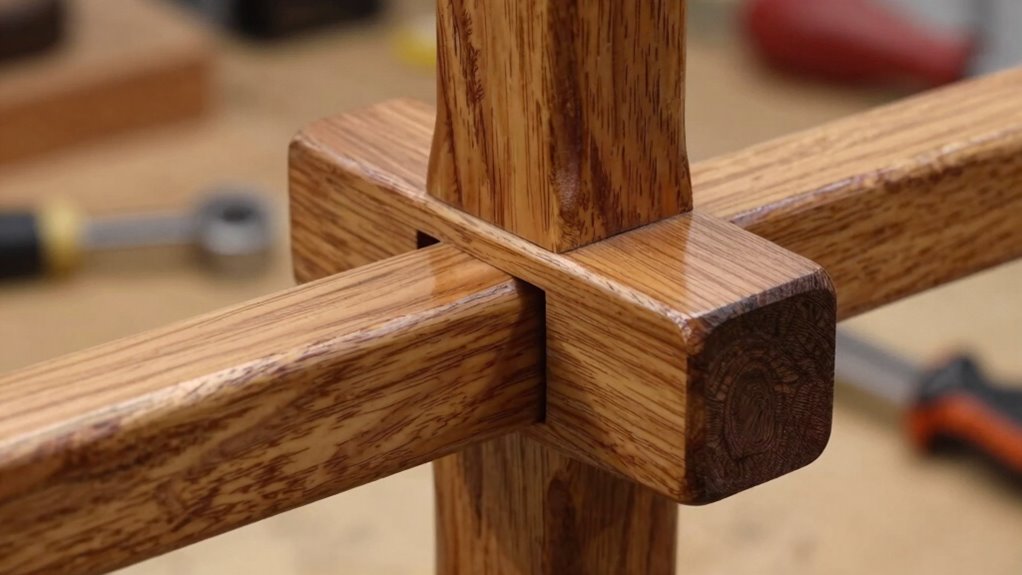
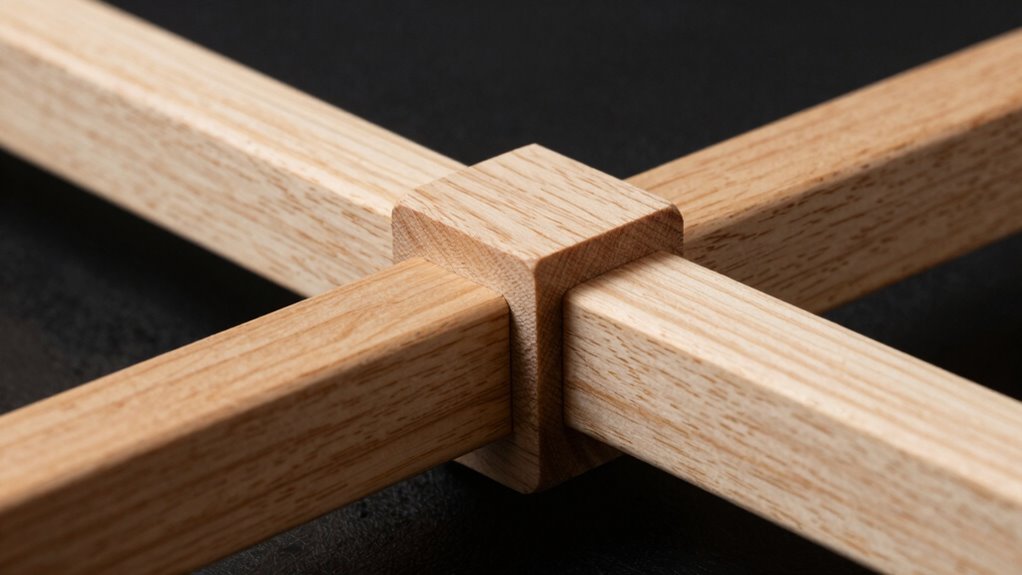
A bridle joint is a woodworking joint where one piece of wood fits into a slot or mortise in another, creating a strong, right-angled connection. This joint offers excellent joint stability because of its interlocking design, making it ideal for frames and structural components. To achieve a precise fit, you’ll use specific woodworking techniques like careful marking and accurate cutting. Unlike simpler joints, the bridle joint provides increased strength without complex joinery, making it a practical choice for projects requiring durability. Its simplicity also means you can assemble it quickly while maintaining a high level of stability. Proper joint preparation is essential to ensure a snug fit and maximum strength. Overall, understanding how to execute a bridle joint properly helps ensure your projects are both sturdy and reliable.
As an affiliate, we earn on qualifying purchases.
Is a Bridle Joint Right for Your Project? When and Why to Use It
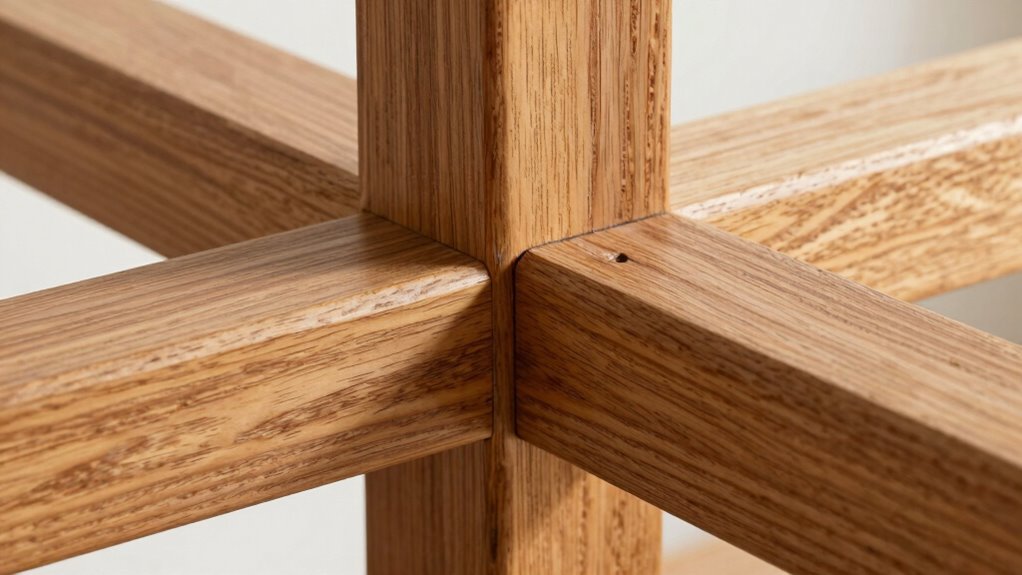
Think about whether a bridle joint fits your project’s needs, especially if strength is a priority. It’s ideal for frame construction and projects where durability matters most. You might also consider it for decorative pieces that benefit from its clean, classic look. Additionally, the bridle joint’s simplicity and strength make it a reliable choice for many woodworking applications.
Ideal for Frame Construction
Are bridle joints the perfect choice for your frame construction? They excel in this area because of their clean joint aesthetics, creating smooth, strong corners that look professional and polished. Unlike more complex joints, bridle joints allow for quick assembly without sacrificing strength, making them ideal for framing projects like doors, windows, and furniture frames. Historically, these joints have seen widespread use in traditional woodworking, especially in timber framing and historic applications, demonstrating their durability and timeless appeal. Their straightforward design also makes them accessible for both beginner and experienced woodworkers. Additionally, the high load-bearing capacity of bridle joints ensures that they can support substantial weight and stress, further emphasizing their suitability for sturdy frames. If you’re aiming for a reliable, visually appealing frame that honors traditional craftsmanship, a bridle joint could be the perfect solution for your project.
When Strength Matters Most
While bridle joints excel in many applications, their suitability depends on the specific strength requirements of your project. If you need a joint with high joint durability, bridle joints are a solid choice, especially when joined with proper glue and reinforcement. They offer substantial strength, making them ideal for load-bearing structures where stability is critical. However, if your project demands exceptional strength under heavy stress, consider whether other joints might be more appropriate. Bridle joints also contribute positively to woodworking aesthetics, providing clean lines and a neat appearance. Use them when you want a reliable, strong connection without complex techniques, especially in furniture frames or support structures. Their strength and visual appeal make them a versatile option when durability and craftsmanship matter most. Additionally, understanding modern woodworking techniques can help optimize the use of bridle joints for enhanced performance.
Suitable for Decorative Projects
Bridle joints not only provide strength but also lend themselves well to decorative woodworking projects. Their clean, precise lines create a polished look that’s ideal for adding decorative accents to furniture or cabinetry. The joint’s visible profile can serve as an aesthetic enhancement, showcasing craftsmanship and attention to detail. When you want a joint that’s both functional and visually appealing, a bridle joint fits perfectly. Its simplicity allows it to blend seamlessly into various design styles, from traditional to modern. Additionally, because it’s easy to execute with common tools, it’s suitable for projects where appearance matters as much as strength. If your goal is to add a touch of decorative sophistication while maintaining structural integrity, a bridle joint is an excellent choice. Design versatility makes it adaptable to many aesthetic preferences and project types.
woodworking saw for precise cuts
As an affiliate, we earn on qualifying purchases.
As an affiliate, we earn on qualifying purchases.
Exploring Different Types of Bridle Joints and How to Choose the Best
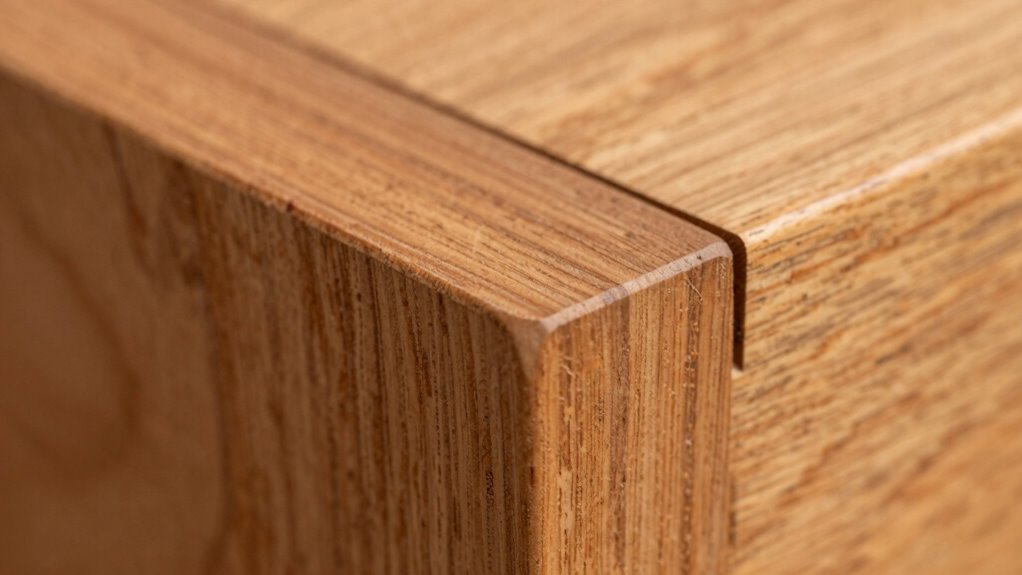
Choosing the right type of bridle joint depends on your specific woodworking project and the strength requirements. Different types vary in joint aesthetics and historical significance, so consider how they fit your design. For example, a traditional through bridle offers a clean look with visible tenons, ideal for furniture with classic appeal. A halved bridle, meanwhile, provides a flush surface, perfect for hidden joints. Here’s a quick comparison:
| Type | Aesthetics | Strength Level | Best Use |
|---|---|---|---|
| Through Bridle | Visible, decorative | Very strong | Structural frames |
| Halved Bridle | Seamless, subtle | Strong | Hidden joints in furniture |
| Tailed Bridle | Ornamental, historical | Moderate to high | Restoration projects |
| Splayed Bridle | Unique, rustic | Moderate | Decorative accents |
Choosing the appropriate joint type can significantly impact the overall durability and appearance of your project, so weigh your options carefully.
As an affiliate, we earn on qualifying purchases.
How to Cut a Bridle Joint: Step-by-Step Instructions
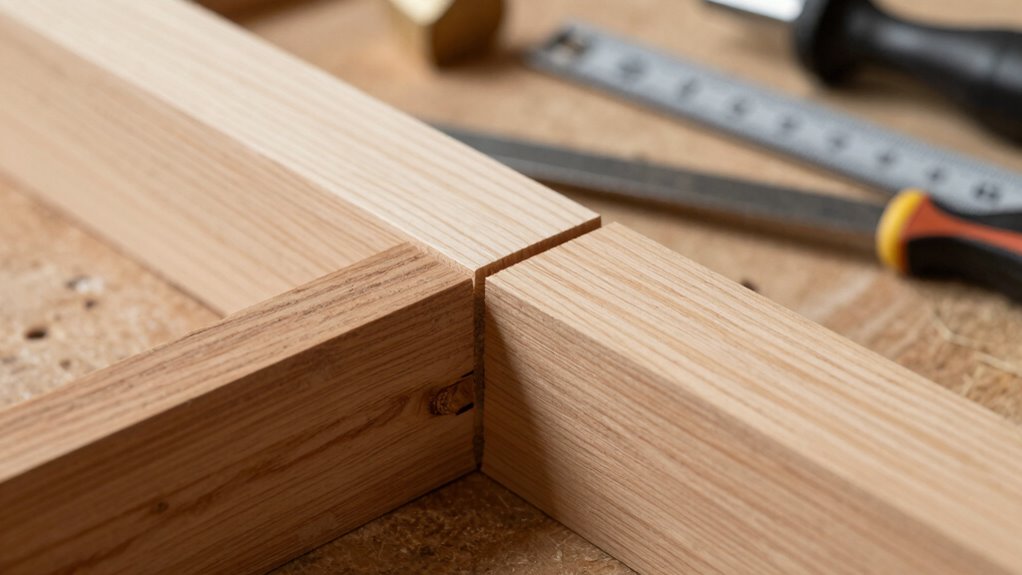
To cut a bridle joint accurately, you’ll need to prepare all your materials beforehand, ensuring your wood is clean and properly measured. Next, focus on precise cutting techniques, using the right tools and steady hands to get clean, tight joints. Following these steps carefully will help you achieve professional results in your project. Additionally, understanding ergonomic workspace setup can improve your comfort and accuracy during woodworking tasks.
Preparing Your Materials
Before you start cutting your bridle joint, gather all the necessary materials and make sure they’re properly prepared. Choosing the right material affects joint durability and ease of cutting. Select hardwoods like oak or maple for strength, or softwoods like pine for easier handling, depending on your project needs. Confirm your wood pieces are accurately measured and planed smooth to prevent splinters and ensure precise cuts. Use sharp tools to achieve clean joints and avoid damage. Additionally, understanding European cloud innovation can inspire more sustainable practices even in woodworking projects.
Precise Cutting Techniques
Accurate cuts are essential for a strong and fitting bridle joint, so it’s important to follow precise techniques throughout the process. Start by carefully measuring and marking the cut lines, similar to how you’d layout dovetail joints or mortise and tenon joints. Use a sharp saw, such as a fine-tooth backsaw, to make clean, controlled cuts along your marked lines. Keep your saw steady and follow the lines exactly, avoiding any wobbling that could cause gaps. For the tenon part, make multiple light passes rather than forcing a deep cut all at once. This approach guarantees precision and helps achieve a snug fit. Remember, clean, precise cuts are key to creating a durable, well-fitting bridle joint that rivals other traditional joints. Understanding the importance of accurate cutting techniques] ensures your joint will be both strong and precise.
Pros and Cons of Using Bridle Joints in Furniture Making
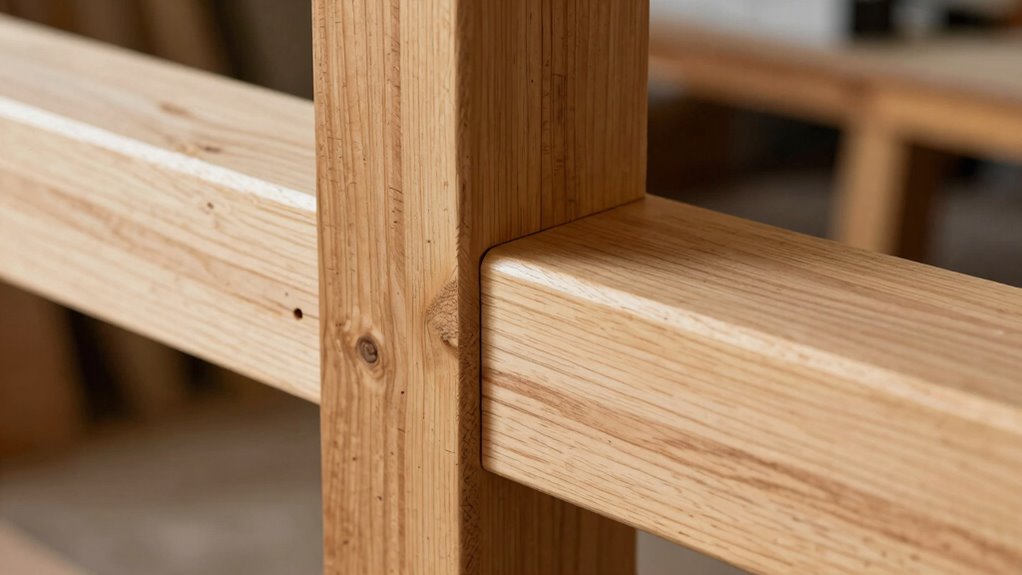
Bridle joints are a popular choice in furniture making because they offer strong, durable connections, especially for frames and corners. Their joint durability makes them reliable over time, resisting wear and tear. However, they do have some drawbacks:
- Complexity of Cutting: Precise cuts are essential, which can be time-consuming and require skill.
- Aesthetic Appeal: When correctly executed, they look clean, but poor craftsmanship can make them appear rough.
- Material Limitations: Best suited for hardwoods; softer woods may not hold the joint as well.
- Assembly Difficulty: Fitting the tenon into the mortise can be tricky, especially for beginners.
Tips for Strengthening and Finishing Your Bridle Joints
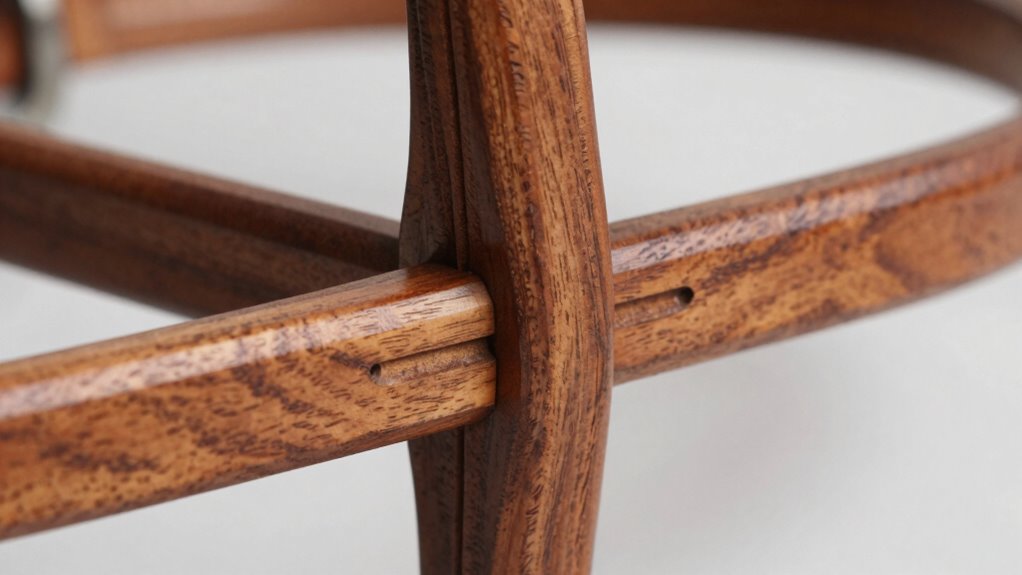
To guarantee your bridle joints are both strong and long-lasting, focus on proper preparation and finishing techniques. Start by ensuring tight-fitting joints, which enhance joint durability. When applying your finish, use thin coats for even coverage and better penetration, which protects the wood and strengthens the joint. Proper finish application also prevents moisture intrusion that can weaken the joint over time. Consider these tips:
| Preparation Tips | Finishing Tips |
|---|---|
| Precision cutting for fit | Use multiple thin coats |
| Sanding smooth for tight fit | Allow adequate drying time |
| Glue joints firmly, clamping | Seal all exposed edges |
Additionally, understanding the importance of moisture management can help you prevent issues like warping or weakening of the joint over time. These steps will maximize joint durability and give your project a professional finish.
Troubleshooting Common Issues With Bridle Joints and How to Fix Them
Even with careful planning, you may encounter issues with your bridle joints that compromise their strength or alignment. Common problems include loose fitting, joint durability loss, material incompatibility, and misalignment. To fix these, consider the following:
- Adjust the fit by carefully removing small amounts of material to improve joint tightness.
- Reinforce the joint with dowels or glue to enhance joint durability, especially if materials differ.
- Check material compatibility before assembly; avoid combining hardwoods with softwoods that may expand or contract at different rates.
- Realign the joint if it shifts, using clamps and proper support until the glue cures fully.
Addressing these issues ensures your bridle joint maintains strength, durability, and proper alignment over time.
Frequently Asked Questions
Can Bridle Joints Be Used for Load-Bearing Applications?
Yes, you can use bridle joints for load-bearing applications because they offer excellent load bearing strength and joint durability. When properly crafted, these joints can handle significant weight and stress, making them suitable for furniture, framing, or structural elements. Their simple design allows for strong, stable connections, ensuring long-lasting performance even under heavy loads. Just make sure to use quality wood and precise joinery techniques for the best results.
What Are the Best Wood Types for Making Bridle Joints?
You should choose hardwoods like oak, maple, or hickory for bridle joints, as their high wood density provides strength and durability. Pay attention to grain direction; aligning the grain properly guarantees the joint resists stress and minimizes splitting. These woods offer excellent stability, making your bridle joints strong and reliable for load-bearing or furniture projects. Proper selection based on density and grain orientation enhances joint performance and longevity.
How Do Bridle Joints Compare to Mortise and Tenon Joints?
Imagine bridle joints as a sturdy handshake, offering impressive joint strength with less fuss. Compared to mortise and tenon joints, they’re simpler to install, making your woodworking project smoother. While mortise and tenon joints provide excellent strength for heavy loads, bridle joints excel in situations where ease of assembly and adequate strength are key. You’ll find bridle joints a practical choice when you need a balance of strength and simplicity.
Are Bridle Joints Suitable for Outdoor Furniture?
Yes, bridle joints are suitable for outdoor furniture, especially when you want good weather resistance and durability. Their strong, simple design makes them ideal for DIY projects, providing stability without complex tools. Just make certain you use weather-resistant wood and sealant to protect against moisture and temperature changes. This way, your outdoor furniture stays sturdy and lasts longer, leveraging the strength and simplicity of bridle joints effectively.
What Tools Are Essential for Cutting Precise Bridle Joints?
To achieve perfect joint alignment and cutting accuracy, you need essential tools like a fine-tooth saw or a Dovetail or Tenon saw for precise cuts. A marking gauge guarantees accurate layout, while a chisel helps clean up the joint. A square or combination square guarantees your cuts stay true. Don’t underestimate the importance of sharp tools and careful measurement—these are the secrets to flawless, strong bridle joints every time.
Conclusion
Bridle joints are like the sturdy backbone of woodworking—simple yet incredibly reliable. When you understand how to cut, fit, and reinforce them, you’ll find they’re perfect for strong, lasting projects. Whether you’re building furniture or decorative pieces, their versatility makes them a valuable skill to master. Embrace this overlooked joint, and you’ll craft pieces as solid and elegant as a well-worn heirloom, standing the test of time with grace.
Fall Picks
fall essentials
As an affiliate, we earn on qualifying purchases.