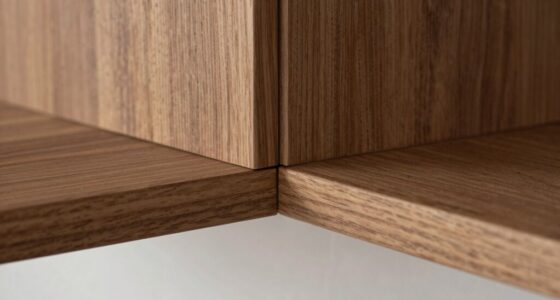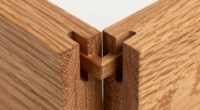
If you’re after the classic look and strong joints of dovetails but want an easier method, box joints are your solution. They offer a modern, clean design and are simpler to cut with the right jig and basic tools. Using box joints still provides durability and style, perfect for furniture and storage projects. Keep exploring, and you’ll discover how to perfect these joints and incorporate them into stunning designs.

Get business pricing on tools and workshop supplies
- Business-only prices and quantity discounts
- Tax-exempt purchasing
- Multiple users, one account, clear invoices
Key Takeaways
- Box joints mimic dovetails’ aesthetic with clean, interlocking edges, creating the “dovetail vibe” easily.
- Use an adjustable box joint jig with precise settings for consistent, dovetail-like interlocks.
- Incorporate contrasting woods in box joints to enhance visual appeal similar to dovetails.
- Practice accurate measurements and tight clamping to achieve dovetail-style fit and finish.
- Box joints are a beginner-friendly alternative that offers durability and a modern look akin to dovetails.
As an affiliate, we earn on qualifying purchases.
Why Use Box Joints Instead of Dovetails?
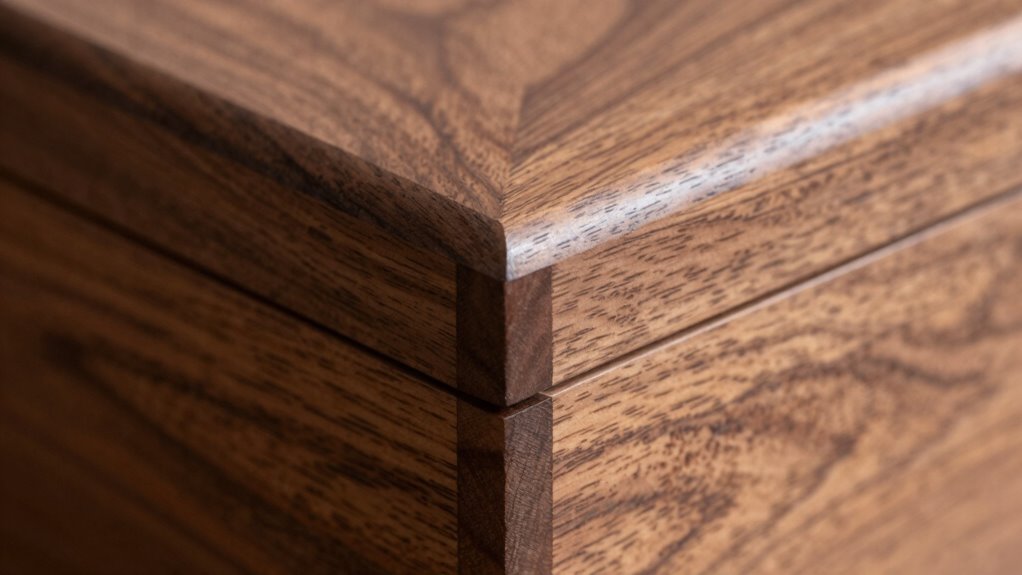
Why choose box joints over dovetails? You might prefer box joints because they offer a clean, modern look with excellent visual appeal, especially in contemporary projects. They’re simpler to cut accurately, giving you consistent, tight-fitting joints without the intricate craftsmanship dovetails require. Plus, box joints provide impressive construction strength, making them ideal for furniture that needs durability and stability. The interlocking fingers distribute stress evenly, creating sturdy connections that stand the test of time. While dovetails are often praised for their aesthetic, box joints strike a great balance of visual appeal and practicality. They’re accessible for beginners and still produce a professional appearance, making them a smart choice when strength and ease of production matter most. Additionally, the ease of fabrication makes box joints a preferred option for many woodworking enthusiasts. For projects emphasizing structural integrity, box joints are particularly advantageous, ensuring long-lasting quality without complex joinery techniques. Their manufacturing process can be streamlined with jigs and guides, reducing errors and speeding up your workflow.
As an affiliate, we earn on qualifying purchases.
What to Consider When Choosing a Box Joint Jig?
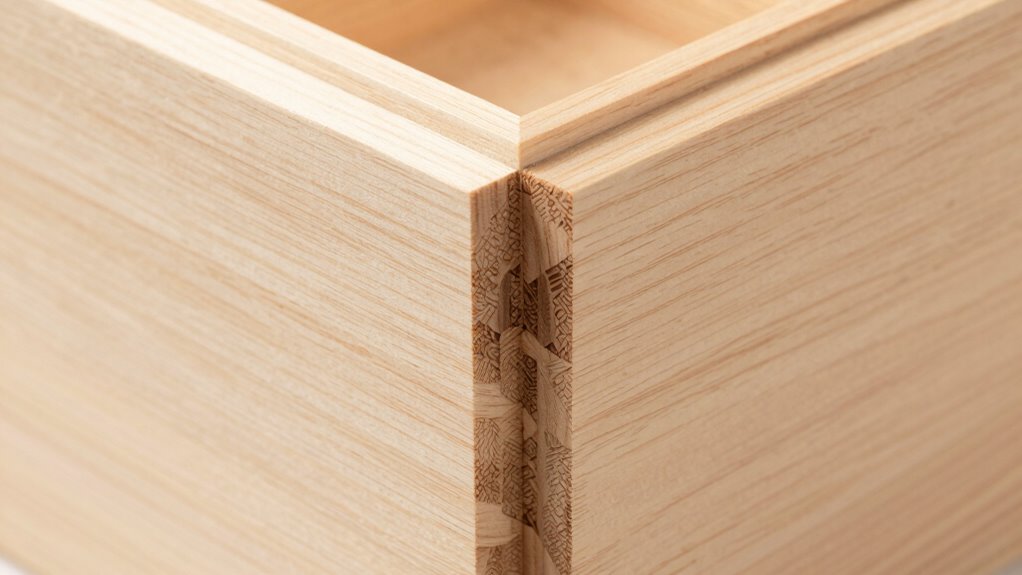
When selecting a box joint jig, you need to check if it’s compatible with your router type to guarantee smooth operation. Consider how adjustable and precise the jig is, so you can achieve accurate, consistent joints. Also, look at the materials it works with and whether it’s durable enough for your projects. Additionally, evaluating the ventilation considerations can help ensure safe and effective operation during use. Incorporating connected equipment that monitors your workspace environment can further enhance safety and performance during woodworking sessions. Understanding tool compatibility is essential to prevent issues and ensure seamless integration with your existing setup. Moreover, assessing the material compatibility can prevent potential damage to your tools and workpieces.
Compatibility With Router Types
Choosing the right box joint jig depends heavily on the compatibility with your router type, as different jigs are designed to work with specific router features. To guarantee smooth operation, consider these factors:
- Router compatibility: Check if the jig fits your router’s mounting system and whether it can accommodate variable speeds.
- Power tool types: Confirm if your power tool is a plunge router or fixed base, as some jigs are better suited for one or the other.
- Collet size: Make sure the jig supports your router’s collet size to avoid compatibility issues.
- Motor power: Opt for a jig that matches your router’s power capacity to handle the workload without strain.
Matching your router compatibility and power tool types ensures safe, precise, and efficient box joints.
Adjustability and Precision Options
Ensuring precise and adjustable box joints requires a jig with flexible settings and accurate guides. Look for adjustment mechanisms that allow you to fine-tune the fit easily, ensuring tight joints without guesswork. Precision options, such as clear scale measurements or micro-adjustments, help you achieve consistent results every time. Consider jigs with locking features that hold adjustments securely, so your settings stay in place during cuts. A good jig should offer multiple adjustment points for both fit and spacing, giving you control over the joint’s tightness and appearance. Additionally, adjustment mechanisms that are smooth and easy to operate make the setup process quicker and more reliable. By choosing a jig with versatile adjustment mechanisms and precise options, you can consistently produce professional-quality box joints with minimal effort and maximum accuracy. Adjustability and precision options are essential to achieve reliable and repeatable results in your woodworking projects.
Material Compatibility and Durability
Selecting a box joint jig that’s compatible with your materials is essential for achieving durable and precise joints. Consider these points to ensure you choose the right jig:
- Material strength: Ensure the jig can handle the hardness and thickness of your wood without wear or damage.
- Finish compatibility: Pick a jig that won’t mar or stain delicate surfaces or finishes during cutting.
- Wood type: Softer woods like pine may require less robust jigs, while hardwoods demand sturdier options.
- Durability: Opt for a jig built from high-quality materials that will withstand repeated use without losing accuracy.
Matching your jig to your project’s material characteristics guarantees stronger joints and a cleaner finish, making your woodworking projects more professional and long-lasting.
As an affiliate, we earn on qualifying purchases.
How to Cut Perfect Box Joints With Basic Tools?
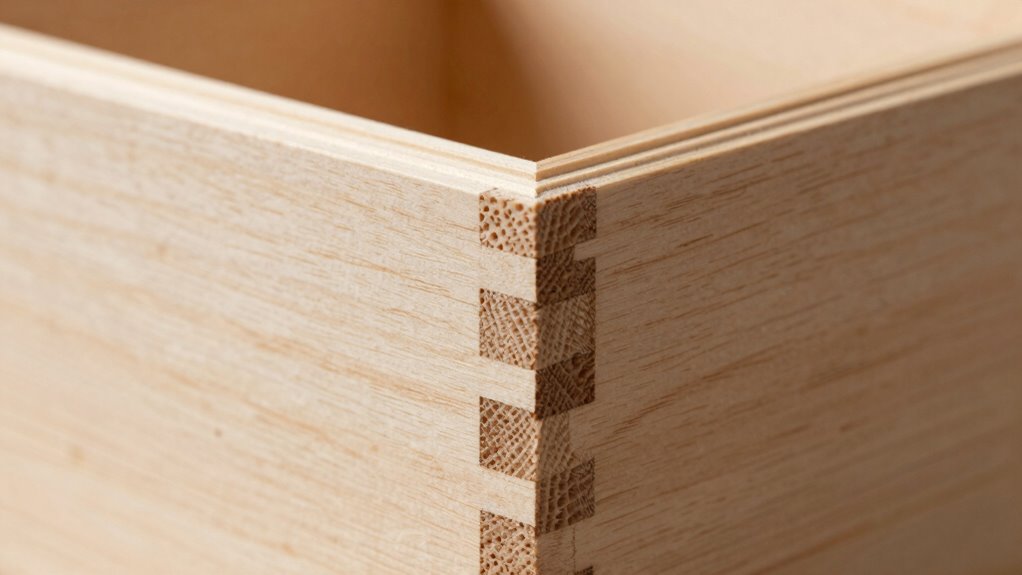
To cut perfect box joints with basic tools, start by marking and measuring carefully to guarantee precise fit. Using jigs and guides can help keep your cuts consistent and accurate. With attention to detail, you’ll achieve clean, tight joints even with simple equipment. Ensuring your workspace is safe and well-lit is also important for precise cuts and safety during the process. Additionally, understanding the horsepower of electric dirt bikes can inspire confidence in your ability to handle power tools effectively and safely. Knowing the appropriate blade types for your saws can further improve your cutting precision and results.
Marking and Measuring Accurately
Accurate marking and measuring are essential for creating perfect box joints, especially when using basic tools. To guarantee precise cuts, consider these key steps:
- Always check the grain direction to avoid tear-out and ensure strength.
- Use a reliable ruler or measuring tape for thickness measurement, confirming consistent spacing.
- Mark your cuts carefully, making light pencil lines that won’t interfere with the saw blade.
- Double-check measurements before cutting, verifying all marks line up perfectly.
Using Jigs and Guides
Using jigs and guides can substantially improve the accuracy and consistency of your box joints when working with basic tools. Proper jig setup guarantees that your cuts are aligned perfectly each time, reducing errors and waste. Start by selecting a guide that matches the width of your desired joint; a well-chosen guide simplifies the process and improves results. Secure the guide firmly to prevent shifting during cutting. When setting up your jig, double-check measurements against your marked lines to ensure precise alignment. Consistent guide selection and careful setup make it easier to produce tight, professional-looking box joints, even with basic tools. Additionally, understanding cutting techniques can help refine your skills and achieve cleaner joints. For optimal results, using proper tools and accessories can further enhance your woodworking accuracy and efficiency. Incorporating precision measurement into your setup process ensures that each joint fits perfectly, elevating the quality of your finished projects. With these steps, you’ll achieve strong, attractive joints that elevate your woodworking projects.
As an affiliate, we earn on qualifying purchases.
Creative Ways to Use Box Joints in Your Projects?
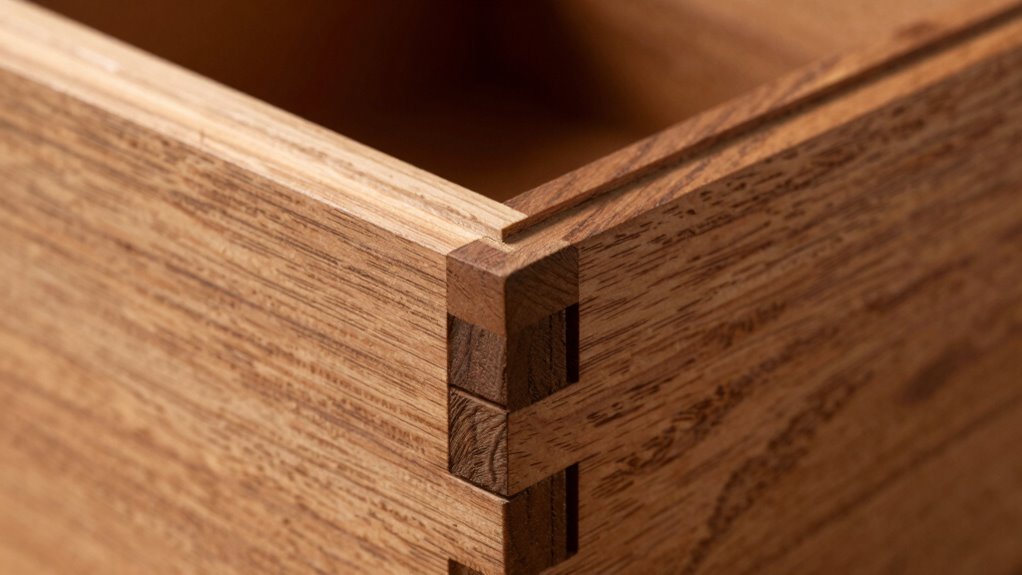
Box joints aren’t just for traditional boxes—they can add a striking visual element and strength to a wide range of projects. You can incorporate them as decorative accents or for furniture framing, elevating your craftsmanship. Here are some creative ideas:
- Use box joints on drawer fronts to create a textured, eye-catching look.
- Frame cabinet doors with box joints for added durability and style.
- Incorporate them into jewelry boxes or small storage chests for a refined touch.
- Combine box joints with contrasting woods to emphasize the joinery as a design feature.
- When designing projects, consider the structural integrity offered by box joints, which enhances both aesthetic appeal and durability. Additionally, understanding appliance maintenance plans can ensure your woodworking tools remain in top condition for precise cuts.
- Exploring woodworking techniques can help you refine your skills and achieve cleaner, more professional-looking joints. Regularly practicing these techniques can also improve your precision and accuracy, making your projects more polished and reliable.
These techniques showcase your skills while adding both aesthetic appeal and structural integrity. With a little creativity, box joints become an effective way to enhance any woodworking project.
Common Box Joint Problems and How to Fix Them?

Despite their strength and aesthetic appeal, box joints can sometimes present common problems that challenge woodworkers. One issue is misaligned joints, often caused by inconsistent joint alignment during cutting or assembly. Material expansion can also cause gaps or tight fits over time, especially with changes in humidity. To fix misalignment, double-check your jig setup and clamp pieces tightly during assembly. If gaps appear due to expansion, allow for seasonal movement by leaving slight gaps or using flexible adhesives. Here’s a quick overview:
| Problem | Cause | Fix |
|---|---|---|
| Misaligned joints | Inaccurate cuts | Recheck jig setup and cut precision |
| Gaps from expansion | Seasonal humidity changes | Leave slight gaps or choose flexible glue |
| Tight joints | Overly tight fit | Sand slightly or adjust cut dimensions |
| Loose joints | Worn or dull tools | Sharpen tools and recut joints |
Additionally, understanding market trends and staying updated on current developments can help you anticipate changes in material behavior and plan your woodworking projects accordingly. Being aware of material properties such as moisture absorption and expansion characteristics can help prevent future issues with your joints.
Box Joints vs. Dovetails: Which Is Right for You?
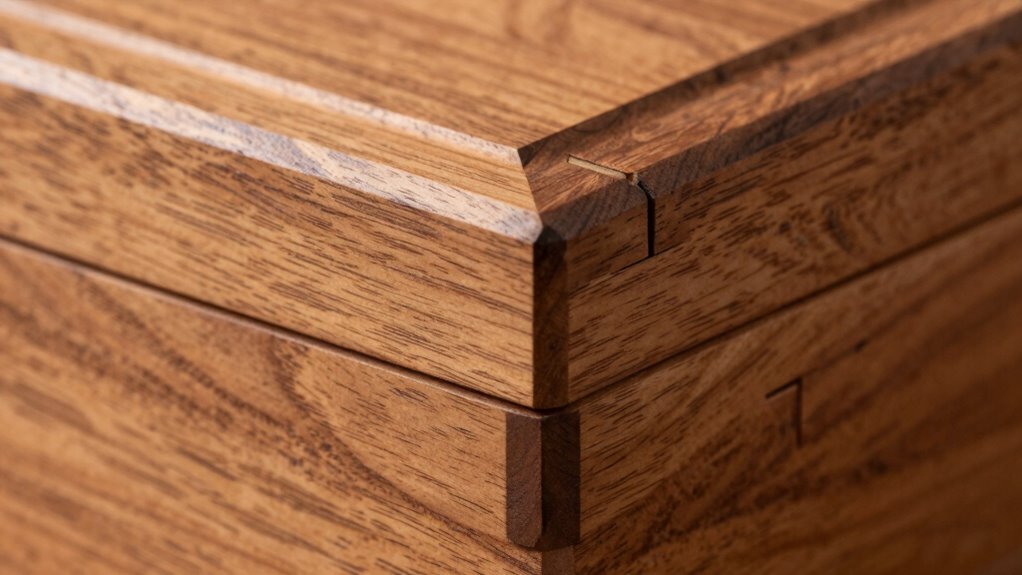
Choosing between box joints and dovetails depends on your project’s needs and your skill level. If you want maximum joint strength and durability, box joints are a solid choice—they’re simple to make and sturdy. Dovetails, on the other hand, excel in aesthetic appeal, showcasing craftsmanship and elegance. Consider these factors:
- Joint Strength: Box joints provide excellent strength for everyday furniture.
- Aesthetic Appeal: Dovetails offer a classic, handcrafted look that impresses.
- Skill Level: Box joints are easier for beginners, while dovetails require more finesse.
- Project Purpose: For functional boxes, box joints work well; for display pieces, dovetails elevate the style.
Choose based on whether you prioritize durability or visual impact—both can work beautifully for your project.
Frequently Asked Questions
Can Box Joints Be Used for Curved or Angled Edges?
Yes, you can use box joints for curved or angled edges. To achieve this, you’ll need to employ curved joint techniques or create custom jigs for angled box joints. These methods allow you to make precise, clean joints on non-straight edges. It takes a bit of planning and adjustments, but with patience and the right tools, you can create beautiful, functional joints that follow curves or angles perfectly.
What Wood Types Are Best Suited for Box Joints?
They say “choose the right tool for the job,” and that applies to wood selection for box joints. Hardwoods like oak, maple, and cherry are your best bet because they offer superior joint durability. Softwoods like pine can work but may wear faster. You want a wood that holds tight and lasts, so pick wisely to guarantee your box joints stay strong and beautiful over time.
How Do I Maintain Consistent Box Joint Spacing?
To maintain consistent box joint spacing, focus on precise measuring techniques and joint alignment. Use a reliable jig or dado stack to ensure uniform cuts, and double-check measurements before cutting each joint. Keep your workpiece steady and align it carefully with your guides. Regularly verify your setup, and take your time to make adjustments as needed. This attention to detail helps achieve perfectly spaced, professional-looking box joints every time.
Are Box Joints Suitable for High-Stress Applications?
Like a sturdy bridge, box joints can handle high-stress applications if made properly. Their joint strength and load capacity depend on the wood type and craftsmanship. When you guarantee tight fit and proper glue-up, box joints offer good durability for drawers or small boxes. However, for extremely demanding tasks, consider reinforced joints or alternative techniques, because while box joints are strong, they might not always be the best choice under heavy, sustained loads.
What Safety Precautions Should I Follow When Making Box Joints?
When making box joints, you should always wear safety gear like goggles and hearing protection to guard against debris and noise. Keep your workspace clean and verify proper tool handling—use push blocks and clamps to maintain control. Stay focused and avoid distractions, and double-check your measurements and blade alignment before cutting. Following these precautions helps prevent accidents and ensures precise, safe woodworking.
Conclusion
Now that you’ve learned how to craft box joints, picture your projects coming together like a puzzle fitting perfectly, each notch snug and precise. With your tools in hand and a steady eye, you can create stunning drawers, boxes, or furniture that not only look beautiful but feel sturdy and reliable. Embrace the process, enjoy the craftsmanship, and watch your woodworking dreams take shape—one perfect joint at a time.
Fall yard work Picks
leaf blowers
As an affiliate, we earn on qualifying purchases.