When you choose between shop-sawn and commercial veneer, you’ll notice a significant difference in the final look. Shop-sawn veneer features handcrafted aesthetics with unique patterns, giving your project rich character and individuality. In contrast, commercial veneer delivers a sleek, uniform appearance that’s perfect for larger installations. If you’re aiming for a standout piece, shop-sawn is the way to go, while commercial suits cohesive designs. Explore how these choices can elevate your project even further.
Key Takeaways
- Shop-sawn veneer showcases unique patterns and textures, enhancing the individuality of each piece.
- Commercial veneer offers a polished, uniform appearance, ideal for modern, cohesive designs.
- The natural variations in shop-sawn veneer contribute to a richer, more organic aesthetic.
- Grain patterns in shop-sawn veneer tell a distinct story, while commercial veneer lacks this character.
- Choosing between the two affects the overall appeal and alignment with design goals.
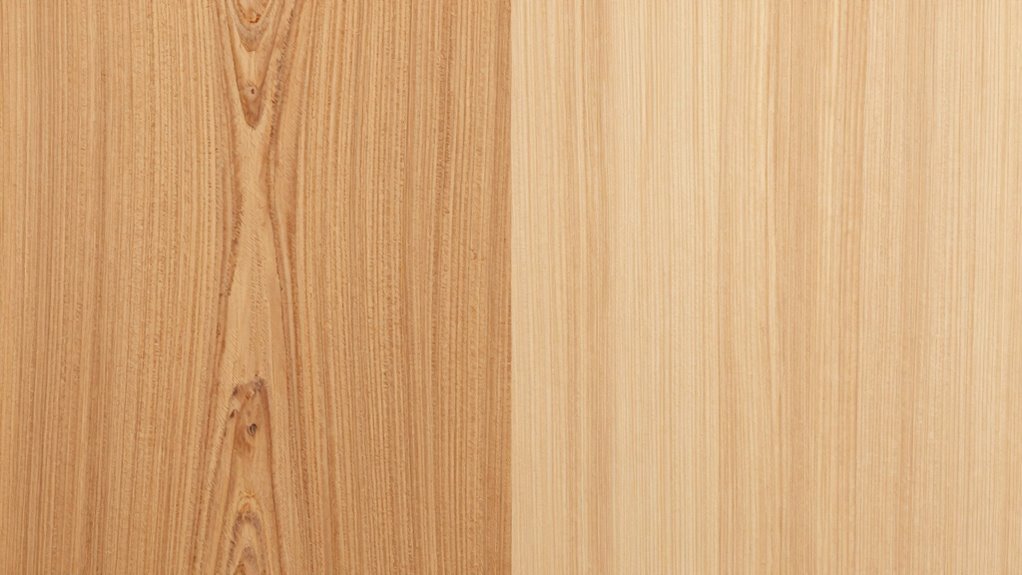
When choosing between shop-sawn veneer and commercial veneer, it’s essential to understand the differences that can impact your project. Both options offer unique characteristics, but they cater to different needs and aesthetics. If you’re aiming for a specific look, knowing how each type is produced will help you make an informed decision.
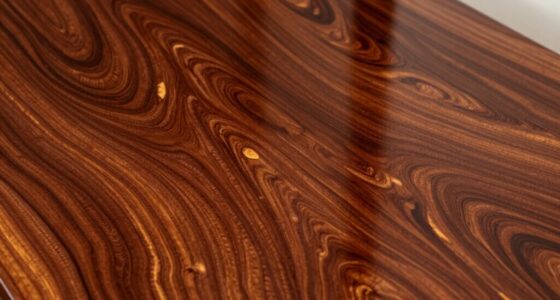
Shop-sawn veneer is often considered a go-to for those who appreciate handcrafted aesthetics. This type of veneer is typically produced in smaller batches, allowing for greater attention to detail. When woodworkers slice veneer from a log in their own shops, they can create unique patterns and textures that reflect the wood’s natural beauty. This method often results in a richer, more organic look, which is ideal if you’re after a bespoke finish that speaks to craftsmanship. The imperfections and variations in color can enhance the character of your project, giving it that artisanal touch. Understanding wood slicing methods can also help you appreciate how different techniques contribute to the appearance and texture of shop-sawn veneer. Additionally, grain patterns play a significant role in the overall visual impact of the veneer and are more prominently showcased in handcrafted slicing processes. Plus, the artisanal approach often results in veneers with more pronounced natural variations, adding to their unique charm.
Shop-sawn veneer embodies handcrafted beauty, offering unique patterns and rich textures that enhance the character of your project.
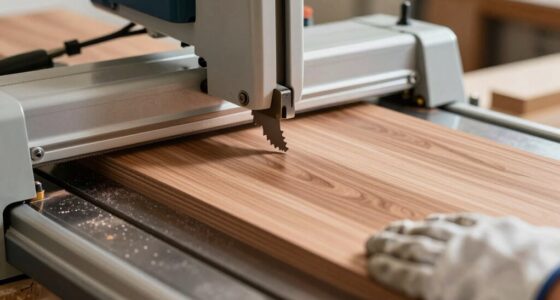
On the other hand, commercial veneer undergoes more standardized manufacturing processes. Typically produced in large quantities, this veneer is sliced using industrial machinery designed for efficiency. While this can lead to consistency in thickness and appearance, it often sacrifices some of the natural charm found in shop-sawn options. If uniformity is important for your project, commercial veneer might be the better choice. It can provide a polished, sleek look but may lack the unique character that sets handcrafted pieces apart.
Consider how you want your final product to feel. If you’re crafting a piece that aims to stand out, shop-sawn veneer can offer that distinct, one-of-a-kind vibe. You’ll likely find that each sheet tells its own story, thanks to the natural variations inherent in the wood. Additionally, understanding wood slicing methods can help you better appreciate the differences in appearance and texture between the two options. Alternatively, for projects needing a cohesive look, particularly in larger installations, commercial veneer can guarantee a streamlined appearance.
Ultimately, the choice between shop-sawn and commercial veneer boils down to the vision for your project. Do you want the handcrafted aesthetics that come with the individuality of shop-sawn veneer, or are you leaning towards the uniformity and efficiency of commercial options? By understanding these nuances, you’ll be better equipped to choose the veneer that aligns with your design goals and enhances the overall appeal of your work.

WoodPress® Real Maple Wood Veneer – Pack of 6 Sheets – US Letter Size (Approx 8 & 1/2" x 11") – Veneer for Marquetry, Crafts, Model Making, Panels, Cabinets and Furniture Repair, School Projects
PREMIUM Maple WOOD VENEER: The wood veneer sheets contained in this pack offer a thickness of 1/32” and…
As an affiliate, we earn on qualifying purchases.
As an affiliate, we earn on qualifying purchases.
Frequently Asked Questions
How Do I Maintain Shop-Sawn Veneer Over Time?
To maintain shop-sawn veneer over time, follow these maintenance tips: regularly dust the surface with a soft cloth to prevent scratches. Use a wood conditioner or polish to enhance its natural beauty and protect it from moisture. When applying finishing techniques, consider a clear coat to seal the veneer and prevent wear. Avoid placing hot items directly on the surface, and keep it away from direct sunlight to prevent fading.
Can Commercial Veneer Be Repaired if Damaged?
Yes, commercial veneer can be repaired if damaged. You can use various repair techniques, such as filling cracks with wood glue or using patches for larger areas. Since commercial veneers typically have a shorter lifespan compared to shop-sawn options, it’s essential to address damage promptly to maintain their appearance. Regular maintenance and careful handling can also extend their life, ensuring your surfaces look great for years to come.
What Is the Cost Difference Between the Two Types?
When you think about the difference in cost between shop-sawn and commercial veneer, it’s like comparing apples to oranges. Generally, shop-sawn veneer tends to be pricier due to its handcrafted quality and unique appearance. In contrast, commercial veneer offers a more budget-friendly option, often mass-produced. Pricing factors include the source of the wood, production methods, and finish. So, weigh your options carefully based on your project needs and budget!
Are There Eco-Friendly Options for Both Veneers?
Yes, there are eco-friendly options for both veneers. You can find shop-sawn and commercial veneers that prioritize sustainable sourcing and come with material certifications, like FSC or PEFC. These certifications guarantee that the wood is harvested responsibly, minimizing environmental impact. When choosing veneers, look for these labels to make a greener choice. By opting for certified products, you’re supporting sustainable practices in the industry and reducing your ecological footprint.
How Do I Choose Between the Two for My Project?
Choosing between shop-sawn and commercial veneer hinges on your design preferences and the aesthetic impact you want to achieve. If you’re drawn to unique, natural patterns, shop-sawn may suit you better. It often offers a more organic look, while commercial veneer provides consistency and uniformity. Consider your project’s overall style and how each type will complement it. Don’t forget to factor in budget and availability to make the best choice for your needs.

Olanglab Wood Veneer Acoustic Wall Panels 6 Pack, 23.6"×47.2" Sound Absorbing Wall Panels for Interior Wall Decor, Cool Oak
Wood Veneer Surface: Acoustic panels showcase a premium wood veneer finish (not solid wood slats) for a smooth,…
As an affiliate, we earn on qualifying purchases.
As an affiliate, we earn on qualifying purchases.
Conclusion
In the world of veneers, shop-sawn veneer is like a hand-painted canvas, rich with unique grains and textures that tell a story, while commercial veneer resembles a mass-produced print, uniform yet lacking in character. Choosing between them is like deciding between a one-of-a-kind masterpiece and a factory replica. Each has its place, but if you want a space that feels alive and authentic, shop-sawn veneer might just be the brushstroke your project needs.

Natural Sapele Wood Veneer Sheets 11"x98" | Ideal for Furniture Restoration, Cabinets, DIY Projects | Handcrafted Real Sapele Veneer for Professionals & Woodworking Enthusiasts
Natural Sapele Wood Veneer: Features rich, reddish-brown color and unique grain patterns, perfect for adding elegance to furniture…
As an affiliate, we earn on qualifying purchases.
As an affiliate, we earn on qualifying purchases.

Wood-All Maple Wood Veneer Sheet, Plain Sliced/Flat Cut, 24×96, A Grade, 10 mil Peel and Stick PSA Backer
REAL WOOD VENEER SHEET – Unfinished and ready for stain and finish. Veneer provides stability and flexibility for…
As an affiliate, we earn on qualifying purchases.
As an affiliate, we earn on qualifying purchases.