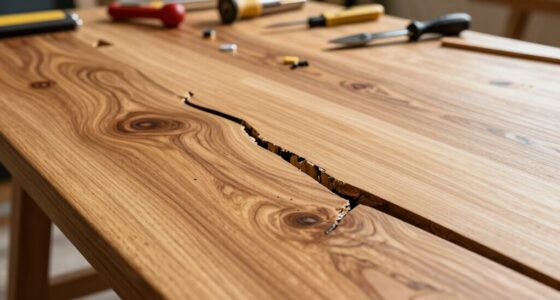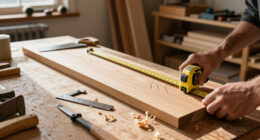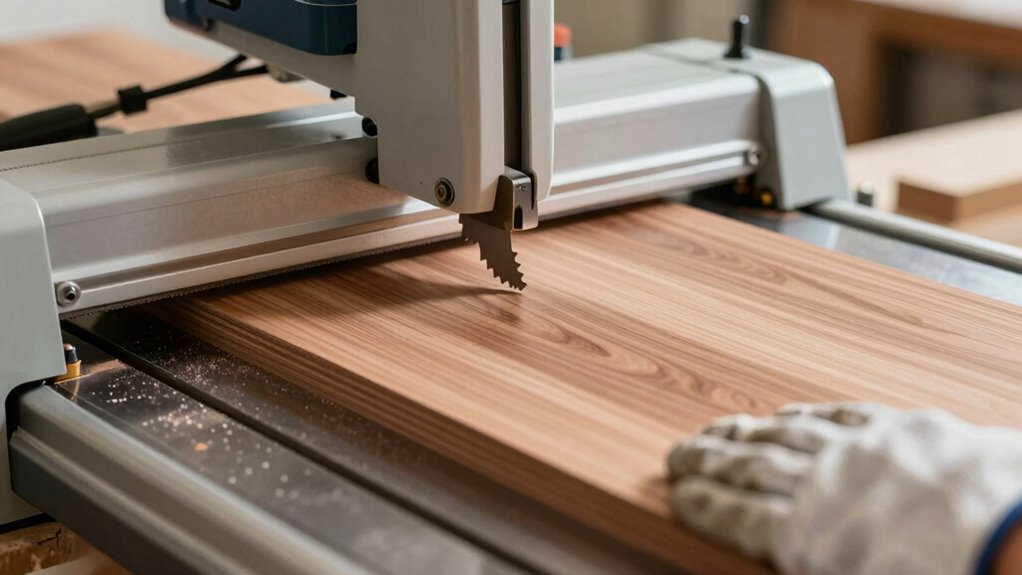

When resawing veneer, your setup and patience matter more than raw horsepower. Aligning the grain correctly and adjusting your blade tension guarantees smooth, clean cuts and minimizes waste. Rushing through the process leads to jagged edges, tearing, and uneven slices. Taking your time to prepare and fine-tune your equipment results in better, more consistent results. Keep going, and you’ll discover how proper technique makes all the difference in achieving professional-quality veneer edges.

Get business pricing on tools and workshop supplies
- Business-only prices and quantity discounts
- Tax-exempt purchasing
- Multiple users, one account, clear invoices
Key Takeaways
- Proper setup, including grain alignment and blade tension, ensures cleaner cuts and reduces waste, regardless of horsepower.
- Patience in preparing the cut minimizes errors and results in a professional finish, outperforming raw power.
- Correct blade tension prevents tearing and splintering, essential for high-quality veneer slices.
- Proper grain orientation reduces the risk of uneven, jagged cuts, which horsepower alone cannot correct.
- Focused setup improves control and consistency, making power less critical for successful veneer resawing.
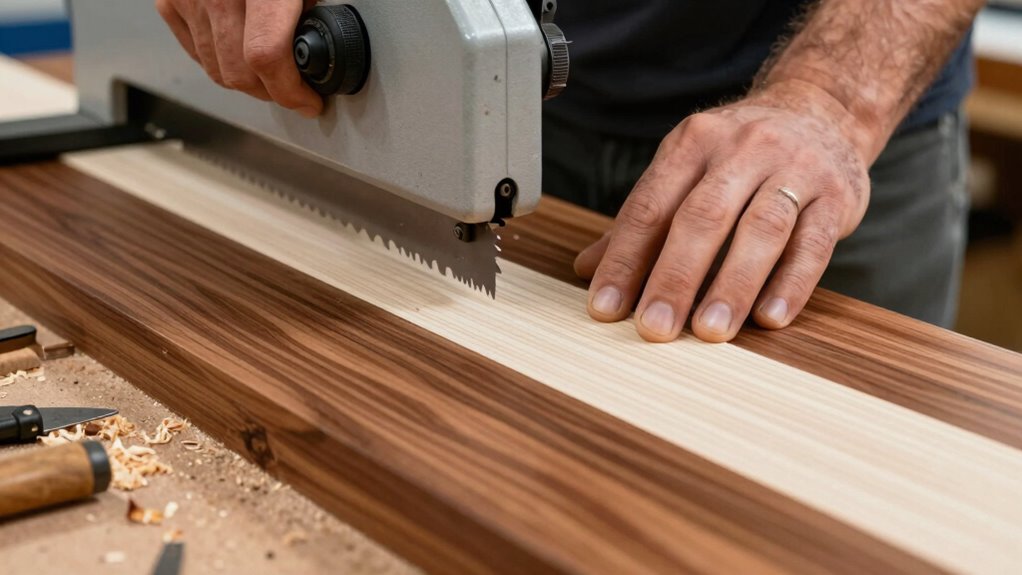
Have you ever wondered how to turn a thick sheet of veneer into thinner, more workable slices? Resawing veneer isn’t just about cranking up your saw’s horsepower; it’s about understanding a few key setup details that make all the difference. When you’re slicing through veneer, the two most critical factors are grain alignment and blade tension. Getting these right ensures cleaner cuts, less waste, and a more professional finish.
First, focus on grain alignment. Veneer grain runs in specific directions, and if you neglect this, your cuts can be jagged or uneven. Before you start, examine the sheet carefully to identify the grain pattern. Always align the veneer so you’re cutting parallel to the grain if you want a smooth, consistent surface. This reduces tearing and helps your veneer stay intact. When you position the veneer on your work surface or in the saw’s jig, make sure the grain runs straight and true along the cut line. Ignoring grain orientation can lead to splintering, which ruins both the look and strength of your veneer slices. Additionally, understanding grain orientation can help you plan your cuts more effectively, minimizing waste. Taking the time to plan your cuts based on grain direction can also improve your overall efficiency and yield.
Align the veneer grain parallel to the cut line for smoother, stronger slices and to prevent splintering.
Next, pay close attention to blade tension. A dull or poorly tensioned blade drags through the veneer, creating rough edges and increasing the risk of burning or chipping. A properly tensioned blade stays straight and stable during the cut, providing a cleaner, more precise slice. To check tension, consult your saw’s manual and ensure the blade is tight enough so it doesn’t wobble or deflect under pressure. Remember, too much tension can cause the blade to break or warp, so find that sweet spot where the blade remains firm but not overstressed. Proper tension reduces vibration and helps you maintain control, resulting in cleaner cuts and less frustration. Ensuring correct blade tension can significantly elevate your veneer resawing results, making the process smoother and more predictable.
veneering resawing blade tension gauge
As an affiliate, we earn on qualifying purchases.
As an affiliate, we earn on qualifying purchases.
Frequently Asked Questions
What Types of Wood Are Best for Veneer Resawing?
You’ll want to choose woods with straight, tight grain patterns like maple, cherry, or walnut for veneer resawing. These woods produce cleaner cuts and help maintain consistent veneer thickness. Avoid woods with irregular grain or interlocking patterns, as they can cause tearing or uneven thickness. Selecting stable, well-seasoned wood guarantees easier setup, reduces machine strain, and results in smooth, uniform veneer sheets.
How Do I Prevent Tear-Out During Resawing?
Don’t bite off more than you can chew; slow your feed rate and pay close attention to grain direction. Always align the veneer’s grain with your cut, and make gentle, steady passes. Using a sharp blade and a zero-clearance insert minimizes tear-out. Taking your time and adjusting feed rate accordingly lets you keep the veneer smooth, avoiding tear-out and ensuring a quality cut every time.
What Safety Precautions Are Essential for Veneer Resawing?
To guarantee safe operating during veneer resawing, always wear protective gear like safety glasses and hearing protection. Keep your hands clear of the blade and use push sticks when necessary. Make certain your equipment is properly maintained and set up correctly before starting. Stay focused, avoid distractions, and never rush the process. These safety precautions help prevent accidents and ensure a smooth, safe resawing experience.
How Do Blade Sharpness and Tension Affect Veneer Quality?
You’ll notice that blade sharpness and tension directly impact veneer quality. Keep your blade well-maintained and sharp to guarantee clean cuts, reducing tear-out. Proper tension adjustment is essential; too loose causes wobbling, while too tight risks blade breakage. Regularly check and adjust tension, and prioritize blade maintenance to achieve smooth, precise veneers. This focus on setup and patience produces better results than relying solely on horsepower.
Can I Resaw Veneer on a Standard Band Saw?
Yes, you can resaw veneer on a standard bandsaw. To get the best results, focus on proper blade alignment and control your cutting speed—slower speeds help prevent tear-out and ensure cleaner cuts. Take your time to set up the machine correctly, adjusting tension and guides. Patience and precision are key; rushing can lead to rough edges or wasted material, no matter how powerful your saw is.
woodworking veneer saw setup tools
As an affiliate, we earn on qualifying purchases.
As an affiliate, we earn on qualifying purchases.
Conclusion
Remember, when resawing veneer, patience and proper setup are your best tools—more than horsepower alone. A well-prepared machine with the right blade and steady feed can produce smoother, more consistent slices. In fact, studies show that a carefully set-up resawing process reduces material waste by up to 30%. So, take your time, double-check your setup, and trust in your technique; the quality of your veneer will thank you for it.
grain alignment jig for veneer cutting
As an affiliate, we earn on qualifying purchases.
As an affiliate, we earn on qualifying purchases.
professional veneer resawing saw
As an affiliate, we earn on qualifying purchases.
As an affiliate, we earn on qualifying purchases.
Halloween Picks
halloween
As an affiliate, we earn on qualifying purchases.