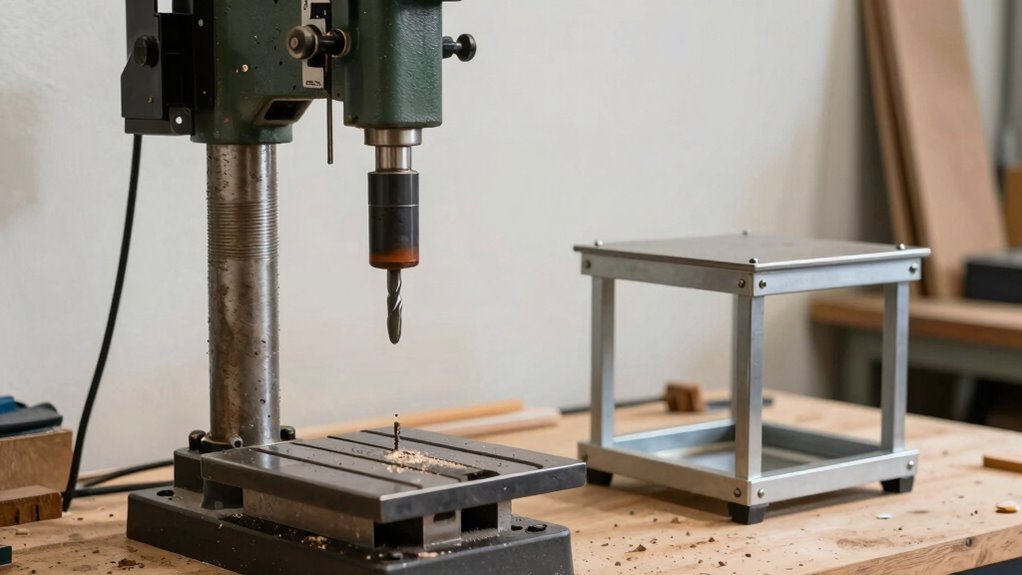

When choosing between a floor and benchtop drill press, consider your project size, workspace, and power needs. A floor model offers more stability, higher horsepower, and handles heavy-duty tasks, perfect for large or tough materials. A benchtop is portable, compact, and suitable for lighter, precise work in smaller spaces. To find out which fits your work best and guarantees the right tool for your tasks, explore the details further.

Get business pricing on tools and workshop supplies
- Business-only prices and quantity discounts
- Tax-exempt purchasing
- Multiple users, one account, clear invoices
Key Takeaways
- Choose a floor drill press for heavy-duty, large-material projects requiring higher power and stability.
- Opt for a benchtop model if space is limited or for lighter, precision tasks.
- Consider portability if frequent moving or mobile work setups are needed.
- Assess workspace size: larger workshops can accommodate heavy, floor-standing units.
- Match your project complexity and material demands to the drill press’s power and stability features.
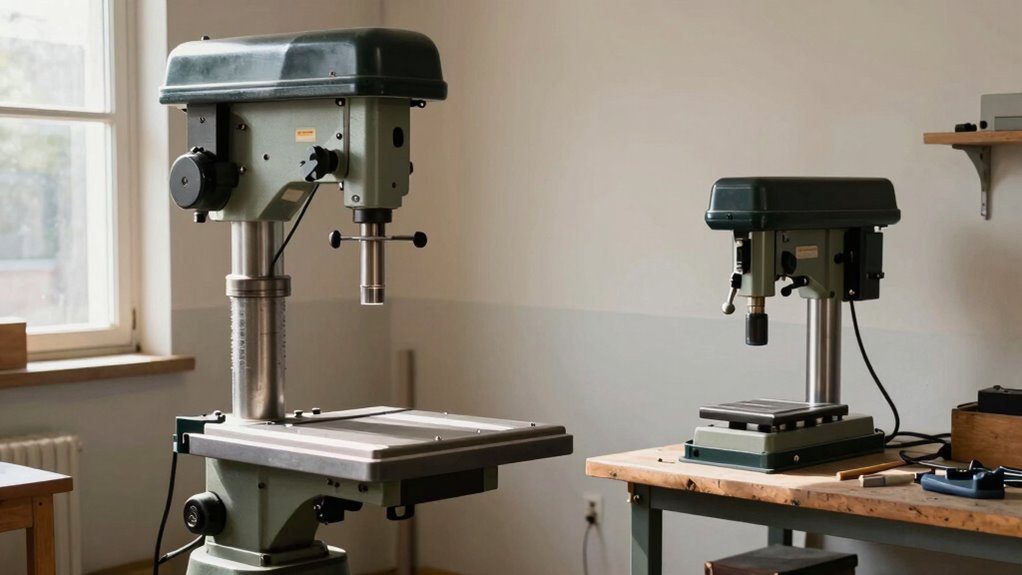
When choosing between a floor drill press and a benchtop model, understanding their differences can help you make the best decision for your workshop. One of the key factors to think about is motor power. Floor drill presses generally come with more powerful motors, which means they can handle larger, tougher materials with ease. If you often work with thick wood, metal, or dense composites, a floor model might be the better choice. These machines typically offer higher horsepower, providing the necessary torque for demanding projects. Benchtop models, on the other hand, tend to have smaller motors, which are perfectly adequate for lighter tasks like drilling small holes in softwood or working on delicate projects. If your work doesn’t require heavy-duty drilling, a benchtop can be more than sufficient. Additionally, motor power is a crucial factor that influences the overall capability and efficiency of your drilling tasks. The type of motor also affects noise levels and energy consumption, which can be important considerations depending on your workspace environment. A motor’s efficiency can also impact long-term operational costs and maintenance needs.
Floor drill presses offer more power for tough, demanding projects, while benchtop models excel at lighter, precision work.
Portability concerns also play a significant role in your decision. Floor drill presses are larger and heavier, often weighing hundreds of pounds, which makes them less portable. If you have a dedicated workshop space and rarely need to move your equipment, a floor model won’t be an issue. But if you need to transport your drill press between work sites or store it in a closet when not in use, a benchtop model offers clear advantages. Benchtop drill presses are compact, lightweight, and designed to sit securely on a workbench or stand. This portability makes them ideal for hobbyists or those with limited space. Plus, they’re easier to set up and store when not in use, giving you flexibility without sacrificing much in terms of power or precision for smaller projects. Space-saving features can be particularly beneficial for small workshops or mobile setups.
Another aspect to weigh is stability. Floor drill presses generally provide greater stability because of their weight and larger base, resulting in fewer vibrations during operation. This stability translates into more accurate drilling, especially on larger or tougher workpieces. Conversely, benchtop models, while stable enough for light work, may vibrate more if pushed beyond their limits or if placed on uneven surfaces. To maximize accuracy, proper setup and placement are essential regardless of the model you choose. Regular maintenance and proper alignment can also help maintain drilling accuracy over time. Ensuring your workspace is level and secure can further improve your drilling results and prolong the lifespan of your machine. Additionally, some users may opt for adjustable bases or vibration dampening accessories to enhance stability further.
Ultimately, your choice hinges on what you prioritize—power and stability or portability and space-saving features. If you frequently tackle heavy-duty projects and have a dedicated space, a floor drill press makes sense. But if you’re working within a small workshop, need to move your equipment easily, or mainly perform lighter tasks, a benchtop model offers a practical, efficient solution. Understanding these differences ensures you pick the right tool that fits your specific work needs and workspace constraints.
floor drill press for heavy-duty woodworking
As an affiliate, we earn on qualifying purchases.
As an affiliate, we earn on qualifying purchases.
Frequently Asked Questions
Which Type Is More Portable for Mobile Workshop Setups?
A benchtop drill press is more portable for your mobile workshop setup because it’s lightweight and easier to move around. Its compact size makes it ideal for a portable setup, allowing you to carry it without much hassle. When considering weight considerations, a benchtop model typically weighs less than a floor drill press, making it the better choice if mobility and convenience matter most for your work on the go.
How Does Noise Level Compare Between the Two Options?
Noise levels are generally lower with benchtop drill presses because they’re smaller and have less powerful motors, making them less of a sound bomb. Floor drill presses tend to be louder, with higher sound levels due to their larger motors and heavier construction. While it’s often said that “you get what you pay for,” in this case, a benchtop might be your quieter option if noise is a concern.
Are There Safety Concerns Unique to Each Drill Press Type?
You should always wear safety gear like goggles and ear protection when using either drill press. Floor models might pose stability risks if not secured properly, so follow emergency procedures for accidents or jams. Benchtop presses are more manageable but still require caution to avoid slips or debris hazards. In both cases, staying alert and knowing emergency steps guarantees safe operation, reducing injury risk and equipment damage.
Which Model Offers Better Precision for Detailed Work?
Like a steady hand guiding a delicate brush, a floor drill press offers superior precision for detailed work. Its robust motor stability reduces vibrations, enhancing drill accuracy. The larger, more stable base minimizes movement, allowing you to focus on intricate tasks. In contrast, benchtop models, while convenient, may lack the same stability, making them less ideal for projects demanding high precision. Choose the model that aligns with your need for meticulous craftsmanship.
What Are the Typical Maintenance Requirements for Each?
You need to follow maintenance schedules and lubrication routines for both machines to keep them running smoothly. For a floor drill press, regularly check and replace belts, and lubricate moving parts every few months. Benchtop models require less frequent maintenance but still need periodic cleaning and lubrication of the spindle and gears. Always consult the user manual for specific intervals to guarantee peak performance and longevity.
benchtop drill press for precision tasks
As an affiliate, we earn on qualifying purchases.
As an affiliate, we earn on qualifying purchases.
Conclusion
Ultimately, choosing between a floor drill press and a benchtop depends on your workspace and projects. Imagine you’re building a custom bookshelf; if you have limited space, a benchtop model allows you to drill precisely without clutter. Conversely, for heavy-duty tasks like furniture making, a floor drill press offers stability and power. Think about your typical projects—select the one that best supports your creativity and workflow for smoother, more confident drilling.
As an affiliate, we earn on qualifying purchases.
heavy-duty floor standing drill press
As an affiliate, we earn on qualifying purchases.
As an affiliate, we earn on qualifying purchases.
Halloween Picks
halloween
As an affiliate, we earn on qualifying purchases.