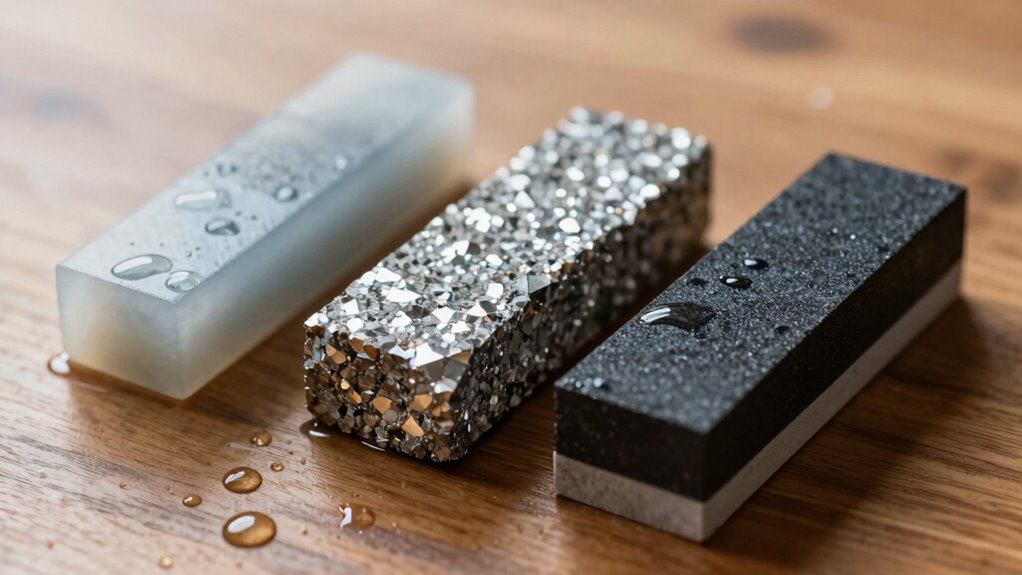

When choosing between waterstones, diamond stones, and oilstones, you’ll find distinct maintenance trade-offs. Waterstones require soaking and regular flattening but offer a fine finish. Diamond stones are low-maintenance and durable, saving you money in the long run despite the higher upfront cost. Oilstones provide a traditional sharpening experience, needing oil but lasting impressively. Your choice depends on how much effort you want to invest. Discover more about how each option fits your sharpening needs.

Get business pricing on tools and workshop supplies
- Business-only prices and quantity discounts
- Tax-exempt purchasing
- Multiple users, one account, clear invoices
Key Takeaways
- Waterstones require soaking and regular flattening, increasing maintenance efforts despite their low initial cost.
- Diamond stones demand minimal maintenance, offering durability and consistent performance without the need for soaking.
- Oilstones require oil for lubrication, which can be tedious, but they provide a traditional sharpening experience with long-lasting effectiveness.
- Waterstones have the cheapest upfront cost but incur higher long-term maintenance expenses compared to diamond stones.
- User preferences heavily influence stone choice; maintenance levels vary significantly between waterstones, diamond stones, and oilstones.
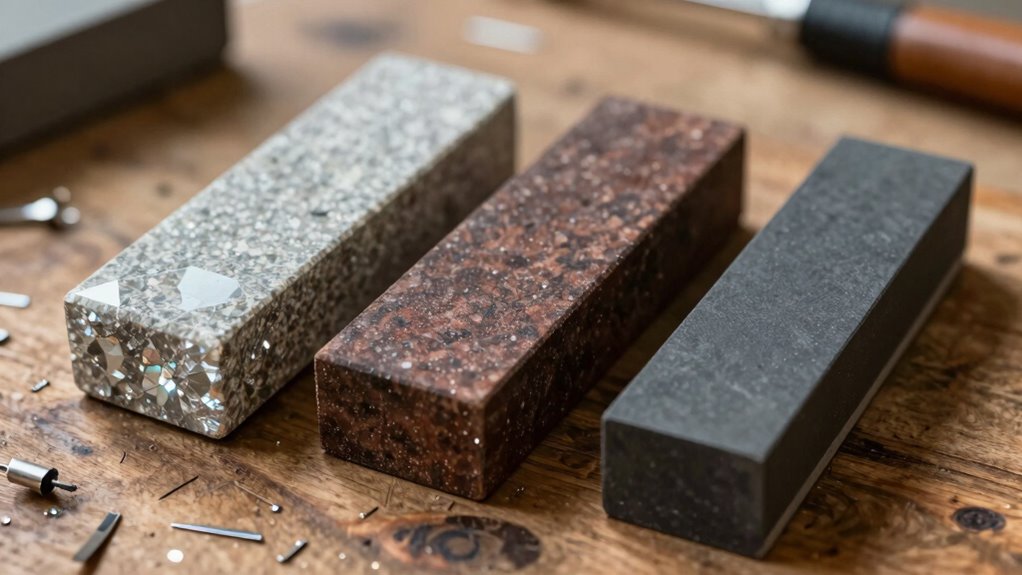
When it comes to sharpening your tools, choosing between waterstones, diamond stones, and oilstones can feel overwhelming. Each option offers unique advantages and challenges, and understanding their maintenance tradeoffs can help you make an informed decision. Let’s explore how these sharpening stones compare regarding performance, longevity, and user preferences.
Waterstones are popular for their fast cutting action and fine finish. They often come in a range of grits, which allows for precise sharpening techniques. However, they require regular maintenance to keep them flat, and you’ll need to soak them in water before use. This maintenance frequency can be a hassle for some, especially if you’re in a hurry. Still, many woodworkers prefer waterstones for their ability to produce razor-sharp edges. Regular flattening is essential to maintain their effectiveness and ensure consistent results. Additionally, proper storage helps prevent them from deteriorating prematurely. The moisture retention of waterstones also plays a role in their effectiveness and maintenance needs.
Waterstones excel in fast cutting and fine finishes, but their maintenance and soaking requirements can be a hassle for some users.
On the other hand, diamond stones offer durability and convenience. They don’t need soaking and tend to last longer than waterstones or oilstones. Their grit comparison shows that they provide consistent performance across various materials. While they might be pricier, a good diamond stone can last for years without losing its cutting ability. If you value longevity and low maintenance, diamond stones might be your go-to choice.
Oilstones, while less commonly used today, still have their proponents. They require oil for lubrication, which some users find tedious. However, their longevity is impressive, and they offer a different sharpening experience. The performance differences between oilstones and other stones can be noticeable, particularly for those who prefer a traditional honing method. You’ll often find that oilstones can achieve a keen edge, but they may not be as fast or convenient as waterstones or diamond stones. Additionally, oilstones often have a traditional appeal that many enthusiasts value. Their slower cutting speed can be advantageous for delicate sharpening tasks, providing greater control. For those interested in traditional honing, oilstones can be a satisfying choice. Proper cleaning and oiling help prolong their lifespan and maintain their effectiveness.
In a cost analysis, waterstones might be the cheapest initial investment, but factor in the frequent maintenance and replacement costs. Diamond stones, while more expensive upfront, usually save you money in the long run due to their durability. Oilstones sit somewhere in the middle, offering a reasonable balance of cost and longevity.
Ultimately, your choice will depend on your user preferences. If you enjoy the ritual of sharpening and don’t mind the maintenance, waterstones could be ideal. If you’re looking for ease and longevity, consider diamond stones. And if you appreciate tradition, oilstones may resonate with you. Understanding these aspects will guide you toward the sharpening stone that fits your needs best.
As an affiliate, we earn on qualifying purchases.
Frequently Asked Questions
Can I Use These Stones for Sharpening Kitchen Knives?
Yes, you can use these stones for sharpening kitchen knives! Each type offers different advantages based on your sharpening technique. Waterstones provide a fine finish with their varying stone grit, while diamond stones are durable and require less maintenance. Oilstones are great for those who prefer a traditional approach. Choose the one that fits your needs best, and you’ll keep your knives sharp and ready for use in no time!
How Often Should I Replace My Sharpening Stone?
You should replace your sharpening stone when you notice significant stone wear, typically after several months to a few years, depending on your sharpening frequency. If you’re sharpening knives daily, you might need to switch stones sooner. Keep an eye out for uneven surfaces or grooves, as these can affect the sharpening process. Regular maintenance can extend your stone’s life, but don’t hesitate to replace it when it’s no longer effective.
Are Any of These Stones Better for Beginners?
If you’re just starting out, you might find diamond stones to be your best friend. They’re user-friendly and require little maintenance, letting you focus on mastering your sharpening techniques. Waterstones can be a bit more high-maintenance, while oilstones often involve a learning curve. So, for beginner preferences, diamond stones offer a smooth introduction, helping you develop confidence without the fuss. Immerse yourself and enjoy the journey of sharpening!
What Is the Average Lifespan of Each Stone Type?
The average lifespan of each stone type varies. Waterstones last around 1-5 years, depending on usage and care. Diamond stones can last a lifetime due to their durability, making them a great investment. Oilstones typically last several years but may wear down faster if not maintained properly. For sharpening efficiency, diamond stones excel, while waterstones offer a finer finish. Choose based on your needs and how often you sharpen.
Do These Stones Require Special Storage Conditions?
You’ll find that these stones don’t need overly special storage conditions, but they do thrive in specific environments. Ideally, keep them at room temperature, between 60°F and 80°F, and maintain humidity levels around 40-60%. Notably, proper storage can extend a stone’s lifespan by up to 50%. Avoid damp areas to prevent mold, and store them flat to prevent warping. With a little care, your stones can last much longer!
diamond sharpening stones for knives
As an affiliate, we earn on qualifying purchases.
As an affiliate, we earn on qualifying purchases.
Conclusion
When choosing between waterstones, diamond stones, and oilstones, it really comes down to your needs and how much maintenance you’re willing to put in. For instance, if you’re a woodworker like Sarah, who loves the quick results of waterstones but hates the fuss, she might opt for diamond stones instead. They’re low-maintenance and perfect for her busy schedule, allowing her to focus more on her projects and less on sharpening. Choose wisely, and your tools will thank you!
As an affiliate, we earn on qualifying purchases.
As an affiliate, we earn on qualifying purchases.
Halloween Picks
halloween
As an affiliate, we earn on qualifying purchases.