TL;DR

Get business pricing on tools and workshop supplies
- Business-only prices and quantity discounts
- Tax-exempt purchasing
- Multiple users, one account, clear invoices
A House Beautiful report shares four design approaches intended to make stairs safer without giving up visual appeal: add lighting, fit a stair runner securely, maintain a continuous handrail and reduce gaps between balusters. The recommendations come from designers; local building requirements and the needs of a particular home still matter.
House Beautiful has published four designer recommendations for making stairs safer while preserving their appearance: improve lighting, install a firmly secured runner, provide a continuous handrail and use closely spaced balusters. The advice is aimed at households with people who may be more vulnerable to falls, including older adults, young children and small pets.
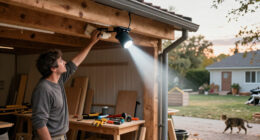
Lighting is one of the first changes Terri Fiori, founder of Fiori + Co. and a Certified Aging in Place specialist, recommends. The report describes a renovation where recessed stairwell lights were combined with touch-activated LED lighting beneath the handrail. Fiori said the arrangement helped address shadows and gave children who might not reach a wall switch another way to turn on light. The report does not provide measurements or independent safety testing for that project.
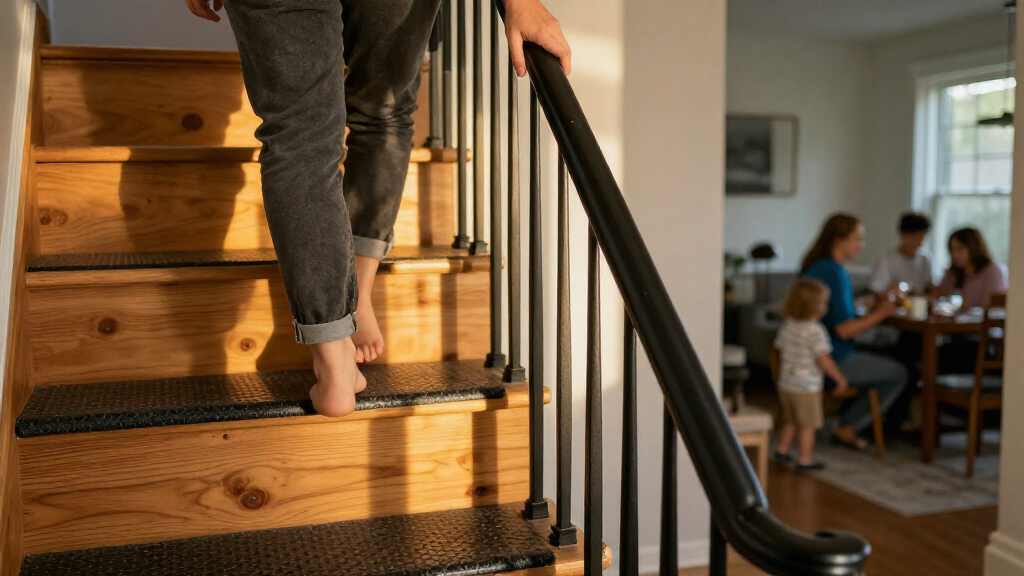
For steep or narrow stairs, designer Caroline Aycock recommends a stair runner to help reduce slipping while adding a pattern or color. Fiori cautions that how the runner is attached matters: she recommends a “Hollywood” installation, in which fabric follows each tread and is secured beneath the nosing and to the riser, rather than a loose waterfall-style fit. Her explanation is that securing the runner helps limit movement and stretching.
The other recommendations address handrails and balusters. Designer Prudence Bailey suggests adding a second continuous handrail where a break occurs, including at a landing between flights; she says the rail can also be treated as a design feature. Designer Shannon Crain favors closely spaced vertical balusters when existing gaps are too wide. The report gives four inches as a general rule of thumb for maximum spacing, while noting that building codes vary by location.
Safety Features That Fit the Home
Stairs combine changes in height with everyday foot traffic, so a poorly lit tread, loose floor covering, interrupted rail or wide baluster gap can create a hazard for some household members. The designers’ suggestions matter because they frame safety improvements as part of a home’s design, rather than as features that must be hidden or treated as purely utilitarian.
The advice is not a substitute for checking a staircase’s condition or applicable codes. A runner that looks secure may still be improperly fitted, and a visually appealing handrail may not be sturdy or easy to grip. Homeowners planning changes should weigh the needs of everyone using the stairs and seek qualified installation or local guidance where needed.
As an affiliate, we earn on qualifying purchases.
Four Updates From Designers
The House Beautiful report gathers advice from designers who work on residential interiors, including historic homes and projects involving aging-in-place considerations. Its examples include an ombré runner in a historic Pittsburgh home and patterned runners used to make narrow staircases more distinctive. The piece presents these as design examples and professional recommendations, not as a comparative study of fall rates.
Its four suggestions cover different parts of a staircase: visibility, traction, support and gaps between balusters. Lighting can make treads easier to see; a tightly fitted runner is intended to reduce movement underfoot; a continuous rail offers a place to hold; and closer balusters can reduce openings that may pose a risk to children or pets. Local building rules differ, so the report’s four-inch spacing guidance should not be read as a universal code requirement.
“Recessed lighting plus handrail lighting ensured that shadows on the steps were eliminated and a trip to the ER avoided.”
— Terri Fiori, founder of Fiori + Co. and a Certified Aging in Place specialist, as quoted by House Beautiful
As an affiliate, we earn on qualifying purchases.
Code Rules and Results Vary
The report does not quantify how much any of the four changes reduces falls, nor does it compare installation methods through testing. Fiori’s account of avoiding an emergency-room trip is her description of a project, not evidence establishing that the lighting alone prevented an injury.
Exact requirements for rails, baluster spacing and stair construction depend on location and circumstances. The article’s four-inch spacing figure is presented as a rule of thumb, not a definitive code standard. It also does not specify product ratings, installation costs, or whether a given solution will suit every staircase. Readers should check local rules and assess the actual condition and dimensions of their stairs before making changes.
As an affiliate, we earn on qualifying purchases.
Check the Staircase Before Updating
The recommendations are practical starting points, not a reported policy change or formal safety standard. Homeowners considering an update can first identify dim areas, loose or worn coverings, gaps in handrails and openings between balusters. They can then confirm applicable local requirements and choose materials and installation methods suited to the staircase and its users.
No follow-up study or further announcement is identified in the source material. The next step for an individual household is to check its own stair conditions and local code requirements; whether any specific alteration improves safety will depend on the home, the installation and the people using it.
closely spaced balusters for stairs
As an affiliate, we earn on qualifying purchases.
As an affiliate, we earn on qualifying purchases.
Key Questions
What four stair updates does the report recommend?
It recommends adding lighting, fitting a stair runner securely, maintaining a continuous handrail and using closely spaced balusters. These are designer suggestions, not a guarantee that a staircase will be hazard-free.
What is a Hollywood-style stair runner installation?
In the report, it means the runner follows the shape of each tread and is secured beneath the step’s nosing and to the riser. Terri Fiori recommends it over a waterfall-style fit because, she says, it limits movement and stretching.
How far apart should stair balusters be?
The report gives no more than four inches as a general rule of thumb, but says building codes vary by location. Check the requirements that apply to your home rather than treating the figure as a universal code rule.
Can a safety handrail also be decorative?
Yes. Designer Prudence Bailey says a sturdy, easy-to-grip handrail can be a design feature. Appearance should not come at the expense of a secure installation or a grip that works for the people using the stairs.
Source: rss
Fall yard work Picks
leaf blowers
As an affiliate, we earn on qualifying purchases.