
Proper lathe belt tension is key to smooth turning. If the belt sags or feels loose, you’re risking slippage and inaccuracies. Check the tension by pressing down gently; any movement over half an inch means it’s too loose. Use the tension adjustment mechanism to tighten it up without making it overly tight. Regular checks can enhance your machining outcomes considerably. Stick around to discover more tips on maintaining your lathe for top performance.

Get business pricing on tools and workshop supplies
- Business-only prices and quantity discounts
- Tax-exempt purchasing
- Multiple users, one account, clear invoices
Key Takeaways
- Proper belt tension is crucial for lathe performance, preventing slippage and inaccuracies during turning operations.
- Check belt tension by pressing gently; over half-inch movement indicates looseness and the need for adjustment.
- Use the tension adjustment mechanism, adjusting bolts or screws while maintaining some resistance for balance.
- After adjusting, ensure the belt doesn’t sag and secure all fasteners before testing the lathe for unusual noises.
- Regularly inspect and adjust belt tension to extend equipment life and enhance machining quality.

Adjusting the tension on your lathe’s belt is essential for ideal performance, and it can make a significant difference in your machining results. When the belt is too loose, you might experience slippage, which can lead to inaccuracies in your workpiece. On the other hand, if it’s too tight, you risk excessive wear on both the belt and the pulleys. Understanding how to adjust the tension correctly not only prolongs the life of your equipment but also enhances the quality of your projects.
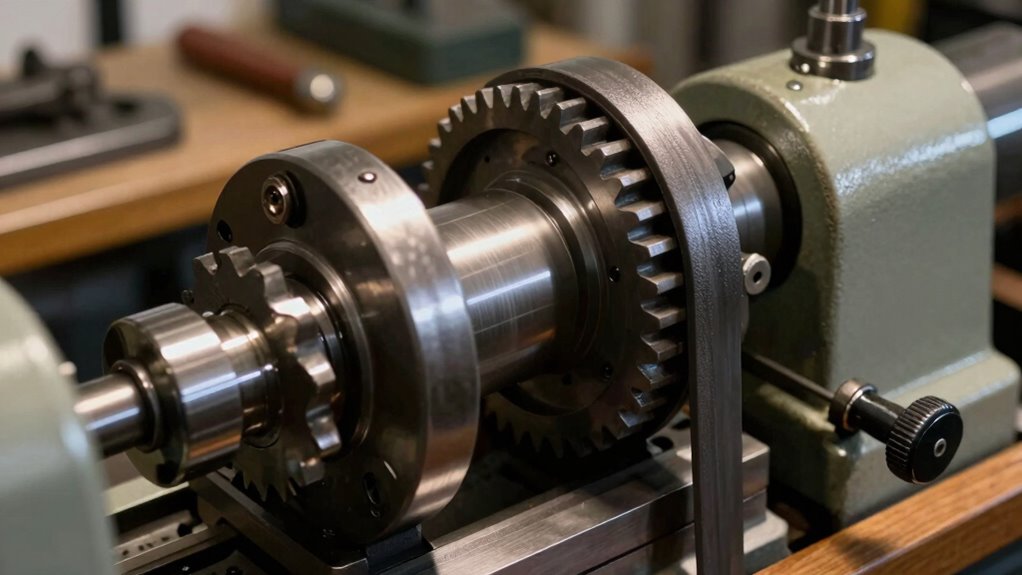
First, you’ll want to check the current tension of the belt. To do this, press down gently on the belt midway between the pulleys. If it moves more than a half-inch, it’s likely too loose. A proper tension keeps the belt tight enough to avoid slippage but not so tight that it causes unnecessary strain. Keeping an eye on belt wear is vital; a worn belt can lead to inefficient operation and may even snap if neglected.
Check your lathe’s belt tension regularly; too loose can cause slippage, while too tight leads to excessive wear.
Next, you’ll need the right tools for the adjustment. Most lathes come with a tension adjustment mechanism, typically a series of bolts or a tensioning screw. Locate this mechanism and loosen it slightly. Don’t overdo it; you want to maintain some resistance while making your adjustments. Once loosened, gently pull on the belt or adjust the screw to increase tension. Aim for a balance that allows for a little flex but doesn’t sag.
After you’ve adjusted the tension, tighten the bolts or screw to secure the belt in place. Always double-check your work by running the lathe for a short period. Listen for any unusual noises, which could indicate that the tension isn’t quite right. If everything sounds good, you’re on the right track. Regular tension maintenance is key; you should make it a habit to check the belt tension before starting new projects.
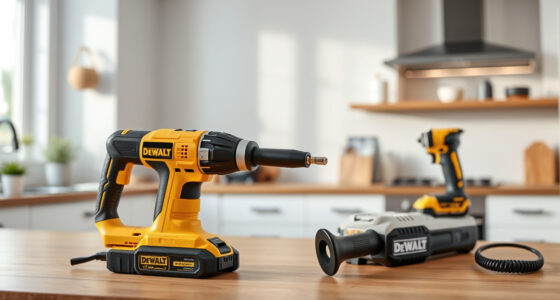
lathe belt tension adjustment tool
As an affiliate, we earn on qualifying purchases.
As an affiliate, we earn on qualifying purchases.
Frequently Asked Questions
How Often Should I Check My Lathe Belt Tension?
You should check your lathe belt tension regularly, ideally every few weeks or after significant usage. Consistent belt maintenance is key to ensuring smooth operation. If you notice any slipping or unusual vibrations, it’s time for tension adjustments. Keeping an eye on the belt condition helps prevent costly repairs and enhances your lathe’s performance. Don’t wait until problems arise; proactive checks can save you time and hassle in the long run.
What Tools Do I Need for Adjusting Belt Tension?
Adjusting belt tension is like tuning a guitar; the right tools make all the difference. For this task, you’ll need a few essential belt tension tools: a wrench, a screwdriver, and possibly a tension gauge. Mastering adjustment techniques with these tools guarantees your lathe runs smoothly. Don’t forget to check for wear and tear while you’re at it, keeping everything in harmony for your projects ahead.
Can Improper Belt Tension Cause Lathe Damage?
Yes, improper belt tension can definitely cause lathe damage. If the belt’s too loose, it can slip, leading to vibration issues that affect your work’s precision. Over time, this can increase belt wear and even damage the lathe’s components. On the other hand, if the belt’s too tight, it can put excessive strain on the motor and bearings. Regularly checking and adjusting the tension helps maintain your lathe’s performance and longevity.
Are There Signs Indicating My Belt Tension Is Too Loose?
Yes, there are clear signs your belt tension’s too loose. You might notice excessive belt wear or hear unusual vibrations during operation. If the lathe’s performance feels inconsistent or if the belt slips, those are red flags too. Regularly check for these indicators to maintain ideal functionality. Addressing loose tension promptly can prevent further issues, ensuring your lathe runs smoothly and efficiently. Don’t overlook these signs; they’re essential for your machine’s longevity.
What Is the Ideal Tension for Different Lathe Models?
Think of your lathe’s belt tension like the strings on a guitar; too loose, and it sounds off. The ideal tension varies by model, but generally, you want it snug enough to prevent belt wear and vibration issues. Check your manufacturer’s guidelines for specifics, and adjust accordingly. A well-tuned belt not only enhances performance but also prolongs the life of your lathe, ensuring smooth and efficient operation every time you use it.
As an affiliate, we earn on qualifying purchases.
Conclusion
In the world of turning, proper lathe belt tension is your secret weapon. By making this simple adjustment, you’ll transform your machine from a clunky beast into a smooth operator, gliding through projects with ease. Don’t let loose belts derail your creativity; tighten them up and watch your craftsmanship shine. Just like a well-tuned instrument, your lathe deserves precise care to hit all the right notes. So, take a moment to adjust and enjoy the harmony of smooth turning!
As an affiliate, we earn on qualifying purchases.
As an affiliate, we earn on qualifying purchases.
Fall Picks
fall essentials
As an affiliate, we earn on qualifying purchases.