
TL;DR

Get business pricing on tools and workshop supplies
- Business-only prices and quantity discounts
- Tax-exempt purchasing
- Multiple users, one account, clear invoices
A Hunker report describes DIYers on social media using picture frames and other open-front decor to make thermostats less prominent on walls. The ideas are adaptable, but enclosed or obstructed coverings can interfere with airflow and temperature readings.
DIYers are using picture frames, baskets and small boxes to make wall thermostats blend into home decor, according to a report by Hunker. The projects offer a way to make the devices less prominent while keeping them reachable, but coverings that restrict airflow can affect thermostat readings.
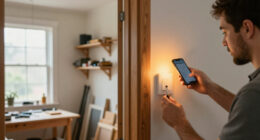
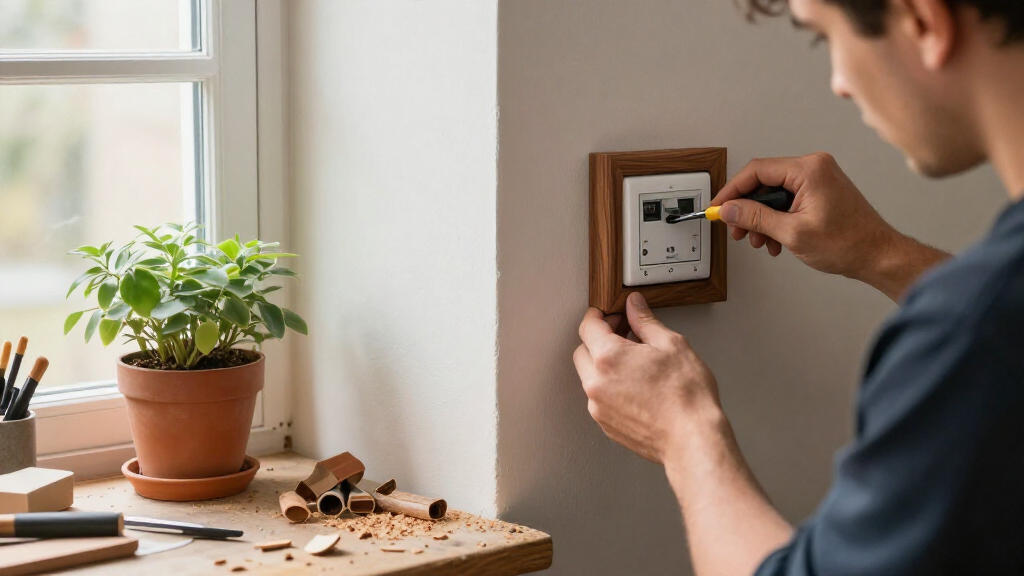
One common approach is to place a frame around the thermostat, turning the area into something that resembles a piece of art. Hunker says the frame should fit the unit’s shape and that its glass should be removed before installation. Some homeowners use double-sided adhesive fasteners rather than drilling into the wall. The report notes that a frame can also become part of a larger gallery wall, where it sits among other artwork.
The examples described are not limited to conventional frames. Hunker points to an Instagram DIYer, brickhomehaven, who used an open-weave basket and cut a thermostat-shaped opening in its back. TikToker Morgan Geyer used a trinket box as a casing with accessories placed on top, creating a small shelf-like feature. These examples are attributed to the creators; the report does not provide performance tests or independent verification of the installations.
The design needs to suit the thermostat and leave it usable. Hunker says the approach can be customized for different shapes and sizes, but that does not mean every covering will work equally well. In particular, a box or other structure around a thermostat may reduce airflow near its sensor. The report cautions that this can affect the accuracy of its temperature reading.
Making Thermostats Fit the Room
Thermostats are functional controls that often sit in visible places such as hallways, where they can interrupt a carefully planned wall. The projects described by Hunker address that everyday design problem without requiring homeowners to replace the device or conceal it behind a permanent renovation. A frame can make the unit feel more integrated with nearby decor while preserving access to the controls.
There is a practical trade-off: the thermostat must still sense room conditions properly. If a decorative cover traps heat or limits air movement, the reading may not reflect the surrounding room accurately. That could affect how the heating or cooling system responds. The report does not quantify the effect or specify safe clearances, so homeowners should avoid treating appearance as the only requirement.
decorative picture frame for thermostat
As an affiliate, we earn on qualifying purchases.
As an affiliate, we earn on qualifying purchases.
Frames, Baskets and Box Covers
Hunker presents the idea as a social-media DIY trend rather than a new thermostat product or a formal design standard. The article describes a range of approaches, from a simple frame to an altered basket or a box used as a casing. The central design principle is to make the thermostat visually fit its surroundings while leaving the unit available for use.
The report mentions a round rattan frame as one possible match for a round thermostat and says rectangular units need a frame with a corresponding shape. That example is not a universal recommendation: dimensions vary by device, and the article does not assess compatibility across models. Homeowners should check that any chosen surround fits without blocking the display, controls or sensor.
“The thermostat can be made to look less obvious so it blends in with the decor.”
— Hunker report
open-weave basket for thermostat cover
As an affiliate, we earn on qualifying purchases.
As an affiliate, we earn on qualifying purchases.
Fit and Airflow Remain Key
The report does not identify a tested design, provide measurements for safe airflow, or establish that the featured covers work with every thermostat model. It also does not say whether the individual installations affected temperature readings. The examples show creative options, not evidence that any particular cover is suitable for all devices.
It remains up to the homeowner to check the thermostat’s shape, mounting and sensor placement before adding a surround. Hunker’s warning about airflow means that a design that looks tidy may still be unsuitable if it encloses the unit or changes the air around it.
As an affiliate, we earn on qualifying purchases.
Check the Device Before Decorating
Anyone considering the idea should first identify the thermostat’s dimensions and make sure the controls and display remain accessible. For a frame, Hunker’s instructions call for removing the glass; adhesive fasteners are one option mentioned for mounting. A basket or box needs particular care because it can obstruct airflow more than an open frame.
The report does not announce a product launch, formal guidance or follow-up testing. For now, the next step for homeowners is to adapt the look to their own device without compromising its operation, and to seek manufacturer guidance if they are unsure how a cover could affect sensing or performance.
adhesive mounting strips for wall decor
As an affiliate, we earn on qualifying purchases.
As an affiliate, we earn on qualifying purchases.
Key Questions
How are DIYers disguising thermostats?
Hunker describes frames, open-weave baskets and trinket boxes used to make thermostats blend with wall decor. Some creators include the device in a gallery wall.
Does a frame need glass?
The report says to remove the glass before fitting a frame around a thermostat. The device should remain visible and accessible.
Can a thermostat cover affect its readings?
It can. Hunker cautions that a box-like covering may reduce airflow and affect temperature readings. The report does not give measurements or quantify the effect.
Can adhesive fasteners be used instead of drilling?
Hunker names double-sided adhesive fasteners as one way to attach a frame, but does not assess products or wall surfaces. Suitability depends on the frame and the wall.
Source: rss
Fall Picks
fall essentials
As an affiliate, we earn on qualifying purchases.