Setting the frog position on your bench plane isn’t as intimidating as it seems. It directly impacts how the blade interacts with the wood, affecting your tool’s performance and the quality of your cuts. With a few simple adjustments, you can fine-tune the angle, control chatter, and achieve smoother surfaces. Just remember, it’s all about finding that sweet spot. Keep exploring to uncover tips that will enhance your woodworking skills even further.
Key Takeaways
- Proper frog positioning is crucial for optimal blade interaction with wood, enhancing overall tool performance and cutting effectiveness.
- Achieving stability through correct frog alignment prevents chatter and ensures smooth gliding during planing.
- Finding the sweet spot involves loosening screws, adjusting the frog, and securing it for precise blade contact with the wood.
- Adjusting the frog influences the mouth width, impacting control and minimizing tear-out, especially on delicate woods.
- Experimenting with frog settings encourages skill improvement, ensuring consistent blade alignment and balance during woodworking projects.
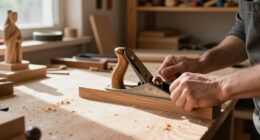
The frog position on a bench plane plays an important role in how effectively the tool performs. You might feel intimidated by this aspect, but understanding frog mechanics can make a substantial difference in your woodworking experience. When you adjust the frog, you’re not just moving a piece of metal; you’re influencing how the blade interacts with the wood and how the plane behaves overall.
First, let’s talk about bench stability. A well-adjusted frog helps guarantee that the blade sits at the best angle to the wood surface. If you set the frog too far forward or backward, you can end up with a plane that chatters or doesn’t cut properly. The frog position can also affect the depth of cut, which is vital for achieving smooth, even surfaces. By aligning it correctly, you’re allowing the plane to glide effortlessly, enhancing both performance and finish.
You might wonder how to find that sweet spot. Begin by loosening the frog screws slightly, allowing for some play. Then, hold the plane at a comfortable angle and adjust the frog until you feel the blade’s edge make contact with the wood. Once you find that ideal position, tighten the screws to secure it. Don’t be afraid to tweak it a bit; sometimes, it takes a few tries to get it just right. Understanding the importance of fitting the frog properly can help prevent issues like chatter and uneven cuts. Additionally, being familiar with frog adjustments can help you troubleshoot common problems and improve your overall technique.
Another important factor is the relationship between the frog and the mouth of the plane. A tighter mouth can improve your control, especially when working with delicate woods or finer cuts. If the mouth is too wide, you might experience tear-out or an uneven finish. This is where your understanding of frog mechanics comes into play—adjusting the frog allows you to fine-tune the mouth’s width, leading to better results.
Remember, it’s not just about the angle; it’s about the overall balance of the plane. A well-positioned frog contributes to the bench stability you need for effective planing. It helps you maintain control over the tool, allowing you to focus on your work rather than battling against your equipment. Furthermore, proper frog adjustment ensures consistent blade alignment, which is crucial for achieving precision in your projects.
Don’t let the fear of adjusting the frog hold you back. With a little practice and understanding, you’ll find that mastering the frog position can elevate your woodworking game. You’ve got this, so go ahead and experiment; you’ll be amazed at the difference it makes!
bench plane frog adjustment tool
As an affiliate, we earn on qualifying purchases.
As an affiliate, we earn on qualifying purchases.
Frequently Asked Questions
What Is the Origin of the Term “Frog Position”?
The term “frog position” originates from the historical context of woodworking and planes. It evolved as terminology to describe the adjustable part of a plane that holds the blade in place. Over time, craftsmen adopted this term, linking it to the way the blade sits, resembling a frog’s stance. Understanding this evolution helps you appreciate how language adapts to specific trades, enriching the craftsmanship and communication within woodworking communities.
How Does Frog Position Affect Wood Grain?
Frog position directly affects wood grain by influencing how the plane interacts with the wood texture. When you adjust the frog, you’re altering the angle at which the blade meets the surface, which can enhance or diminish grain patterns. A well-set frog allows for smoother cuts, revealing the beauty of the wood’s grain. If it’s poorly positioned, you might end up with tear-out, ruining the wood’s natural texture and appearance.
Can I Use This Position for Different Wood Types?
Yes, you can definitely use the frog position for different wood types. Adjusting your plane accordingly is key to achieving the finest results. With hardwoods, you might want a tighter frog position for a smoother finish, while softer woods can handle a looser setting. Experimenting with these woodworking techniques lets you find what works best for each wood type, ensuring you get peak performance from your plane every time.
What Tools Are Best for Adjusting Frog Position?
Adjusting the frog position is like fine-tuning a musical instrument; the right tools make all the difference. For this, you’ll want a flathead screwdriver for blade adjustment and a wrench for secure fittings. Keep your tools in good shape through regular maintenance to avoid frustration during adjustments. By staying proactive with your tool care, you guarantee your plane performs beautifully, letting you tackle any wood type with confidence.
Is Frog Position Suitable for Beginners?
Yes, frog position can be suitable for beginners, but it’s important to avoid common mistakes. Start with beginner tips like adjusting the frog position slightly to see how it affects your cuts. Don’t rush; take your time experimenting to find what works best for you. Remember, getting comfortable with adjustments will improve your skills and confidence. With practice, you’ll master it and enhance your woodworking experience.
As an affiliate, we earn on qualifying purchases.
Conclusion
In the end, don’t let fear keep you from embracing the frog position on your bench plane. It’s like learning to ride a bike; once you find your balance, you’ll glide smoothly. This technique not only enhances your control but also elevates your woodworking game. So, take a deep breath, trust your instincts, and give it a shot. You might just discover a newfound confidence that transforms your craft into something truly special.
planing tools for fine woodworking
As an affiliate, we earn on qualifying purchases.
As an affiliate, we earn on qualifying purchases.
As an affiliate, we earn on qualifying purchases.