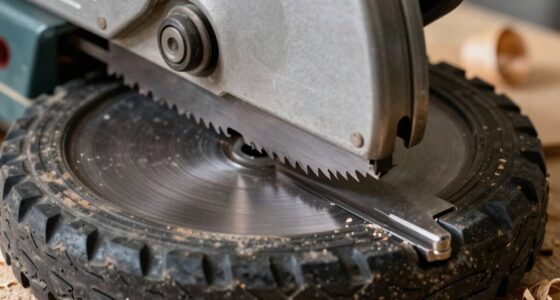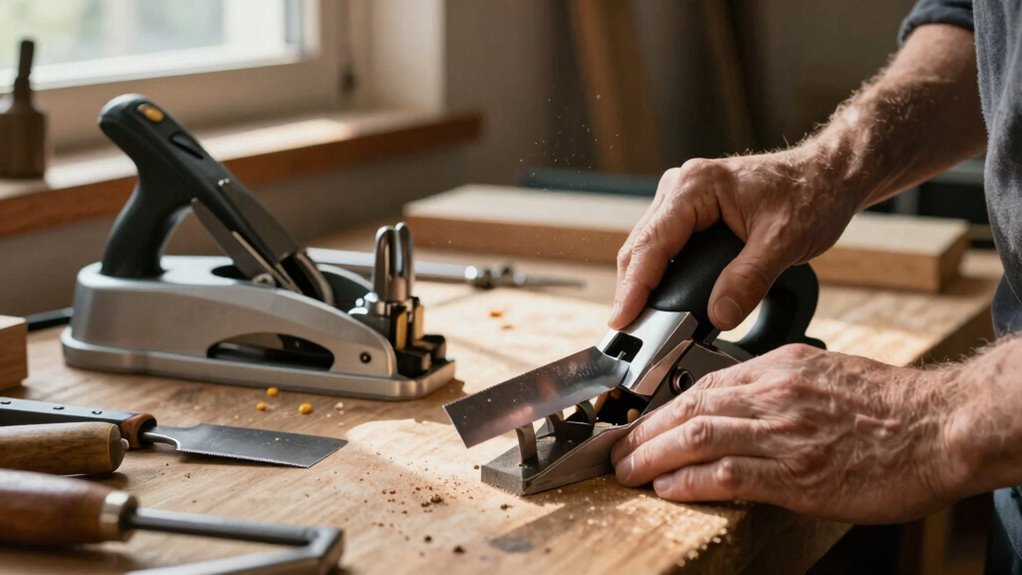
When it comes to sharpening your jointer and planer blades, outsourcing makes sense when you’re pressed for time or the skills needed for precision sharpening aren’t your forte. Professionals use specialized equipment that gives blades a consistent edge, guaranteeing peak performance and longer lifespan. Plus, by outsourcing, you can avoid the risk of damaging your blades with improper techniques. If you want to guarantee your tools operate at their best, keep exploring the benefits of professional services.
Open a free Amazon Business account
Business pricing, bulk buying and tax-exempt orders.
As an affiliate, we earn on qualifying purchases.
Key Takeaways
- Outsourcing sharpening saves time, allowing woodworkers to focus on projects rather than the labor-intensive process of DIY sharpening.
- Professional services ensure blades are sharpened to the correct angle, improving cut quality and extending blade lifespan.
- Frequent dullness may indicate blades are nearing the end of their life; outsourcing can provide a professional assessment of their condition.
- Reliable sharpening services often reduce costs in the long run by extending intervals between sharpenings and minimizing the need for new tools.
- Investing in professional sharpening enhances overall work quality and ensures blades meet necessary performance standards.
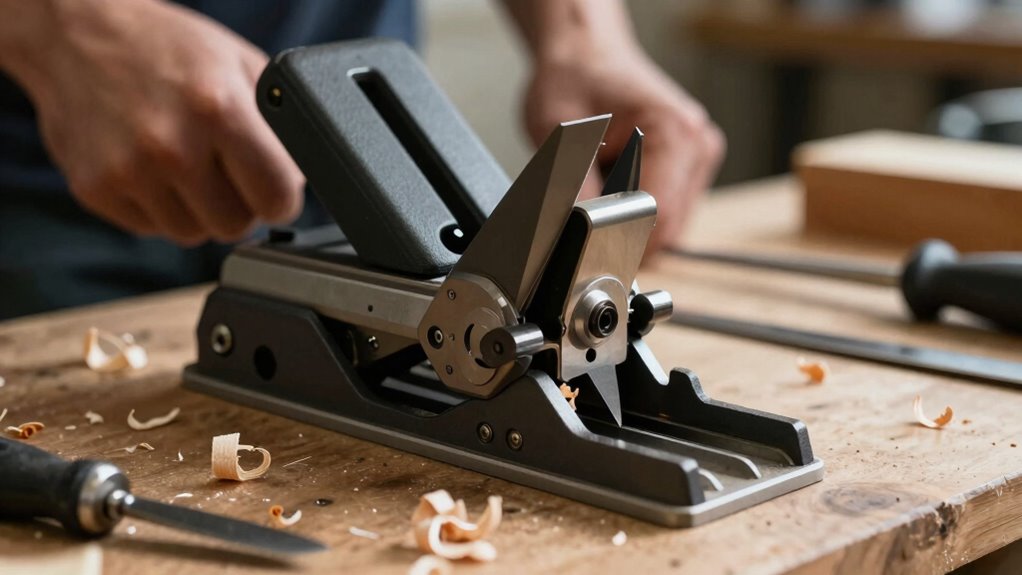
First off, let’s talk about blade maintenance tips. Regularly inspecting your blades should be part of your routine. If you notice any nicks or chips, it’s essential to address these issues promptly. Dull blades often require more effort and can reduce the quality of your cuts, leading to potential errors in your work. If you find yourself constantly sharpening your blades, it might be a sign that they’re nearing the end of their lifespan. In such cases, reflect on whether outsourcing the sharpening might be more efficient.
Regularly inspect your blades; nicks or dullness can impact your work quality. Consider outsourcing sharpening for efficiency and longevity.
When it comes to sharpening techniques, you’ve got options. Some woodworkers prefer to use a sharpening jig for precision, while others might opt for freehand methods. Both techniques have their merits, but they can be time-consuming and require a certain level of skill to achieve the best results. If you’re not comfortable with these techniques or if you don’t have the right tools, outsourcing to a professional can guarantee your blades are sharpened to the right angle and finish. Proper blade maintenance is essential for preserving the sharpness and accuracy of your tools, making outsourcing a practical choice in many cases. Additionally, professional sharpening services often use specialized equipment that can achieve a more consistent and precise edge than DIY methods.
Another factor to keep in mind is your time. If you have a busy schedule or multiple projects lined up, dedicating hours to sharpening can be impractical. In such cases, sending your blades out to a sharpening service can free you up to focus on what you love—creating beautiful woodwork. Many professionals offer quick turnaround times, so you won’t have to wait long to get back to your projects. Outsourcing can also help you avoid the risk of damaging blades through improper sharpening techniques. Furthermore, professional services often provide quality assurance, ensuring the blades meet the necessary standards for your work. Incorporating proper blade care routines can also extend the intervals between professional sharpenings, making it more economical over time.
Finally, think about the overall cost-effectiveness. If you’re frequently sharpening your blades and buying new tools, outsourcing might save you money in the long run. Investing in a reliable sharpening service can extend the lifespan of your blades, allowing you to get the most out of your equipment. Proper maintenance is essential for preserving the sharpness and accuracy of your tools, making outsourcing a practical choice in many cases. Proper blade care practices can significantly reduce the frequency of sharpening needed, further enhancing the cost-efficiency of professional services.
jointer planer blade sharpening service
As an affiliate, we earn on qualifying purchases.
As an affiliate, we earn on qualifying purchases.
Frequently Asked Questions
How Often Should I Sharpen My Jointer and Planer Blades?
You should sharpen your jointer and planer blades every 20 to 50 hours of use, depending on the hardwoods you’re working with. Regular maintenance helps maximize blade longevity, ensuring clean cuts. Keep an eye out for signs of dullness, like tear-out or burning. Utilize effective sharpening techniques, such as honing or using a sharpening jig, to maintain peak performance. Staying on top of this will save you time and improve your woodworking results.
What Signs Indicate That My Blades Need Sharpening?
You can spot blade performance indicators that signal your blades need sharpening by looking for rough cuts, increased tear-out, or a burning smell during operation. If you notice a drop in efficiency or the need for excessive pressure while feeding wood, it’s time for maintenance. Following these maintenance best practices guarantees your tools remain effective. Regularly inspecting and sharpening your blades will keep your projects smooth and professional-looking.
Can I Sharpen Blades Myself Safely?
Absolutely, you can sharpen blades yourself safely, and it can feel like wielding a magic wand! Use proper sharpening techniques to maintain edge quality, but don’t forget your safety precautions. Wear protective gear, like goggles and gloves, to shield yourself from flying debris. Make certain your workspace is well-lit and organized. With practice and care, you’ll keep those blades sharp and ready to tackle any project with ease.
What Tools Are Needed for Sharpening Blades?
To sharpen blades yourself, you’ll need a few essential tools. Start with a sharpening stone or a honing guide for precise angles. A bench grinder can speed up the process, while a diamond file works well for touch-ups. Don’t forget safety gear like goggles and gloves. Mastering these sharpening techniques will enhance your blade maintenance routine, ensuring your tools stay effective and last longer. Enjoy the satisfaction of keeping your blades in top shape!
How Does Blade Material Affect Sharpening Frequency?
The material of your blades subtly influences their longevity and sharpening frequency. High-speed steel blades, while durable, may require more regular touch-ups compared to carbide ones, which endure longer but are harder to sharpen. If you’re working with softer woods, you might find yourself sharpening more often. Ultimately, the choice of material can dictate how frequently you need to tend to your blades, impacting your overall workflow and efficiency.
woodworking blade sharpening jig
As an affiliate, we earn on qualifying purchases.
As an affiliate, we earn on qualifying purchases.
Conclusion
Outsourcing your jointer and planer blade sharpening might seem like a step back, but it’s actually a leap forward. You could spend hours wrestling with dull blades, or you could hand off the task to a pro, freeing up your time for more creative projects. Ironically, by letting someone else handle the grind, you’re sharpening not just your tools, but your skills as a woodworker. Sometimes, the best way to cut down on work is to let others do it for you.
professional planer blade sharpener
As an affiliate, we earn on qualifying purchases.
As an affiliate, we earn on qualifying purchases.
woodworking blade sharpening kit
As an affiliate, we earn on qualifying purchases.
As an affiliate, we earn on qualifying purchases.
Flea & tick season Picks
flea and tick prevention
As an affiliate, we earn on qualifying purchases.