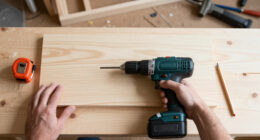
In woodworking, using both task and general lighting is essential. Task lighting provides focused, bright light on your workpiece, helping you see details clearly and work accurately. Meanwhile, general lighting fills the space with ambient light, making the environment welcoming and reducing eye strain. Combining these two types creates a safer, more efficient workspace, improving overall project quality. Stick around to discover how balancing both can truly enhance your woodworking experience.
Open a free Amazon Business account
Business pricing, bulk buying and tax-exempt orders.
As an affiliate, we earn on qualifying purchases.
Key Takeaways
- Combining task and general lighting ensures both focused detail work and safe, ambient room illumination.
- Task lighting reduces shadows and glare, improving precision for cuts and joints in woodworking projects.
- General lighting provides even, ambient light that minimizes eye strain and enhances overall workspace comfort.
- Proper balance between both types enhances safety, project quality, and creates a more inviting environment.
- Using both lighting types optimizes visibility, reduces fatigue, and increases efficiency during woodworking tasks.

Have you ever wondered why your workspace or living room feels more inviting when properly lit? The answer often lies in how the lighting is designed and positioned. In woodworking, understanding the difference between task lighting and general lighting is essential to creating an efficient and comfortable environment. Both types serve unique purposes, and when used together effectively, they enhance your workspace’s functionality and ambiance.
Task lighting is all about precision. It provides focused illumination on specific areas where detailed work takes place. Think about the bright, direct light you need when carving, sanding, or assembling pieces. This type of lighting minimizes shadows and ensures you see every cut, joint, or detail clearly. When setting up task lighting, consider the *lighting placement* carefully. Position fixtures so they illuminate the work surface without casting shadows or causing glare. You might use adjustable lamps or under-cabinet lights that can be directed exactly where you need them. Equally important is selecting the right *color temperature*. A cooler, daylight-balanced temperature (around 5000K to 6500K) mimics natural light, helping you distinguish colors and fine details accurately, which is crucial for precision work.
Effective task lighting minimizes shadows and enhances precision with adjustable fixtures and natural daylight color temperatures.
On the other hand, general lighting fills the entire space with a soft, even glow. It creates an inviting atmosphere and reduces eye strain by providing ambient light that balances the environment. This type of lighting is essential for safety, navigation, and reducing fatigue during long projects. When installing general lighting, pay attention to *lighting placement* to avoid overly bright spots or dark corners. Overhead fixtures, such as ceiling-mounted LEDs or fluorescent lights, should be evenly spaced to distribute light uniformly across the room. The *color temperature* for general lighting can be warmer (around 2700K to 3000K) to produce a cozy, welcoming vibe, especially in a woodworking shop or living area.
Combining both lighting types is where your workspace truly thrives. Use general lighting to establish a comfortable environment and task lighting to handle detailed work. Proper *lighting placement* ensures that both layers complement each other without causing glare or shadows. Adjusting *color temperature* based on the task at hand helps your eyes adapt and stay comfortable. When you balance task and general lighting effectively, your workspace becomes not only more efficient but also more enjoyable. You’ll find that both types are necessary components—each playing a key role in making your woodworking projects safer, more precise, and more satisfying to complete.
adjustable LED task work light for woodworking
As an affiliate, we earn on qualifying purchases.
As an affiliate, we earn on qualifying purchases.
Frequently Asked Questions
How Do I Choose the Right Type of Task Lighting?
To choose the right task lighting, prioritize precision illumination that clearly highlights your work area. Look for adjustable fixtures so you can direct light exactly where needed, enhancing workspace ergonomics and reducing eye strain. Consider bright, focused lights for detailed tasks like carving or sanding, and softer, diffused lighting for general workspace visibility. Ensuring proper lighting helps you work accurately and comfortably, improving safety and craftsmanship.
Can Natural Light Replace Artificial Lighting in Woodwork Shops?
Sure, natural illumination can be tempting, but relying solely on daylight integration isn’t practical. Sunlight fluctuates, casting shadows and creating glare, which can lead to mistakes or accidents. While natural light is lovely, it’s inconsistent, so artificial lighting is essential for steady, precise work. Combining both guarantees your workspace is well-lit at all times, helping you focus and craft with confidence, no matter the weather outside.
What Are the Energy-Efficient Options for Task Lighting?
You should consider energy-efficient options like LED strips and motion sensors for task lighting. LED strips consume less power, last longer, and provide bright, focused light perfect for detailed woodworking tasks. Motion sensors automatically turn lights on and off, saving energy when you’re not around. Together, these options guarantee you get effective illumination while reducing energy costs, making your workspace both eco-friendly and efficient.
How Do Lighting Conditions Affect Woodworking Safety?
Ever wondered how lighting affects your safety? Poor lighting can cause glare, reducing your ability to see fine details and increasing accident risks, while improper color accuracy may lead to misjudging wood tones or cuts. Adequate lighting with glare reduction and true color rendering helps you work precisely and safely. By ensuring ideal lighting conditions, you minimize mistakes and prevent injuries, keeping your woodworking experience both enjoyable and secure.
What Is the Best Placement for General Lighting in a Workshop?
You should place overhead fixtures strategically to provide even ambient illumination throughout your workshop. Position these fixtures high enough to avoid shadows and guarantee consistent light coverage, especially over workbenches, machinery, and walkways. Proper placement minimizes glare and dark spots, helping you work safely and accurately. Aim for multiple fixtures if your space is large, maintaining a well-lit environment that supports precision and reduces eye strain.
overhead LED ceiling light for workshop
As an affiliate, we earn on qualifying purchases.
As an affiliate, we earn on qualifying purchases.
Conclusion
Remember, combining task lighting and general lighting in your woodworking space is like having a trusty lantern and a bright candle—each plays an essential role. Without proper illumination, your craftsmanship might falter, and your projects could end in despair, much like a blacksmith in a dark forge. Embrace both types of lighting to create a workshop that’s as inspiring as a Renaissance artist’s studio. Only then will your woodworking truly flourish under the glow of perfection.
As an affiliate, we earn on qualifying purchases.
ambient LED ceiling lighting for workshop
As an affiliate, we earn on qualifying purchases.
As an affiliate, we earn on qualifying purchases.
NFL season / tailgating Picks
team gear
As an affiliate, we earn on qualifying purchases.