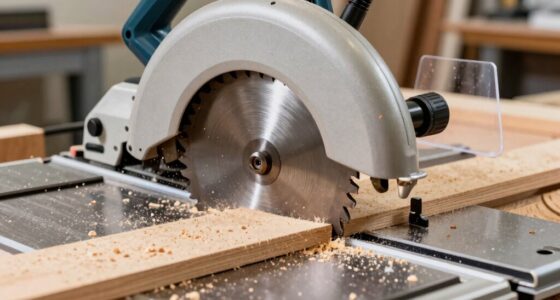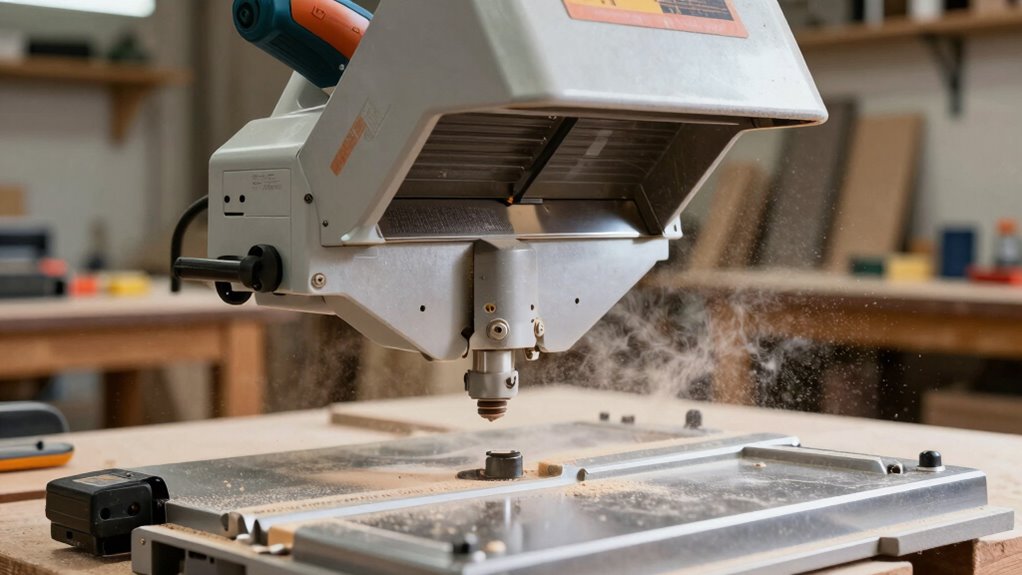

Most dust collection systems on miter saws miss a lot because they often only capture a portion of the sawdust, and airflow isn’t strong enough to seal all particles. Factory systems can be ineffective due to poor fittings and low suction power, allowing dust to escape into the air and settle on surfaces. Upgrading or customizing these setups can help, but they still might not catch everything. Keep exploring to discover how you can improve your dust control further.

Get business pricing on tools and workshop supplies
- Business-only prices and quantity discounts
- Tax-exempt purchasing
- Multiple users, one account, clear invoices
Key Takeaways
- Factory dust ports often lack sufficient suction power and proper fittings, reducing overall dust capture efficiency.
- Airborne dust escapes from the cut line, bypassing the collection system and settling around the workspace.
- Inconsistent airflow and improper modifications limit the effectiveness of existing dust extraction setups.
- Many systems are not airtight, allowing dust to escape before being collected or filtered.
- Regular maintenance and upgrades are essential to improve dust capture and prevent missed dust particles.
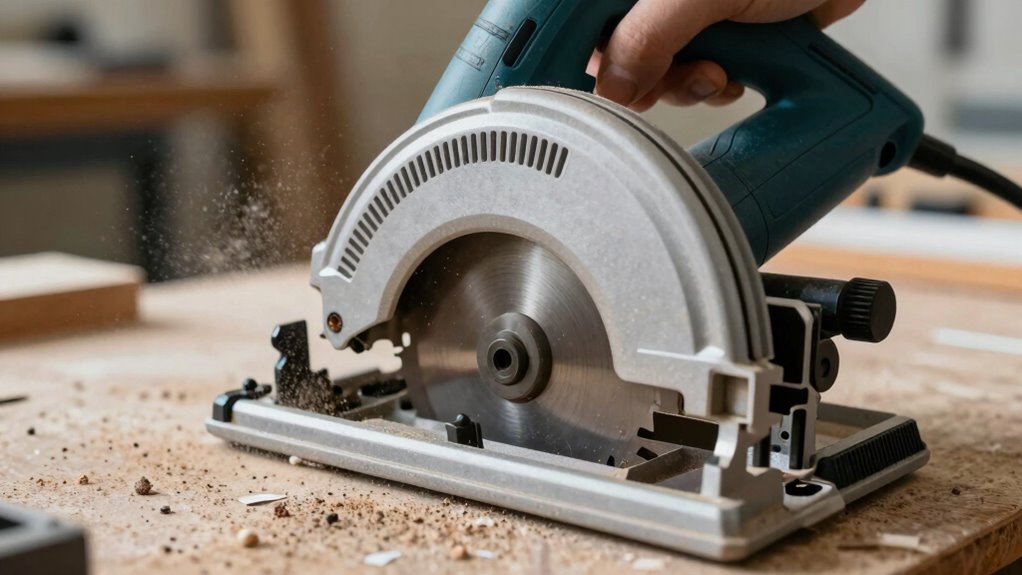
Have you ever noticed how much dust a miter saw generates during cutting? It’s almost impressive how quickly fine sawdust fills the air and coats your workspace. This dust isn’t just a nuisance; it’s a serious health hazard and a safety concern. That’s why dust collection on miter saws is so vital, and why understanding the limitations of current dust extraction methods matters. Most systems do a decent job, but they still miss too much, leaving behind airborne particles that can be inhaled or settle on surfaces where they create slip hazards.
Many miter saws come with built-in dust ports designed to connect to shop vacuums or dust extractors. You might assume that plugging in your shop vacuum will keep your workspace clean, but the reality is that these systems often only capture a portion of the dust. The reason? The design of the dust collection system isn’t always optimized for maximum efficiency. Airflow can be inconsistent, and many saws lack the suction power or proper attachment fittings needed to pull the dust away effectively. As a result, a significant amount of dust escapes from the saw’s cut line, settling on your work surface or floating in the air, which can compromise miter saw safety by reducing visibility and increasing respiratory risks.
To improve dust extraction methods, you need to look beyond the factory-installed systems. Upgrading to a more powerful dust collector or adding a dedicated dust hood can help trap more airborne particles. Some users retrofit their saws with custom dust shields or use specialized attachments designed to improve airflow and capture dust at the source. These modifications can make a noticeable difference in reducing the amount of dust that escapes during cuts. But even with these enhancements, no system is perfect. Airborne dust still sneaks out, especially if your vacuum isn’t strong enough or if the connections aren’t airtight. Recognizing the limitations of dust collection systems helps in choosing the right upgrades and maintaining safety standards. Improving dust collection efficiency is crucial for minimizing health risks and maintaining a cleaner workshop environment. Additionally, ensuring proper airflow management can significantly enhance dust capture performance. Investing in a high-quality dust collection system can further improve overall performance and safety.
This all circles back to miter saw safety. Excess dust not only makes your workspace messy but also creates a health risk, especially over long-term exposure. It can also impair your visibility, leading to inaccurate cuts or even accidents. That’s why it’s vital to invest in better dust extraction methods and keep your workspace as clean and safe as possible. Regularly cleaning your saw and maintaining your dust collection system ensures that you’re doing what you can to minimize dust in the air. In the end, understanding the limitations of most dust collection systems helps you take proactive steps—whether through upgrades or proper maintenance—to protect yourself and improve your work environment. Proper dust collection systems can significantly enhance both safety and cleanliness in your workshop.
miter saw dust collection upgrade
As an affiliate, we earn on qualifying purchases.
As an affiliate, we earn on qualifying purchases.
Frequently Asked Questions
What Are the Best Dust Collection Systems for Miter Saws?
You should choose dust collection systems that prioritize dust containment and air filtration. Look for models with powerful vacuums and wide, efficient hoods that capture dust at the source. HEPA filters improve air quality by trapping fine particles. Portable systems with adjustable hoses and mounting options can enhance coverage. Combining a high-quality dust collector with proper setup guarantees you minimize dust, airborne particles, and maintain a cleaner, safer workspace.
How Does Blade Type Affect Dust Collection Efficiency?
Your blade type considerably impacts dust collection efficiency because blade compatibility influences how well dust is directed into your system. For example, blades with larger gullets or aggressive teeth tend to produce more dust, making extraction harder. Choosing blades designed for cleaner cuts or with dust ports can improve dust extraction efficiency. Always match your blade type with your dust collection system to minimize airborne particles and keep your workspace cleaner.
Can Aftermarket Attachments Improve Dust Collection Performance?
Yes, aftermarket attachments can improve dust collection performance. Upgrading filters enhances airflow and trapping efficiency, while attachment compatibility guarantees a snug fit, reducing dust escape. You should look for accessories designed specifically for your miter saw model, as they often feature better sealing and more effective collection mechanisms. Installing these upgrades can markedly reduce airborne dust, making your workspace cleaner and safer.
How Often Should Dust Collection Systems Be Maintained?
Think of your dust collection system as a essential lifeline, needing regular care to keep it running smoothly. You should check and maintain it at least every few months, more often if you use it frequently. Focus on air filter maintenance and dust disposal procedures, ensuring filters are clean and debris is properly disposed of. Regular upkeep prevents clogs, improves performance, and keeps your workspace safe and healthy.
Are There Safety Concerns With Dust Buildup Around Miter Saws?
Yes, dust buildup around miter saws poses safety concerns. It can compromise air quality and affect your respiratory health, especially if dust particles become airborne. When dust accumulates, it increases the risk of slips or fires from sawdust igniting. To stay safe, regularly clean your workspace, use efficient dust collection systems, and wear protective gear like masks. This minimizes health risks and keeps your workspace safer.
shop vac dust extractor for miter saw
As an affiliate, we earn on qualifying purchases.
As an affiliate, we earn on qualifying purchases.
Conclusion
While modern dust collection systems promise a cleaner workspace, they often fall short, leaving behind dangerous particles. You might think your saw is safe, but the lingering dust tells a different story—one of overlooked health risks. Don’t settle for less; prioritize your safety by choosing better systems or improving existing ones. Because in the end, clean air isn’t just about a tidy shop—it’s about protecting yourself and your loved ones from invisible harm.
As an affiliate, we earn on qualifying purchases.
air filtration system for workshop
As an affiliate, we earn on qualifying purchases.
As an affiliate, we earn on qualifying purchases.
Fall Picks
fall essentials
As an affiliate, we earn on qualifying purchases.