TL;DR

Get business pricing on tools and workshop supplies
- Business-only prices and quantity discounts
- Tax-exempt purchasing
- Multiple users, one account, clear invoices
A Hunker home-storage report describes using a curtain rod and S-shaped hooks to hang kitchen utensils and other bulky items, freeing countertop space. It recommends choosing a reachable location away from the stove and checking the rod’s load capacity, which the report says is typically 20 to 50 pounds.
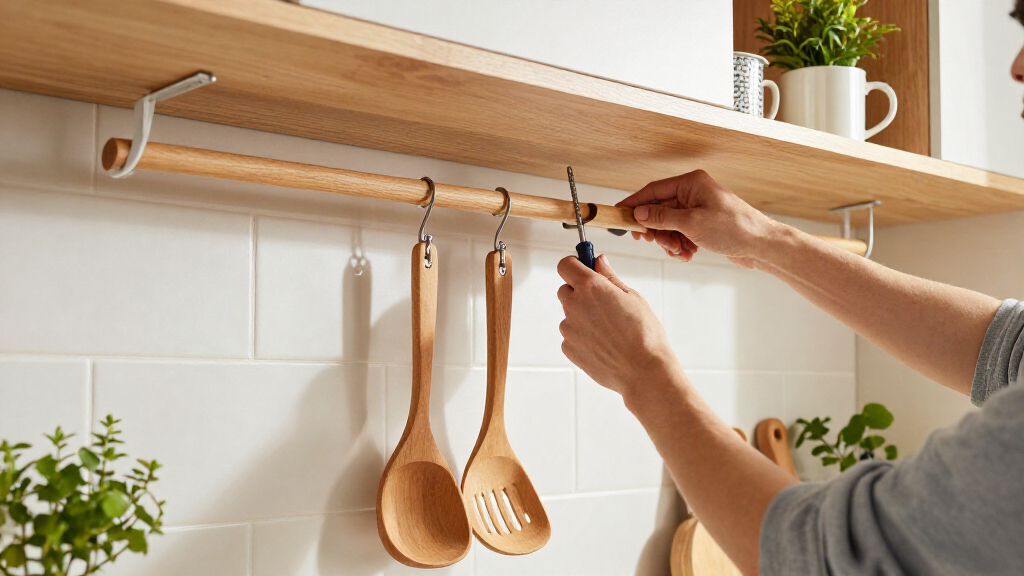
A Hunker home-storage report describes repurposing a curtain rod and S-shaped hooks to hang kitchen utensils and other bulky items, freeing countertop space for cooking and preparation. The approach can also accommodate mugs, cutting boards and measuring cups, though the report cautions that placement and the rod’s weight limit matter.
The setup uses a rod mounted in a suitable kitchen space, with movable S-hooks attached to hold items. Hunker suggests looking at an unused stretch between or beneath cabinets, or along a backsplash, then measuring that area before choosing a rod. The report says traditional rods generally use screws for support, while a tension rod between cabinets can offer a renter-friendly option where the fit allows.
The items named in the report go beyond cooking tools: mugs, cutting boards and measuring cups can also be hung if their shape and weight suit the hooks and rod. A small basket suspended from two hooks is another proposed option for smaller objects such as spice jars. Hooks can be repositioned along the rod, allowing users to adjust spacing as their storage needs change.
Hunker says curtain rods typically have a stated maximum capacity of 20 to 50 pounds. That range is not a guarantee for every rod or installation: the specific product’s rating and the strength of its mounting surface and hardware determine what a particular setup can safely hold. The report also advises avoiding a position above the stove, citing grease and fire concerns, particularly for wooden and plastic utensils.
More Room for Kitchen Preparation
Moving frequently used tools off the counter can leave more open space for meal preparation in kitchens where storage is limited. That can be useful in apartments and smaller homes, where bulky utensils or boards may compete with the area needed to chop ingredients, set down cookware or organize a meal.
The suggestion also shifts storage onto an often-unused wall area without adding a freestanding rack to the counter. In practice, the benefit depends on the kitchen layout, what is being hung and whether the chosen rod and anchors can support the load. Items displayed in the open may be easier to reach, but they will also remain visible and may collect cooking residue or dust. The report’s idea is a storage option, not evidence that every kitchen or rod can accommodate it safely.
Products Worth Considering

LEVOIT Vital 200S-P Smart Air Purifier for Large Rooms

Dyson Airwrap i.d. Multi-Styler for Straight and Wavy Hair

Bose TV Speaker (2nd Gen) Compact Soundbar with Bluetooth and HDMI
As an affiliate, we earn on qualifying purchases.
How the Rod Storage Idea Works
The Hunker report frames the method as a small do-it-yourself storage project rather than a major renovation. Its basic steps are to identify an open wall area, measure the available span, choose a rod and mounting method, then add hooks and arrange the items. It says installation can take only a few minutes, but the actual time and effort will vary with the wall, hardware and product.
Rod styles and finishes can be selected to suit a kitchen’s appearance, according to the report. It also mentions cabinet knobs as possible anchors for added detail, but does not give a specific installation method or load rating for that arrangement. The source includes shopping references and a disclosure that Hunker may receive commissions on purchases made through links; those commercial links do not establish that a particular product has been independently tested for this use.
““Ample counter space is a luxury in any kitchen.””
— Hunker report
Limits Depend on the Specific Installation
The source does not identify a particular rod model, wall type, anchor system or independently verified weight test. Its 20-to-50-pound range is a broad generalization, not a rating that can be applied to every product. The safe load for an installed rod depends on the manufacturer’s instructions, the hardware, the surface and how the weight is distributed.
It is also unclear how well the idea works in kitchens without a clear wall span, or for items that are awkward to hang or used frequently. The report does not provide testing on long-term durability, cleaning needs or whether a tension rod remains secure under repeated use. Readers should treat the method as a possible storage arrangement and confirm that their chosen product is suitable before loading it.
Check the Rod Before Hanging Items
Anyone considering the setup can start by measuring the intended location and checking the rod maker’s instructions for mounting and capacity. The report’s own guidance is to keep the storage within easy reach and away from the stove. Users should account for the combined weight of the rod’s contents, use compatible hooks and hardware, and avoid relying on a general capacity estimate when the specific product’s rating differs or is unavailable.
No further product test, installation guidance or follow-up development is included in the supplied material. The practical next step is to decide whether the kitchen has a suitable mounting area and whether the items to be stored can be hung without obstructing work surfaces, appliances or safe movement.
Key Questions
What can be stored on a curtain rod in the kitchen?
The Hunker report suggests utensils, mugs, cutting boards and measuring cups, using S-hooks where the items can be hung securely. It also proposes suspending a small basket for items such as spice jars.
How much weight can a curtain rod hold?
The report gives a typical range of 20 to 50 pounds, but capacity varies by rod, mounting hardware and surface. Check the specific product’s instructions rather than treating that range as a rating for every installation.
Where should the rod be installed?
Hunker suggests an open area between or beneath cabinets or along a backsplash, at a height that is easy to reach. It advises against installing the storage above the stove because of grease and fire concerns.
Can renters use this storage method?
The report says a tension rod between cabinets may work as a renter-friendly option. Whether it fits securely depends on the opening, rod design and weight of the items; follow the product’s instructions.
Source: hunker.com