To prevent lumber from warping, store it properly using racks that keep boards elevated and evenly supported. Place stickers—thin spacers—between layers to promote airflow and guarantee even moisture loss. Arrange the boards with consistent spacing and avoid tight stacking to maintain good air circulation around each piece. Keeping environmental conditions stable and avoiding temperature fluctuations also helps. For more tips on ensuring your lumber stays flat and durable, continue exploring this essential storage guide.

Get business pricing on tools and workshop supplies
- Business-only prices and quantity discounts
- Tax-exempt purchasing
- Multiple users, one account, clear invoices
Key Takeaways
- Use proper racks with adequate spacing to ensure good airflow around lumber stacks.
- Incorporate stickers (wooden spacers) between boards to promote even moisture evaporation.
- Maintain consistent stacking techniques, keeping stacks level and supported to prevent internal stresses.
- Ensure storage areas are well-ventilated and free from moisture buildup to avoid uneven drying.
- Regularly monitor moisture levels and adjust airflow to prevent internal warping and cracking.
lumber storage racks with proper spacing
As an affiliate, we earn on qualifying purchases.
As an affiliate, we earn on qualifying purchases.
Why Proper Storage Prevents Lumber Warping

Proper storage is essential to prevent lumber from warping, especially since environmental factors can cause wood to bend or twist over time. Controlling moisture content is vital because wood absorbs or loses moisture depending on its surroundings, which leads to warping. Keeping the moisture level consistent helps maintain the wood’s shape. Additionally, storage temperature affects how quickly moisture moves within the wood. Extreme temperatures can cause uneven expansion or contraction, increasing the risk of warping. When you store lumber properly, you minimize these risks by choosing a stable environment with moderate, consistent temperatures and humidity levels. Using environmental monitoring devices can further ensure that storage conditions remain optimal. This approach helps preserve the natural integrity of the wood, ensuring it stays flat and true for your projects. Proper storage isn’t just about space; it’s about protecting your lumber investment and preventing wood deformation. Implementing these storage techniques can significantly extend the lifespan of your lumber and maintain its quality over time.
As an affiliate, we earn on qualifying purchases.
Using Racks to Store Lumber Without Warping

Using racks to store lumber helps prevent warping by ensuring proper spacing between boards, which allows air circulation. When you elevate the lumber, it stays dry and avoids contact with damp surfaces that can cause distortion. By paying attention to rack placement and height, you can keep your wood in top condition for longer. Additionally, incorporating ventilation considerations into your storage setup promotes consistent drying and reduces the risk of moisture buildup that leads to warping. Proper airflow is essential for maintaining optimal moisture levels and preventing mold growth on stored lumber. Choosing Suprem fabric for any coverings or storage materials can further enhance airflow and durability in your storage area.
Proper Rack Spacing
To prevent lumber from warping during storage, maintaining the right rack spacing is essential. The spacing should accommodate the wood’s density; denser woods need slightly wider gaps to allow even airflow and reduce moisture buildup. Proper spacing guarantees air circulates freely around each board, minimizing uneven drying that can cause warping. If you’re storing freshly dried lumber, consider the proximity of drying chambers and how moisture moves through the stacks. Thin or lightweight wood can be stored closer together, while thicker or denser species require more space. Consistent spacing supports uniform airflow, preventing moisture pockets that lead to warping. Adjust your rack spacing based on the specific type of wood and its moisture content, ensuring each piece dries evenly and stays straight. Additionally, understanding wood properties can help tailor your storage setup for optimal results.
Elevated Storage Benefits
Elevated storage with racks offers a practical way to keep lumber straight and warping at bay. By raising your wood off the ground, you enhance storage optimization and improve air circulation, which helps moisture escape evenly. This setup also makes material handling easier, allowing you to access and organize lumber efficiently. Using racks minimizes contact points and pressure that can cause warping, protecting your investment. Elevated storage also maximizes space, letting you stack more lumber vertically without sacrificing quality. Plus, it keeps your workspace safer and cleaner by preventing wood from direct contact with damp floors. Proper airflow management is essential for preventing moisture buildup and warping in stored lumber. Incorporating Free Floating techniques can further improve ventilation and reduce the risk of warping over time. Ensuring consistent air circulation throughout your storage area is crucial for maintaining the integrity of your lumber. Additionally, using vented racks can further promote even airflow and help prevent moisture accumulation. Implementing climate control measures can also aid in maintaining optimal storage conditions.
As an affiliate, we earn on qualifying purchases.
How Stickers Help Lumber Dry Evenly

Using stickers between lumber layers allows air to circulate evenly, helping moisture escape uniformly. This promotes consistent drying and reduces the chances of warping. When you use stickers correctly, your wood dries more reliably and stays straighter. Additionally, proper wood movement management is essential to prevent deformation during the drying process. Incorporating appropriate airflow techniques ensures that moisture evaporates efficiently from all parts of the lumber. Implementing these methods, along with proper stacking, optimizes the drying environment for high-quality lumber. To further enhance drying, maintaining consistent temperature and humidity levels is crucial for preventing uneven moisture loss. Proper ventilation systems can also support this process by facilitating consistent airflow throughout the storage area.
Promotes Uniform Moisture Loss
Stickers play a critical role in guaranteeing lumber dries evenly by promoting uniform moisture loss. By elevating the boards, stickers create space for airflow, which helps maintain a consistent moisture balance throughout the stack. This airflow allows moisture to escape from all sides of the lumber at a steady rate, preventing uneven drying. When moisture loss occurs uniformly, the wood dries more evenly, reducing the risk of internal stresses that can cause warping or cracking. Proper sticker placement ensures that each board experiences similar environmental conditions, promoting drying uniformity. This controlled moisture loss is crucial for producing high-quality, stable lumber, especially when working with large quantities. In essence, stickers are key to achieving consistent, well-dried wood. Proper airflow further supports even drying and helps prevent issues like warping or cracking. Additionally, airflow management is essential for optimizing drying conditions and ensuring the longevity of stored lumber. Using well-designed racks and proper stacking techniques enhances moisture control, leading to better drying outcomes and more durable finished products. Employing appropriate stacking methods ensures that airflow remains unobstructed and that moisture is effectively released from the lumber. Maintaining optimal conditions through effective ventilation strategies can significantly improve drying efficiency and quality.
Minimizes Warping Risks
When lumber dries unevenly, internal stresses can develop, leading to warping or cracking. Using stickers and proper airflow helps ensure (or guarantees) even moisture loss, reducing these risks. Wood treatment can enhance stability, but monitoring moisture content with moisture meters provides precise control. By checking moisture levels regularly, you prevent over-drying or uneven drying that causes warping. Stickers create consistent gaps between boards, allowing air to circulate evenly around each piece. This uniform airflow helps the wood dry slowly and evenly, minimizing internal stresses. When combined with proper wood treatment and moisture monitoring, this approach significantly (or considerably) lowers the chances of warping or cracking during the drying process. Ultimately, it keeps your lumber stable, flat, and ready for use or further processing.
As an affiliate, we earn on qualifying purchases.
How to Arrange Lumber on Racks for Best Results
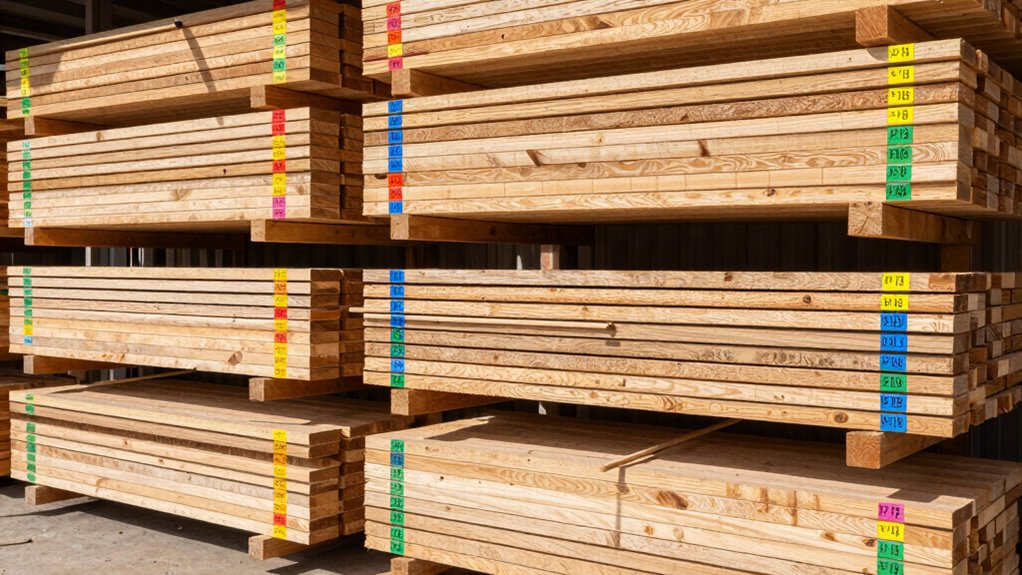
To guarantee your lumber stays straight and warp-free, it’s essential to arrange it carefully on your racks. Start by stacking boards with similar dimensions and lumber grading to ensure uniform drying and minimize stress. Place stickers—thin spacers—between each layer to promote airflow and prevent sticking. Always position the wood flat and straight, avoiding any twisting or bending. Consider applying wood treatment before storage to reduce moisture content and further prevent warping. Keep the stacks level and supported evenly to prevent sagging or uneven pressure. Rotate your lumber periodically to ensure even drying across all pieces. Proper arrangement not only maintains the quality of your wood but also makes future handling easier and safer. Precise stacking and attention to detail are key to warp-free storage. Additionally, maintaining good airflow around your stored lumber is crucial for consistent drying and warp prevention.
Ensuring Good Airflow Around Your Lumber
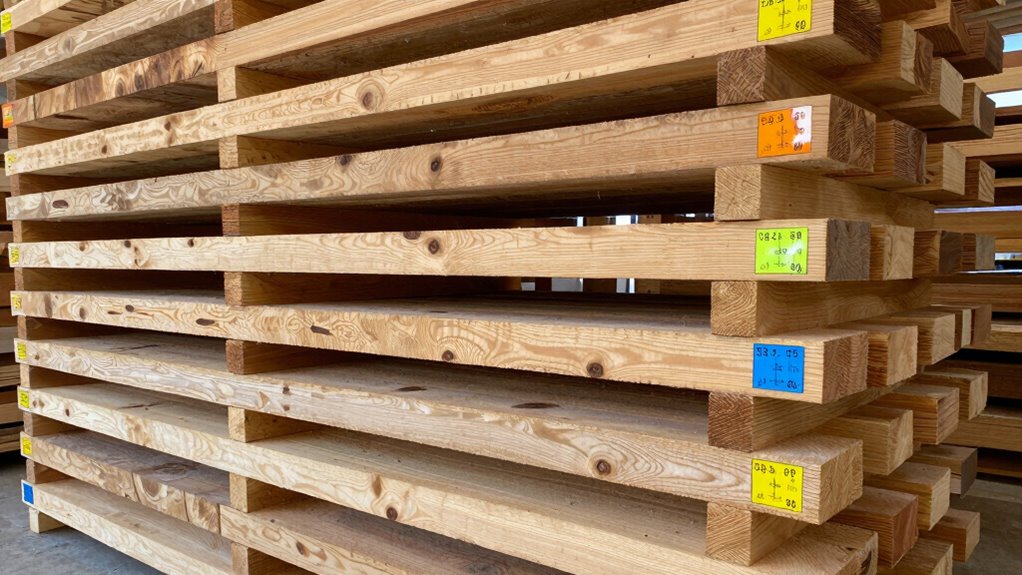
Ensuring good airflow around your lumber is vital for even drying and preventing warping. Proper circulation helps moisture escape, reducing the risk of uneven drying. Use moisture barriers to separate stacks from damp surfaces, and keep your storage temperature consistent to avoid rapid moisture loss or absorption. To improve airflow, consider these tips:
Good airflow ensures even drying and prevents warping.
- Space boards adequately on racks or stickers
- Use vents or fans to promote air movement
- Keep the storage area well-ventilated and dry
- Avoid stacking lumber directly against walls or other objects
Maintaining ideal airflow ensures your wood dries uniformly, preserving its shape and strength. Monitoring storage temperature helps prevent fluctuations that can cause warping. By paying attention to these factors, you create a stable environment that supports proper drying and long-term lumber quality.
Common Mistakes That Cause Warping
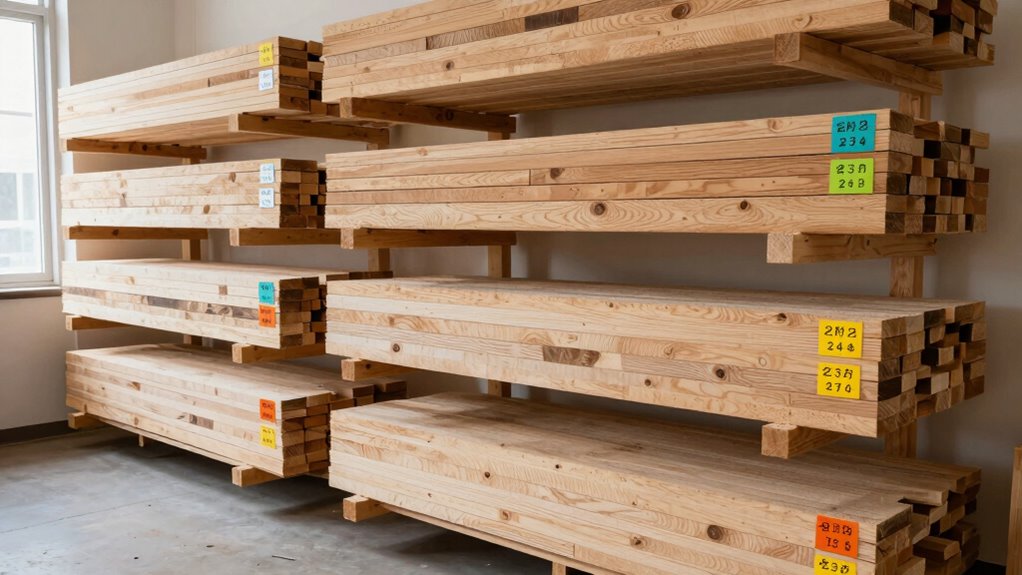
One of the most common mistakes that lead to warping is improper stacking of lumber, which prevents even drying and puts uneven stress on the wood. Incorrect stacking can cause boards to bend or cup as moisture escapes unevenly. Additionally, storing lumber in unventilated storage areas traps moisture, increasing the risk of warping. When you stack boards too tightly or without proper spacers, airflow is restricted, slowing the drying process and encouraging internal stresses. Failing to use stickers or leaving gaps between boards can lead to uneven moisture loss. Avoid these mistakes by ensuring your lumber is stacked correctly with consistent spacing and in a well-ventilated space. Proper stacking and airflow are vital to prevent warping during storage.
Tips for Long-Term Lumber Care and Maintenance
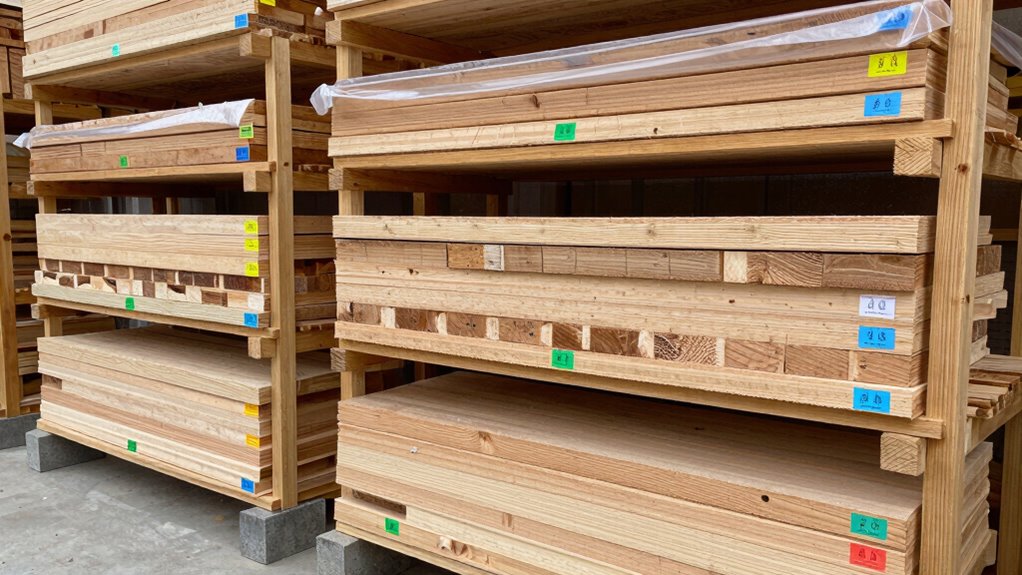
Proper long-term care and maintenance of lumber involve regular inspection and careful handling to preserve its quality. To prevent warping, you should routinely check moisture levels with moisture meters, ensuring wood stays within ideal ranges. Applying appropriate wood treatment helps protect against pests and decay. Store lumber in a stable environment, avoiding drastic temperature shifts. Keep the wood properly ventilated to prevent excess moisture buildup. Here are some tips to follow:
- Use moisture meters regularly to monitor moisture content
- Apply suitable wood treatment for protection
- Store lumber in a consistent, ventilated area
- Rotate stock to ensure even exposure and drying
Frequently Asked Questions
What Types of Wood Are Most Prone to Warping?
You should know that softwoods like pine, cedar, and spruce are most prone to warping. When storing wood, guarantee proper wood treatment and maintain consistent moisture content to prevent this. If moisture levels fluctuate, these woods expand or contract unevenly, causing warping. Using racks, stickers, and good airflow helps keep moisture balanced, reducing the risk. Always check and control moisture content to protect your wood from warping over time.
How Often Should Stored Lumber Be Inspected for Warping?
You should inspect stored lumber at least once a month for warping. Use storage container options like racks and stickers to promote airflow, and regularly check moisture levels with a moisture meter. This helps identify early signs of warping, allowing you to take corrective actions promptly. Consistent inspections guarantee your lumber stays flat and in good condition, preventing costly damage or waste during your projects.
Can Indoor Humidity Levels Affect Lumber Warping?
Did you know that indoor humidity levels above 60% increase the risk of lumber warping? Yes, humidity regulation is vital for moisture control, which directly impacts your wood’s stability. When you maintain consistent humidity, you prevent excess moisture absorption that causes warping. So, make sure your space has proper ventilation and use dehumidifiers if needed, keeping humidity levels steady to protect your lumber from unwanted deformation.
Are There Specific Rack Materials Better for Preventing Warping?
Yes, certain rack materials can help prevent warping. Metal racks are sturdy and durable, providing stable support that minimizes movement. Plastic pallets are lightweight and resist moisture, reducing the chance of warping caused by humidity. Using these materials, you guarantee proper airflow and reduce pressure points on the lumber, maintaining its shape. Opt for metal racks or plastic pallets to better protect your lumber from warping during storage.
How Does Temperature Variation Influence Lumber Stability?
Temperature variation affects lumber stability by causing moisture content fluctuations and thermal expansion. As temperatures rise or fall, moisture inside the wood can expand or contract, leading to warping or cracking. You should store lumber in a consistent environment to minimize these effects, and avoid rapid temperature changes. Proper airflow and stable conditions help maintain moisture levels, reducing the risk of warping due to thermal expansion or moisture content shifts.
Conclusion
By storing your lumber properly, you prevent warping, promote even drying, and guarantee durability. Use racks to keep your wood off the ground, stickers to separate each piece, and maintain good airflow around every board. Avoid common mistakes, follow best practices, and regularly check your storage setup. With these simple steps, you protect your investment, preserve your projects, and enjoy perfectly straight, long-lasting lumber every time. Your woodworking success starts with smart storage—keep it simple, keep it balanced, keep it dry.
Fall Picks
fall essentials
As an affiliate, we earn on qualifying purchases.