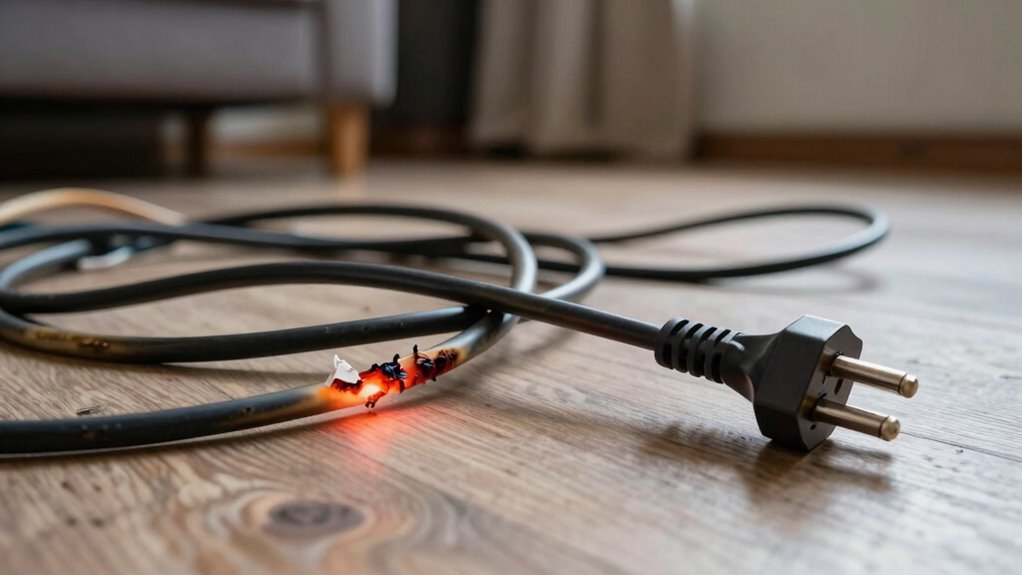

Extension cords might seem safe, but overheating is a hidden risk that can cause fires and shocks if not properly managed. Overloading, damage, or using the wrong cord can cause heat to build up inside the insulation, often without visible signs. Watch for melted areas, scorch marks, or warm spots. To stay safe, use cords correctly, inspect them regularly, and replace damaged ones immediately. Keep informed—there’s more to know about keeping your home safe from overheating dangers.
Key Takeaways
- Regularly inspect cords for signs of damage, melting, or frayed wires to prevent overheating risks.
- Avoid overloading extension cords with multiple high-wattage devices or daisy-chaining cords.
- Use cords rated for your specific indoor or outdoor environment and appropriate wattage capacity.
- Keep cords away from heat sources, furniture, or rugs to prevent heat buildup and damage.
- Unplug cords immediately if they become hot, emit a burning smell, or show signs of melting or scorch marks.
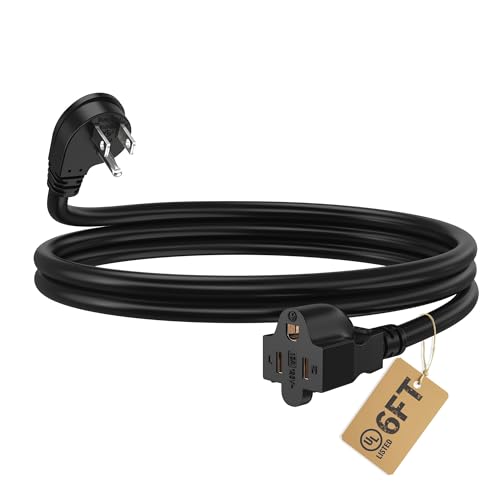
LUCKY TL Indoor Outdoor Extension Cord, 16/3 Gauge Black Short Extension Cord 6ft, Waterproof Flexible Case, Made in Pure Copper, 13A 1625W 16AWG SJTW, 3 Prong Heavy Duty Wire, UL
SPECIFICATION & SIZE: 16AWG extension cord, Black 6 feet, 3 Prong, 125 volts, 13 amps, 1625 watts, Male…
As an affiliate, we earn on qualifying purchases.
As an affiliate, we earn on qualifying purchases.
What Are the Hidden Dangers of Overloaded Extension Cords?
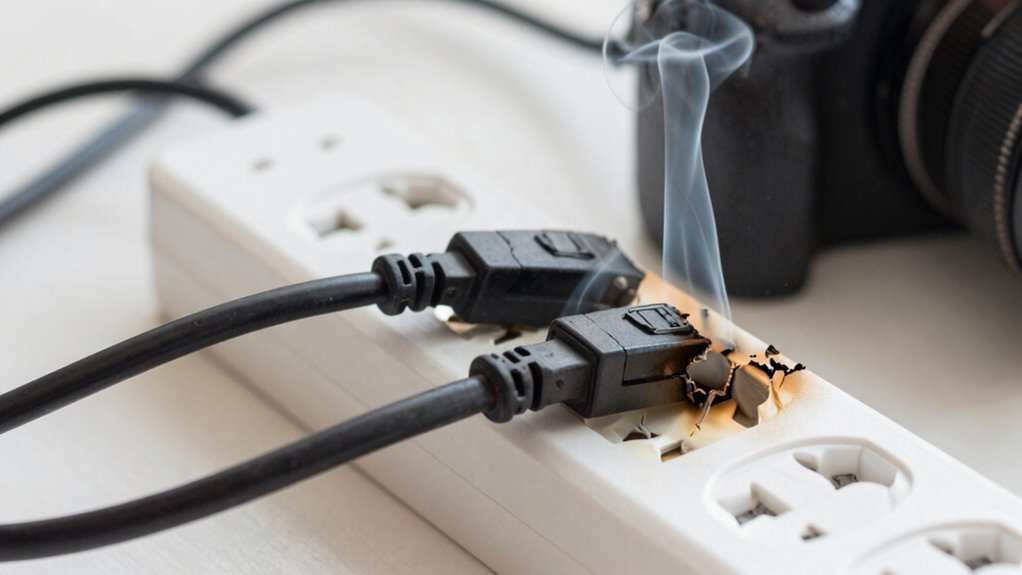
Overloading extension cords might seem harmless, but it can hide serious dangers. When you plug in too many devices or high-wattage appliances, you increase the risk of overheating. This can lead to fire hazards, as the cord’s insulation and wiring become stressed and vulnerable. Overloaded cords are more likely to generate excessive heat, which can ignite nearby materials or the cord itself. Electrical fires can start quickly and cause significant damage, putting your home and loved ones at risk. Even if a fire doesn’t ignite immediately, the strain on the cord can weaken its structure over time, making future hazards more likely. Additionally, proper wiring and technology can help reduce these risks by ensuring your electrical system is capable of handling your power needs. Always be mindful of your extension cord’s capacity to prevent these hidden dangers.

HUANCHAIN 12 Gauge Heavy Duty Outdoor Extension Cord 25 ft Waterproof with Lighted end, Flexible Cold-Resistant 3 Prong Electric Cord Outside, 15Amp 1875W 12AWG SJTW, Yellow, ETL
Lighted End and Extra Size for Safety: The power socket indicator light shows that power is on and…
As an affiliate, we earn on qualifying purchases.
As an affiliate, we earn on qualifying purchases.
How Do Extension Cords Overheat, and What Signs Should You Watch For?
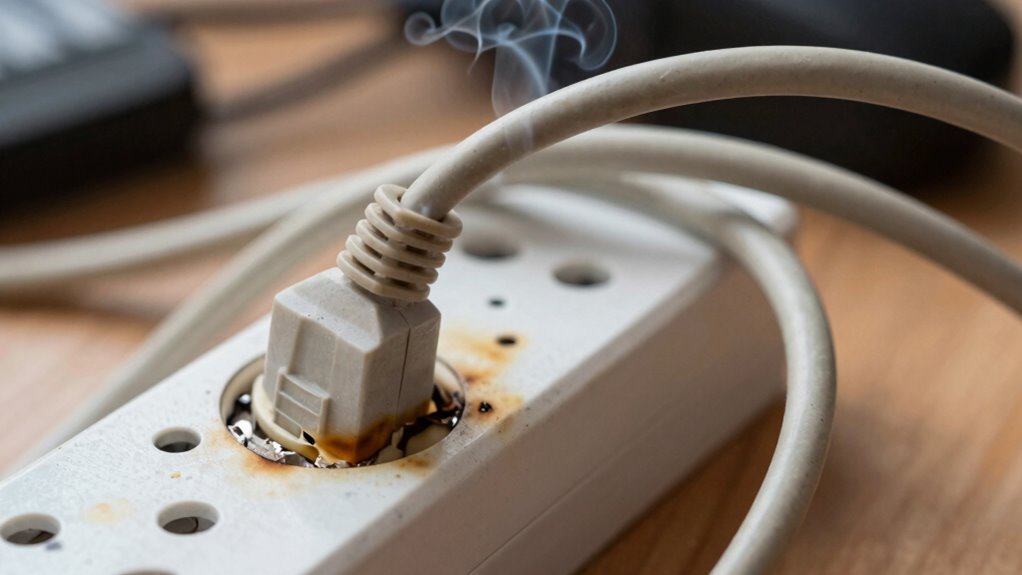
Extension cords can overheat when they are used improperly or exceed their rated capacity. When this happens, heat buildup occurs inside the cord, often due to damaged or worn cord insulation that fails to dissipate heat effectively. As heat accumulates, the insulation may become soft, discolored, or melt, signaling trouble. You might also notice the cord feels warm or hot to the touch, which is a clear sign of overheating. Faint burning smells or sparks are more obvious signs of severe issues. Regularly inspecting your extension cords for any damage—especially around the insulation—can help you catch these signs early. Understanding the proper usage and limitations of extension cords can prevent overheating incidents. If you notice any of these warning signs, stop using the cord immediately to prevent fire hazards or electrical failures.

HUANCHAIN Indoor Outdoor Black Extension Cord 15 ft Waterproof, 16/3 Gauge Flexible Cold-Resistant Appliance Extension Cable Outside, 13A 1625W 16AWG SJTW, 3 Prong Electric Cord, ETL
Extra Size for Safety: Extra size Male NEMA 5-15P power plug and Female NEMA 5-15R power socket for…
As an affiliate, we earn on qualifying purchases.
As an affiliate, we earn on qualifying purchases.
What Causes Extension Cord Overheating? Common Mistakes to Avoid
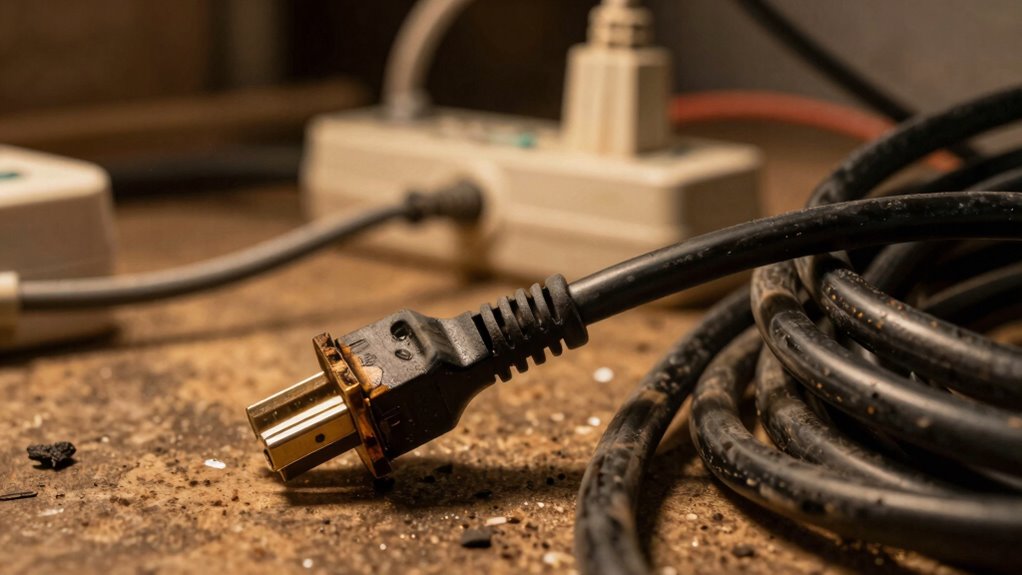
One common cause of extension cord overheating is overloading it with too many devices or high-wattage tools. Using damaged or frayed cables also increases the risk of overheating and electrical fires. To keep safe, always avoid these mistakes and check your cords regularly for wear. Understanding electrical load limits can help prevent overloading and ensure safe usage.
Overloading Extension Cords
When you plug multiple devices into a single extension cord without considering its capacity, you risk overloading it and causing it to overheat. Overloading can happen whether you’re using indoor or outdoor cords, but indoor cords are often overlooked for their limits. Power strip hazards are common when people assume they can connect many devices to a single extension cord or power strip. Always check the maximum wattage and amperage ratings before plugging in multiple appliances. Remember, outdoor cords are designed for different conditions and may have lower capacity or different insulation, increasing the risk of overheating if overloaded. Avoid the mistake of daisy-chaining cords or plugging high-power devices into a single extension cord. Properly distributing the load helps prevent overheating and potential fire hazards. Additionally, understanding power capacity and safety guidelines can help you make informed decisions and avoid dangerous overloads.
Using Damaged Cables
Have you ever considered how damaged cables can cause your extension cords to overheat? Damaged cables expose wires, which increases electrical hazards and risks of overheating. Frayed insulation, cuts, or exposed wiring weaken the cord’s integrity, making it more vulnerable to short circuits. When you use a damaged cable, you disrupt the safe flow of electricity, leading to potential sparks or fires. Always inspect your extension cords before use; discard any with visible damage. Continuing to use compromised cables not only damages the cord further but also endangers everyone nearby. Regularly replacing damaged cables is a simple step to prevent overheating and reduce electrical hazards. Remember, the integrity of your extension cords directly affects safety—don’t ignore signs of damage. Additionally, understanding electrical safety precautions can further help prevent accidents associated with faulty cords.
Surge Protector Power Strip – 10 FT Extension Cord, Power Strip with 12 Widely AC Outlet 3 USB, Flat Plug, Wall Mount Overload Protection, 1050J, Desk Charging Station for Home Office, ETL Listed
【15 IN 1 Power Strip】- 12 widely AC outlets power strips(1875W/15A Max)with 3 USB charing ports, the flat…
As an affiliate, we earn on qualifying purchases.
As an affiliate, we earn on qualifying purchases.
How Can You Prevent Extension Cord Overheating Safely? Practical Tips
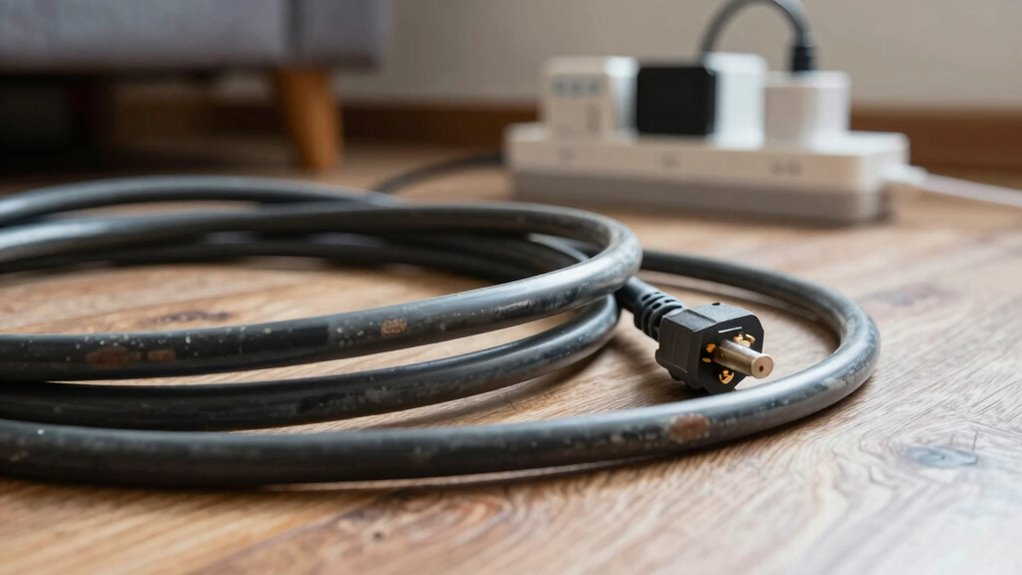
To prevent extension cord overheating, it’s essential to use cords appropriately and follow safety guidelines. Proper cord management keeps cords organized, reduces strain, and prevents damage that can lead to overheating. Avoid running cords under rugs or furniture where heat can build up and airflow is restricted. When plugging in, pay attention to outlet placement; use outlets that are easily accessible to avoid overloading a single socket. Distribute the electrical load across multiple outlets if necessary, rather than overusing one. Never connect multiple extension cords in a series, as this increases the risk of overheating. Regularly inspect cords for signs of wear, and replace damaged ones immediately. Additionally, understanding wiring basics can help you identify potential hazards and ensure safe electrical setups. Following these tips helps guarantee safe, efficient use and minimizes the risk of overheating.
How Do You Choose the Right Extension Cord for Your Needs?
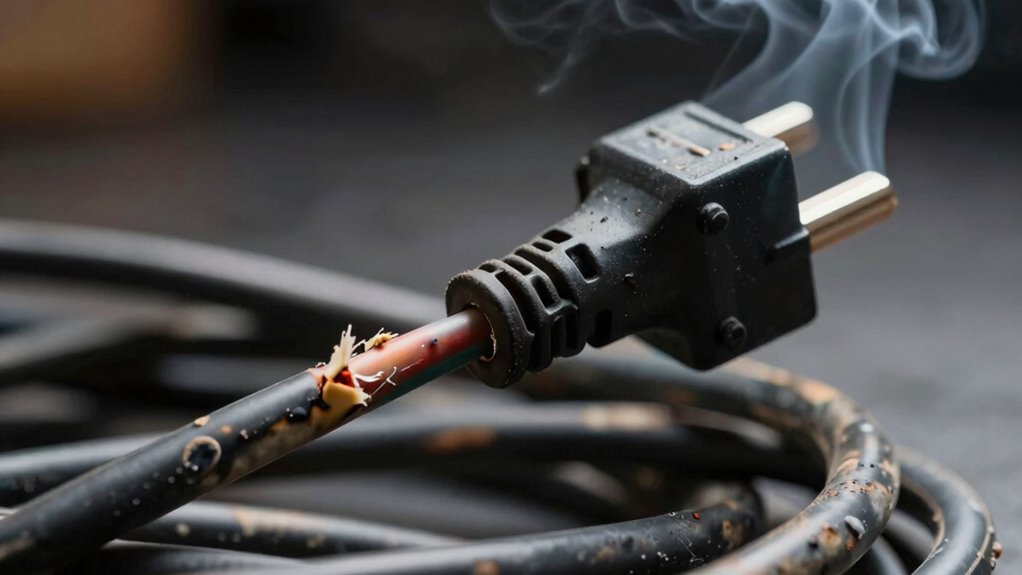
Choosing the right extension cord starts with understanding your specific power needs. First, consider the cord length; longer cords can cause voltage drops, so use the shortest length possible for your task. If you need to reach a far distance, opt for a shorter cord or consider a heavy-duty option. Next, check the cord gauge—thicker gauges (lower number, like 12 or 14) support higher current loads and reduce overheating risk. For high-power tools or appliances, select a heavier gauge cord to ensure safety. Avoid using a cord that’s too long or too thin, as it can lead to overheating. Always match the cord’s capacity with your device’s power requirements, and inspect cords regularly for damage before use. Proper selection minimizes overheating and keeps you safe. Additionally, understanding comparative advantage can help consumers make more efficient choices when selecting the appropriate extension cord for their specific needs.
What Should You Do If You Suspect Your Extension Cord Is Overheating?
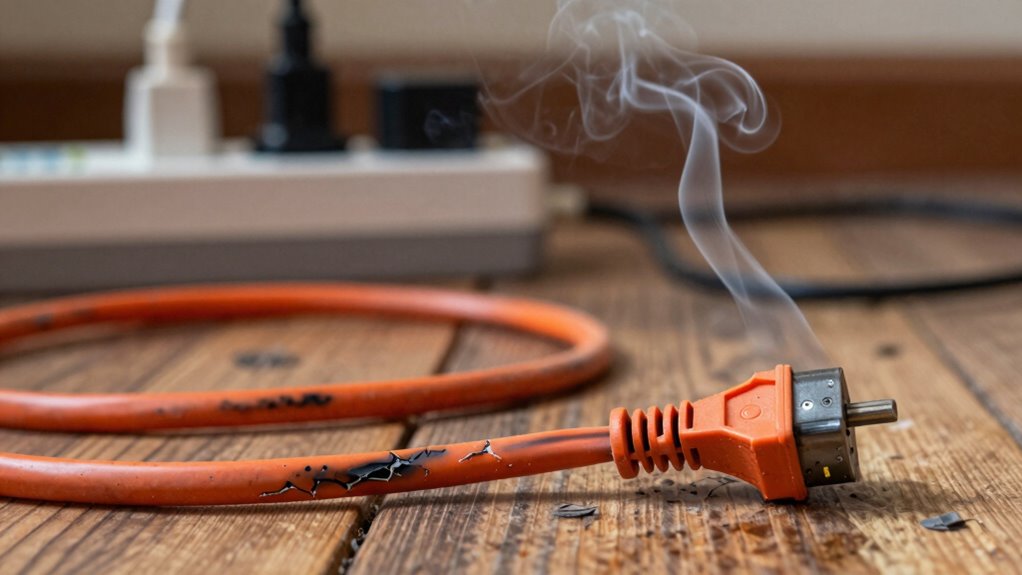
If you notice your extension cord feeling hot or emitting a burning smell, unplug it immediately to prevent damage or fire. After unplugging, carefully inspect the cord for any visible damage or fraying. If you find any issues, replace the cord before using it again to stay safe.
Unplug Immediately and Safely
When you notice your extension cord feeling hot, emitting a burning smell, or showing signs of melting, it’s crucial to act immediately. First, unplug the cord from the power source carefully, ensuring your hands are dry to avoid shock. This prevents further damage and reduces fire risk. Remember, a cord’s durability and power capacity are designed for specific loads; exceeding these can cause overheating. Never attempt to use a damaged or overheating cord again. Once unplugged, keep the cord away from combustible materials and place it in a safe, cool area. Do not try to fix or reuse a cord that has shown signs of overheating. Regularly inspecting and understanding the limits of your extension cords can prevent accidents, and your quick action can prevent potential fires and protect your home.
Inspect and Replace Cord
Since an overheating extension cord can pose serious safety risks, it’s essential to inspect it carefully. Start with a thorough cord inspection, looking for signs like melted insulation, scorch marks, or frayed wires. Feel along the length for hot spots or unusual warmth, which indicate internal damage. If you notice any damage or suspect overheating, it’s best to replace the cord immediately. Follow replacement tips like choosing a cord with appropriate wattage capacity and ensuring it’s rated for outdoor or indoor use as needed. Never ignore warning signs—using a damaged cord increases the risk of fire or electric shock. Regular inspections help prevent hazards, and replacing worn or damaged cords keeps your environment safe. When in doubt, opt for a new, certified extension cord. European cloud innovation promotes the development of safer and more reliable power solutions for everyday use.
How Can You Maintain Electrical Safety in Your Home Overall?
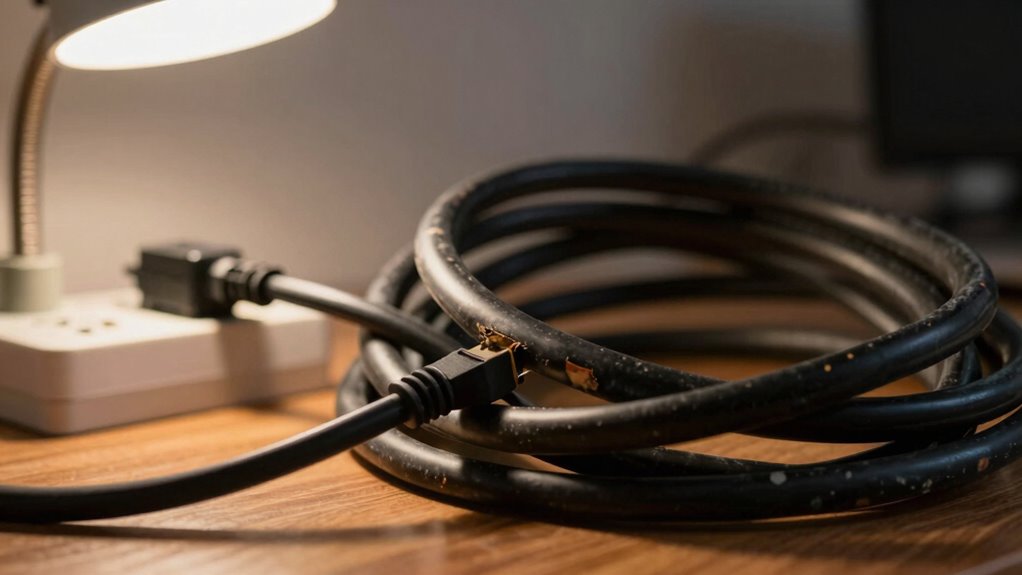
Maintaining electrical safety in your home requires proactive measures and consistent awareness. Regular electrical maintenance helps prevent fire hazards caused by faulty wiring or damaged outlets. Start by inspecting cords, outlets, and appliances for signs of wear or damage, and replace or repair them promptly. Avoid overloading circuits and use appropriate extension cords for the task. Keep electrical devices away from water to prevent shocks and short circuits. Install smoke detectors and ensure they’re functioning correctly. Educate everyone in your household about electrical safety practices. Proper cable management can further reduce the risk of overheating and accidental damage. By staying vigilant and performing routine electrical maintenance, you’ll reduce risks and create a safer environment. Remember, addressing potential hazards early is key to preventing accidents and ensuring your home remains a secure space.
Frequently Asked Questions
Are There Specific Extension Cord Brands Known for Safer Performance?
You can choose extension cords from brands known for safety, like Southwire or Iron Forge Cable, which have strong reputations for quality. Look for cords with safety certifications such as UL or ETL, guaranteeing they meet safety standards. These brands prioritize safety features like overheating protection, so you’re less likely to experience issues. Always check reviews and certifications before purchasing to ensure you’re getting a reliable, safe extension cord.
How Does Outdoor Usage Affect Extension Cord Overheating Risks?
Outdoor use increases your extension cord’s risk of overheating because water exposure and temperature fluctuations can cause insulation damage and electrical faults. When cords get wet or experience extreme temperature changes, they may short circuit or overheat unnoticed. To stay safe, avoid using extension cords outdoors unless they’re rated for outdoor use, keep them dry, and disconnect them when not in use. Always check for signs of wear before plugging in.
Can Multiple Extension Cords Be Safely Connected Together?
Connecting multiple extension cords is like stacking chairs; it can easily become unstable and unsafe. You shouldn’t do it because extension cord stacking increases the risk of overheating, especially if you’re using multiple outlets. Instead, use a single heavy-duty extension cord rated for your needs. Always check the wattage and avoid daisy-chaining cords to prevent potential fires and electrical hazards. Safety first keeps everyone out of harm’s way.
What Are the Legal Safety Standards for Extension Cords in Homes?
You need to follow legal safety standards for extension cords, which include grounding requirements and insulation standards. Make certain your cords have proper grounding to prevent electrical shocks, and check that the insulation is intact without damage. Use cords rated for your specific power needs, and avoid daisy-chaining multiple cords. These standards protect you from overheating and electrical hazards, keeping your home safer during everyday use.
How Often Should I Inspect My Extension Cords for Damage?
You should inspect your extension cords regularly, ideally once a month. Follow your cord inspection routines by checking for frayed wires, cracks, or exposed insulation. Use damage detection techniques like gently tugging on the cord to see if the plug or wire feels loose or damaged. If you notice any signs of wear or damage, replace the cord immediately to prevent overheating and potential hazards.
Conclusion
Think of your extension cord as a delicate thread in your home’s safety tapestry. When you overload or neglect it, the risk of overheating frays that tapestry, exposing you to danger. By staying vigilant, choosing the right cord, and practicing safe habits, you keep that thread strong and secure. Remember, a small step today can prevent a fiery tear tomorrow—protect your home by respecting your extension cords’ limits.