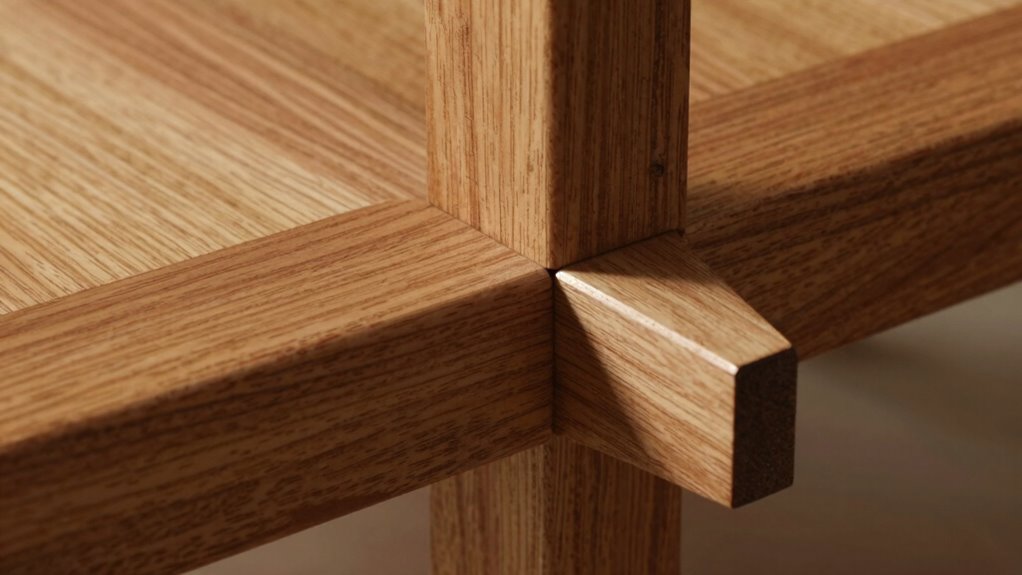

Fox wedge joinery is a clever technique that locks your tenon in place, enhancing the strength and stability of your projects. This method fills gaps and prevents movement, making it perfect for high-stress areas like table legs. You’ll appreciate how the tapered wedge secures the joint while adding a unique aesthetic. Plus, mastering this skill allows you to explore different wood types and finishes. Stick around to uncover more about improving your woodworking techniques and craftsmanship.

Get business pricing on tools and workshop supplies
- Business-only prices and quantity discounts
- Tax-exempt purchasing
- Multiple users, one account, clear invoices
Key Takeaways
- Fox wedge joinery uses a tapered wedge to securely lock the tenon in place, enhancing joint strength and stability.
- This technique fills gaps and prevents movement, ensuring durability in high-stress areas like table legs and chair frames.
- Understanding wood movement is crucial, as it maintains joint integrity despite natural expansion and contraction of the wood.
- Essential tools like chisels and mallets are necessary for creating precise cuts, enhancing the fit and strength of the joint.
- The visible wedge adds aesthetic appeal and showcases craftsmanship, elevating the overall quality of handmade furniture.
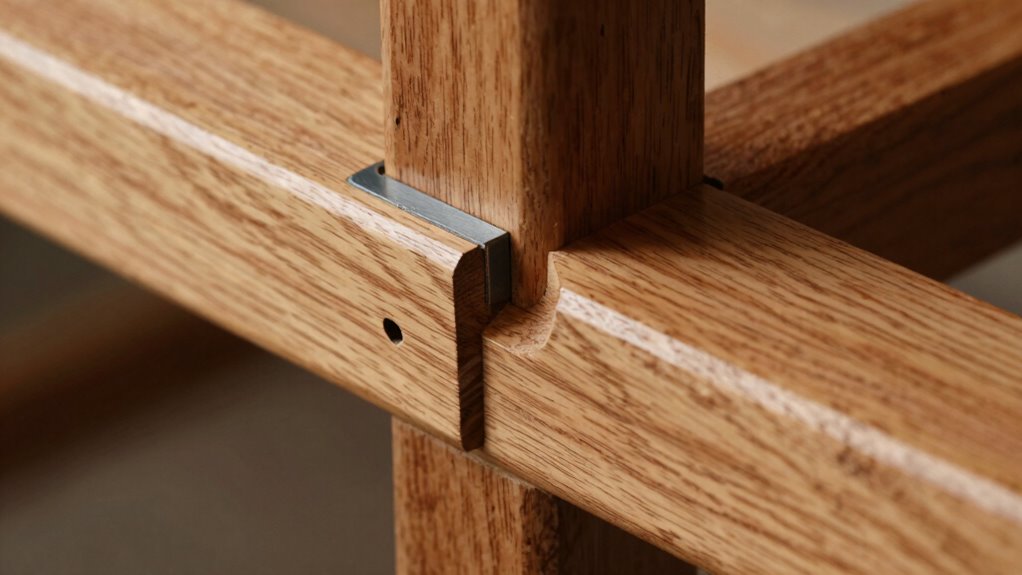
When you cut a mortise for a tenon, adding a wedge into the mix changes the game. The wedge strength dramatically increases as it locks the tenon in place. You’ll find that once you drive the wedge into the joint, it expands the tenon, filling any gaps and creating a tight fit that resists movement. This tightness is essential, especially in high-stress areas like table legs or chair frames. You won’t just be building a piece of furniture; you’ll be crafting something that stands the test of time. Using wood expansion principles can further enhance the stability of your joints under varying conditions. Understanding how wood movement influences joint integrity can help you make more durable projects.
Adding a wedge to your mortise and tenon joint creates unmatched strength and stability, ensuring your furniture withstands the test of time.
As you get started, make sure you’ve got the right tools. A chisel, mallet, and saw are vital for creating precise cuts. You’ll want to cut your tenon with great care, ensuring it fits snugly into the mortise. After that, it’s time to create the wedge itself. The wedge should be shaped to taper at one end, allowing it to be driven into the joint easily. Precision is key—too loose, and it won’t provide the stability you need; too tight, and you risk splitting the wood. Understanding the joint mechanics can help you fine-tune your technique for optimal results.
Once you’ve got your tenon and wedge ready, you can assemble the joint. Insert the tenon into the mortise, and then gently tap the wedge into place. You’ll feel the wedge strength kicking in as it fills any gaps and locks everything securely. It’s a satisfying moment, knowing you’ve created a joint that won’t budge.
One of the best parts of using fox wedge joinery is its aesthetic appeal. The visible wedge can add character to your project, giving it a unique, handcrafted look. It’s not just about function; the technique allows you to showcase your craftsmanship. You can even experiment with different wood types or finishes to enhance the overall appearance.
Incorporating fox wedge joinery into your woodworking projects isn’t just practical; it’s an opportunity to elevate your skills. With each joint, you’ll gain confidence and experience, discovering how the right techniques can transform your work. So go ahead, give it a try, and enjoy the lasting benefits of this ingenious method.
As an affiliate, we earn on qualifying purchases.
Frequently Asked Questions
What Materials Are Best for Fox Wedge Joinery?
For fox wedge joinery, hardwoods like oak, maple, or cherry work best as your joinery materials due to their strength and durability. You’ll want a tight fit, so select wedges made from the same or harder material for best results. Avoid softwoods, as they may compress over time. Always consider the grain direction when cutting your wedges to guarantee they lock securely, enhancing the joint’s overall stability and longevity.
Can Beginners Use Fox Wedge Joinery Effectively?
Absolutely, you can use fox wedge joinery effectively as a beginner. Think of it as a key opening the door to joint stability in your projects. By mastering beginner techniques, you’ll build a solid foundation for your woodworking skills. As you practice, the process will feel like a dance, each cut and fit flowing together. With patience and precision, you’ll transform simple joints into robust connections that stand the test of time.
How Does Fox Wedge Joinery Compare to Traditional Methods?
Fox wedge joinery offers several advantages over traditional methods. Its innovative wedge design enhances joint strength, creating a more secure connection that’s less prone to failure. Unlike conventional joints that rely solely on glue or screws, the wedge locks the tenon in place, providing stability. You’ll find that this technique not only simplifies assembly but also improves durability, making your projects more resilient and long-lasting compared to standard joinery methods.
What Tools Are Necessary for Creating Fox Wedge Joints?
To create fox wedge joints, you’ll need a few essential tools. Start with a table saw for precise cuts, ensuring joint accuracy. A chisel helps refine the tenons, while a mallet drives the wedges in. For measuring wedge dimensions accurately, a caliper or ruler is vital. Don’t forget clamps to hold everything in place while the glue sets. With these tools, you’ll achieve strong, durable joints that stand the test of time.
Are There Any Specific Wood Types to Avoid?
You should avoid softwoods like pine and fir when making joints. These woods often lack the necessary density, which can compromise joint stability. Instead, opt for hardwoods like oak or maple, as their higher density provides better support and durability. Remember, the right wood can make or break your project, so think about wood density considerations carefully. A stable joint is key to ensuring your work stands the test of time.
As an affiliate, we earn on qualifying purchases.
Conclusion
Incorporating fox wedge joinery into your projects can truly make a world of difference. This clever technique not only enhances strength but also locks your tenons in place for good. With a little practice, you’ll find it’s a game changer that takes your woodworking to the next level. So, why not give it a shot? Once you master this hidden wedge trick, you’ll be on cloud nine, impressing everyone with your newfound skills.
As an affiliate, we earn on qualifying purchases.
As an affiliate, we earn on qualifying purchases.
Fall yard work Picks
leaf blowers
As an affiliate, we earn on qualifying purchases.