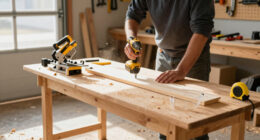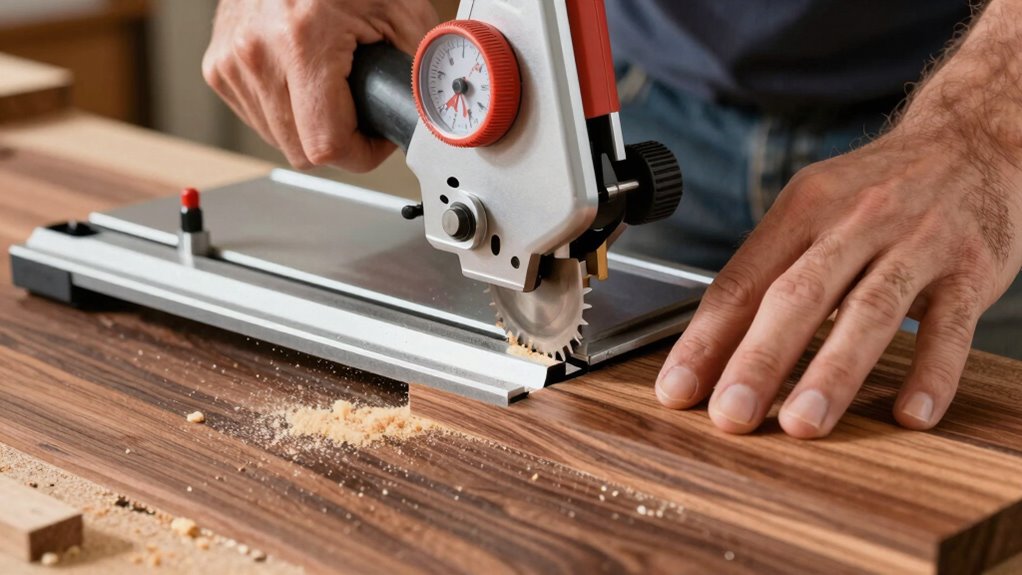
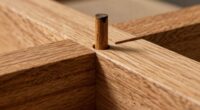
To eliminate miter saw deflection and stop shy angles, make certain your saw is properly calibrated—check blade alignment and fence accuracy regularly. During cuts, hold steady pressure, secure your workpiece firmly, and use push sticks or clamps for stability. Keep your blade sharp and clean to prevent wobble. Focusing on these techniques helps maintain precise angles and prevents deflection. For more tips on mastering clean, accurate cuts every time, continue exploring these expert strategies.

Get business pricing on tools and workshop supplies
- Business-only prices and quantity discounts
- Tax-exempt purchasing
- Multiple users, one account, clear invoices
Key Takeaways
- Ensure blade is perfectly aligned perpendicular to the table and securely tightened before cutting.
- Calibrate the fence and miter angles accurately using reliable measuring tools.
- Use steady, smooth pressure and maintain control with proper grip during each cut.
- Secure the workpiece firmly against the fence to prevent shifting and wobbling.
- Regularly inspect and maintain the saw components to prevent misalignment and deflection issues.
As an affiliate, we earn on qualifying purchases.
How to Achieve Perfect Angles by Eliminating Miter Saw Deflection
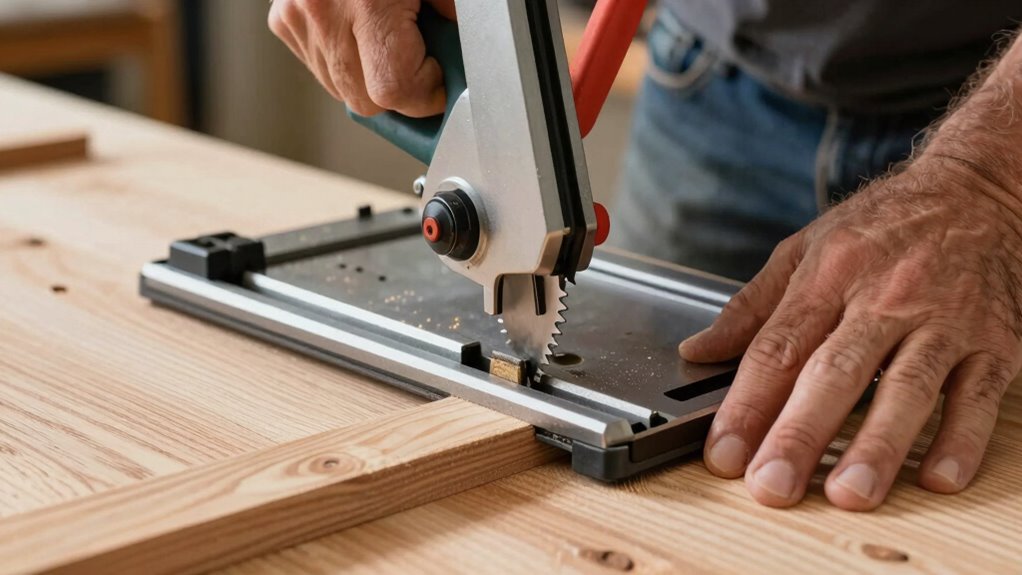
To achieve perfect angles with your miter saw, you need to address and eliminate deflection that can throw off your cuts. Start by checking blade alignment; a misaligned blade causes uneven cuts and inaccurate angles. Ensure the blade is perfectly perpendicular to the fence and table surface. Next, focus on workpiece stability—secure your material firmly against the fence and table. Use clamps if necessary to prevent shifting during the cut. When the workpiece is stable and the blade is properly aligned, you reduce the chances of deflection and off-angle cuts. Proper projector setup is also essential for visual accuracy in finishing your projects. Consistent, accurate cuts depend on these adjustments. Taking the time to verify blade alignment and secure your workpiece ensures your miter saw produces precise, clean angles every time. Additionally, understanding miter saw mechanics can help you troubleshoot and prevent deflection issues more effectively.
As an affiliate, we earn on qualifying purchases.
What Causes Saw Deflection and How to Recognize Off-Angle Cuts
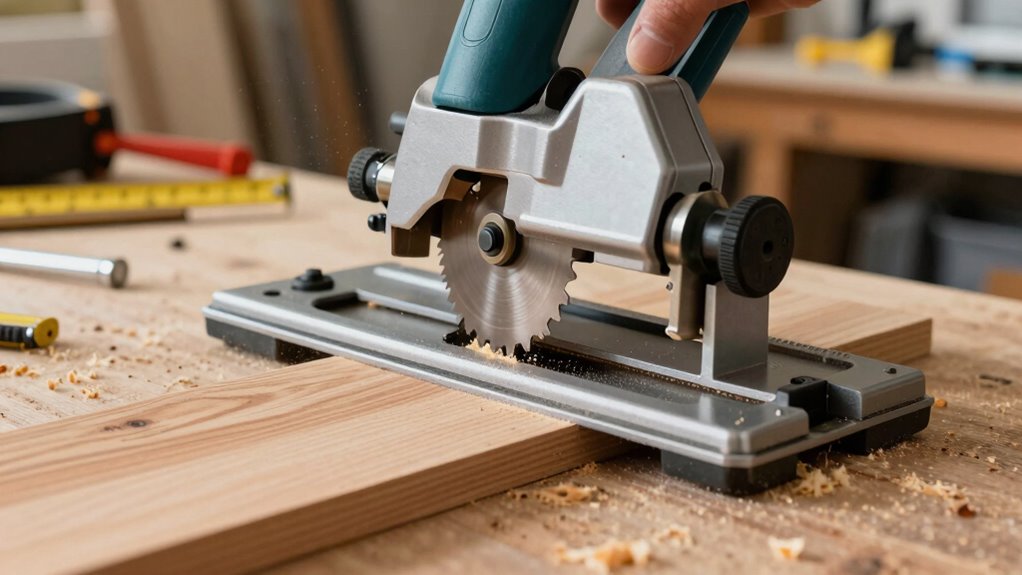
Saw deflection often happens because of loose parts, worn blades, or uneven pressure during cuts. You can spot off-angle cuts by checking if edges don’t line up or look uneven. Recognizing these signs helps you identify the root causes and improve cut accuracy.
Common Causes of Deflection
Miter saw deflection often results from mechanical issues or improper setup, causing cuts to veer off the intended angle. One common cause is blade wobble, which happens when the blade isn’t spinning true, leading to uneven cuts and angles that aren’t precise. Another frequent issue is fence misalignment, where the fence isn’t perfectly parallel to the blade, pushing the material off course. Over time, worn or loose components can contribute to these problems, making it harder to achieve accurate cuts. Regular maintenance, checking blade stability, and verifying fence alignment are essential steps to avoid these common sources of saw deflection. Ensuring your saw’s mechanical stability is maintained helps prevent these issues and achieve cleaner, more accurate cuts.
Detecting Off-Angle Cuts
Detecting off-angle cuts begins with closely inspecting your workpiece and cut lines. If the cut line appears uneven or skewed, it’s a sign the blade alignment might be off. Check your saw’s blade to ensure it’s perpendicular to the table and properly aligned with the miter angle indicator. Also, verify that your fence is calibrated correctly; a misaligned fence can cause the workpiece to shift, resulting in an inaccurate cut. Look for inconsistencies, such as gaps between the workpiece and fence during the cut or uneven angles on the finished piece. Recognizing these signs early helps you identify whether the cause is blade misalignment or fence calibration issues, so you can make the necessary adjustments before proceeding with your project. Additionally, understanding the importance of saw setup can help prevent common issues like deflection and ensure more precise cuts.
As an affiliate, we earn on qualifying purchases.
Step-by-Step Technique to Prevent and Fix Saw Deflection
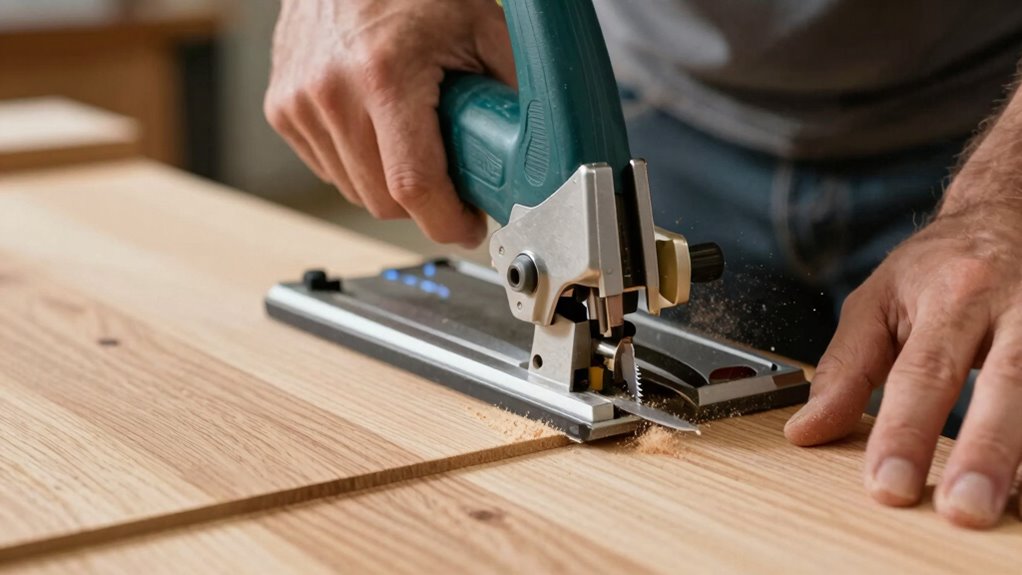
To prevent saw deflection, start by ensuring your miter saw is properly set up and calibrated. Use precise cutting techniques, applying steady pressure and avoiding rushing through cuts. These steps help maintain stability and accuracy, reducing the risk of deflection during your projects. Incorporating consistent storytelling into your setup routine can reinforce good habits and improve overall results. Additionally, understanding the material properties can guide you in selecting the appropriate blade and cut settings, further minimizing deflection issues. Paying close attention to detail throughout your process ensures that minor adjustments are made promptly to maintain optimal performance. Being aware of the power tool specifications can also help you choose the right equipment for your specific tasks.
Proper Saw Setup
Ensuring your saw is properly set up is essential for preventing and fixing deflection during cuts. Start with saw calibration by checking that the miter and bevel angles are accurate, adjusting as needed. Proper calibration ensures the blade moves smoothly and maintains stability throughout the cut. Next, focus on blade selection: choose a high-quality blade suited for your material, as this reduces vibration and deflection. Make sure the blade is sharp, clean, and properly installed, with the arbor nut securely tightened. Align the blade with the fence and miter gauge, confirming they’re square and consistent. Regularly inspect these components to catch any misalignments early. A well-calibrated saw with the right blade setup is key to achieving precise cuts and eliminating shy angles caused by deflection.
Precise Cutting Technique
A precise cutting technique helps minimize saw deflection and improves the quality of your cuts. Start by ensuring your blade alignment is perfect; a misaligned blade causes uneven cuts and extra resistance. Select material appropriate for your saw’s capacity—thicker or denser materials increase the risk of deflection. Before cutting, secure the material firmly against the fence to prevent shifting. Use smooth, steady pressure when lowering the blade, avoiding forceful pushes that can cause wobbling. Keep your blade sharp and clean for cleaner cuts with less resistance. Check your saw’s adjustments periodically to maintain accuracy. Proper luggage & bags selection and organization can also help when transporting your tools and materials to the worksite, reducing the risk of mishandling or damage. Additionally, understanding saw mechanics can help identify issues that contribute to deflection, allowing for more targeted adjustments. Being familiar with the causes of saw deflection enables you to troubleshoot effectively and implement preventative measures. Paying attention to blade tension is also crucial, as it directly influences cut precision and stability. By focusing on proper blade alignment and choosing the right material, you reduce stress on the saw, leading to cleaner, more precise cuts and markedly less deflection. Incorporating vibration control techniques can further enhance cut stability and minimize wobbling during operation.
As an affiliate, we earn on qualifying purchases.
Essential Tools and Adjustments for Accurate, Deflection-Free Cuts
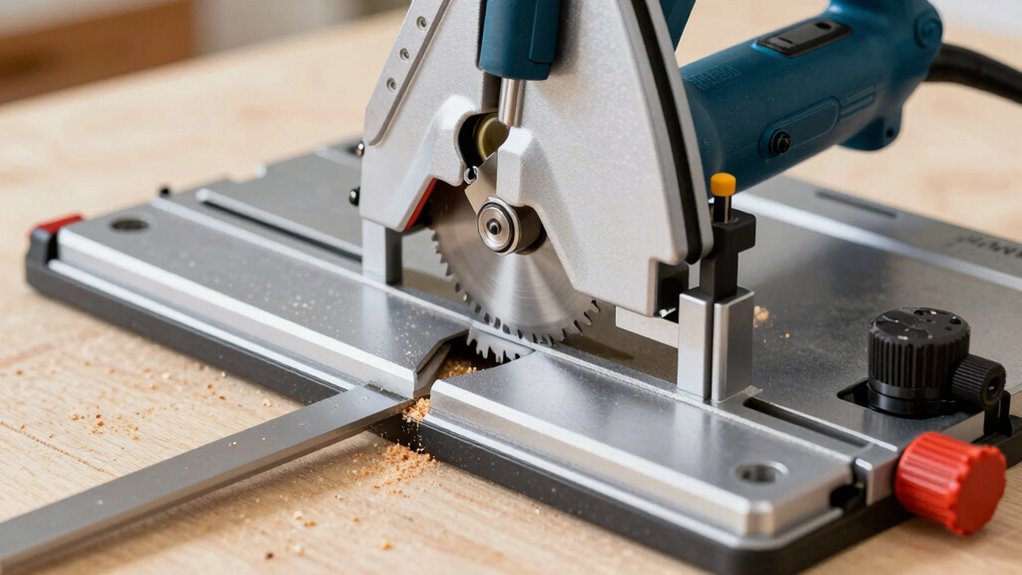
Achieving accurate, deflection-free cuts with your miter saw hinges on having the right tools and making precise adjustments. Start by checking blade alignment; a misaligned blade causes uneven cuts and increases deflection. Use a square or alignment tool to ensure the blade is perfectly perpendicular to the table and fence. Next, calibrate the fence so it’s parallel to the blade, providing consistent support during cuts. Tighten any loose bolts or knobs that hold the fence in place, and verify its position regularly. Proper blade alignment and fence calibration are fundamental to reducing vibration and ensuring your cuts stay true to your measurements. With these adjustments, you’ll improve cut accuracy and minimize deflection, making your miter saw more reliable for every project.
Common Troubleshooting Tips for Shy Angles and Deflection
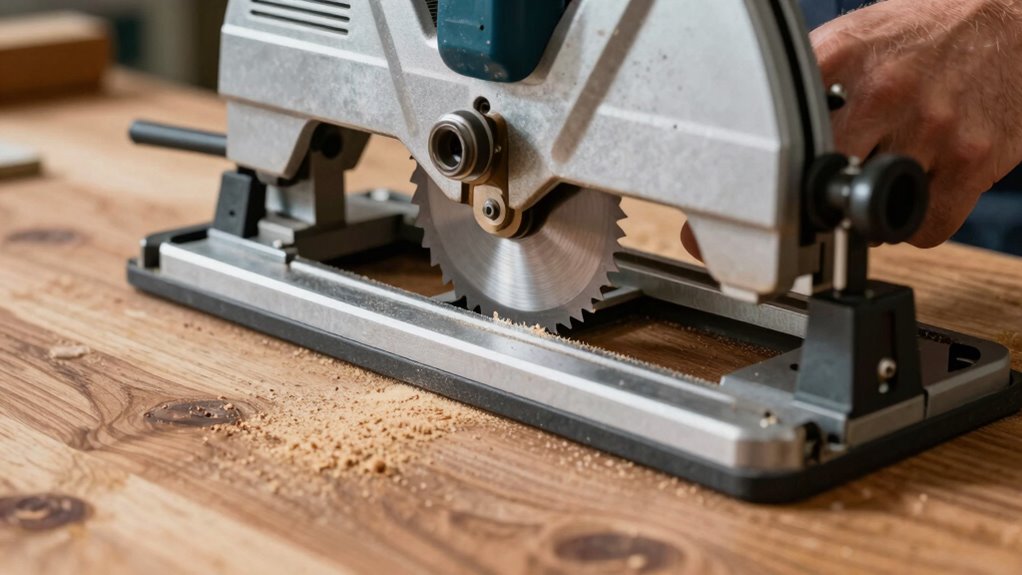
When your miter saw produces shy angles or inconsistent cuts, troubleshooting quickly becomes essential to keep your projects on track. Start by checking the blade alignment; a misaligned blade can cause cut inaccuracies and deflection. Ensure the blade is perfectly perpendicular to the table and securely tightened. Next, verify the fence calibration—if the fence isn’t properly aligned, your angles will be off, leading to shy cuts. Use a square or a reliable measuring tool to confirm the fence’s position matches your desired angles. Adjustments should be precise and firm. Regularly inspecting these components helps prevent common issues. Proper blade alignment and fence calibration are key to eliminating deflection and achieving consistent, accurate cuts every time.
Practice Tips to Consistently Make Precise, Deflection-Free Cuts
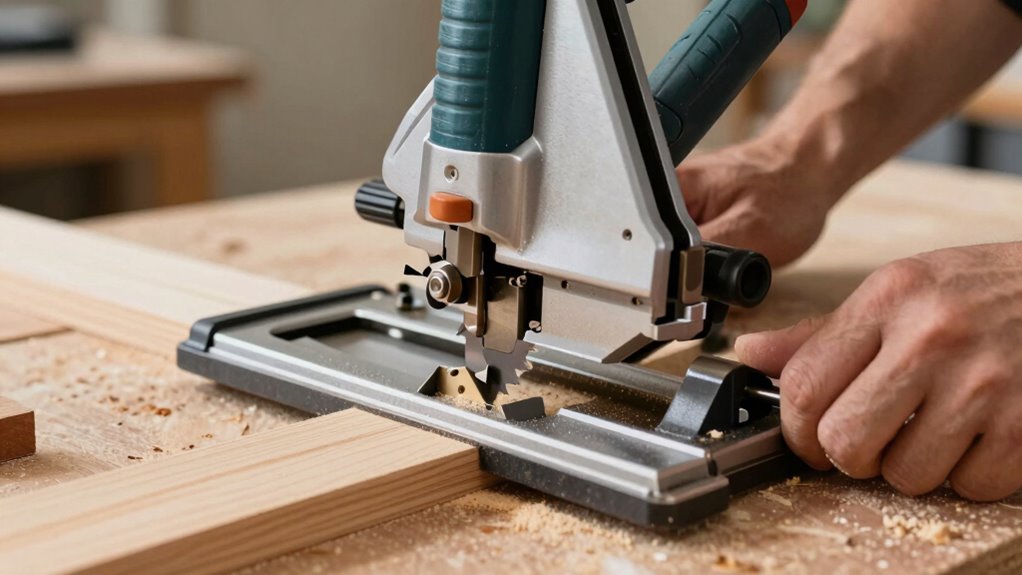
Practicing proper technique is essential for making consistent, deflection-free cuts with your miter saw. Start by regularly checking your blade alignment; a misaligned blade causes uneven cuts and increased deflection. Confirm your fence is properly calibrated so it holds the material securely at the correct angle. Maintain a firm grip and steady pressure throughout the cut, avoiding any twisting or sudden movements. Use a push stick or clamp if needed to stabilize your workpiece. Consistent technique reduces errors and enhances precision.
| Technique | Purpose |
|---|---|
| Check blade alignment | Prevents uneven cuts caused by misalignment |
| Calibrate fence regularly | Ensures material stays at the correct angle |
| Steady pressure | Maintains control and reduces deflection |
| Secure workpiece | Prevents shifting during cutting |
Frequently Asked Questions
How Does Blade Type Affect Miter Saw Deflection?
Blade type substantially impacts miter saw deflection because different blades come with varying compositions. High-quality blades with carbide tips or diamond coatings offer better cutting precision and stability, reducing flex during cuts. Cheaper blades tend to bend or wobble, increasing deflection and resulting in less accurate angles. Choosing the right blade composition ensures your cuts stay precise, especially when working on detailed or critical projects, ultimately improving your overall results.
Can Environmental Factors Influence Saw Accuracy?
Think of your saw as a delicate boat sailing on unpredictable waters. Environmental impacts like humidity and temperature can sway its accuracy, much like waves rocking the vessel. High humidity may cause metal parts to expand, while temperature fluctuations can make materials contract or loosen. These changes can lead to slight misalignments, making your cuts less precise. To maintain accuracy, keep your workspace climate-controlled and monitor environmental factors regularly.
Are There Specific Miter Saw Brands Better at Preventing Deflection?
Some brands are better at preventing deflection due to their reputation for quality and precision. For instance, DeWalt and Bosch are known for sturdy builds and reliable performance, making them worth the price comparison. You’ll find that higher-end models often come with better stability features, reducing deflection. While cheaper brands might save you money upfront, investing in reputable brands guarantees accurate cuts and long-term durability.
How Often Should I Calibrate My Miter Saw?
Think of your miter saw as a trusty steed; regular care keeps it running smoothly. You should calibrate your saw at least once every six months or after any major impact or extensive use. Incorporate calibration into your maintenance schedule to maintain accuracy and prevent deflection. Frequent checks guarantee your cuts stay precise, saving you time and frustration, and keeping your projects looking sharp.
What Safety Precautions Should I Take During Adjustments?
When making adjustments, always wear safety gear like goggles and gloves to protect yourself. Before starting adjustment procedures, unplug the saw to prevent accidental activation. Follow the manufacturer’s instructions carefully, and use proper tools to avoid slips or damage. Keep your hands clear of the blade area, and work in a well-lit, stable environment. These precautions help guarantee your safety during any miter saw calibration or maintenance.
Conclusion
Mastering your miter saw’s technique can boost your cut accuracy considerably—did you know that proper setup and technique reduce deflection errors by up to 60%? By eliminating saw deflection, you’ll achieve perfect angles more consistently, saving time and materials. Keep practicing these tips, stay attentive to adjustments, and you’ll soon enjoy flawless, “shy” angles that impress every time. Accurate cuts aren’t just a goal—they’re achievable with the right approach!
Fall yard work Picks
leaf blowers
As an affiliate, we earn on qualifying purchases.