If you’re working with wood and need precise, clean holes, opt for a brad point bit because its guiding tip minimizes wandering and tear-out. For general, faster drilling in softer woods or larger projects, twist bits are versatile and durable. Your choice depends on your project’s accuracy needs and material type. Want to learn more about when and how to choose the right bit? Keep exploring to find out how to get the best results.
Key Takeaways
- Brad point bits provide cleaner, more precise holes, ideal for joinery and detailed woodworking projects.
- Twist bits are versatile and faster, suitable for general drilling in softer woods and larger holes.
- Use brad point bits to reduce tear-out and wandering, ensuring accuracy in hardwood or softwood.
- Twist bits are better for quick, rough drilling, especially when precision isn’t critical.
- Select the bit based on project needs: accuracy with brad point or speed and versatility with twist bits.

VALYRIANTOOL 13PCS HSS Brad Point Wood Drill Bits Set for Carpenter Woodworking, 1/4" Hex Shank Black Gold for Hardwood, Plywood, Plastic 1/8"-1/2"
Package and Most Frequently Used Sizes: 1/8"(x2), 5/32"(x2), 11/64", 3/16"(x2), 7/32",1/4"(x2), 5/16", 3/8", 1/2". All drill bits are…
As an affiliate, we earn on qualifying purchases.
As an affiliate, we earn on qualifying purchases.
What Are Brad Point and Twist Bits, and How Do They Work?
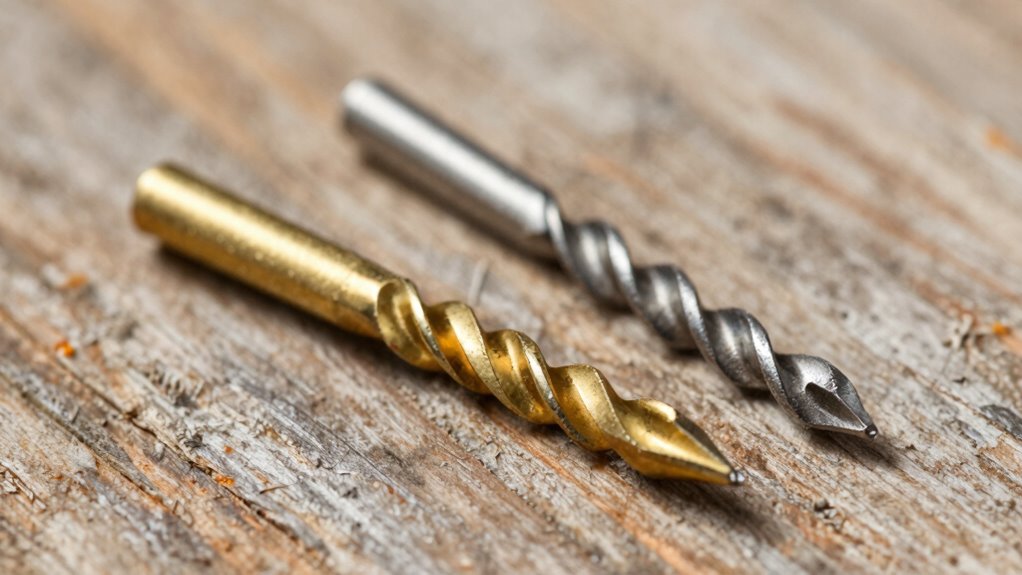
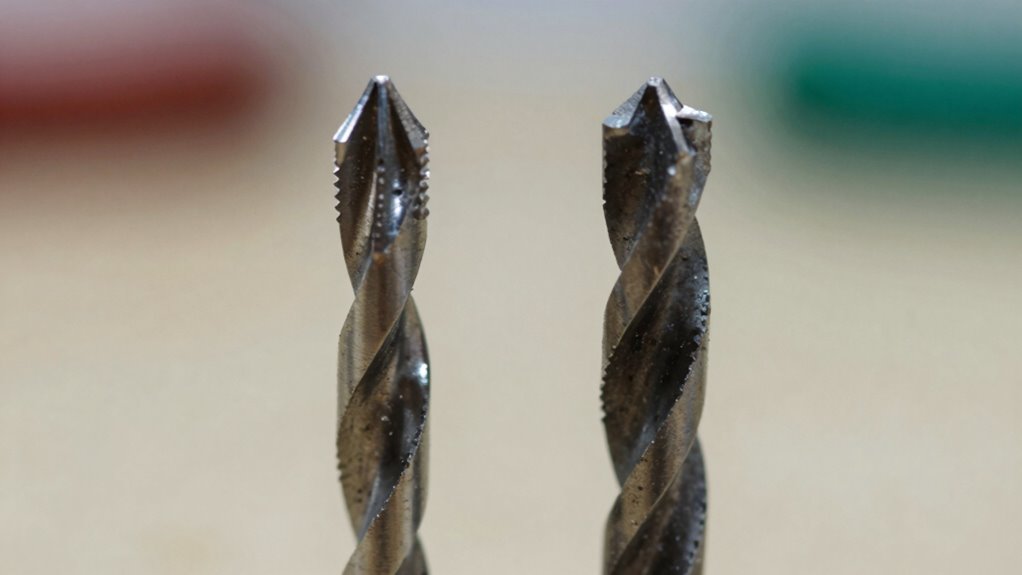
Have you ever wondered how different drill bits create precise holes? It all starts with understanding their materials and shank types. Brad point bits are typically made from high-speed steel or carbide, which provide durability and sharpness for clean, accurate cuts in wood. Twist bits, on the other hand, often feature high-speed steel or cobalt, making them versatile for various materials. The shank type also matters—most bits have a straight shank, but some feature hex or SDS shanks for specific drill drivers. Brad point bits have a pointed tip that guides the bit, preventing slipping and ensuring precision. Twist bits are spiral-fluted, allowing for efficient chip removal. Knowing these differences helps you select the right bit for your woodworking project.

Rocaris 8 Pack Titanium Coated HSS Twist Drill Bits, 3-10mm Serrated Side Cutting Drill Bit Woodworking Tools for Plastic Metal Wood Hole
8 Most Common Size – 3mm, 4mm, 5mm, 6mm, 6.5mm, 7mm, 8mm, 10mm to satisfy all your needs….
As an affiliate, we earn on qualifying purchases.
As an affiliate, we earn on qualifying purchases.
When Should You Use a Brad Point or Twist Bit in Woodworking?
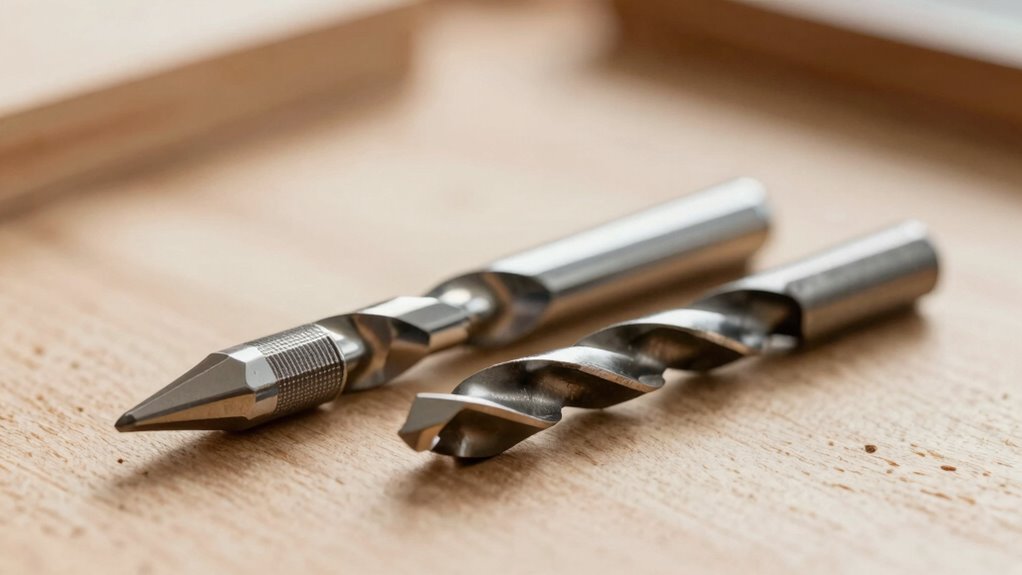
Choosing the right drill bit depends on the specific woodworking task at hand. Different drill bit types serve different purposes, so selecting the appropriate one is essential for quality results. Use a brad point bit when you need precise, clean holes in hardwood or softwood, especially for joinery or furniture making. Its sharp tip helps prevent wandering, ensuring accuracy. A twist bit is better suited for general drilling tasks, such as creating pilot holes or working with softer woods. It’s versatile and faster but may produce rougher edges. Consider your project’s requirements and the characteristics of your woodworking tools. Using the correct drill bit type at the right time can save you time, reduce errors, and improve the overall finish of your woodworking projects. Additionally, understanding project-specific requirements can help you choose the most suitable drill bit for optimal results. Recognizing the material properties of your wood can further influence your selection process. Being aware of wood grain direction can also impact your drilling accuracy and the quality of your finished work. For example, understanding grain direction can help prevent splintering and ensure a smoother cut. Knowing how free floating drill bits operate can also assist in achieving cleaner holes in certain woodworking applications.

DEWALT Drill Bit Set, Brad Point, 6-Piece (DW1720) , Black
Precise cutting edges of the drill bits for wood or metal are designed to reduce splintering
As an affiliate, we earn on qualifying purchases.
As an affiliate, we earn on qualifying purchases.
Brad Point vs Twist Bits: Which Creates Cleaner, More Precise Holes?

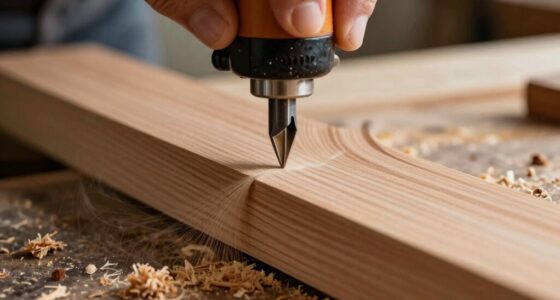
When it comes to creating clean, accurate holes in your woodworking projects, the type of drill bit you select makes a significant difference. Brad point bits excel at producing precise, smooth holes because their sharp central point guides the bit and keeps it stable, reducing tear-out. Twist bits, on the other hand, can create rougher edges and are more prone to wandering, which may compromise your accuracy. In terms of drill bit durability, brad point bits tend to last longer when used correctly, thanks to their specialized design that minimizes heat buildup and wear. For woodworking safety, both bits are safe if handled properly, but the cleaner holes from brad point bits lessen the need for extra sanding, reducing dust and improving overall project safety. Additionally, bit longevity can be improved by using proper drilling techniques and selecting high-quality bits suited for your specific material. Proper bit maintenance and choosing the right bit for the material also contribute to better performance and extended lifespan.

BOSCH CO14B 14-Piece Assorted Set with Included Case – Cobalt M42 Metal Drill Bits with Three-Flat Shank for Drilling Applications in Stainless Steel, Cast Iron, Titanium, and Light-Gauge Metal
Cobalt M42 drill bit – provides upgraded M42 Cobalt jobber-length bits designed for durability, high heat resistance and…
As an affiliate, we earn on qualifying purchases.
As an affiliate, we earn on qualifying purchases.
Advantages and Limitations of Brad Point and Twist Bits for Woodworking
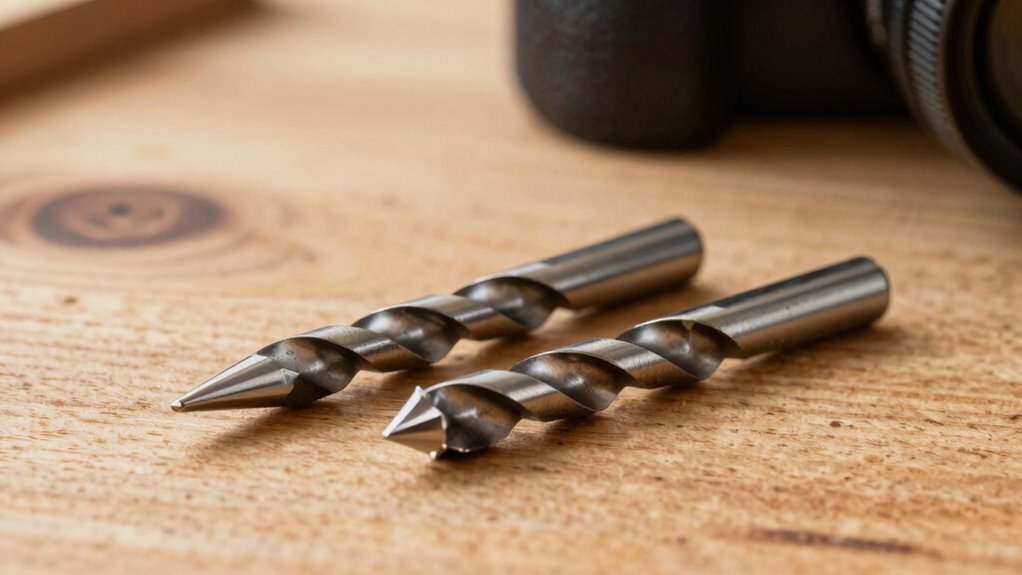
Both brad point and twist bits offer distinct advantages and face certain limitations in woodworking. Brad point bits excel in drill bit durability for clean, precise holes, especially on soft or hardwoods, making them ideal for detailed projects. However, they can be less versatile for larger or multi-material tasks. Twist bits are highly versatile and durable across various materials, but their drill bit durability can decrease with frequent use or tougher woods, leading to less precise results. For simple, repetitive tasks, twist bits perform well, but for complex woodworking projects requiring accuracy, brad point bits provide better control and precision. Your choice depends on project complexity and the durability needed; understanding these advantages and limitations helps you select the right bit for each job. Additionally, material compatibility plays a crucial role in choosing between the two, as some bits perform better with specific types of wood or composite materials.
How to Choose the Best Drill Bit for Your Woodworking Projects
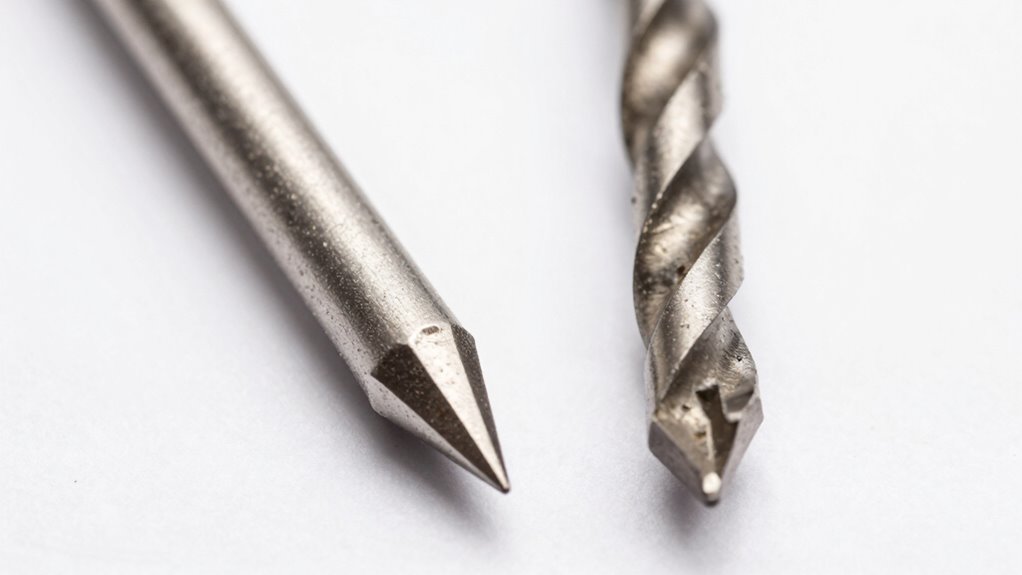
Selecting the right drill bit for your woodworking projects depends on understanding the specific needs of each task. Consider the bit material, as high-speed steel (HSS) is versatile, while carbide offers durability for tougher woods. Your drill speed also matters; slower speeds prevent overheating and ensure cleaner cuts. To choose the best bit, keep these factors in mind:
- Match bit material to the wood type and project demands
- Adjust drill speed according to the bit and material
- Use sharper bits for cleaner, more precise holes
- Select the correct bit size for your project
- Consider the bit’s design, like brad point for accuracy or twist for general use
- Recognize the importance of bit durability when working on long or demanding projects to ensure safety and precision. Additionally, understanding bit maintenance can extend the life of your tools and improve overall results, especially for maintaining optimal cutting performance.
Frequently Asked Questions
Can Brad Point and Twist Bits Be Used on Materials Other Than Wood?
You can use brad point and twist bits on materials beyond wood, but with limitations. Twist bits work well for metal drilling and drywall applications, while brad point bits are best suited for woodworking. For metal, choose high-speed steel or cobalt twist bits to prevent damage. Always match the bit type to the material to guarantee clean, efficient drilling and avoid damaging your tools or work surface.
How Do I Maintain and Sharpen Brad Point and Twist Bits?
Think of your bits as skilled musicians needing tuning. To keep them sharp, regularly perform bit sharpening with a honing stone or file, focusing on the edges and tips. Maintain your bits by cleaning off debris and oiling them to prevent rust. Proper bit maintenance guarantees clean cuts and prolongs tool life, just like a well-tuned instrument delivers perfect sound every time. Keep up with these steps, and your bits will perform flawlessly.
Are There Specific Brands Known for High-Quality Brad Point or Twist Bits?
You should look for brands with a strong reputation for high-quality tools, like Bosch, Freud, or DeWalt, which are known for durability and precision. These brands focus on material compatibility, ensuring their bits work well with various wood types without dulling quickly. Investing in reputable brands guarantees you’ll get reliable performance, making your woodworking projects easier and more accurate. Always check reviews to confirm the quality before purchasing.
What Safety Precautions Should I Take When Using These Drill Bits?
When using drill bits, always wear personal protective equipment like safety goggles and gloves for safe drill handling. Keep your workspace clear, secure the wood firmly, and maintain a steady hand to prevent slips. Check your drill and bits for damage before use. Remember, staying attentive and following safety protocols minimizes risks, ensuring a safe and efficient woodworking experience.
Can I Use a Brad Point Bit in a Standard Drill Press?
Yes, you can use a brad point bit in a standard drill press, but you need to consider drill press compatibility and bit size limitations. Make sure the bit shank fits your press’s chuck securely, and check if the bit size matches your drill press’s capacity. Using the right bit in the correct size ensures accurate holes and prevents damage to your equipment. Always tighten the bit firmly before drilling.
Conclusion
Choosing between a brad point and a twist bit is like picking the right paintbrush for your masterpiece—each has its perfect purpose. If you want clean, precise holes, go with the brad point; for versatility and speed, the twist bit is your trusty sidekick. By understanding their strengths and limitations, you’ll be better equipped to carve out success in your woodworking projects—making your work as smooth as a well-oiled machine.