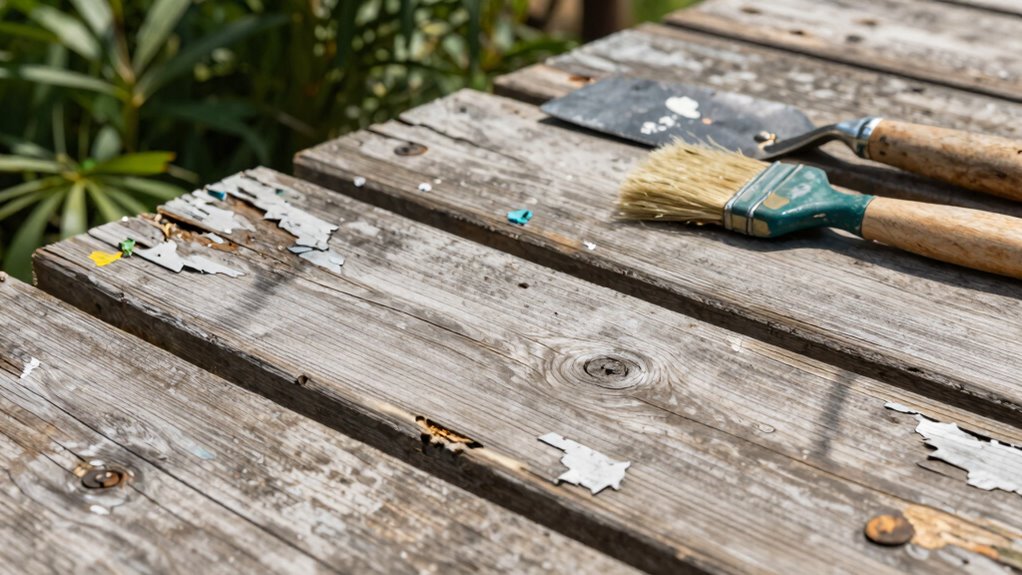
If you’re experiencing finish peeling on outdoor wood, it often boils down to inadequate preparation. Skipping cleaning or sanding can trap contaminants that prevent proper adhesion. Dust, old finishes, and natural oils create barriers, leading to peeling and uneven wear. A solid foundation through effective wood preservation and correct product selection is essential for durability and weather resistance. You’ll want to make sure your surface is well-prepped to avoid these costly issues and discover more tips for success.

Get business pricing on tools and workshop supplies
- Business-only prices and quantity discounts
- Tax-exempt purchasing
- Multiple users, one account, clear invoices
Key Takeaways
- Proper surface preparation, including cleaning and sanding, is essential to ensure strong adhesion of finishes on outdoor wood.
- Contaminants such as dirt and oils can cause finishes to peel if not adequately removed before application.
- Weather resistance is compromised without a strong foundation; poor adhesion allows moisture to become trapped, leading to blistering.
- Selecting the right finish that matches the wood type and climate is crucial for preventing future peeling issues.
- Ideal application conditions, including temperature and humidity, are vital for ensuring the durability of the finish on outdoor wood.
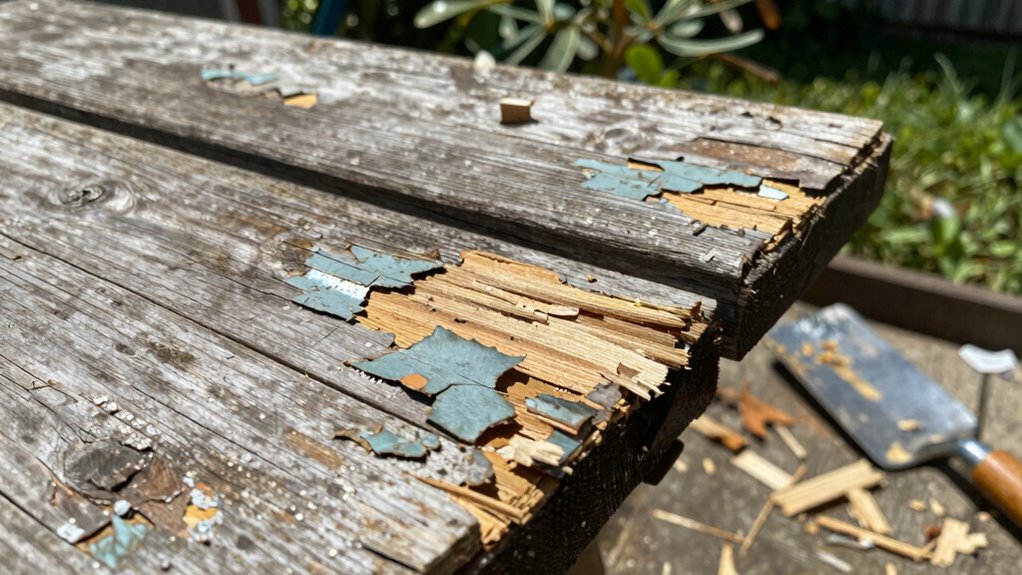
When you’ve invested time and money in outdoor wood surfaces, it can be frustrating to see the finish peeling away. You might wonder why this happens, especially after taking care to choose high-quality products. The truth is, the problem often lies in the preparation process. Without proper prep work, even the best finishes can fail, leading to peeling and uneven wear.
To start, reflect on how wood preservation plays an essential role in your project’s success. If you skip steps like cleaning or sanding, you’re not giving the wood the best chance to bond with the finish. Dirt, old finishes, or even natural oils can prevent the new coating from adhering properly. When you apply a finish over an unprepared surface, you’re fundamentally sealing in contaminants that will eventually cause the finish to lift or peel away.
Proper wood preparation is vital; skipping cleaning or sanding can seal in contaminants, leading to peeling finishes.
Weather resistance is another significant factor. Outdoor wood surfaces face various challenges, including UV rays, moisture, and temperature fluctuations. A strong finish needs to withstand these elements, and that starts with a solid foundation. If the wood isn’t adequately prepared, it can’t effectively resist the weather. For instance, if moisture gets trapped beneath the finish due to poor adhesion, it can lead to blisters and peeling. Proper surface preparation techniques are crucial to ensure the longevity of your outdoor finish.
You also need to take into account the type of product you’re using. Some finishes, while appealing, may not be suitable for the specific wood or climate conditions. Understanding how different finishes interact with wood can save you from future headaches. Always check the manufacturer’s recommendations and verify they align with your wood type and local weather conditions.
After prepping the wood, applying the finish in ideal conditions is critical. Extreme temperatures or high humidity can impact how well the finish cures. If you rush this step or ignore environmental factors, you might end up with a finish that looks great initially but deteriorates quickly. Proper surface preparation, including understanding wood preservation techniques, is vital to ensure longevity. Additionally, selecting the right climate-appropriate finish can make a significant difference in durability.
outdoor wood cleaning and sanding kit
As an affiliate, we earn on qualifying purchases.
As an affiliate, we earn on qualifying purchases.
Frequently Asked Questions
How Often Should Outdoor Wood Be Refinished?
You should refinish outdoor wood every two to three years, depending on exposure to the elements. This refinishing frequency helps maintain the wood’s integrity and appearance. Regular wood maintenance, like cleaning and inspecting for damage, can extend the life of your finish. If you notice peeling or fading, it’s a sign you need to refinish sooner. Staying proactive guarantees your outdoor wood looks great and lasts longer.
What Types of Finishes Are Best for Outdoor Wood?
When it comes to outdoor wood, you want finishes that stand strong against the elements. Oil finishes nourish the wood, while breathable coatings allow moisture to escape. Water repellents shield against rain, and UV protection keeps colors vibrant. Consider epoxy sealers for added durability, and don’t forget wood preservatives to ward off decay. Choosing the right combination will guarantee your wood stays beautiful and resilient, standing like a fortress against nature’s wear and tear.
Can I Paint Over Peeling Finishes?
You can paint over peeling finishes, but it’s not ideal. For good paint adhesion, you need to properly prepare the surface first. Start by scraping off any loose paint and sanding the area to create a smooth surface. Clean the wood thoroughly to remove dust and debris. If you skip these prep steps, your new paint might peel again. Taking the time to prepare guarantees a durable and long-lasting finish.
How Do Weather Conditions Affect Wood Finishing?
Weather conditions dramatically affect wood finishing—it’s like trying to paint a masterpiece in a hurricane! Moisture impacts your finish by causing it to swell or crack, while temperature extremes can lead to warping. UV exposure from sunlight breaks down the protective layers, making your finish fade faster. Seasonal changes also play a role, as they can cause the wood to expand and contract, ultimately compromising your finish’s durability.
What Tools Are Needed for Wood Preparation?
To prepare wood for finishing, you’ll need a few essential tools. Start with sandpaper or a power sander to utilize effective sanding techniques. This helps smooth the surface and remove old finishes. Next, grab a vacuum or a damp cloth for surface cleaning, ensuring all dust and debris are gone. If you’re dealing with tough spots, a scraper might come in handy. With these tools, you’ll set the stage for a great finish.
wood surface prep for outdoor finishes
As an affiliate, we earn on qualifying purchases.
As an affiliate, we earn on qualifying purchases.
Conclusion
As you step back and admire your outdoor wood, remember that a solid finish is like a protective armor against the elements. When you take the time to prep properly, you’re not just preserving the wood; you’re safeguarding memories waiting to be made. Don’t let peeling paint be the ghost of projects past. Instead, embrace the beauty of a well-finished surface, and let your outdoor space shine like a beacon of pride and care.
weatherproof wood finish for outdoor furniture
As an affiliate, we earn on qualifying purchases.
As an affiliate, we earn on qualifying purchases.
wood restoration and peeling repair products
As an affiliate, we earn on qualifying purchases.
As an affiliate, we earn on qualifying purchases.
Fall yard work Picks
leaf blowers
As an affiliate, we earn on qualifying purchases.