
When choosing a bandsaw blade, don’t focus only on width—the tooth configuration, tension, and material compatibility matter just as much. The right blade depends on your project’s specific needs, like smoothness or roughness of cuts and material type. Proper tension and tooth design work together for best results and longer blade life. Stick with us to discover how these factors can help you make the perfect choice for your woodworking projects.
Key Takeaways
- Match blade width to your bandsaw’s maximum capacity and intended cut radius.
- Consider tooth configuration (shape and spacing) for material type and cut quality.
- Ensure proper blade tension based on width and tooth design for optimal performance.
- Select the correct blade length to fit your bandsaw and project needs.
- Regularly maintain and adjust tension to prolong blade life and ensure precise cuts.

Choosing the right bandsaw blade is essential for achieving clean cuts and efficient operation, especially when you’re working on different materials. One critical factor often overlooked is blade tension. Proper tension ensures the blade stays straight and true during cuts, preventing wandering or fluttering that can ruin your work. Too loose, and the blade may wobble, causing rough cuts or even blade breakage. Too tight, and you risk putting excess stress on the blade and saw’s bearings, shortening their lifespan. Adjusting blade tension correctly depends on the blade’s width and tooth configuration, so always follow the manufacturer’s recommendations. When you set it right, you’ll notice smoother cuts and less strain on your saw, making your work more precise and less frustrating. blade tension is also crucial for maintaining the longevity of your equipment and ensuring consistent results over time. Proper blade tensioning also helps to reduce vibration, which can enhance cutting accuracy and improve safety during operation.
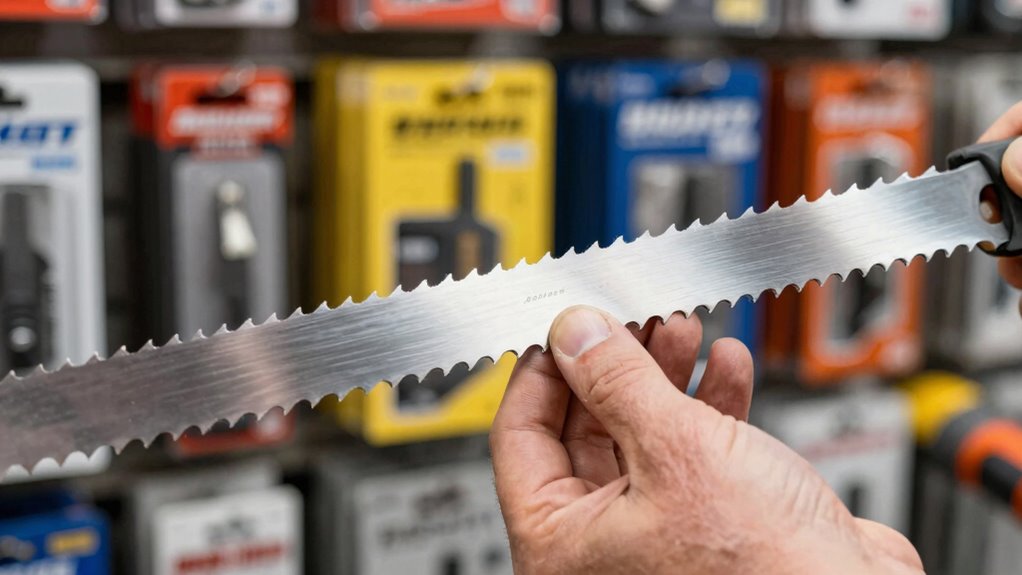
Another key aspect of choosing a bandsaw blade is understanding tooth configuration. The shape and spacing of the teeth directly influence how the blade cuts and what materials it’s best suited for. For instance, larger, more aggressive teeth are ideal for rough cuts in thicker or softer materials, while fine, closely spaced teeth give you cleaner, more precise cuts in hardwoods or thin materials. The tooth configuration also interacts with blade tension; a blade with a particular tooth pattern needs to be tensioned correctly to perform at its best. If the tension is off, the tooth engagement can become uneven, leading to rough edges or blade damage. Matching your tooth configuration to your project’s needs, along with proper tension, ensures you get the best results every time. Additionally, understanding blade maintenance can help prolong the life of your blades and improve cutting performance over time.

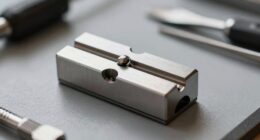
Lenox, 62126, Band Saw Blade Tension Meter
As an affiliate, we earn on qualifying purchases.
As an affiliate, we earn on qualifying purchases.
Frequently Asked Questions
How Do I Determine the Correct Blade Tension for My Bandsaw?
To determine the correct blade tension for your bandsaw, start by consulting your saw’s manual for specific guidelines. Use tension gauges for precise calibration, ensuring the blade isn’t too loose or tight. Perform a simple test by plucking the blade like a guitar string—if it produces a clear, high-pitched sound, it’s properly calibrated. Regularly check and adjust the tension to maintain ideal cutting performance and prolong blade life.
What Are the Differences Between Hook and Straight Tooth Blades?
Hook tooth blades have a curved, hook-shaped tooth design that provides aggressive cutting, ideal for ripping. Straight tooth blades feature a linear, flat tooth pattern, offering smoother cuts suitable for crosscutting and detailed work. When choosing, consider tooth geometry for your specific project and verify blade compatibility with your bandsaw. The right combination improves cutting efficiency and finish quality, making your work safer and more precise.
How Often Should I Replace My Bandsaw Blade?
Imagine a blade dulled by time, its teeth no longer biting cleanly into wood. You should replace your bandsaw blade when you notice rough cuts, increased strain, or visible wear. Regular blade maintenance and sharpening help extend its life, but don’t push it too far. For best cutting techniques, change the blade before performance drops. Typically, every 6 to 12 months, depending on usage and material.
Can I Use the Same Blade for Cutting Metal and Wood?
You shouldn’t use the same blade for cutting metal and wood because of blade compatibility and material considerations. Metal-cutting blades typically have finer teeth and tougher steel, while wood blades are designed for faster cuts with coarser teeth. Using the wrong blade can damage your saw and produce poor results. Always choose a blade suited for your specific material, and check the manufacturer’s recommendations to guarantee safety and peak performance.
What Safety Precautions Should I Follow When Changing Blades?
When changing blades, always unplug your saw, wear gloves, and use proper tools to prevent injuries. Store blades safely in a dry, labeled container to avoid damage and confusion. Before installing a new blade, check for rust or damage, and apply blade lubrication if needed for smoother operation. Follow manufacturer instructions, keep your workspace clean, and double-check that the blade is securely tensioned before restarting your saw.

FOXBC 80 Inch x 1/4 Inch x 14 TPI Bandsaw Blades for Sears Craftsman 12" bandsaw – 2 Pack
- Blade Length: 80 inches long
- Blade Width: 1/4 inch wide
- Tooth Count: 14 TPI
As an affiliate, we earn on qualifying purchases.
As an affiliate, we earn on qualifying purchases.
Conclusion
Remember, when buying a bandsaw blade, broadening your basic belief beyond width boosts your blade’s brilliance. Balance, compatibility, and tooth type tell a tale of true toughness, transcending mere size. Take time to test, tune, and tailor your tool to tackle tasks with precision and power. By blending basics with beyond, you’ll build a better, brighter bandsaw blade that boosts your projects and boosts your pride. Happy cutting!
Lenox, 62126, Band Saw Blade Tension Meter
As an affiliate, we earn on qualifying purchases.
As an affiliate, we earn on qualifying purchases.

AYAO 56 1/8 inch Bandsaw Blades Assortment (1/8" 1/4" 3/8" Wide) for for Delta 28-180 and 28-185 8" Band Saws, 3PK
- Set Includes Three Blades: Different widths and TPI for versatility
- Compatible with Delta Band Saws: Fits 28-180, 28-185 models and more
- Sharp Ground Teeth: Enhanced cutting performance and durability
As an affiliate, we earn on qualifying purchases.
As an affiliate, we earn on qualifying purchases.