
When you’re tackling a building project, choosing the right fastener is essential. Deck screws are designed for outdoor use, made from rust-resistant materials, ideal for lighter applications like decking. On the other hand, structural screws are tougher, tailored for heavy-duty tasks, ensuring safety under load. Mixing them up can lead to safety hazards and project failures. Understanding these differences can save you time and money, so stick around to discover what’s right for your next job.
Play games included with Prime
Start a Prime free trial and play with Amazon Luna on your devices.
As an affiliate, we earn on qualifying purchases.
Key Takeaways
- Deck screws are designed for lighter outdoor projects, while structural screws are meant for heavy-duty applications like framing and securing beams.
- Material differences exist, with deck screws often made from rust-resistant materials and structural screws typically made from hardened steel for strength.
- Installation techniques vary; deck screws are easy to install, while structural screws require careful torque management to avoid damage.
- Load handling capacity is crucial; deck screws support lighter loads, whereas structural screws are built to accommodate higher weight and stress.
- Choosing the correct fastener type is essential for project safety, as incorrect usage can compromise structural integrity and durability.

When you’re tackling a construction project, choosing the right screws can make all the difference. With so many options available, it’s important to understand the specific roles that deck screws and structural screws play in your builds. Each type of screw has unique characteristics that cater to different applications, so knowing their differences will save you time and potential headaches down the line.
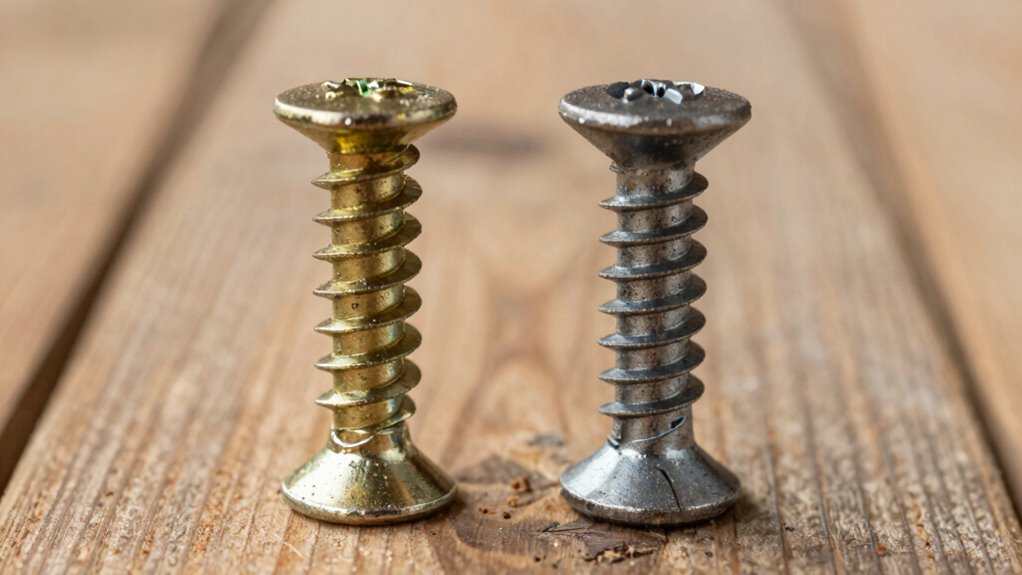
Deck screws are designed specifically for outdoor projects, like building decks or fences. They’re often made from stainless steel or coated with a rust-resistant material to withstand the elements. This means they’re less likely to corrode over time, which is crucial for maintaining the integrity of your structure. Installation techniques with deck screws are straightforward; you can typically use a power drill or impact driver to get the job done quickly. Their sharp tips and threaded shanks allow them to penetrate wood easily, creating a strong bond without splitting the material.
Deck screws are essential for outdoor projects, providing rust resistance and easy installation for a durable bond.
On the other hand, structural screws are engineered for heavy-duty applications. These fasteners are often thicker and designed to handle higher loads, making them ideal for framing, securing beams, or attaching heavy hardware. The materials used in structural screws vary, but they frequently come in hardened steel, which provides additional strength. When installing structural screws, you’ll want to pay attention to the torque settings on your drill, as over-tightening can lead to stripping or damaging the screw. Additionally, corrosion resistance is a key factor in selecting the appropriate fastener for outdoor or load-bearing projects. Using the right fastener for the job also ensures long-term durability and safety of your completed project.
Both fasteners have their installation techniques, but it’s important to choose the right one for your specific project. If you’re building a deck, go for deck screws; if you’re framing a wall or securing structural elements, opt for structural screws. Mixing them up could lead to safety hazards or premature failure of your project.
As an affiliate, we earn on qualifying purchases.
Frequently Asked Questions
Can I Use Deck Screws Indoors for Furniture Projects?
Yes, you can use deck screws indoors for furniture projects, but it’s not always ideal. While deck screws offer good durability, they’re designed for outdoor use, so their coating might not suit indoor aesthetics. If you’re building furniture, consider whether the finish and rust resistance matter. For lasting indoor furniture, you might want to choose dedicated screws that guarantee better suitability and appearance for your projects.
How Do I Choose the Right Screw Length for My Project?
To choose the right screw length for your project, consider the thickness of the materials you’ll be joining. A good rule is to use a screw that penetrates at least half the thickness of the bottom material. Check the screw gauge to verify it’s compatible with your materials, as well. For softwoods, a longer screw might work better, while hardwoods may require shorter screws for a secure hold. Always test for stability!
Are Structural Screws Reusable After Removal?
Structural screws aren’t typically reusable after removal due to their design and screw durability. When you remove them, you might damage the threads, making it hard to achieve a secure fit again. If you’re looking to reuse screws, use proper removal techniques, like backing them out slowly to minimize wear. However, for the best results in your project, it’s often better to use new screws to guarantee strength and stability.
What Tools Are Best for Driving These Screws?
For driving screws, a power drill or impact driver is your best bet. These tools provide the torque needed for different screw types, making the job easier and faster. You’ll want to match the driving techniques to the specific screws; for instance, use a clutch setting on the drill for deck screws to avoid overdriving. Always verify you’ve got the right bit for a snug fit, reducing the risk of stripping.
How Do Environmental Conditions Affect Screw Performance?
Environmental conditions can greatly affect screw performance. If you’re in a humid or coastal area, you’ll want screws with high corrosion resistance to prevent rusting. Additionally, consider material compatibility; using the wrong screw material can lead to galvanic corrosion when paired with different metals. Always choose screws designed for your specific environment to guarantee durability and longevity, keeping your projects secure and safe from environmental wear.
hardened steel structural screws
As an affiliate, we earn on qualifying purchases.
As an affiliate, we earn on qualifying purchases.
Conclusion
In the battle of deck screws versus structural screws, knowing the right choice can be your Excalibur in the domain of construction. While deck screws shine in outdoor projects, structural screws stand strong under heavy loads, much like the steadfast heroes of old. Choosing wisely guarantees your projects withstand the test of time, just as legendary tales endure. So, whether you’re building a deck or a fortress, remember: the right fastener makes all the difference in your craftsmanship.
As an affiliate, we earn on qualifying purchases.
As an affiliate, we earn on qualifying purchases.
NFL season / tailgating Picks
team gear
As an affiliate, we earn on qualifying purchases.