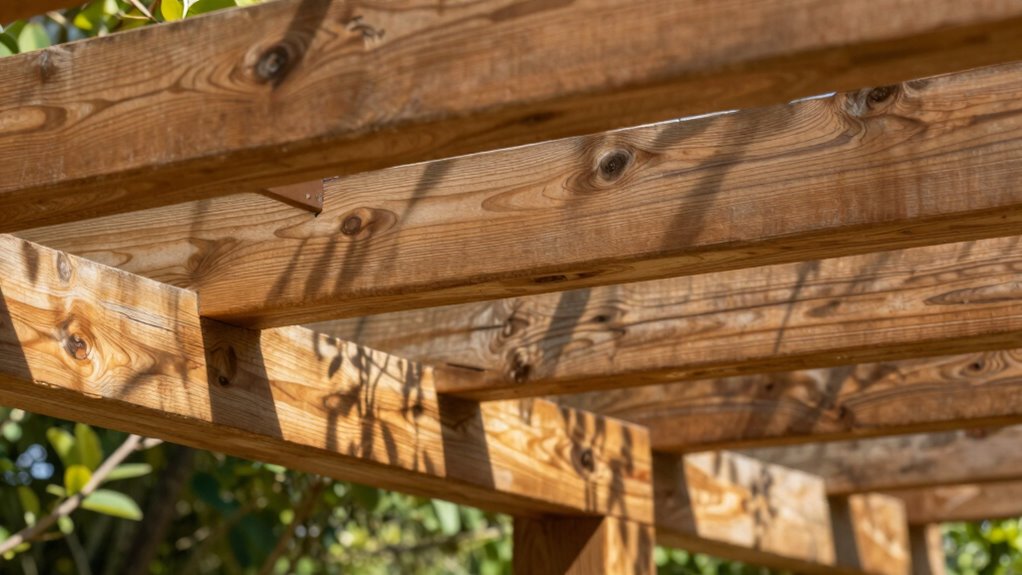

When building a pergola, you need to understand that big boards still require room to move. Timber reacts to moisture and temperature changes, expanding in high humidity and contracting when dry. Without proper allowances for this movement, you risk warping or cracking, which compromises the beauty and durability of your structure. Incorporating gaps and flexible fasteners helps manage these changes, ensuring your pergola lasts longer. There’s more to learn about effective design strategies to enhance your pergola’s resilience.

Get business pricing on tools and workshop supplies
- Business-only prices and quantity discounts
- Tax-exempt purchasing
- Multiple users, one account, clear invoices
Key Takeaways
- Timber expands and contracts with moisture and temperature changes, making room for movement essential for structural integrity.
- High humidity causes timber to absorb moisture, increasing the need for expansion allowances in larger boards.
- Rigid connections can restrict natural wood movement, leading to cracks or breakage in bigger timber pieces.
- Incorporating gaps between boards allows for expansion, reducing stress on the pergola’s structure.
- Proper fastening methods and design features are crucial to accommodate timber movement and ensure longevity.
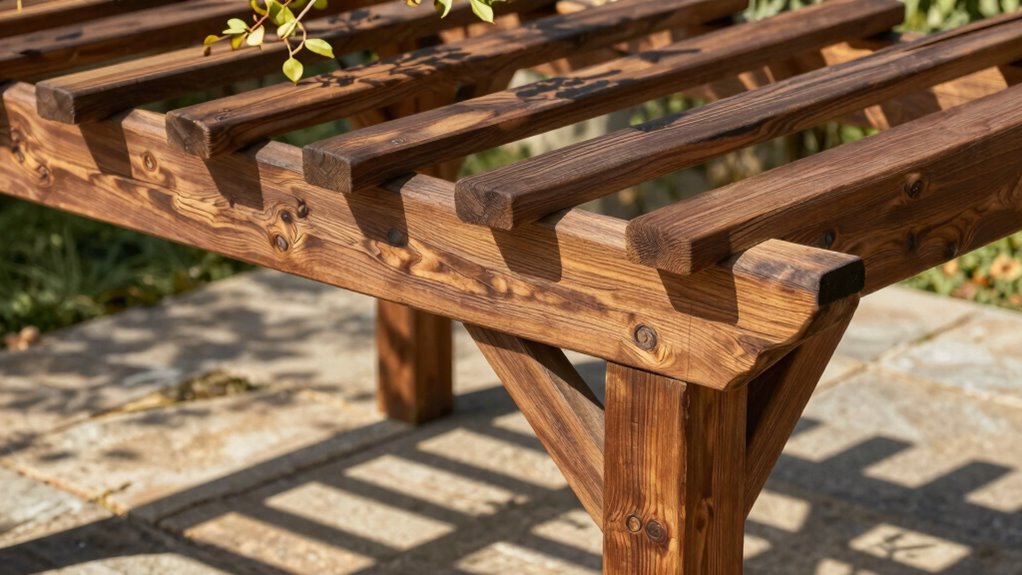
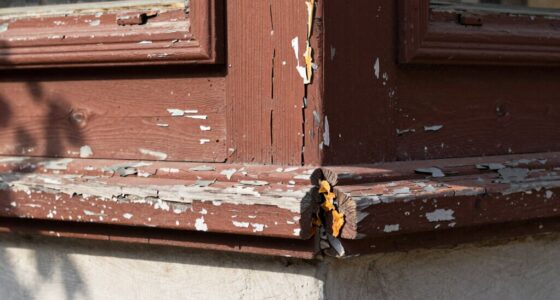
When you build a pergola, understanding timber movement is essential. Timber is a natural material that reacts to changes in moisture and temperature, which can lead to timber expansion and contraction. If you ignore these factors, you could end up with a structure that warps or cracks over time, diminishing both its beauty and integrity.
First, consider the climate in your area. If you live in a place with high humidity, the timber will absorb moisture, causing it to expand. Conversely, in dry conditions, the timber will lose moisture and contract. This cycle can lead to stress on joints and fasteners, potentially causing structural failure if the timber isn’t given room to move. By allowing for proper expansion, you can guarantee your pergola stands the test of time.
Consider your local climate; timber expands in humidity and contracts in dryness, necessitating room for movement to ensure your pergola’s longevity.
Moisture control is another key factor in managing timber movement. You can make simple adjustments during the construction phase to help mitigate moisture’s effects. For instance, using a sealant or treatment on the timber can help keep moisture out. This will not only extend the life of your pergola but will also minimize the amount of expansion and contraction that occurs. Additionally, consider using timber that’s been kiln-dried, as it’s less prone to significant movement compared to untreated lumber.
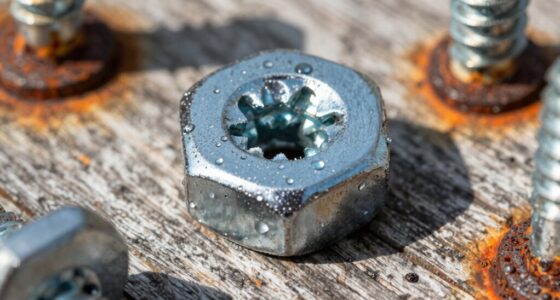
Be mindful of how you fasten the timber together. If you use rigid connections, you might restrict the natural movement of the wood, leading to cracks or even breakage. Instead, opt for connectors that allow for some flexibility, which can accommodate the timber’s expansion without compromising the structure’s integrity. Proper timber preparation can also help reduce unnecessary movement and stress.
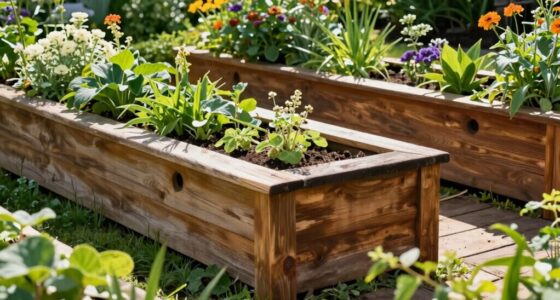
Lastly, it’s wise to incorporate design features that account for timber movement. Leave small gaps between boards to allow for expansion, and make certain that your posts are anchored securely to withstand any shifts. This way, when the wood expands or contracts, it won’t place undue stress on the overall structure. Understanding timber movement is crucial for ensuring a durable and aesthetically pleasing pergola over time.
As an affiliate, we earn on qualifying purchases.
Frequently Asked Questions
What Types of Timber Are Best for Pergolas?
When choosing timber for your pergola, consider both hardwood options and softwood choices. Hardwoods like cedar and oak offer durability factors and aesthetic appeal, while softwoods like pine are often more cost-effective. Think about sustainability aspects too; sourced responsibly, timber can be eco-friendly. Ultimately, balance your budget with the desired look and longevity to create a striking and lasting outdoor structure that enhances your space.
How Can I Prevent Timber Warping in My Pergola?
Think of your pergola like a ship at sea, needing space to sway with the waves. To prevent timber warping, choose high-quality wood and apply protective finishes. Make certain you allow for timber expansion during seasonal changes by leaving gaps between boards. Regular maintenance, such as cleaning and re-sealing, keeps moisture at bay. By taking these steps, you can keep your pergola sturdy and beautiful, sailing smoothly through the seasons.
What Is the Ideal Moisture Content for Pergola Timber?
The ideal moisture content for pergola timber is between 12% and 15%. Maintaining this moisture balance helps prevent warping and cracking. When humidity effects fluctuate, wood can absorb or release moisture, leading to structural issues. To keep your timber stable, store it in a controlled environment before installation and apply sealants to protect against moisture. Regularly check the timber’s moisture content to guarantee it stays within that ideal range.
How Often Should I Maintain My Timber Pergola?
You should maintain your timber pergola at least once a year. Regular pergola maintenance keeps it looking great and extends its lifespan. Start by cleaning the surface to remove dirt and debris. Inspect for any signs of rot or damage, and treat them promptly. Reapply protective finishes every few years to shield against weather elements. By prioritizing timber care, you guarantee your pergola remains sturdy and visually appealing for years to come.
Can I Use Treated Timber for a Pergola?
Yes, you can use treated timber for a pergola. Treated timber offers several benefits, including enhanced resistance to pests and moisture, which boosts your pergola’s durability. This means you won’t have to worry as much about rot or insect damage. By choosing treated timber, you guarantee your pergola lasts longer and withstands the elements better, giving you peace of mind and a beautiful outdoor space to enjoy for years.
As an affiliate, we earn on qualifying purchases.
Conclusion
In the end, it’s clear that even big boards in your pergola need some wiggle room. While you might think solid timber is stable, it can expand and contract with moisture changes. Ignoring this can lead to warped structures and costly repairs. So, when planning your pergola, remember to account for timber movement. It’s not just about aesthetics; it’s about longevity. By giving your timber space to breathe, you’re ensuring your outdoor oasis stands strong for years to come.
kiln-dried lumber for outdoor structures
As an affiliate, we earn on qualifying purchases.
As an affiliate, we earn on qualifying purchases.
timber sealant for moisture control
As an affiliate, we earn on qualifying purchases.
As an affiliate, we earn on qualifying purchases.
Fall yard work Picks
leaf blowers
As an affiliate, we earn on qualifying purchases.