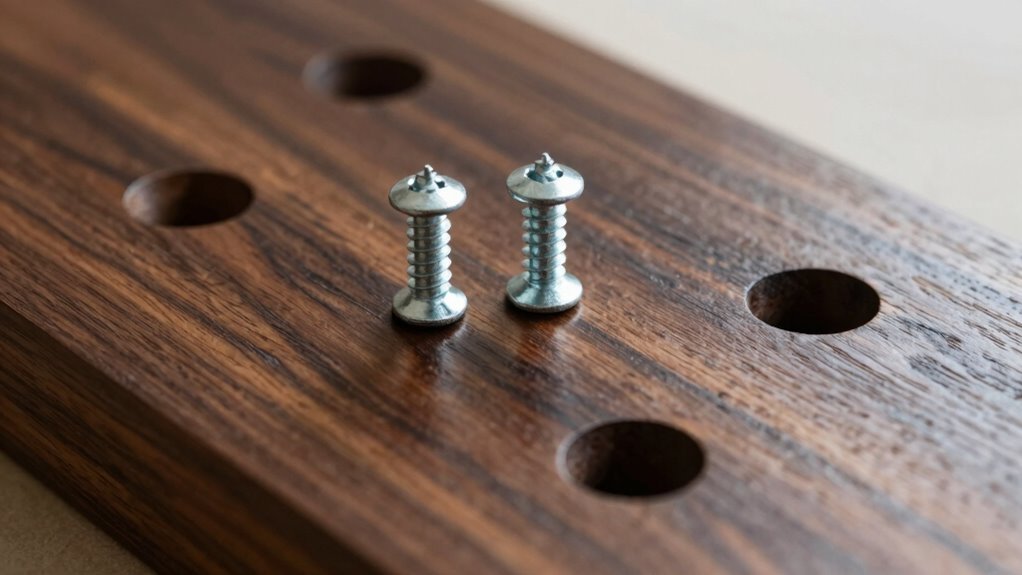
When driving screws into hardwood, using a properly sized pilot hole is essential to prevent splitting and cracking. A pilot hole guides the screw, reduces stress on the wood fibers, and ensures a straight, secure fit. Choosing the right size and drilling technique helps avoid damage and keeps your joints strong and professional-looking. If you want to discover more tips on how to achieve perfect, crack-free woodworking projects, keep exploring this guide.

Get business pricing on tools and workshop supplies
- Business-only prices and quantity discounts
- Tax-exempt purchasing
- Multiple users, one account, clear invoices
Key Takeaways
- Drilling proper pilot holes reduces wood splitting when inserting screws into hardwood.
- The right pilot hole size distributes force evenly and prevents crack propagation.
- Using sharp, appropriately sized drill bits ensures clean, accurate holes that minimize damage.
- Pre-drilling along the grain helps guide screws and reduces stress concentration.
- Proper clamping and glue application enhance joint stability and prevent splits over time.
As an affiliate, we earn on qualifying purchases.
Why You Must Use Pilot Holes When Driving Screws Into Hardwood
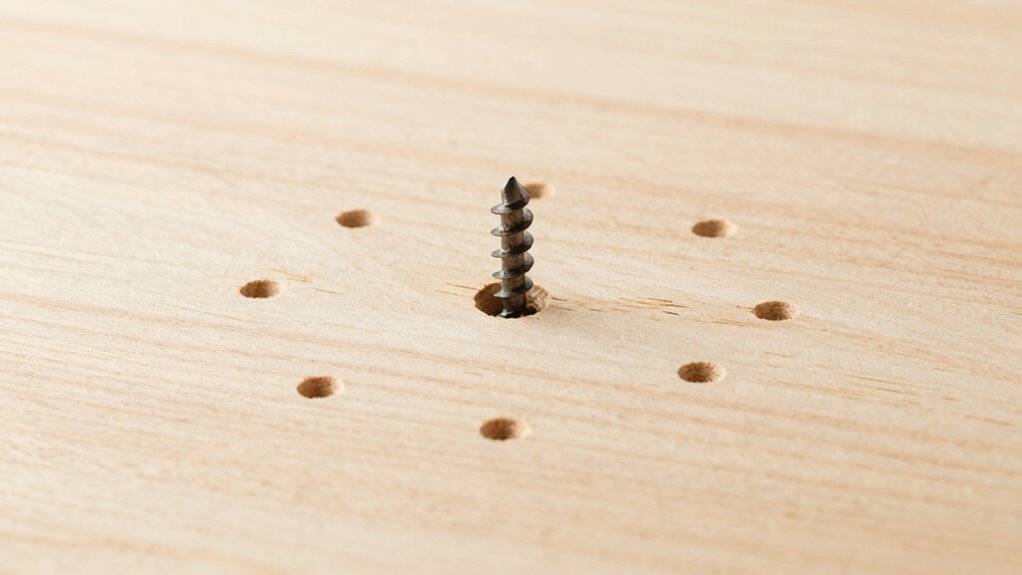
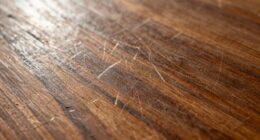
Driving screws into hardwood without a pilot hole can lead to splitting, cracking, or damaging the wood. The key is understanding the wood grain; if you don’t align the screw properly, the wood may split along the grain when force is applied. Choosing the correct screw length is also crucial—too long, and you risk splitting the wood, too short, and the screw won’t hold securely. Pilot holes help guide the screw, reducing the stress on the wood fibers and preventing cracks. They make insertion easier and ensure the screw goes in straight, especially in dense hardwoods. Proper drilling techniques are essential for a professional finish and to maintain the integrity of the wood. By creating a proper pilot hole, you protect your project from unnecessary damage and achieve a cleaner, more professional finish. Additionally, using the right bit size ensures the screw fits snugly without exerting excessive pressure on the wood fibers.
As an affiliate, we earn on qualifying purchases.
How Pilot Holes Prevent Wood Splitting and Cracking
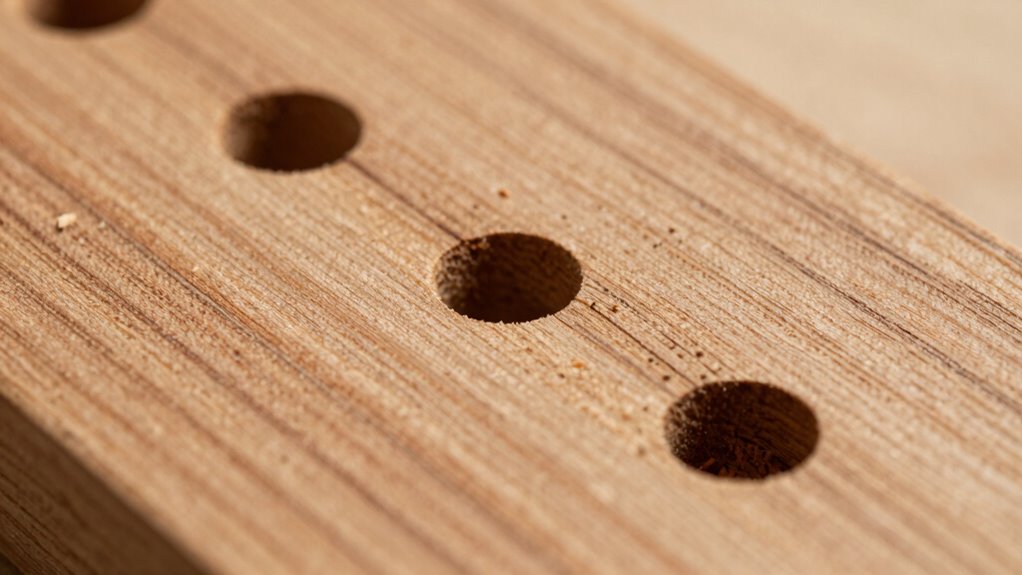
Using a pilot hole helps diminish stress on the wood, preventing it from cracking under pressure. It also guarantees your screw goes in straight and aligns properly with the surrounding material. Most importantly, it minimizes crack propagation, keeping your project strong and intact. Additionally, employing proper packing techniques can further protect the wood and ensure a smooth construction process. Being aware of Woodworking Safety measures ensures a safer and more efficient building experience.
Reduces Material Stress
To prevent wood from splitting or cracking under screw pressure, drilling a pilot hole is essential. It reduces material stress by allowing the screw to penetrate smoothly along the grain orientation, minimizing resistance. Without a pilot hole, the screw forces material apart, increasing internal stress that can cause cracks. Properly placed pilot holes distribute stress evenly, preventing localized pressure points that weaken the wood. This technique promotes precise control during assembly, ensuring accurate placement and reducing the chance of damage. Additionally, material stress can be alleviated by selecting the appropriate screw size and type for the specific hardwood. Using essential oils such as clove or tea tree oil can help maintain wood condition and prevent deterioration over time. This not only preserves the integrity of the material but also maintains finish quality, as splits and cracks can mar the surface. By reducing stress on the wood fibers, pilot holes ensure your project stays durable and visually appealing. Maintaining proper technique helps prevent unnecessary damage and prolongs the lifespan of your woodworking projects. Keeping material stress low helps your work last longer, especially in hardwoods prone to splitting under pressure.
Ensures Proper Alignment
When you drill a pilot hole before inserting a screw, it helps guarantee the screw aligns precisely with the wood grain. Proper alignment ensures the screw follows the natural grain direction, reducing the risk of misplacement or skewing. This accuracy not only makes the assembly stronger but also enhances the finish quality, as the screw sits flush and neat. When screws align correctly, they minimize uneven stress on the wood, preventing potential splits or cracks over time. Precise pilot holes allow you to control the direction of the screw, maintaining the aesthetic appeal of your project. By respecting the grain direction during drilling, you create a clean, professional look while safeguarding the integrity of the hardwood. Proper alignment ultimately contributes to a durable, visually appealing finished piece.
Minimizes Crack Propagation
Have you ever noticed how a poorly placed screw can cause a crack in hardwood? When you drill without considering grain orientation, you increase the risk of crack propagation. Proper pilot holes help distribute the force evenly, preventing the wood fibers from splitting further. By aligning your screw with the grain, you minimize stress concentration, reducing the chance of cracks spreading. Additionally, maintaining a clean finish surface ensures your pilot hole is precise, which also helps prevent cracks from enlarging. When you avoid forcing screws into hardwood without pilot holes, you safeguard the integrity of the wood, stopping cracks from propagating beyond the initial split. This careful approach keeps your project durable and visually appealing, avoiding costly repairs or replacements later.
screw and drill bit set for hardwood
As an affiliate, we earn on qualifying purchases.
As an affiliate, we earn on qualifying purchases.
How to Choose the Correct Pilot Hole Size for Hardwood
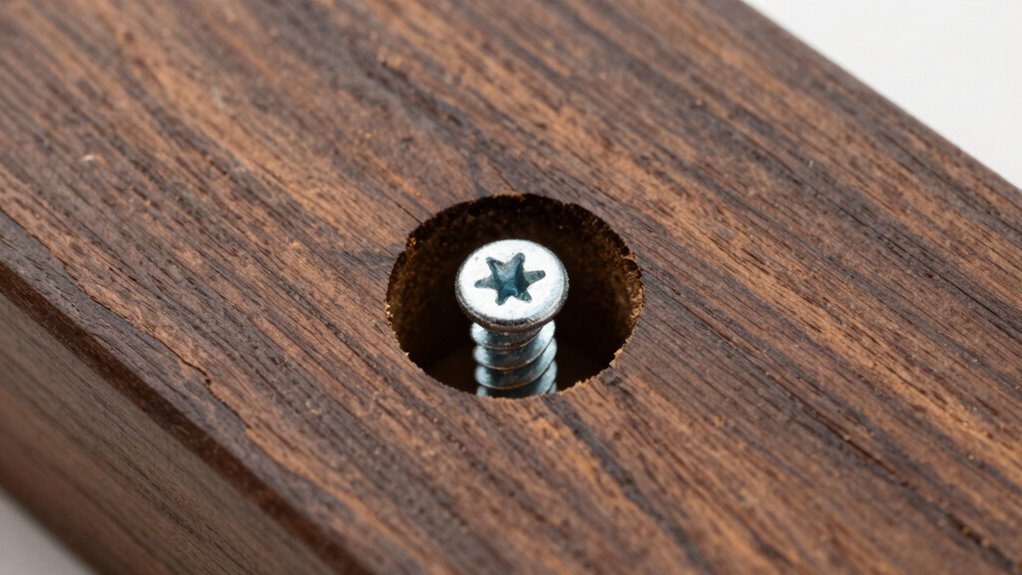
Choosing the right pilot hole size is essential for securing screws effectively in hardwood. A properly sized pilot hole prevents splitting and ensures a smooth finish, especially when considering your wood finish. If the hole is too small, the screw may crack the wood or strip the thread; if too large, the screw won’t hold securely. To match your screw head types, select a pilot hole that allows the screw’s threads to grip firmly without damaging the surface. For flat or pan-head screws, use a pilot hole slightly smaller than the screw’s shank. For hex or other head types, adjust accordingly. Remember, the goal is to balance ease of driving with holding power, preserving the integrity of both the wood finish and the overall project.
professional woodworking screw set
As an affiliate, we earn on qualifying purchases.
As an affiliate, we earn on qualifying purchases.
Step-by-Step: Drilling Effective Pilot Holes in Hardwood
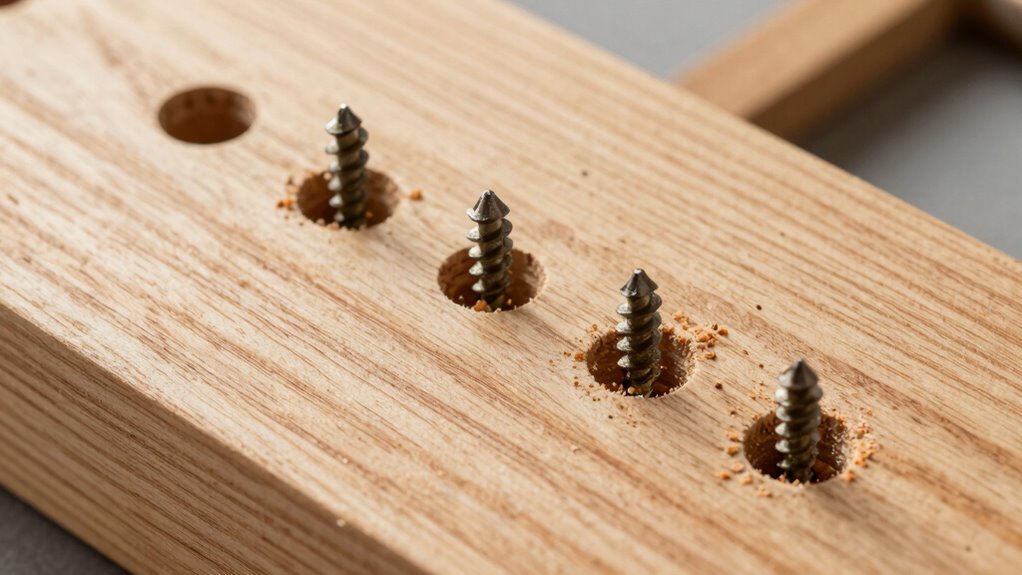
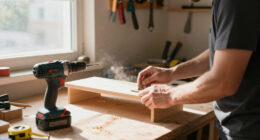
To drill effective pilot holes in hardwood, start by selecting the appropriate drill bit size based on your screw type and the wood’s density. Pay attention to the wood grain direction; drilling with the grain reduces splitting risk. Mark your spot and drill straight into the wood, maintaining steady pressure. Unlike nails, screws need precise pilot holes to grip securely and prevent splitting. Nails often require less prep but can cause splits if the wood grain is tight. Screws, however, benefit from a well-drilled pilot hole that matches their shank size. Keep the drill perpendicular to the surface for a clean, accurate hole. Proper pilot holes ensure your screw threads cut smoothly into the wood, holding tight while avoiding splits and cracks. Using the right drill bit and technique also helps maintain the structural stability of the wood, reducing the chance of splits or cracks forming during installation. Additionally, understanding the density of hardwood helps in selecting the optimal drill and screw size for a durable, split-free joinery. Recognizing the grain direction is crucial for achieving clean, split-free results in hardwood. Paying attention to wood grain patterns can further improve your drilling success and prevent damage. Knowing how to measure wood density can assist in choosing the most appropriate tools and techniques for different hardwood types.
Common Mistakes When Drilling Pilot Holes in Hardwood (and How to Avoid Them)

One common mistake when drilling pilot holes in hardwood is using the wrong drill bit size. This can cause splits or damage, especially if the grain orientation isn’t considered. To avoid this, pay attention to these points:
- Choosing a bit too small: results in poor screw grip and weak hold.
- Using a bit too large: leaves the screw loose, reducing finish quality.
- Drilling against grain: increases chances of splitting and rough edges.
- Ignoring grain direction: can cause splintering or tear-out, affecting the finish.
- Not considering wood properties: such as hardness and grain, which influence how the wood reacts to drilling. Being aware of grain orientation can also help prevent splitting.
- Selecting the appropriate drill speed: using too high a speed can heat the wood and cause splitting, so adjusting the speed based on wood density is essential. Additionally, understanding how wood grain structure affects drilling can improve results and reduce damage.
Best Tools and Bits for Making Precise Pilot Holes in Hardwood
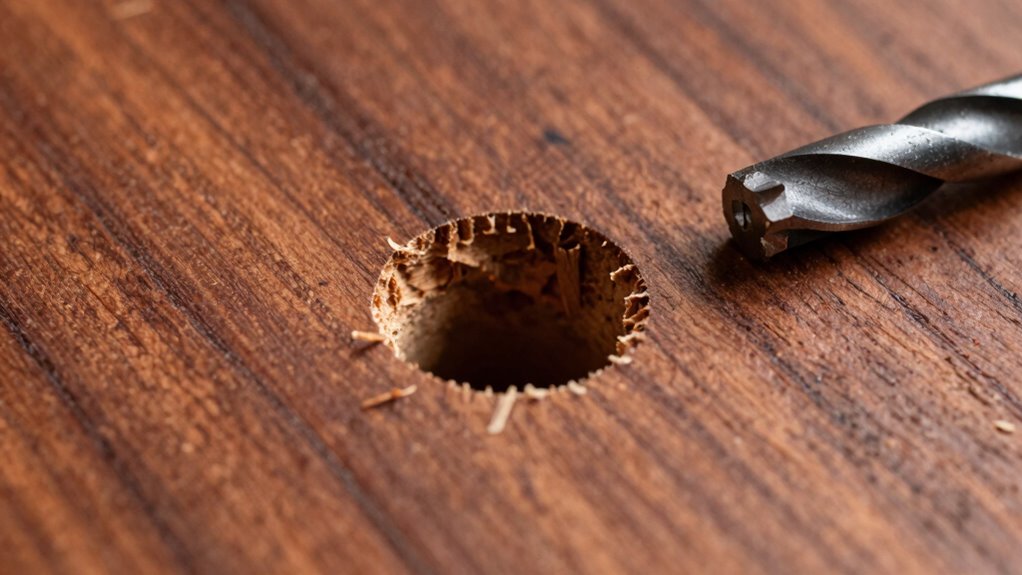
Choosing the right drill bits is essential for making accurate pilot holes in hardwood. You need to consider the type, size, and compatibility of your bits to prevent splitting or misalignment. We’ll explore essential tools and tips to help you drill with precision every time. Additionally, selecting appropriate safety gear ensures safe operation during your woodworking projects.
Drill Bit Types
When preparing to drill into hardwood, selecting the right drill bit is essential for creating precise pilot holes. The best drill bit types vary based on screw types and the drill bit shapes needed for accuracy. Imagine these options:
- Twist bits – versatile, ideal for general hardwood drilling, with a sharp point to start clean holes. They are commonly used because of their adaptability to different materials and sizes.
- Brad point bits – feature a central spur and spurs on the edges, providing clean, accurate cuts perfect for pilot holes. Their design helps prevent wandering and ensures a precise entry point.
- Forstner bits – flat-bottomed with a center point, excellent for larger, precise holes without splitting the wood. They are especially useful when a smooth, flat-bottomed hole is required.
- Spade bits – quick and effective for larger holes but less precise, suitable for rough pilot holes. They are often chosen for their speed but may require additional finishing.
Choosing the right drill bit shape ensures your screw types fit perfectly, reducing splits and damage. Proper drill bit selection can also help minimize the risk of splitting the wood, especially when working with hardwoods that are more prone to cracking under stress. Additionally, understanding the electric power generation with bike generators can inform sustainable practices during your woodworking projects.
Size and Compatibility
To guarantee your pilot holes are precise and compatible with your screws, selecting the correct size of drill bits is crucial. The size depends on the screw’s diameter and the wood’s grain orientation and density. For hardwood, choose a bit slightly smaller than the screw’s core diameter to prevent splitting. Consider that dense woods require a sharper, sturdier bit to cut cleanly without damaging the grain. Use the table below to guide your choices:
| Screw Diameter | Recommended Drill Bit Size | Grain Orientation | Wood Density |
|---|---|---|---|
| 3mm | 2.5mm | Cross-grain | Dense |
| 4mm | 3mm | With-grain | Moderate |
| 5mm | 4mm | Cross-grain | Soft |
| 6mm | 5mm | With-grain | Dense |
Matching these factors ensures your pilot holes fit well and prevent splits. Additionally, understanding the grain orientation helps determine the best drilling technique to maintain wood integrity.
Precision Drilling Tips
Using the right tools and bits is key to making accurate pilot holes in hardwood. To guarantee you follow the grain direction and achieve a smooth finish, choose bits designed for hardwood. Here are four essential tips:
- Select sharp, high-quality drill bits to prevent splintering.
- Use a bit slightly smaller than the screw’s core diameter for a tight fit.
- Drill slowly and steadily, maintaining perpendicularity to keep the hole precise.
- Match the bit type—spiral or brad point—to the grain for cleaner entry and better finish quality.
Paying attention to grain direction and using the right bits helps you create clean, accurate pilot holes, reducing splits and improving the overall look of your project.
When to Use Pre-Drilling Versus Pilot Holes in Hardwood Projects?
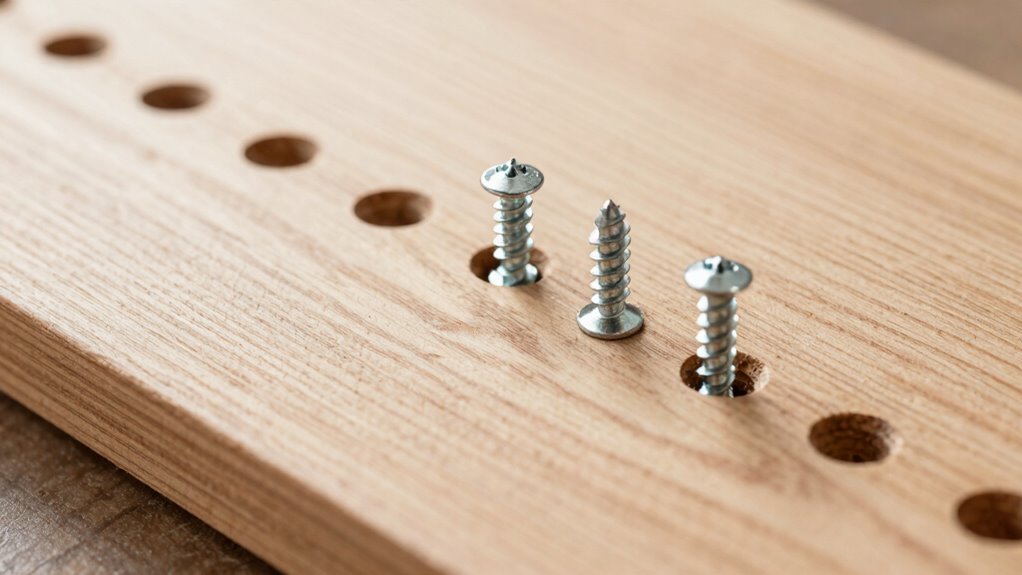
Deciding between pre-drilling and creating pilot holes in hardwood depends on the project’s specifics and the type of wood you’re working with. If the grain direction runs parallel to the screw’s path, pre-drilling helps guarantee preventing splitting and makes driving the screw easier. For softer hardwoods, a simple pilot hole often suffices, especially with screw types designed for woodworking. Harder woods or dense grain may require pre-drilling to reduce stress on the wood and assure precise placement. Consider the screw type—coarse-thread screws usually need pilot holes, while fine-thread screws may require pre-drilling for better control. Additionally, understanding wood grain and how it affects splitting can help inform your drilling choices for optimal results. Properly selecting between pre-drilling and pilot holes ensures your project maintains its integrity and achieves a professional finish. When working with dense or hard woods, drilling techniques can make a significant difference in avoiding damage.
How to Secure Screws Without Causing Damage or Splits
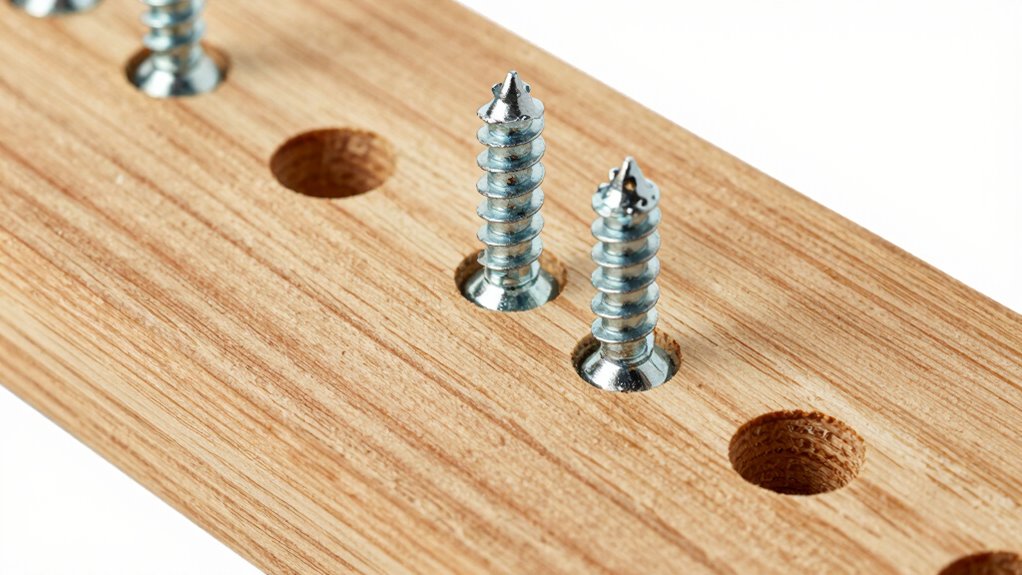
When securing screws in hardwood, taking care to avoid damage or splits is essential for a strong, professional finish. To do this effectively, consider the following:
- Align your screw with the wood grain to reduce splitting risk.
- Choose a screw slightly smaller than the pilot hole to prevent excessive force.
- Place screws away from the edges where splits are more likely.
- Apply steady, even pressure during insertion to avoid damaging the wood or disturbing nail placement.
What to Do If Your Hardwood Still Splits, Even With Pilot Holes
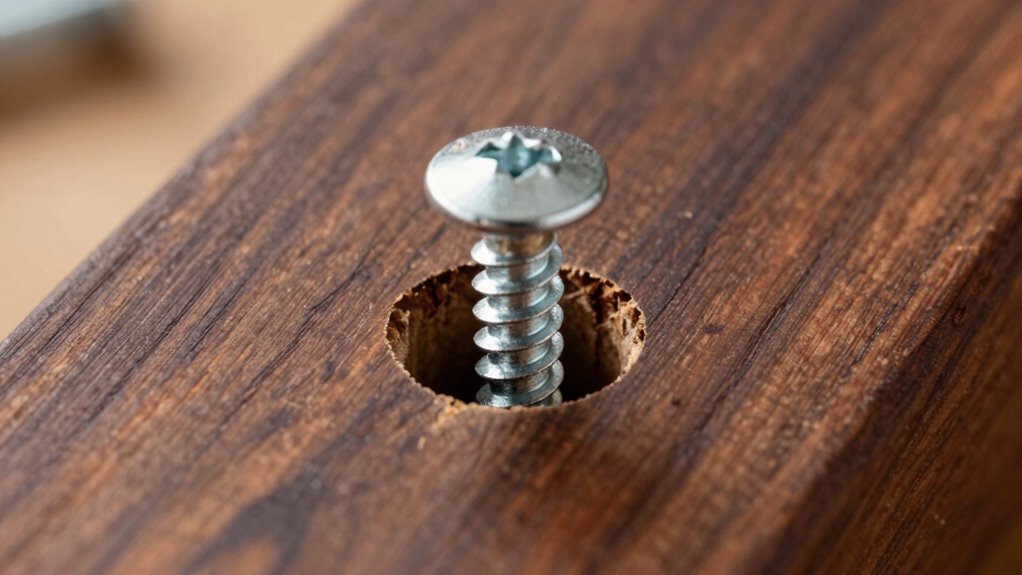
Even with pilot holes, hardwood can still split if the screw is too large or inserted too quickly. If you notice splits despite your precautions, check the wood grain direction—screws inserted against the grain are more likely to cause cracking. Using screws that are too long can also increase the risk; aim for a screw length that’s appropriate for the thickness of your material, typically 1.5 times the thickness. If splitting occurs, gently remove the screw and fill the crack with wood glue or wood filler. Allow it to dry fully before reattempting. When reinserting the screw, drill a smaller pilot hole or use a shorter screw that aligns better with the wood grain, reducing stress and preventing further splits.
Additional Tips to Strengthen Joints and Prevent Cracks in Hardwood Projects
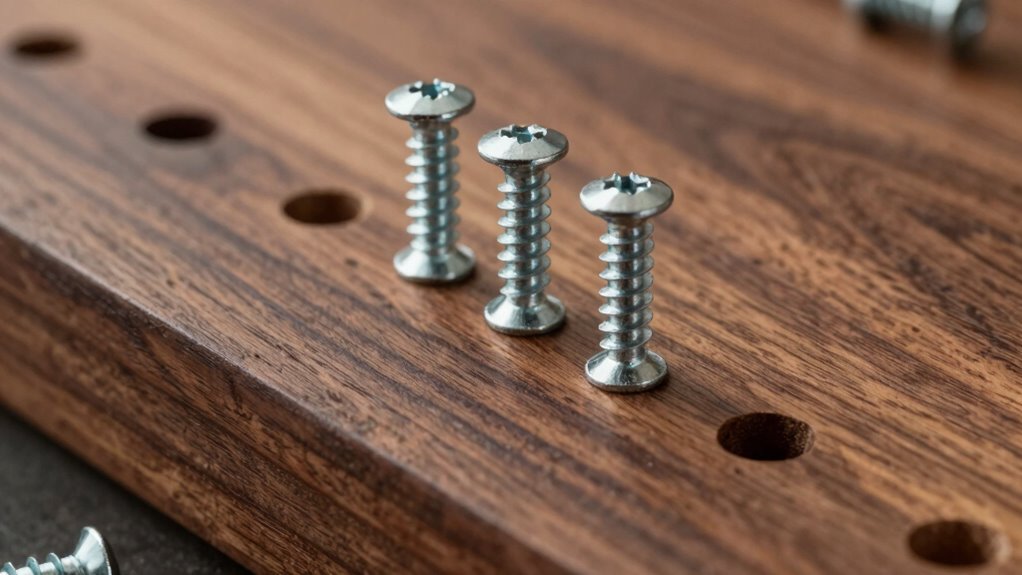
Using clamps during assembly keeps your pieces stable and guarantees a tight fit. Properly applying wood glue adds extra strength to your joints, reducing the risk of cracks over time. Combining these techniques helps create durable, crack-resistant hardwood projects.
Use Clamps for Stability
Clamps are essential tools that help you maintain stability and alignment while working with hardwood. Proper clamp techniques ensure that your pieces stay firmly in place, preventing movement that could cause splits or misalignment. Use the right type and size of clamps to apply even pressure across your work surface. Here are some stability methods to contemplate:
- Apply clamps at equal distances to distribute pressure evenly.
- Use padded clamps to avoid denting or damaging the wood surface.
- Tighten gradually to prevent shifting or cracking.
- Cross-clamp joints for added strength and stability.
Apply Wood Glue Properly
To guarantee strong, durable joints in your hardwood projects, applying wood glue properly is essential. Start by ensuring excellent surface preparation; clean and sand the surfaces to remove dust, grease, or old glue. This creates a better bond and reduces the risk of cracks. Apply a generous, even coat of wood glue to one surface, avoiding excess that could squeeze out and weaken the joint. Clamp the pieces firmly together to evenly distribute the glue and prevent gaps. Wipe away any excess glue immediately with a damp cloth to keep the work area tidy and avoid dried glue affecting finish. Proper application of wood glue, combined with thorough surface preparation, results in stronger joints that are less prone to splitting or cracking over time.
Frequently Asked Questions
What Types of Hardwood Are Most Prone to Splitting?
You’ll find that soft hardwoods like oak and cherry are more prone to splitting, especially if you don’t consider grain orientation and wood density. When you drill, pay attention to the grain direction—going with it helps prevent splits. Denser woods resist splitting better, but softer ones require pilot holes and careful screw placement. Understanding these factors makes certain your screws go in smoothly without cracking the wood.
Can Using Too Large a Pilot Hole Weaken the Joint?
Using too large a pilot hole can weaken the joint because it reduces the amount of material holding the screw, decreasing joint strength. When you choose a pilot hole size that’s too big, the screw doesn’t grip the wood firmly enough, risking instability. To maintain ideal joint strength, select a pilot hole that matches the screw’s diameter closely, ensuring good holding power without risking splits or weak connections.
How Does Humidity Affect Pilot Hole Effectiveness?
Imagine your pilot hole as a tiny superhero cape, struggling against the villainous moisture content. When humidity rises, wood expands, making your pilot hole less effective—like a cape losing its elasticity. High humidity causes wood to swell, reducing the grip of your screw and risking splits. To keep your project heroically sturdy, guarantee proper moisture control and drill pilot holes suited for the wood’s moisture content, especially in humid conditions.
Are There Alternative Fasteners to Screws for Hardwood?
Yes, there are alternative fasteners to screws for hardwood. You can consider using nails, which are quicker to install but may not hold as strongly, or dowels and wooden pegs for a more traditional, sturdy joint. Adhesive options like wood glue also serve as screw alternatives for certain applications. Each fastener choice depends on your project’s needs, balancing ease of installation with durability and strength.
How Long Does a Typical Pilot Hole Last Before Needing Re-Drilling?
A typical pilot hole lasts for years if you use the right drill bit type and account for wood expansion. Over time, wood movement caused by humidity changes can loosen the screw, so you might need to re-drill if you notice looseness or splitting. Regularly inspect your work, and if you see signs of wear or cracking, it’s best to re-drill with a slightly larger bit to maintain a secure fit.
Conclusion
By always using the right-sized pilot holes, you reduce the risk of splitting and guarantee your hardwood projects stay strong and beautiful. While some believe pre-drilling isn’t necessary for small screws, research shows that even minor splits can weaken joints over time. So, trust the science—drill carefully, choose the correct pilot hole, and your hardwood creations will last longer, resisting cracks and damage better than if you skip this essential step.
Fall Picks
fall essentials
As an affiliate, we earn on qualifying purchases.