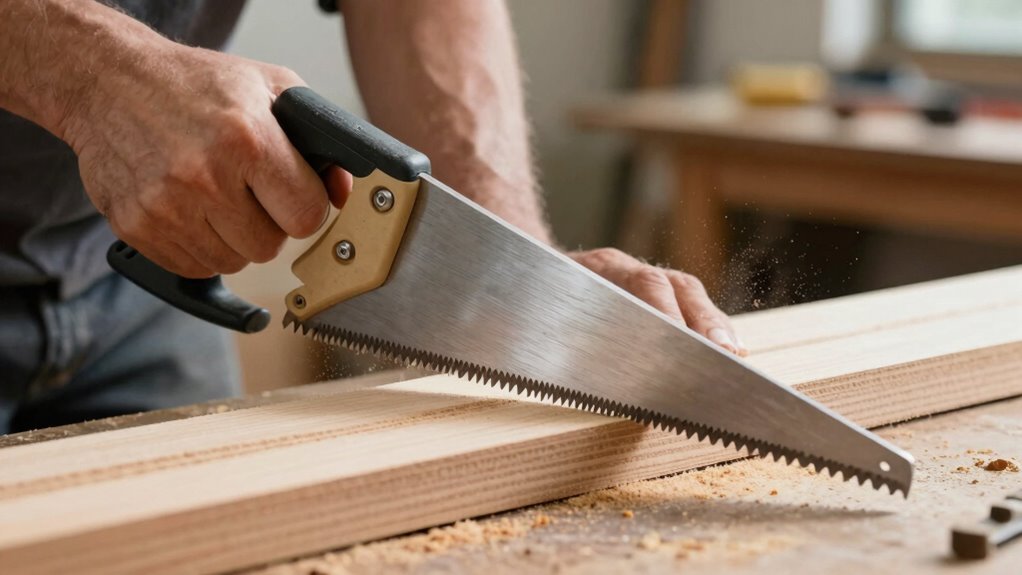
To cut straight lines with a hand saw, focus on controlling your wrist by keeping it relaxed, aligned with your forearm, and moving smoothly. Use your whole arm and hands, not just your wrist, to maintain steady pressure and blade alignment. Practice consistent, deliberate strokes, and pay attention to your grip and saw angle. Mastering this wrist trick improves control and accuracy—keep going, and you’ll discover even more tips to perfect your sawing technique.

Get business pricing on tools and workshop supplies
- Business-only prices and quantity discounts
- Tax-exempt purchasing
- Multiple users, one account, clear invoices
Key Takeaways
- Keep your wrist relaxed and aligned with your forearm to ensure smooth, straight saw motions.
- Use controlled, deliberate wrist movements to guide the saw along the desired line.
- Maintain consistent grip pressure and avoid forcing the saw, allowing natural wrist motion.
- Practice the wrist trick regularly to develop muscle memory for stable, straight cuts.
- Use saw guides or clamps to help keep the workpiece steady while focusing on wrist control.
As an affiliate, we earn on qualifying purchases.
Why Proper Wrist Position Matters When Using a Hand Saw
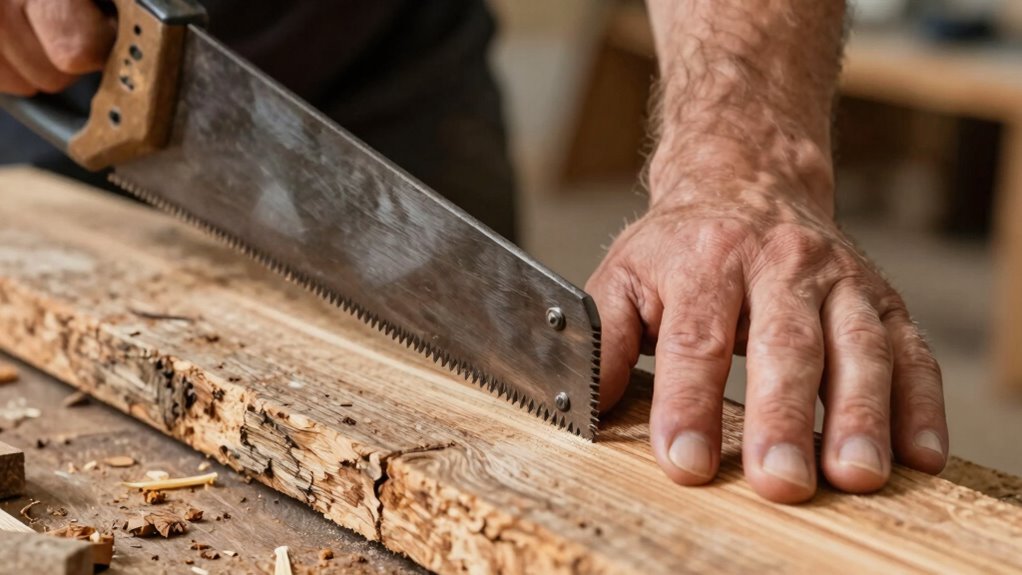
Your wrist position plays a crucial role in making straight, accurate cuts with a hand saw. When your wrist has good flexibility, you can maintain better control and adapt to the saw’s movement, ensuring smoother cuts. A flexible wrist allows you to keep the saw aligned properly with your target line, reducing wobble and uneven edges. Proper wrist positioning helps you apply consistent pressure and follow the saw’s natural motion, preventing fatigue and mistakes. If your wrist is stiff or awkward, it becomes harder to keep the saw straight, resulting in crooked cuts. Focus on keeping your wrist relaxed and in line with your forearm for ideal saw alignment. This simple adjustment improves your precision and makes sawing more efficient and less tiring. Additionally, practicing wrist mobility exercises can enhance your flexibility and overall control during cutting tasks. Developing sawing technique through consistent practice also contributes to cleaner, more accurate cuts. Incorporating ergonomic practices can further reduce strain and improve your overall sawing performance. Building muscle memory through repetition helps solidify proper wrist positioning and makes your cuts more consistent over time.
As an affiliate, we earn on qualifying purchases.
How to Hold Your Hand Saw for Better Control
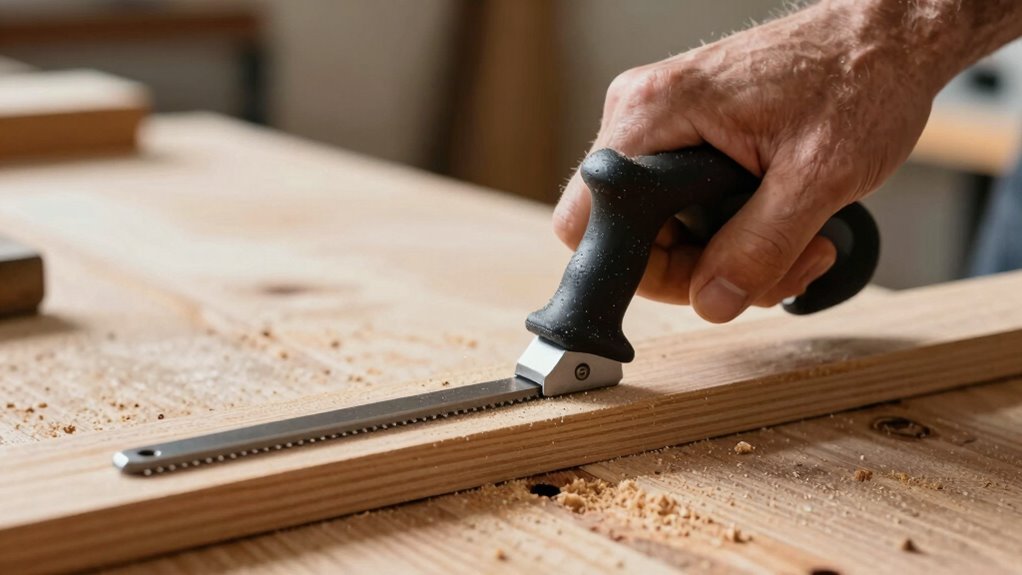
Holding your hand saw correctly is key to gaining better control during cutting. Start by ensuring proper saw blade alignment with the line you want to cut; this keeps the saw steady and reduces deviation. Your hand grip should be firm yet comfortable, emphasizing hand grip ergonomics to prevent fatigue and maintain precision. Wrap your fingers around the handle naturally, avoiding excessive force that can cause twisting or slipping. Keep your thumb along the handle for added control. Maintain a relaxed grip to allow smooth, controlled motions. Position the saw so that the blade runs straight and true, aligning with your line. Proper holding technique not only improves control but also helps you cut straighter, making your sawing more efficient and less tiring. Additionally, focusing on consistent pressure application helps maintain control throughout the cut. Developing a steady hand through regular practice can significantly enhance your sawing accuracy and reduce fatigue over time. Incorporating proper sawing techniques can further improve your overall cutting performance, especially when understanding the importance of plant parts in herbal remedies. Paying attention to saw blade sharpness is also crucial for smoother and safer cuts.
As an affiliate, we earn on qualifying purchases.
How the Wrist Trick Helps You Cut Straight : and How to Do It
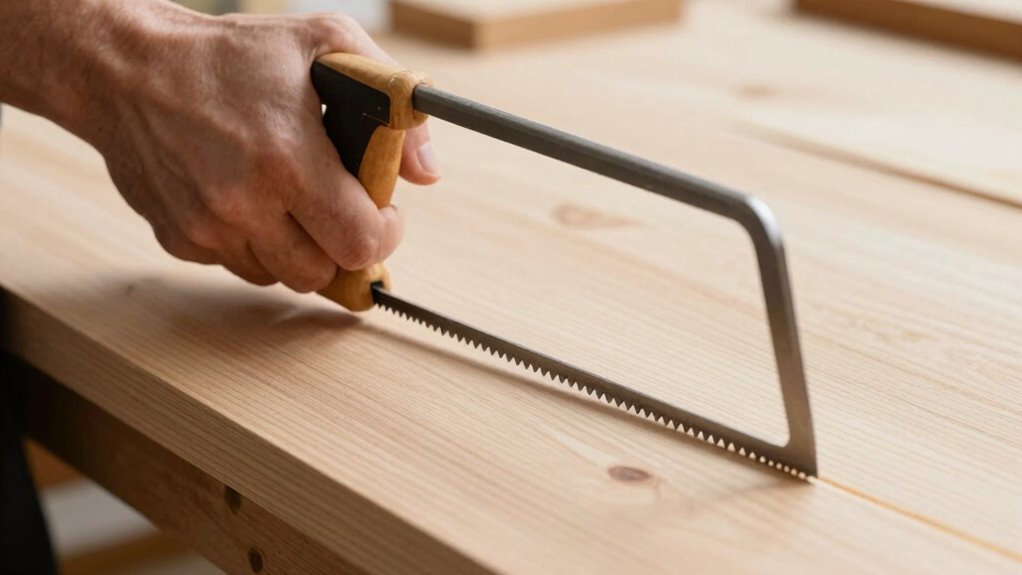
Mastering the wrist trick starts with aligning your wrist movement to guide the saw straight. Using the proper grip technique gives you better control, making your cuts more accurate. With practice, you’ll develop consistency that makes sawing straight easier every time. Incorporating energy-efficient tools can further enhance your precision and reduce fatigue during cutting tasks. Additionally, paying attention to proper maintenance of your tools ensures they perform optimally, helping you achieve cleaner, straighter cuts. Regularly inspecting your tools contributes to better tool longevity and consistent results. Being aware of ergonomic practices can also help prevent fatigue and improve your overall cutting accuracy. Developing technique consistency is key to achieving reliable straight cuts over time.
Wrist Movement Alignment
Aligning your wrist correctly is essential for cutting straight lines with a hand saw. When your wrist has good flexibility, you can maintain a natural, smooth motion that keeps the saw blade aligned with your intended line. Focus on keeping your wrist in a neutral position, avoiding excessive bending or twisting. This helps guarantee the saw blade stays steady and follows the straight path you want. Proper wrist movement alignment allows you to apply even pressure and control the saw more precisely. As you saw, move your wrist smoothly, engaging the wrist trick to guide the saw straight. Maintaining wrist flexibility and correct alignment reduces fatigue and improves accuracy, helping you produce cleaner, straighter cuts every time.
Proper Saw Grip Technique
A proper saw grip is key to making straight cuts, and your wrist plays a central role in this. Good saw ergonomics starts with correct hand positioning, ensuring your grip is firm but relaxed. Hold the saw handle comfortably, keeping your hand aligned with your forearm to reduce strain. Your grip should allow for controlled, steady movements without excessive force, which can cause wobbling or deviations. Focus on keeping your wrist neutral, avoiding twists or bends that can throw off your cut. Proper hand positioning promotes better control and stability, helping you maintain a straight line. Remember, a secure yet relaxed grip minimizes fatigue and enhances precision, making it easier to execute the wrist trick effectively for straight, accurate cuts.
Practice for Consistency
Practicing the wrist trick regularly helps you develop the muscle memory needed to cut straight lines consistently. Focus on maintaining proper sawing angles, which guarantee smooth, controlled cuts. As you practice, pay attention to your blade sharpness; a sharp blade makes it easier to stay on track and reduces the effort needed, helping you keep steady. Consistent practice trains your wrist to perform the trick naturally, improving your accuracy over time. Keep your motions deliberate, and don’t rush through each cut. By regularly honing your technique, you’ll find the wrist trick becomes second nature, making straight, precise cuts more effortless. Remember, patience and repetition are key to mastering the vintage design that turns good sawing into great sawing. Developing good technique consistency ensures that your cuts stay straight regardless of the project size or complexity. Incorporating mindful practice also enhances your overall hand-eye coordination, leading to better control during sawing. Additionally, paying attention to your sawing posture can further improve your steadiness and precision.
muscle memory training for woodworking
As an affiliate, we earn on qualifying purchases.
As an affiliate, we earn on qualifying purchases.
Step-by-Step: Applying the Wrist Technique During Your Cut
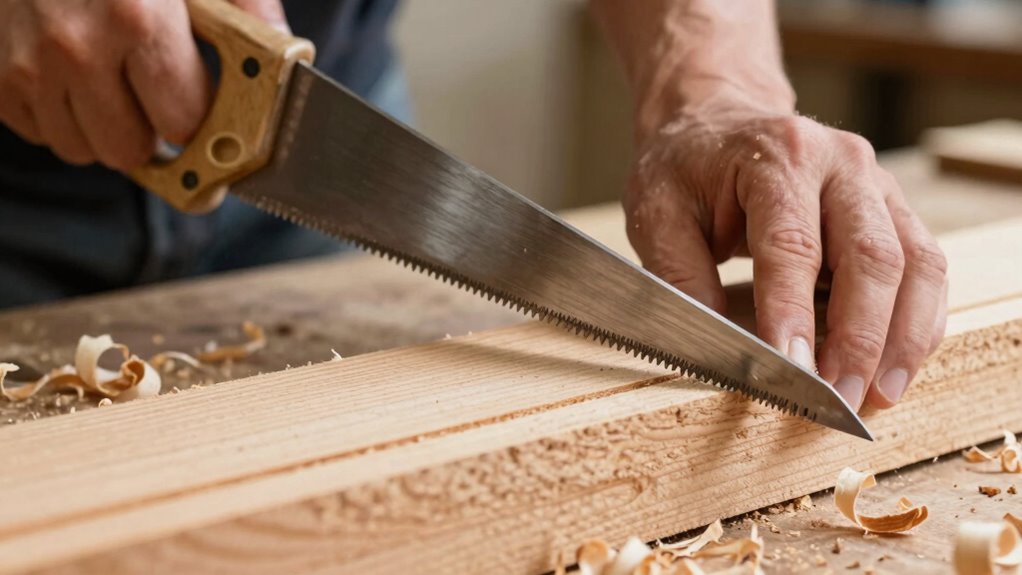
To apply the wrist technique effectively, start by positioning your wrist properly so it guides the saw smoothly. Keep a firm grip to maintain control throughout the cut, avoiding unnecessary movements. This focus on wrist position and control helps you cut straight and steady every time. Additionally, practicing proper tool handling techniques can further improve your accuracy and reduce fatigue during your projects. Proper pressure control is also crucial to achieve precise, clean cuts and maintain consistency over multiple cuts. Ensuring correct saw alignment is also crucial to achieve precise, clean cuts and maintain consistency over multiple cuts.
Proper Wrist Position
Maintaining the correct wrist position is essential for a straight and controlled cut. Keep your wrist adaptable to the saw’s movement without forcing it. A relaxed wrist helps maintain proper saw blade tension, preventing binding or wandering. Your wrist should stay aligned with your arm, neither bent nor twisted, to ensure fluid motion. This positioning improves control and reduces fatigue. Being mindful of saw blade tension contributes significantly to a smoother cutting experience.
Maintaining Saw Control
When you begin sawing, focus on applying your wrist technique smoothly and deliberately. Keep the saw blade alignment steady by maintaining a consistent wrist motion, which helps prevent the blade from wandering off the cut line. Use your hand strength to control the saw’s pressure, avoiding excessive force that can cause jagged edges or loss of control. As you saw, ensure your wrist moves fluidly with each stroke, creating a natural rhythm that guides the saw straight through the material. Regularly check the saw blade alignment, adjusting your wrist motion if the saw starts to veer off course. Maintaining this control keeps your cut accurate, smooth, and effortless, making the wrist technique a reliable method for straight sawing.
Common Mistakes When Using the Wrist Trick (and How to Avoid Them)
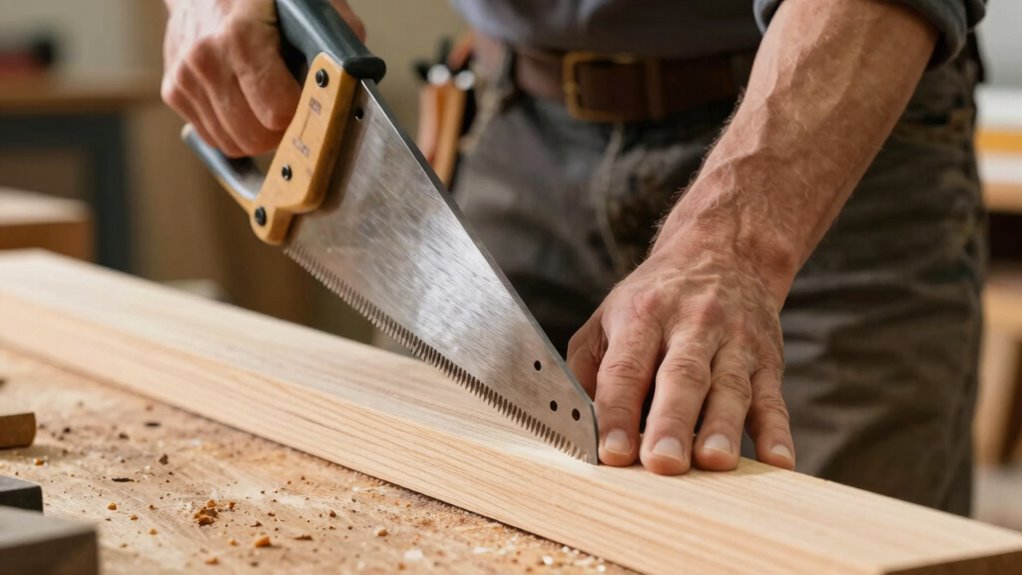
Many beginners make the mistake of relying solely on wrist movement without engaging their arm and body, which can lead to crooked cuts and unnecessary fatigue. This often causes increased wrist tension, making it harder to maintain control and precision. When your wrist is tense, your hand stability diminishes, resulting in uneven saw lines. To avoid this, focus on keeping your wrist relaxed and aligned with your forearm. Instead of forcing the motion, let your arm and body support the saw’s movement, reducing strain and improving accuracy. Remember, overusing your wrist alone can cause fatigue and wobbling. Keep your hand steady and flexible, engaging your whole arm rather than just your wrist. This approach ensures smoother, straighter cuts with less effort and better control. Additionally, understanding wrist tension can help you recognize signs of fatigue and prevent poor technique.
Practice Tips to Improve Your Straight Sawing With the Wrist Technique
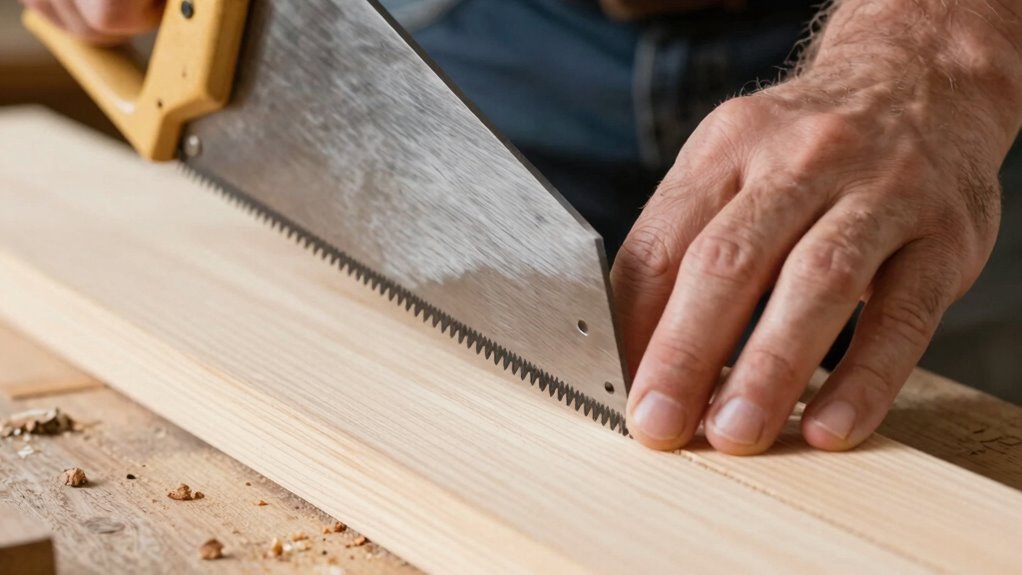
To improve your straight sawing with the wrist technique, start by practicing controlled, deliberate movements. Focus on maintaining proper saw blade alignment throughout each cut, ensuring the blade stays steady and true. Pay close attention to your hand positioning—keep your grip firm yet relaxed, with your wrist guiding the saw smoothly without forcing it. Consistent hand placement helps develop muscle memory, making your cuts more accurate over time. Practice on scrap wood, gradually increasing speed as your control improves. Use slow, steady strokes to master the wrist’s motion and keep the saw aligned. Regular practice with these tips sharpens your technique, leading to straighter, cleaner cuts and greater confidence in your sawing skills.
Tools and Accessories That Help You Saw Straight
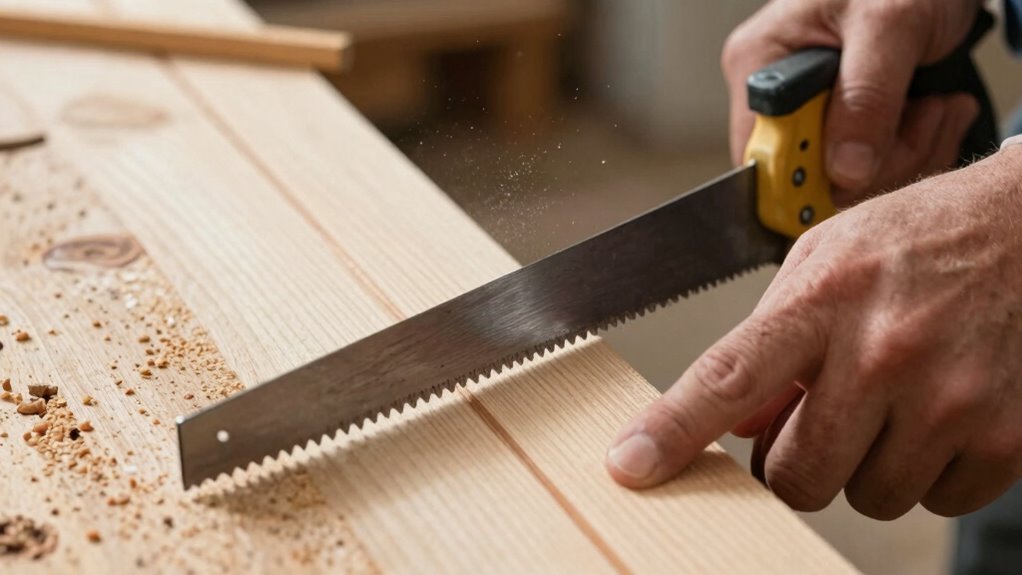
Using the right tools and accessories can considerably improve your ability to saw straight. Choosing the appropriate saw blade types ensures cleaner cuts and easier control. For example, fine-toothed blades excel on detailed work, while coarse teeth cut faster through rough materials. Safety gear like goggles and gloves protect you from splinters and accidents, giving you confidence as you work. To make your sawing more precise and safe, consider these essentials:
| Tool/Accessory | Purpose | Emotional Benefit |
|---|---|---|
| Saw blade types | Match blade to material | Confidence in quality cuts |
| Clamps | Secure your workpiece | Peace of mind |
| Safety glasses | Protect your eyes | Confidence to focus |
| Gloves | Prevent slips and splinters | Comfort and safety |
| Saw guide | Keep saw straight during cut | Satisfaction in precision |
Troubleshooting: What to Do If Your Cuts Still Aren’t Straight
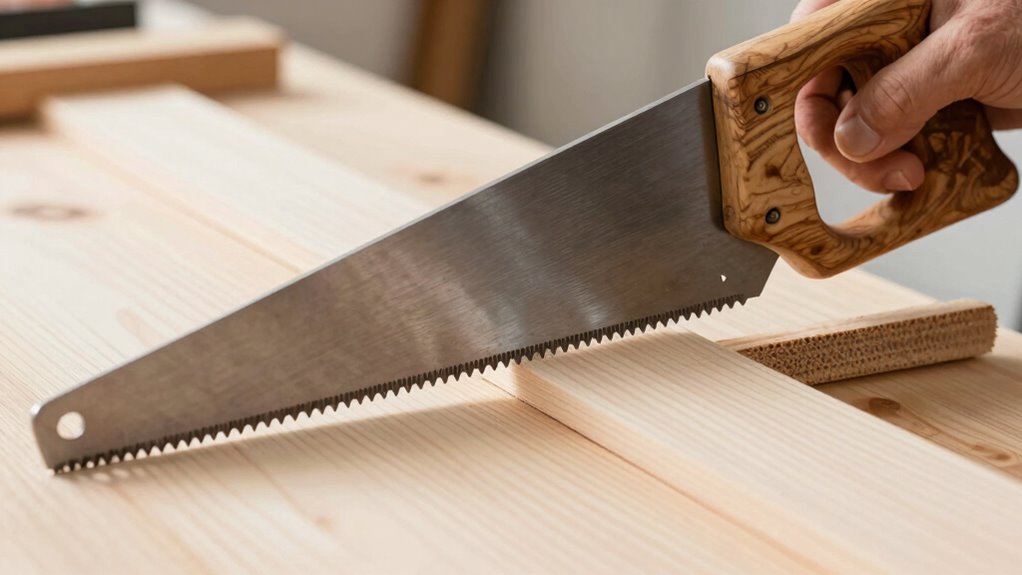
Even with the right tools, you might find that your cuts still veer off course. Check your blade alignment first; a misaligned blade can easily cause crooked cuts. If the blade isn’t straight, loosen the saw’s tension and realign it carefully. Also, make certain your saw is properly lubricated. Using saw lubricants reduces friction, making your cuts smoother and more controlled. Apply a small amount to the blade before starting, especially if you notice resistance or binding. Sharp blades are essential too—dull blades pull or wander. Finally, double-check your grip and wrist motion, keeping your hand steady and following your marked line. These adjustments can dramatically improve your straight cuts, even if initial attempts didn’t go as planned.
Frequently Asked Questions
Can the Wrist Trick Be Used With Different Types of Hand Saws?
Yes, you can use the wrist trick with different types of hand saws. Its saw blade compatibility is broad, as long as the saw allows controlled wrist motion versatility. Whether you’re using a crosscut or rip saw, the wrist trick helps improve straightness and control. Just guarantee your grip and wrist movement are comfortable, and you’ll find this technique effective across various saw types.
How Does Hand Strength Affect the Effectiveness of the Wrist Trick?
Imagine your hand’s strength as a superhero cape—when you’re strong, the wrist trick is your trusty sidekick. If your grip endurance is low, muscle fatigue kicks in faster, making the trick less effective. Weak hands struggle to maintain control, causing wobbly lines. So, build up your grip, stay steady, and your wrist will effortlessly guide the saw, transforming even a feeble grip into a precision powerhouse.
Is There an Ideal Age or Skill Level for Mastering This Technique?
You can master this wrist trick at any age or skill level, as long as you practice and develop your hand coordination. Age applicability varies, but younger and older beginners alike can improve with consistent effort. Focus on skill development by starting with simple cuts, gradually increasing difficulty. With patience and dedication, you’ll find that this technique becomes more natural, helping you saw straight lines more effectively regardless of your current experience.
Are There Specific Safety Precautions to Consider When Applying the Wrist Trick?
You should always wear protective gear like safety goggles and gloves to prevent injuries. When applying the wrist trick, focus on proper technique—keep your wrist steady and controlled. Avoid rushing or forcing the saw, which can cause slips or accidents. Stay alert and maintain a firm grip to guarantee safety. Combining proper technique with protective gear keeps you safe and sharp, making your sawing precise and injury-free.
How Long Does It Typically Take to See Improvement Using This Method?
You’ll typically start seeing improvement within a few practice sessions, but consistent practice is key. With dedication, patience, and regular use of this wrist trick, your precision and control will develop steadily. Remember, progress varies for everyone, so stay patient and keep practicing consistently. Over time, you’ll notice straighter cuts and better handling, making the technique second nature and markedly boosting your woodworking skills.
Conclusion
Mastering the wrist trick transforms your hand saw into a precision instrument, slicing through wood like a hot knife through butter. With steady control and practiced technique, you’ll turn crooked lines into straight, confident cuts. Think of your wrist as the rudder guiding your boat—small adjustments steer big results. Keep practicing, and soon, each cut will glide smoothly, making your woodworking journey feel like a well-choreographed dance rather than a stumble in the dark.
Evergreen bestsellers Picks
bestsellers
As an affiliate, we earn on qualifying purchases.