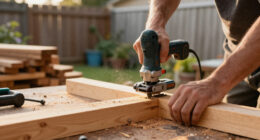
Lacquer dries in just minutes, letting you apply multiple coats quickly and speed up your workflow. In contrast, waterborne finishes need hours or overnight to fully dry, which extends your project timeline and requires more patience. This difference affects how you schedule your work and manage environmental conditions like humidity and airflow. Understanding these drying times helps you plan better and avoid delays. Keep exploring to discover how to optimize your finishing process with either option.

Get tools and workshop supplies delivered free — and shop member deals
- Fast, free delivery on millions of items
- Access to Prime Big Deal Days deals on October 6–7
- Prime Video, Amazon Music and more included
Key Takeaways
- Lacquer’s quick drying allows for faster layer application and shorter overall project timelines.
- Waterborne finishes require longer drying times, extending the workflow and scheduling flexibility.
- Extended drying with waterborne finishes necessitates patience and impacts shop throughput.
- Rapid lacquer drying facilitates quicker re-coating and project completion.
- Environmental control is critical to optimize drying conditions and maintain consistent shop rhythm.
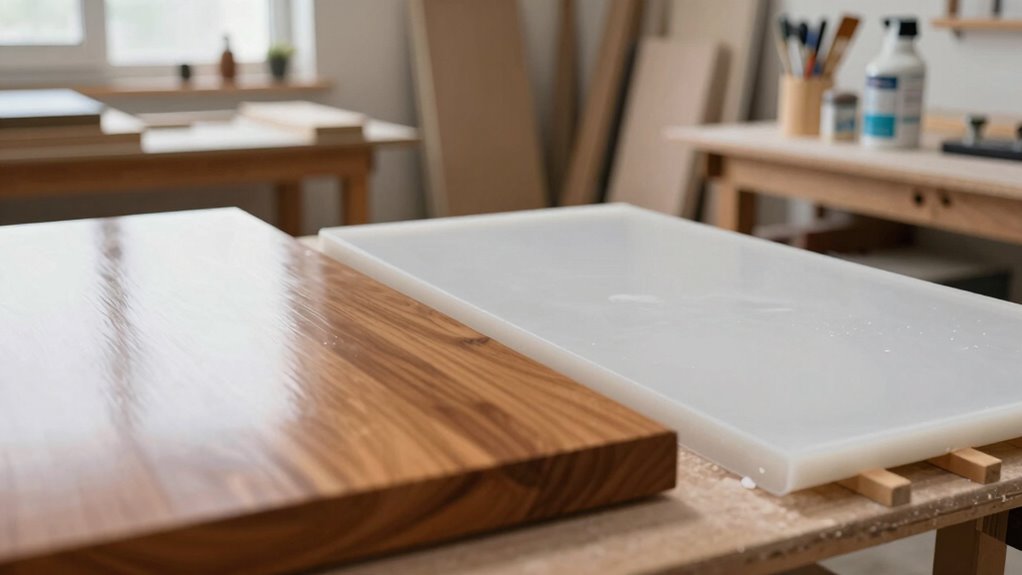
When choosing between lacquer and waterborne finishes, understanding their workflows is essential to guarantee a smooth application process and a high-quality result. One of the key differences lies in their drying times, which directly impacts your shop rhythm. Lacquer tends to dry quickly, sometimes within minutes, allowing you to move swiftly from one coat to the next. Waterborne finishes, on the other hand, usually require longer drying periods, often several hours or even overnight, depending on the environment. This difference influences how you plan your workflow, especially if you’re aiming for efficiency without sacrificing quality.
Understanding drying times is key to optimizing workflow and achieving high-quality finishes with lacquer or waterborne coatings.
Your brush techniques play a crucial role, especially with waterborne finishes. Because these coatings dry more slowly, you need to be precise with your application. Overworking the surface or applying thick coats can lead to issues like brush marks or uneven texture. For lacquer, the quick drying demands a lighter touch and quick, smooth strokes to avoid visible brush marks before the finish sets. With waterborne, taking your time to build up thin, even coats will help you achieve a flawless surface. Patience becomes a virtue, as rushing through the application can result in imperfections that are harder to correct once the finish is dry. Additionally, understanding the drying environment can help you optimize your workflow and achieve the best results. Ensuring proper ventilation and temperature control can also influence how evenly the finish cures. Managing environmental factors such as humidity levels is essential for consistent drying and final appearance. Properly managing airflow can help prevent issues like dust settling and uneven drying, further improving your results.
The drying environment significantly affects the workflow, especially with waterborne finishes. High humidity or low temperatures slow down drying, extending your overall process and possibly causing dust or debris to settle on the wet surface. Conversely, a controlled, moderate environment accelerates drying and minimizes these risks. Lacquer is more tolerant of rapid drying conditions, but still benefits from a well-ventilated space that prevents buildup of fumes and ensures a consistent finish. You’ll need to adapt your shop setup accordingly, making sure your workspace promotes even drying and reduces the chance of defects. Proper ventilation is also critical to maintain safety and quality standards during application. Creating a stable drying environment with controlled temperature and humidity can further enhance your workflow efficiency and finish quality.
As an affiliate, we earn on qualifying purchases.
Frequently Asked Questions
How Do Drying Times Affect Overall Project Deadlines?
Drying times directly impact your project deadlines, as longer drying periods reduce drying efficiency and slow down overall progress. You need to plan workflow adjustments accordingly, allowing extra time for each stage. Rushing through dries can compromise quality, so understanding these timing differences helps you schedule tasks more accurately, maintain consistent productivity, and meet your project deadlines without sacrificing the finish quality.
Are There Environmental Concerns With Lacquer Versus Waterborne Finishes?
You should consider environmental concerns with lacquer and waterborne finishes. Lacquers often have higher VOC emissions, which can harm air quality and contribute to smog. They also require careful chemical disposal to prevent environmental contamination. Waterborne finishes typically emit fewer VOCs, making them a greener choice. By choosing waterborne, you reduce your shop’s chemical impact and promote safer disposal practices, aligning with eco-friendly standards.
What Tools Are Best for Applying Each Type of Finish?
For applying lacquer and waterborne finishes, you’ll find that spray techniques are generally best for achieving a smooth, even coat, especially on larger surfaces. For detailed work or smaller projects, brush application is effective for lacquer, giving you control and precision. Waterborne finishes can also be brushed on, but spraying often results in a more consistent finish. Practice both methods to find what works best for your workflow and project needs.
How Does Humidity Impact Drying Times for Both Finishes?
Ironically, humidity is your finish’s best friend—until it’s not. High humidity effects slow down drying times for both lacquer and waterborne finishes, making them feel more like a waiting game. Excess moisture affects finish consistency, causing drips or uneven coats, which means you’ll spend more time sanding and reapplying. Keep your workspace dry to maintain predictable dry times and save yourself from finishing frustrations and a chaotic shop rhythm.
Can Drying Time Differences Influence Customer Satisfaction?
Yes, drying time differences can substantially influence customer satisfaction. When finishes dry faster, you provide quicker turnaround, boosting customer perception of efficiency. Longer drying times might delay completion, affecting their perception of your shop’s professionalism. This impacts not only customer satisfaction but also finish durability, as proper drying ensures the finish’s longevity. Managing drying times effectively helps maintain high-quality results and keeps your clients happy with timely, durable finishes.
As an affiliate, we earn on qualifying purchases.
Conclusion
Switching between lacquer and waterborne finishes might seem intimidating at first, but understanding their workflows helps you adapt seamlessly. Yes, dry times differ, but with proper planning, your shop’s rhythm stays steady—no delays. Don’t let worries about longer drying periods hold you back; instead, leverage the benefits each finish offers. Embrace the change, refine your process, and watch your craftsmanship flourish with a workflow tuned to your chosen finish’s needs.
air filtration system for woodworking shop
As an affiliate, we earn on qualifying purchases.
As an affiliate, we earn on qualifying purchases.
professional paintbrush set for waterborne finishes
As an affiliate, we earn on qualifying purchases.
As an affiliate, we earn on qualifying purchases.
Halloween Picks
halloween
As an affiliate, we earn on qualifying purchases.