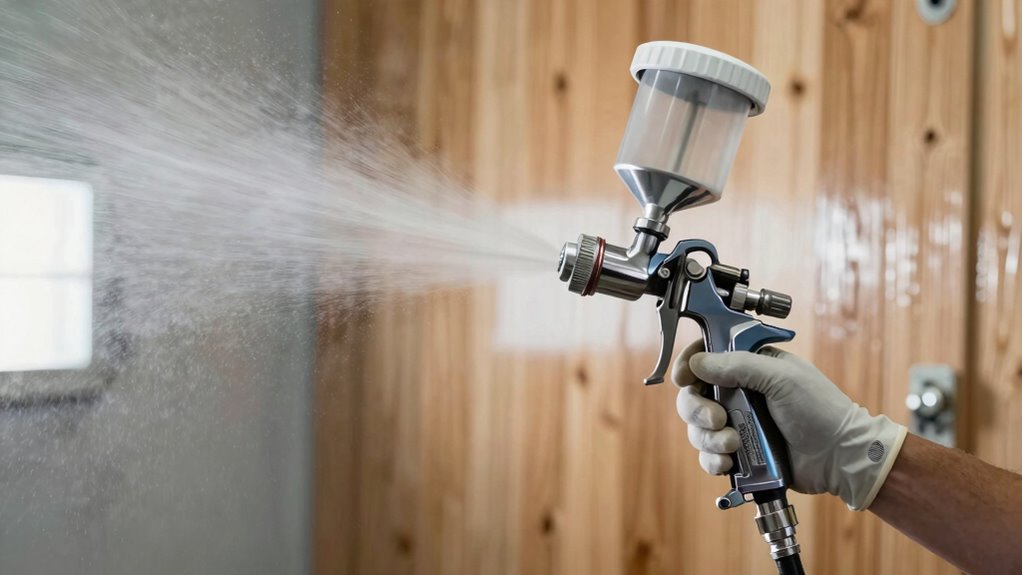

Properly setting up your spray equipment is essential to get the best results with waterborne finishes. When you calibrate your equipment correctly, you guarantee smooth, even application, which reduces waste and the need for rework. It also helps achieve a professional finish that’s eco-friendly and durable. Since waterborne paints are sensitive to application and environmental conditions, small adjustments can make a big difference. Keep exploring to discover tips for perfecting your setup for superior outcomes.

Get business pricing on tools and workshop supplies
- Business-only prices and quantity discounts
- Tax-exempt purchasing
- Multiple users, one account, clear invoices
Key Takeaways
- Proper setup ensures smooth, even application, enhancing finish quality and reducing defects like runs or uneven coverage.
- Correct equipment calibration maintains consistent thickness, improving durability and aesthetic appeal of waterborne finishes.
- Adjusting spray parameters optimizes material use, minimizes waste, and reduces overspray during application.
- Regular equipment maintenance and environmental controls prevent contamination and ensure reliable, professional results.
- Proper setup responds to the sensitivity of waterborne finishes to temperature and humidity, ensuring optimal drying and finish quality.
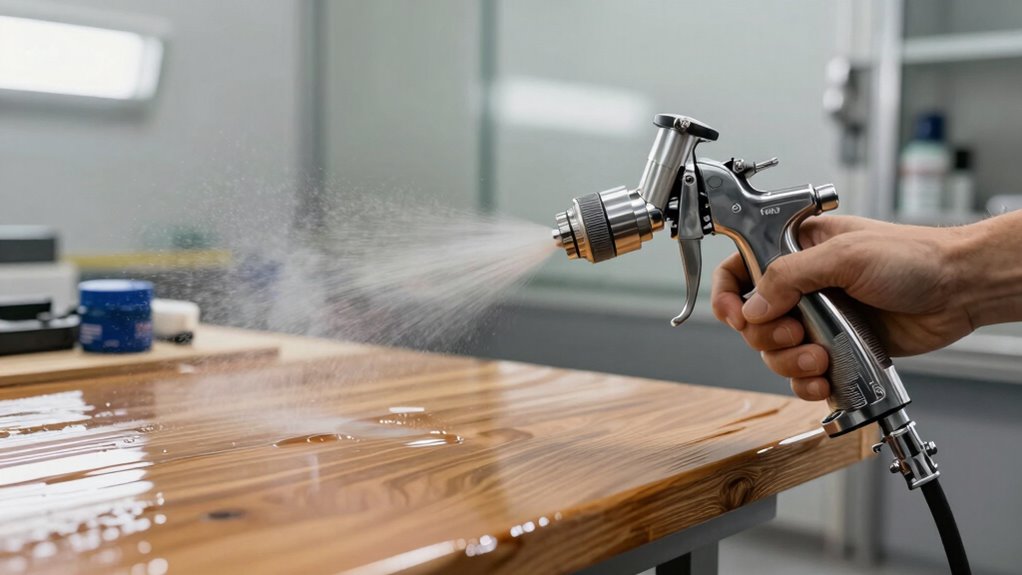
Are waterborne finishes the right choice for your projects? If you’re aiming for environmentally friendly options, waterborne finishes are a smart choice. They’re known for their eco friendly formulations, which produce fewer VOCs and reduce harmful emissions compared to solvent-based paints. But even with the best product, your results depend heavily on proper setup and technique. That’s where equipment calibration comes into play. Ensuring your spray equipment is properly calibrated guarantees a smooth, even application, which not only enhances the quality of your finish but also minimizes waste.
Proper calibration of spray equipment ensures smooth, even finishes and reduces waste with waterborne coatings.
When you’re working with waterborne finishes, the importance of equipment calibration becomes even more apparent. These finishes tend to be more sensitive to application parameters because their viscosity and drying times differ from traditional solvent-based products. Regular calibration of your spray equipment ensures the right pressure, spray pattern, and flow rate, helping you avoid issues like runs, drips, or uneven coverage. Proper calibration also helps you maintain consistent thickness, which is critical for both aesthetics and durability. When your equipment is set correctly, you’ll notice fewer touch-ups, less overspray, and a more professional look at the end. Additionally, understanding the sensitivity of waterborne finishes to application variables can help you better adapt your techniques to achieve optimal outcomes. Regularly inspecting and adjusting your equipment setup is essential to sustain these benefits over time.
Choosing equipment designed for waterborne finishes can make a significant difference. Lower pressure settings often produce finer atomization, leading to a smoother finish. It’s essential to adjust your gun’s nozzle and pressure settings according to the manufacturer’s recommendations for waterborne products. This isn’t just about achieving a good look—it’s also about efficiency. When your equipment is properly calibrated, you use less material, reduce cleanup time, and avoid costly mistakes. Plus, with eco friendly formulations, you’re contributing to a healthier environment, but only if you apply these finishes correctly and responsibly. Proper equipment setup also helps in controlling application variables more effectively, which is crucial for achieving consistent results.
Preparation is key before you start spraying. Make sure your equipment is cleaned thoroughly to prevent any residue from previous coatings from contaminating your waterborne finish. Regular maintenance and calibration keep everything functioning optimally, ensuring your spray pattern is consistent and your finish is flawless. Remember, even small adjustments can make a big difference in the final appearance. Pay attention to environmental conditions like humidity and temperature, as they influence drying times and finish quality. Proper setup, including calibrated equipment and the right technique, is essential to maximize the benefits of eco friendly formulations and achieve professional results. Being aware of application conditions can further enhance your control over the process and the final outcome. Using proper environmental controls can also help mitigate issues related to humidity and temperature fluctuations.
As an affiliate, we earn on qualifying purchases.
Frequently Asked Questions
How Often Should I Calibrate My Spray Equipment?
You should calibrate your spray equipment regularly, ideally before each project or weekly if you’re using it frequently. Proper calibration guarantees finish adhesion and consistent coating quality. Check for equipment compatibility with waterborne finishes to avoid issues like clogging or uneven spray patterns. Regular calibration helps you maintain ideal spray patterns, pressure, and fluid flow, ultimately leading to better finish adhesion and a smoother, professional look.
What Safety Precautions Are Essential When Working With Waterborne Finishes?
Imagine you’re entering a bustling kitchen; safety starts with protective gear like gloves, goggles, and a mask, much like donning an apron and oven mitts. You also guarantee proper ventilation, just like opening windows to let out smoke. These precautions keep you safe from harmful fumes and splashes. Always wear your protective gear and check your ventilation systems before spraying waterborne finishes, so you work safely and efficiently.
Can Existing Spray Equipment Be Adapted for Waterborne Finishes?
Yes, existing spray equipment can often be adapted for waterborne finishes, but you need to check equipment compatibility first. Make certain your spray gun and hoses are suitable for water-based products, as incompatible equipment can affect finish adhesion. You might need to replace or modify certain parts to prevent corrosion and guarantee proper atomization. Proper setup ensures a smooth application, maintaining finish quality and adhesion.
How Does Temperature Affect Waterborne Finish Application?
You should know that temperature fluctuations can reduce finish adhesion by up to 50%. Maintaining temperature stability during application is critical because it guarantees the waterborne finish flows properly and bonds well to the surface. If it’s too cold, the finish may dry too quickly, causing uneven coverage. Conversely, excessive heat can cause poor leveling. Controlling temperature helps you achieve a smooth, durable, and well-adhered finish every time.
What Maintenance Is Required for Spray Equipment Used With Waterborne Finishes?
You need to regularly perform equipment cleaning after each use to prevent buildup and guarantee peak performance. Use water and appropriate cleaning solutions compatible with waterborne finishes to avoid damaging components. Check solvent compatibility before cleaning to prevent corrosion or deterioration. Also, inspect hoses, filters, and nozzles for clogs, wear, or damage, replacing parts as necessary. Proper maintenance keeps your spray equipment functioning smoothly and extends its lifespan.
As an affiliate, we earn on qualifying purchases.
Conclusion
Proper setup of waterborne finishes and spray equipment is essential to achieving a flawless finish. When you fine-tune your equipment, you reduce waste and improve efficiency—saving you time and money. Did you know that improper setup can lead to up to 30% material waste? By paying attention to details, you can guarantee a smoother application and better results, making your projects more successful and sustainable. Remember, setup isn’t just a step—it’s the key to quality.
air spray gun for water-based finishes
As an affiliate, we earn on qualifying purchases.
As an affiliate, we earn on qualifying purchases.
professional spray equipment calibration tools
As an affiliate, we earn on qualifying purchases.
As an affiliate, we earn on qualifying purchases.
Fall yard work Picks
leaf blowers
As an affiliate, we earn on qualifying purchases.