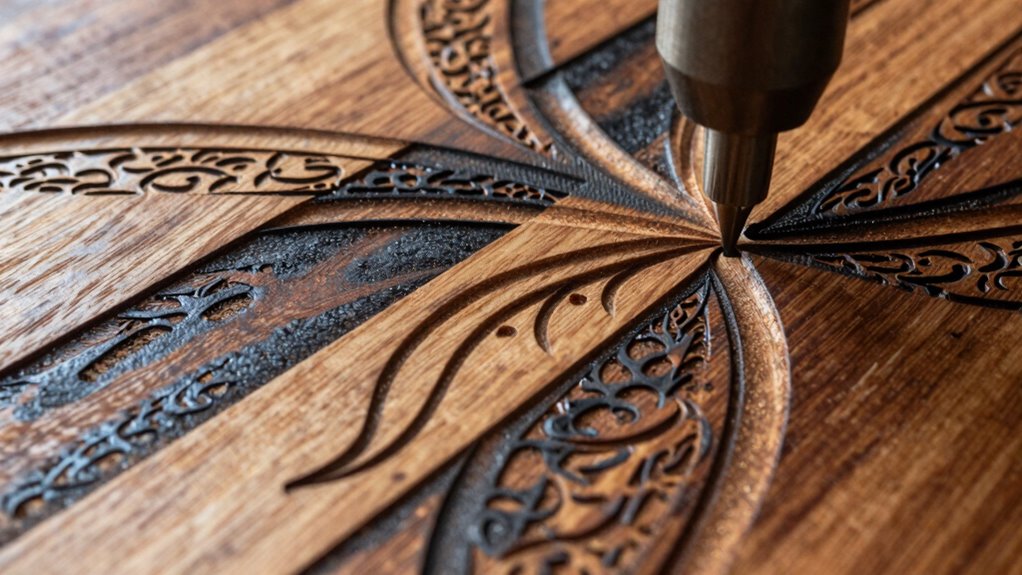
When engraving wood, choosing the right species is key. Hardwoods like maple and walnut have tight grains, which give you crisp, detailed engravings. Softer woods, such as pine and cedar, tend to burn and produce uneven textures due to their higher moisture content and lower density. By understanding these characteristics, you’ll improve your engraving outcomes considerably. Stick around to discover more tips and techniques that can elevate your laser engraving game even further.

Get business pricing on tools and workshop supplies
- Business-only prices and quantity discounts
- Tax-exempt purchasing
- Multiple users, one account, clear invoices
Key Takeaways
- Hardwoods like maple and walnut yield crisp engravings due to their tight grain structure, enhancing detail precision.
- Softer woods, such as pine, tend to burn easily, leading to rough or undesirable engraving outcomes.
- Proper moisture content is critical; drier wood ensures more uniform and clean engravings compared to freshly cut, moist wood.
- Adjusting laser settings, like power and speed, impacts the depth and clarity, affecting whether the engraving appears crisp or burnt.
- Finishing techniques, such as applying varnish, can enhance the final appearance and protect the engraving from wear.
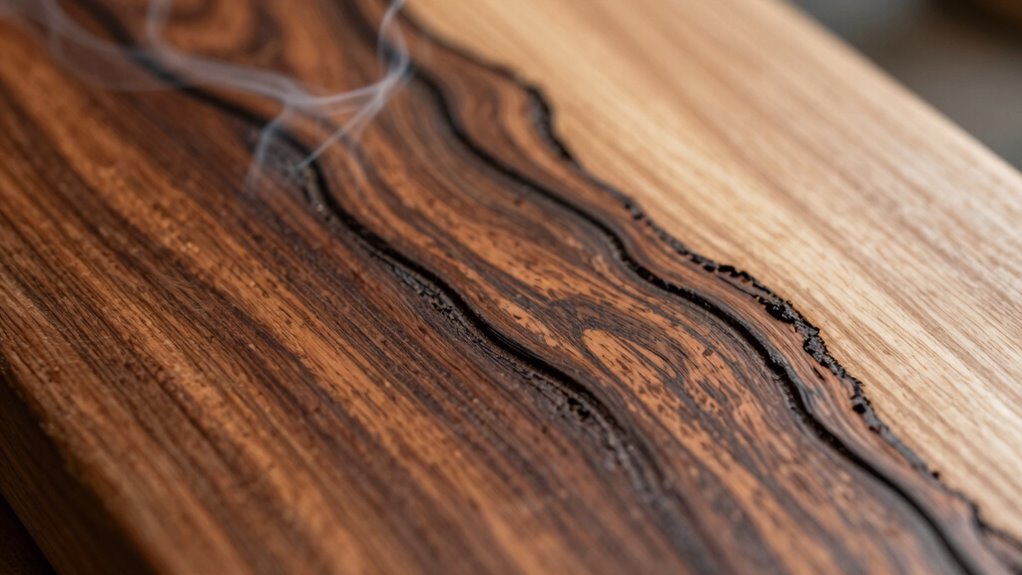
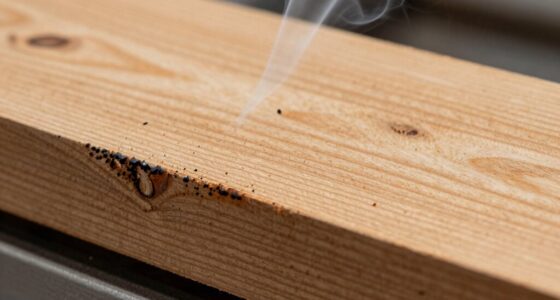
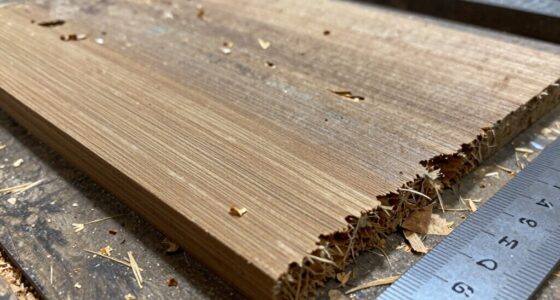
When you’re choosing wood for laser engraving, consider its density and grain. Hardwoods like maple, cherry, and walnut tend to yield cleaner engravings. Their tighter grain allows for more precise detail, giving your designs a professional finish. On the other hand, softer woods like pine or cedar often burn more easily, leading to less desirable effects. If you want those sharp lines and defined edges, you’ll want to steer clear of woods that are too soft.
The moisture content in wood also plays a crucial role in how well it engraves. Freshly cut wood retains more moisture, which can lead to uneven engraving results. Drier wood typically produces better outcomes, as it allows the laser to cut through more uniformly. So, before you start, make sure your wood is seasoned properly. This simple check can make all the difference in your final product. Ensuring the appropriate moisture level of your wood can significantly improve engraving results. Additionally, understanding the wood’s grain structure can help you anticipate how it will respond to laser engraving, leading to more consistent outcomes. Using properly prepared wood can help prevent issues like charring or uneven burns during the process.
Moisture content is key for laser engraving; drier wood ensures more uniform results and a polished finish.
In terms of engraving techniques, you’ll find that adjusting the laser’s power and speed settings can greatly impact the final look. Higher power settings can create deeper engravings, but too much power can scorch the wood, leading to undesirable burn marks. Conversely, if you lower the power and increase the speed, you may achieve a lighter engraving that maintains the wood’s natural texture. Experimenting with these settings will help you find the perfect balance for your specific wood type.
Additionally, understanding the material properties of different wood species can help you predict how they will respond to laser engraving, ensuring more consistent results. Don’t forget about the finish, either. Some woods may require a protective coat post-engraving to enhance their appearance and longevity. A clear varnish or oil can seal the engraving and bring out the natural beauty of the wood. Proper finishing techniques can also help protect your artwork from wear and environmental damage over time.
In the end, mastering laser engraving on wood is about understanding the materials and techniques at your disposal. By carefully selecting your wood and fine-tuning your engraving settings, you’ll create stunning, personalized pieces that showcase the unique characteristics of each species.
As an affiliate, we earn on qualifying purchases.
Frequently Asked Questions
What Types of Wood Are Best for Laser Engraving?
The best types of wood for laser engraving are hardwoods like maple, oak, and cherry. They offer impressive durability and clean results, enhancing the final design. Softwoods, like pine, can present challenges due to their resin content, which may cause uneven burns or splintering. When choosing, consider the wood’s grain and density; you’ll find that hardwood advantages often lead to superior engraving quality compared to softwood options.
How Does Moisture Content Affect Engraving Quality?
Moisture levels can seriously impact your engraving precision. If the wood’s too wet, it absorbs the laser energy, leading to fuzzy lines and uneven burns. On the other hand, overly dry wood might scorch or crack, ruining your design. You’ve got to find that sweet spot! Keeping moisture content balanced guarantees sharp details and clean results. So, before you start, check the wood’s moisture—your engraving quality depends on it!
Can Laser Engraving Be Done on Treated Wood?
Yes, you can laser engrave on treated wood, but treated wood compatibility varies depending on the chemicals used in the treatment. Before you start, test a small area to see how it reacts. Some engraving techniques might work better than others, so adjust your settings accordingly to avoid burning. Always guarantee proper ventilation, as treated wood can release harmful fumes during the engraving process. Happy engraving!
What Maintenance Is Needed for Laser Engraving Machines?
Maintaining your laser engraving machine is like tending a garden; a little care goes a long way. You’ll want to regularly check the laser machine calibration to guarantee precision in your work. Cleaning the lenses and mirrors keeps your engravings crisp, while adjusting the engraving speed optimization can enhance the quality. Don’t forget to inspect belts and rails for wear. With consistent upkeep, your machine will flourish and produce stunning results!
How to Remove Smoke Residue After Engraving?
To remove smoke residue after engraving, use effective smoke removal techniques like wiping with a damp microfiber cloth. You can also try residue cleaning methods such as a mix of vinegar and water for stubborn marks. For larger areas, a gentle scrub with soapy water can help. Don’t forget to dry the surface afterward to avoid streaks. Regular cleaning keeps your projects looking sharp and your machine in top shape!
As an affiliate, we earn on qualifying purchases.
Conclusion
In the world of laser engraving, wood species are like different canvases, each reacting uniquely to the heat of creativity. Some woods crisp beautifully, revealing intricate details, while others succumb to charred edges. Understanding these differences can transform your projects from mere impressions to stunning artworks. So, as you choose your materials, remember: the right wood can make your design shine, turning fleeting moments of inspiration into lasting masterpieces.
As an affiliate, we earn on qualifying purchases.
laser engraving protective varnish
As an affiliate, we earn on qualifying purchases.
As an affiliate, we earn on qualifying purchases.
Halloween Picks
halloween
As an affiliate, we earn on qualifying purchases.