Setting your cap iron correctly can drastically reduce tearout by up to 80%. Position it 1/16 to 1/32 inch from the blade to manage chip exit and shield fibers before tearout happens. If tearout occurs, adjust it closer, but be careful—too close can lead to uneven surfaces. Pay attention to wood types and grain direction, as they impact results. Mastering this setup could elevate your woodworking game, and there’s so much more you’ll want to discover.

Get business pricing on tools and workshop supplies
- Business-only prices and quantity discounts
- Tax-exempt purchasing
- Multiple users, one account, clear invoices
Key Takeaways
- Proper cap iron positioning (1/16 to 1/32 inch from the blade) significantly reduces tearout and enhances cut quality.
- Adjust the cap iron closer if tearout occurs, but avoid settings that create uneven surfaces.
- Experiment with different settings to find the optimal cap iron position for various wood types.
- Hardwoods require finer adjustments due to their challenging grain patterns and increased tearout potential.
- Understanding the relationship between the cap iron and blade is crucial for achieving smoother surfaces and cleaner cuts.
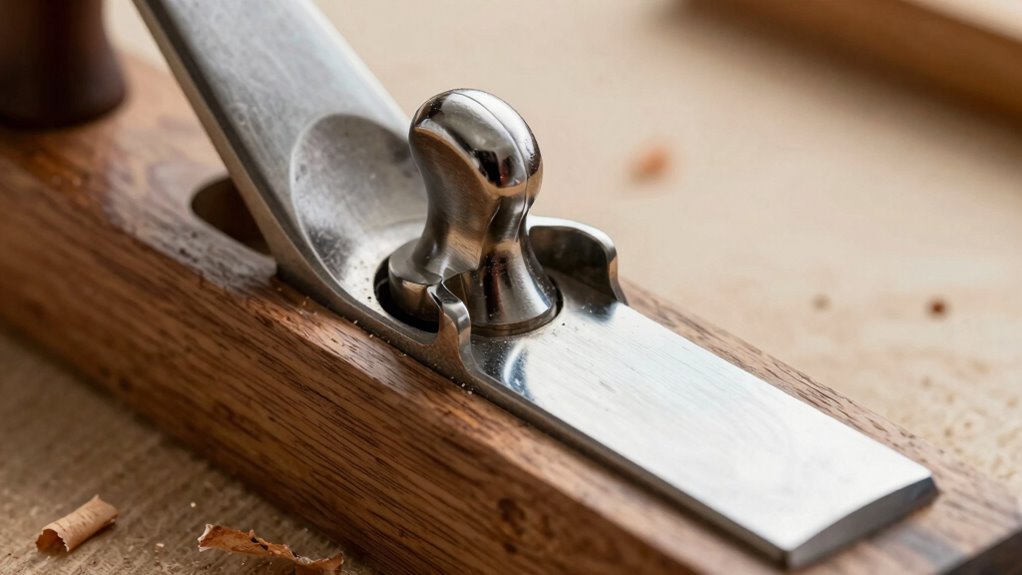
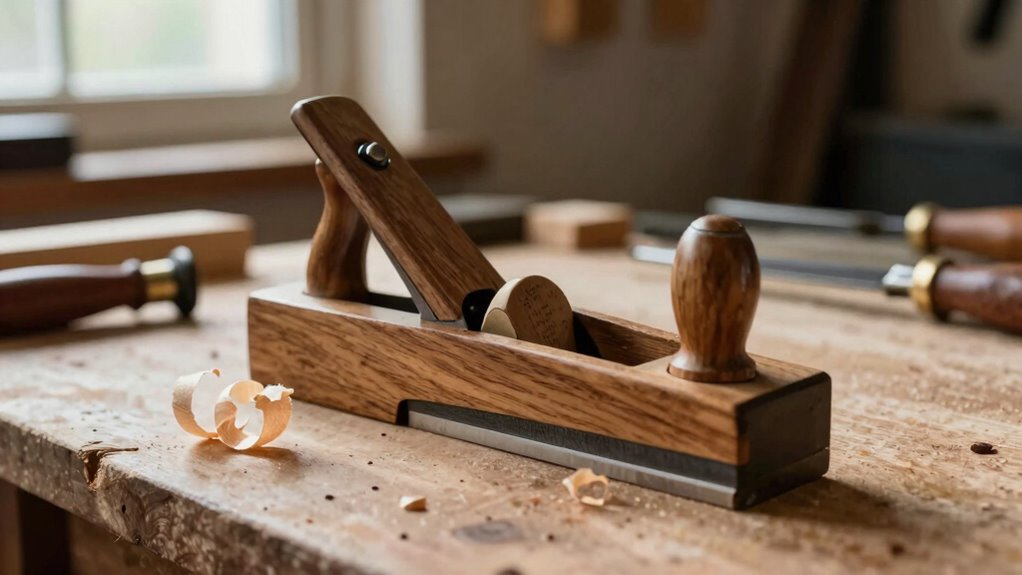
When you’re ready to tackle cap iron setup, it’s vital to understand how this component can affect your woodworking results. The cap iron, often overlooked, plays a key role in tearout prevention. By making the right cap iron adjustment, you can achieve smoother surfaces and cleaner cuts, especially on difficult grain patterns. It’s not just a piece of metal; it’s an important part of your tool that can enhance your woodworking skills remarkably.
To start, verify that you’re familiar with the relationship between the cap iron and the blade. When the cap iron is positioned correctly, it helps control the chip as it exits the blade, reducing the chances of tearout. The key is to set the cap iron close to the cutting edge of the blade—generally, about 1/16 to 1/32 of an inch away. This distance allows the cap iron to act as a shield, effectively breaking the fibers before they tear out.
Understanding the cap iron’s positioning is crucial; set it just 1/16 to 1/32 inch from the blade for optimal tearout prevention.
While adjusting the cap iron, don’t rush. Take your time to experiment with different settings. If you notice tearout occurring, try moving the cap iron closer to the blade. This adjustment can greatly improve your cut quality. Conversely, if the cap iron is too close, it might cause the plane to work harder, leading to an uneven surface. Finding that sweet spot is key to mastering your tools.
You might also want to reflect on the type of wood you’re working with. Hardwoods often present a greater challenge when it comes to tearout. In such cases, a finer cap iron adjustment can make a marked difference. You’ll find that harder woods respond better when the cap iron setup is adjusted to a more precise distance. Understanding the fiber control mechanism can further improve your results in challenging materials. Paying attention to the grain direction can also significantly impact your success with tearout prevention. Additionally, understanding the relationship between the cap iron and blade can help you fine-tune your setup for optimal results.
As an affiliate, we earn on qualifying purchases.
Frequently Asked Questions
What Is the Purpose of a Cap Iron in Woodworking?
A cap iron helps improve your woodworking by reducing tear-out when planing wood. Its design, which dates back centuries, allows you to control the chip’s exit path, minimizing splintering. You’ll notice the cap iron benefits your work, especially on figured woods where tear-out is common. By adjusting the cap iron’s position, you can achieve smoother finishes and better results, enhancing your overall craftsmanship in every project you tackle.
How Does Cap Iron Setup Affect Different Wood Types?
Your cap iron setup notably affects tearout prevention based on wood characteristics. Softer woods may tear out more easily, so adjusting your cap iron closer to the blade helps manage this. For dense hardwoods, a looser setup can be effective since they tend to resist tearout better. By experimenting with your cap iron position, you can optimize performance, ensuring cleaner cuts across various wood types and enhancing your overall woodworking results.
Can I Use a Cap Iron on Any Plane?
Yes, you can use a cap iron on most planes, but it’s particularly beneficial on smoother and jointer planes. The cap iron helps reduce tear-out, especially with tricky wood types. By making proper cap iron adjustments, you can enhance your plane’s performance considerably. It allows for finer shavings and better control, so you’ll notice improved results in your woodworking projects. Experiment with its positioning to find what works best for your specific needs.
What Maintenance Does a Cap Iron Require?
What good’s a cap iron if you don’t take care of it? For ideal performance, you should regularly clean the cap iron to remove resin and debris. A few maintenance tips include checking for any warping or damage and ensuring it fits snugly against the blade. Occasionally, apply a light coat of oil to prevent rust. By keeping up with cap iron care, you’ll enhance your plane’s effectiveness and longevity.
Are There Alternatives to Using a Cap Iron?
Yes, there are cap iron alternatives for tearout prevention. You might consider using a high-angle blade, which helps slice through the wood fibers more cleanly. Another option is a back bevel, which can reduce tearout by altering the cutting angle. Additionally, achieving a well-honed edge on your blade greatly minimizes the risk of tearout. Experimenting with different techniques can lead to better results depending on the wood type and grain direction.
As an affiliate, we earn on qualifying purchases.
Conclusion
In woodworking, you’ve got to remember that “a stitch in time saves nine.” By mastering the cap iron setup, you’re not just preventing tearout; you’re also enhancing the quality of your work. With this simple adjustment, you can achieve cleaner cuts and smoother finishes, transforming your projects from good to great. So, take a moment to fine-tune that cap iron—it’s the little things that make a big difference in the world of craftsmanship.
woodworking hand plane accessories
As an affiliate, we earn on qualifying purchases.
As an affiliate, we earn on qualifying purchases.
As an affiliate, we earn on qualifying purchases.
Fall Picks
fall essentials
As an affiliate, we earn on qualifying purchases.