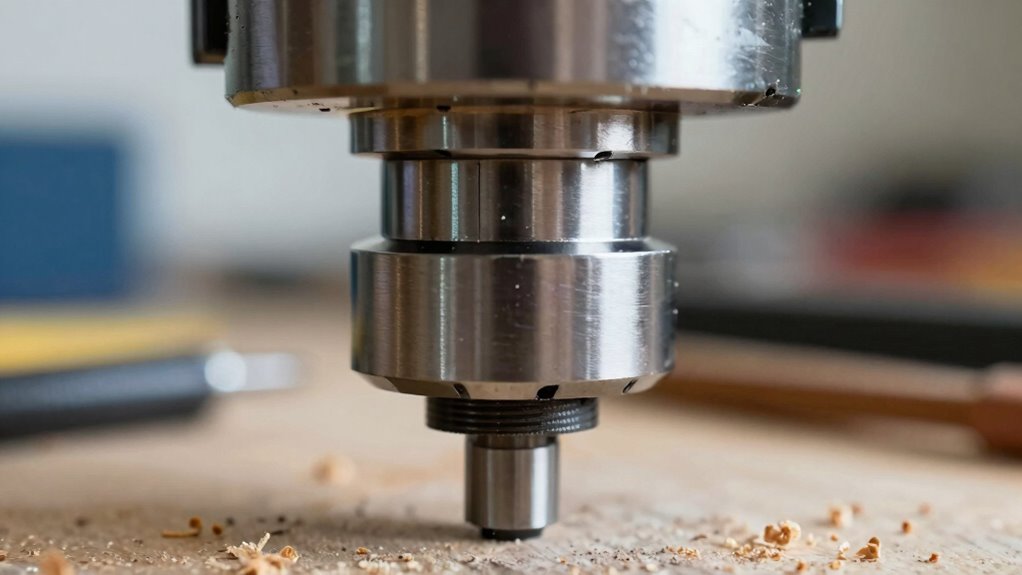

Your router collet is a small yet essential part that holds your bits securely, directly affecting safety and precision. If it’s not properly installed or made from quality material, it can cause wobbling and runout, making your cuts inaccurate and risking accidents. Using the right size and ensuring a tight fit helps keep your work safe and smooth. Keep these details in mind to get the best results—there’s more to discover if you keep exploring.
Key Takeaways
- Properly installed collets ensure secure bit holding, reducing safety risks and preventing runout during operation.
- Correct collet size minimizes wobbling and enhances cutting accuracy.
- High-quality materials, like hardened steel, improve durability and safety.
- Incompatible or poorly fitted collets increase vibration, causing unsafe cuts and tool damage.
- Following manufacturer guidelines for installation and matching collet specifications ensures optimal safety and performance.
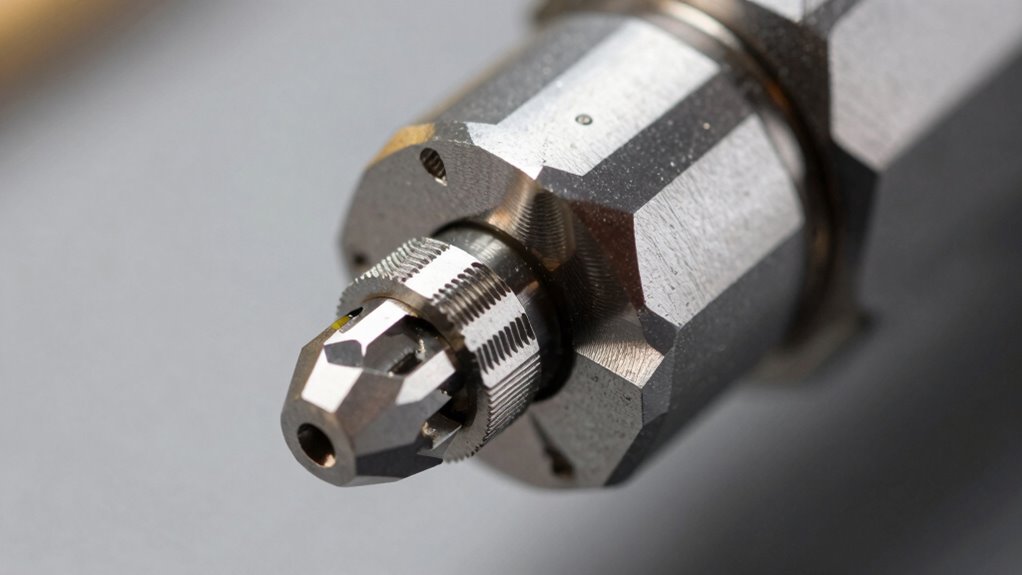
Router collets are essential components that hold your router bits securely in place during woodworking or machining tasks. Without a proper collet, your router bit can wobble, causing poor cuts, safety hazards, and increased tool wear. When choosing a collet, you need to consider material compatibility. Not all collets are made from the same materials, and using the wrong type can lead to issues like corrosion, wear, or even bit slippage. High-quality collets are typically made from hardened steel or stainless steel, which resist deformation and maintain a tight grip over time. Cheaper or incompatible materials may crack or expand under heat, reducing effectiveness. Always verify that your collet material matches the specifications of your router and the bits you’re using for safe, consistent performance. Proper installation techniques also play a vital role in ensuring your router operates smoothly. Properly installing a collet involves cleaning the spindle and the bit shank to remove debris or dust that could interfere with a secure fit. You should insert the bit straight into the collet, ensuring the shank is fully seated without forcing it. Tighten the collet nut evenly and securely, but avoid overtightening, which can damage the collet or the bit. Many routers have a specific tightening sequence or torque recommendation—following these instructions helps prevent runout and maintains precision. When installing, double-check that the bit is centered and fully seated before powering up the router. A poorly installed collet can cause vibration, inaccurate cuts, or even dangerous bit slippage during operation. Understanding runout and its impact is crucial for maintaining accuracy and safety in your woodworking projects. Additionally, selecting correct collet size ensures proper fit and minimizes wobble, leading to better results. Material compatibility and proper installation techniques go hand-in-hand to guarantee safety and precision. Using a collet that isn’t designed for your specific bit size or material can lead to runout, which is the slight wobble or deviation during rotation. This not only affects the quality of your work but also increases the risk of accidents. Properly matching the collet to the bit shank diameter is essential for optimal performance and safety. Furthermore, choosing the right collet material can significantly impact the longevity and safety of your tools and projects. Keep in mind that different router models may have specific collet standards—using an incompatible collet can compromise safety and performance. Always select the correct size and material for your bits, and follow the manufacturer’s instructions for installation. By paying attention to these details, you ensure that your router runs smoothly, safely, and accurately, giving you confidence in every cut and carve you make.
As an affiliate, we earn on qualifying purchases.
Frequently Asked Questions
How Often Should Router Collets Be Replaced?
You should replace your router collets whenever they show signs of wear, damage, or if you notice increased runout, which affects safety and precision. Regular collet maintenance helps guarantee proper collet compatibility and performance, so inspect them before each use. Typically, replace collets every 1-2 years or after 10-15 uses in demanding projects, to maintain safety, accuracy, and smooth operation.
Can Different Brands of Collets Be Used Interchangeably?
Think of collet compatibility as a dance—each partner must match to move smoothly. Different brands of collets are often not interchangeable, as they may have unique shapes or sizes. Using brand interchangeability can compromise safety and precision. To keep your router performing well, always check if a collet is compatible with your tool’s brand. Sticking to the right fit ensures a harmonious, safe, and accurate cut every time.
What Are the Signs of a Worn-Out Collet?
You’ll notice a worn-out collet if you see signs of collet corrosion or if it doesn’t grip bits tightly anymore. Check for any cracks, chips, or deformation in the collet material, which can compromise safety and runout accuracy. Additionally, if your router vibrates excessively or bits slip during use, it’s a clear sign the collet needs replacing. Regular inspection helps prevent accidents and maintains precise cuts.
How Do I Properly Install a Router Collet?
Your router collet is the heart of safe, precise cuts—don’t let it turn into a ticking time bomb. To properly install a router collet, first make certain the shank of your bit is clean and free of debris. Insert the bit straight into the collet, then tighten the collet nut securely with the right wrench. Regular collet maintenance and proper installation prevent runout and ensure your safety, so take the time to do it right.
Are There Safety Risks With Using Incompatible Collets?
Using incompatible collets can pose safety risks, as they may not hold your router bits securely, increasing the chance of slips or kicks. Always check collet compatibility before installing, confirming it matches your router and bit size. Follow safety precautions by inspecting the collet for damage and tightening it properly. Using the right collet guarantees safe operation, reduces runout, and prevents accidents during your woodworking projects.
As an affiliate, we earn on qualifying purchases.
Conclusion
Remember, a router collet is the unsung hero of your woodworking journey, quietly holding your bits with the precision of a finely tuned instrument. Neglect it, and you risk safety hazards or shaky cuts that can ruin your project. Think of your collet as the keystone of a well-arched bridge—small but essential. Keep it clean, properly tightened, and in good condition, and you’ll guarantee your work stays smooth and safe, like a well-conducted symphony.
As an affiliate, we earn on qualifying purchases.
As an affiliate, we earn on qualifying purchases.