Wedged tenons are a classic woodworking joint that combines strength and style, showcasing craftsmanship and attention to detail. You drive a tapered wedge into a slot across the tenon, creating a tight, durable lock that also looks stunning. This old-school technique not only guarantees a reliable fit but adds visual appeal, especially when the wedge is exposed. Keep exploring to learn how to perfect this timeless joint and make your projects truly stand out.

Get business pricing on tools and workshop supplies
- Business-only prices and quantity discounts
- Tax-exempt purchasing
- Multiple users, one account, clear invoices
Key Takeaways
- Wedged tenons are a traditional woodworking joint celebrated for both strength and aesthetic appeal.
- The tapered wedge locks the tenon securely, creating a durable, visually striking connection.
- Properly crafted wedges and precise measurements enhance the joint’s craftsmanship and historical authenticity.
- They offer a timeless, handcrafted look that adds character and visual interest to furniture and projects.
- Widely appreciated for their durability, repairability, and connection to ancient woodworking traditions.
As an affiliate, we earn on qualifying purchases.
What Are Wedged Tenons and Why Are They Still Useful
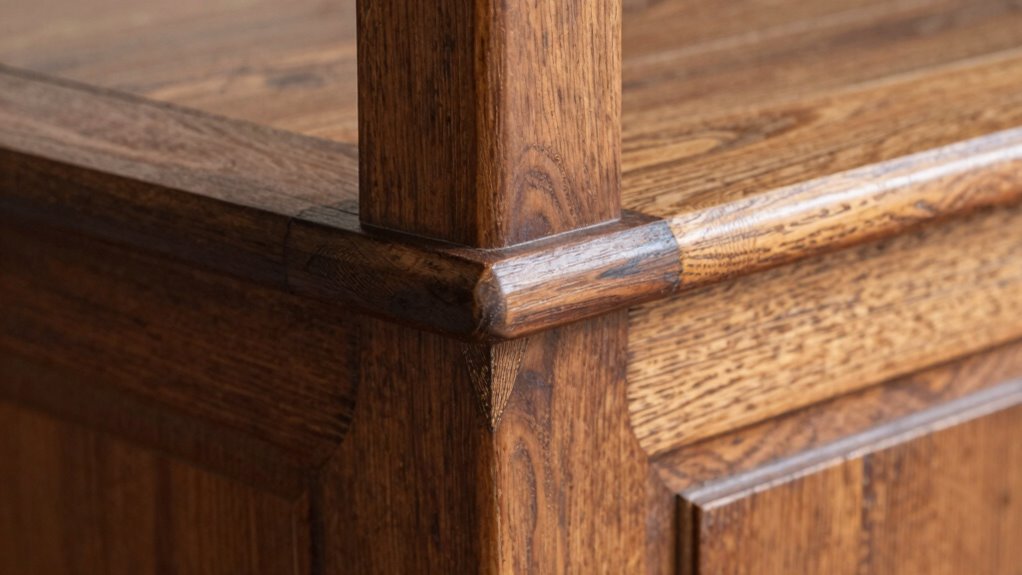
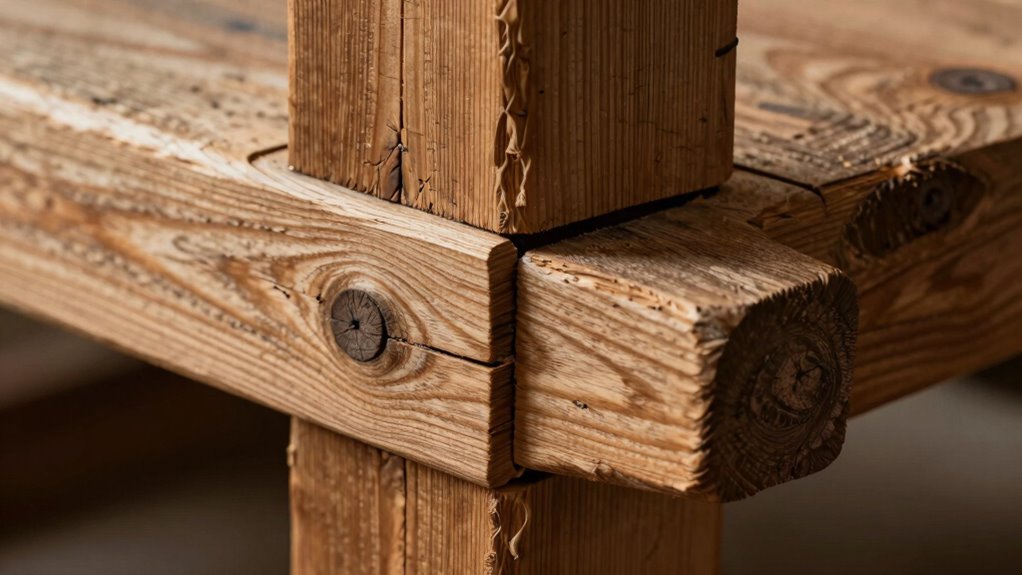
Wedged tenons are a traditional woodworking joint where a tapered piece of wood, called a wedge, is driven into a slot cut across a tenon to tighten and secure the connection. Their historical significance lies in their long-standing use in furniture and timber framing, dating back centuries. These joints demonstrate craftsmanship and durability, connecting generations of artisans. Beyond their practicality, wedged tenons offer aesthetic appeal; the visible wedge adds a crafted, authentic look that highlights traditional woodworking skills. They’re still useful today because they provide a strong, reliable connection that can be easily repaired or adjusted over time. Proper adhesive application can further enhance the joint’s strength and longevity. Whether in restoring antique furniture or creating new pieces with a classic touch, wedged tenons blend function with timeless beauty.
As an affiliate, we earn on qualifying purchases.
Parts of a Wedged Tenon and How It Fits in Traditional Joinery
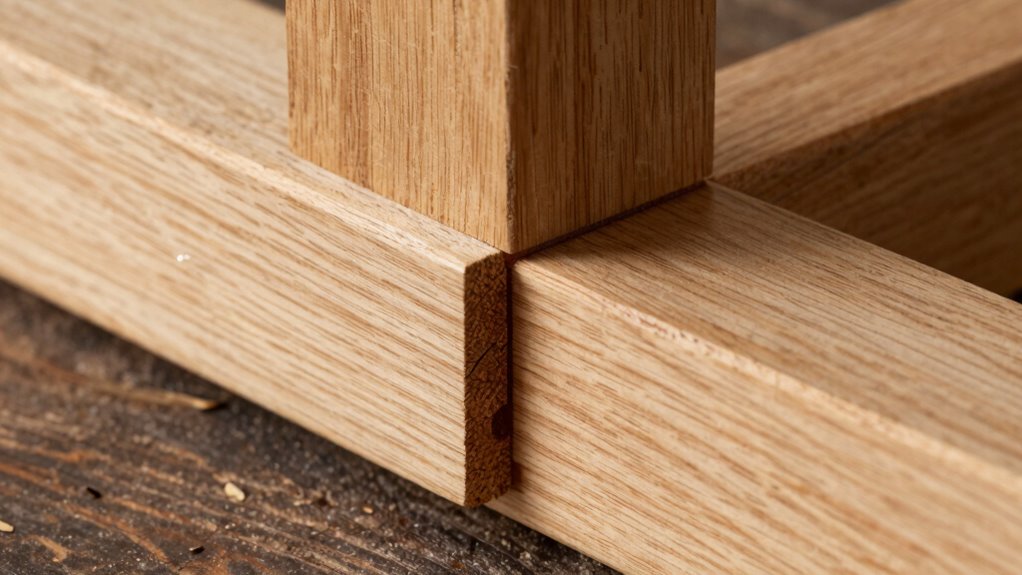
Understanding the parts of a wedged tenon helps you see how it creates strong, reliable joints. The fit between the tenon and mortise, combined with the wedge’s tension, guarantees stability. These components are essential in traditional joinery, where craftsmanship and precise mechanics matter most. Additionally, the history of pinball machines illustrates how craftsmanship and innovation have evolved in related mechanical pursuits over time.
Components of a Wedge Joint
A wedge joint relies on several key components working together to create a strong, reliable connection. The main parts include the tenon, which fits into the mortise, and the wedge, designed to expand the tenon for tight fit and stability. Historically, this assembly has significant importance in traditional woodworking, showcasing craftsmanship and ingenuity. The tenon’s shape ensures proper load transfer, while the wedge adds mechanical tension, locking the joint securely. The aesthetic appeal of this system lies in its simplicity and elegance, often leaving visible, handcrafted details that highlight skill. Each component contributes to durability and visual charm, making the wedged tenon a timeless choice in furniture and structural joinery. Additionally, the assembly process demonstrates the precision and patience characteristic of traditional woodworking techniques, further emphasizing its craftsmanship. Together, these parts embody both function and artistry in traditional woodworking.
Fit and Tension Mechanics
The fit and tension mechanics of a wedged tenon are crucial for ensuring a strong and durable joint. When properly executed, the tenon fits snugly into the mortise, creating inherent joint stability. As you drive in the wedge, it exerts inward pressure, tightening the fit and preventing any movement. This tension not only enhances joint strength but also elevates the aesthetic appeal, with clean lines and a crafted look. The wedge acts as a self-tightening mechanism, ensuring longevity even under stress. Here’s how the tension works:
| Aspect | Effect |
|---|---|
| Tight Fit | Ensures maximum joint stability |
| Wedge Pressure | Maintains consistent tension over time |
| No Gaps | Prevents wobble and enhances strength |
| Visual Appeal | Adds a handcrafted, authentic look |
| Long-lasting | Joint remains secure through years of use |
Additionally, understanding fit and tension mechanics helps in achieving precise craftsmanship and durable construction.
Role in Traditional Joinery
In traditional joinery, the wedged tenon plays an essential role by combining functional strength with craftsmanship. It’s a classic technique that has stood the test of time, relied on for its durability and visual appeal. Unlike modern manufacturing, which often emphasizes speed and uniformity, traditional joinery values hand craftsmanship and precision. The wedged tenon fits into this ethos by providing a secure, tight joint that can be easily adjusted or repaired. For DIY applications, it offers a straightforward method to create strong connections without specialized equipment. This technique showcases woodworking skill and attention to detail, making it a favorite among craftsmen who want their work to reflect tradition and quality. Additionally, understanding how contrast ratio impacts image quality can help woodworkers appreciate the importance of precision and detail in their craft. Overall, the wedged tenon remains a crucial element in preserving the integrity of classic woodworking.
traditional furniture joinery tools
As an affiliate, we earn on qualifying purchases.
As an affiliate, we earn on qualifying purchases.
How to Cut a Wedged Tenon: A Step-by-Step Guide

To cut a wedged tenon accurately, start by preparing your tools and materials. Confirm your saws, chisels, and marking gauges are sharp and ready. Begin by carefully measuring and marking the tenon dimensions on your workpiece, paying attention to the woodworking aesthetics that make traditional joints visually appealing. Use a saw to cut the shoulders and cheeks of the tenon precisely, following your marked lines. Next, carve the mortise to fit the tenon snugly, maintaining the joint’s integrity. For the wedge, cut a taper on the end of the tenon, matching the wedge’s angle. This technique holds historical significance, showcasing craftsmanship passed down through generations. Take your time to ensure each cut is clean and accurate for a tight, durable fit. Additionally, proper tool maintenance ensures your equipment performs at its best, making precise cuts easier and more reliable.
As an affiliate, we earn on qualifying purchases.
Choosing the Best Wood and Wedge Materials for Durability
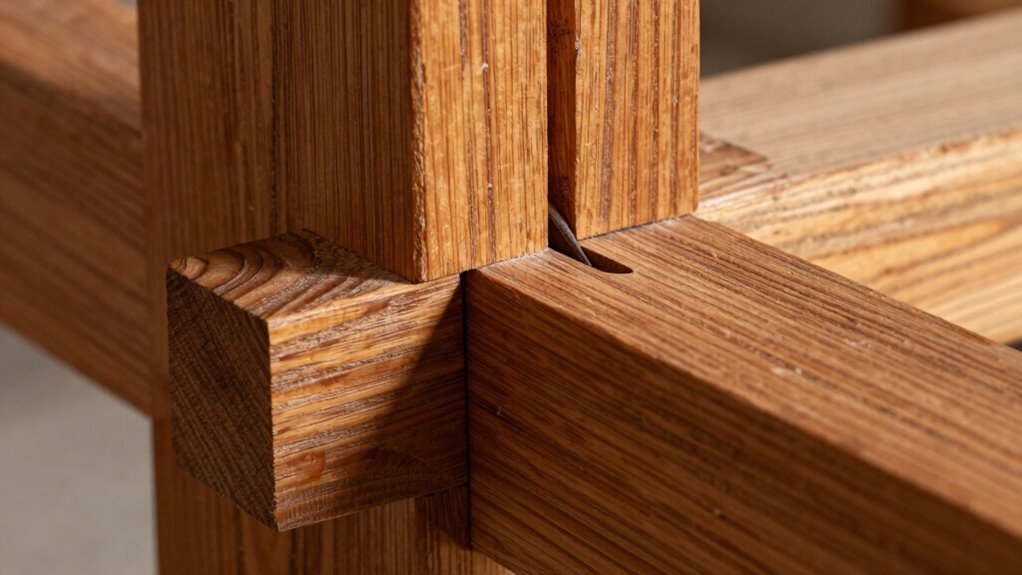
Choosing the right wood and wedge materials is essential for ensuring your wedged tenon joint remains strong and durable over time. For wood selection, opt for hardwoods like oak, maple, or hickory, which resist compression and hold the wedge securely. Softwoods can work but may compress or wear more quickly, reducing joint stability. When selecting wedge materials, consider hardwood wedges for longevity and better grip, or durable composites if you prefer a consistent, stable fit. Avoid soft or overly brittle materials that may crack or crumble under stress. Properly chosen wood and wedge materials create a tight, lasting joint that withstands seasonal movement and load. Additionally, selecting appropriate materials that complement your living space contributes to both the durability and aesthetic appeal of your woodworking projects. This careful selection process guarantees your wedged tenon will perform reliably and look incredible for years to come.
Common Mistakes When Making Wedged Tenons and How to Avoid Them

Making wedged tenons can be straightforward, but common mistakes can compromise the joint’s strength and appearance. One frequent error is not accounting for wood movement; wood expands and contracts with humidity changes, which can loosen the wedge over time. To prevent this, choose stable woods and design the joint to allow for movement. Another mistake is neglecting proper tool sharpening. Dull tools lead to uneven cuts, making the tenon fit poorly and risking splitting when driving in the wedge. Always keep your chisels and saws sharp for clean, precise cuts. Additionally, rushing the process or measuring inaccurately can result in a loose or tight fit, weakening the joint. Take your time, double-check measurements, and maintain sharp tools to guarantee a durable, attractive wedged tenon. Proper understanding of wood properties can significantly improve the quality of your craftsmanship and help avoid these common pitfalls.
Comparing Wedged Tenons to Other Joinery Methods
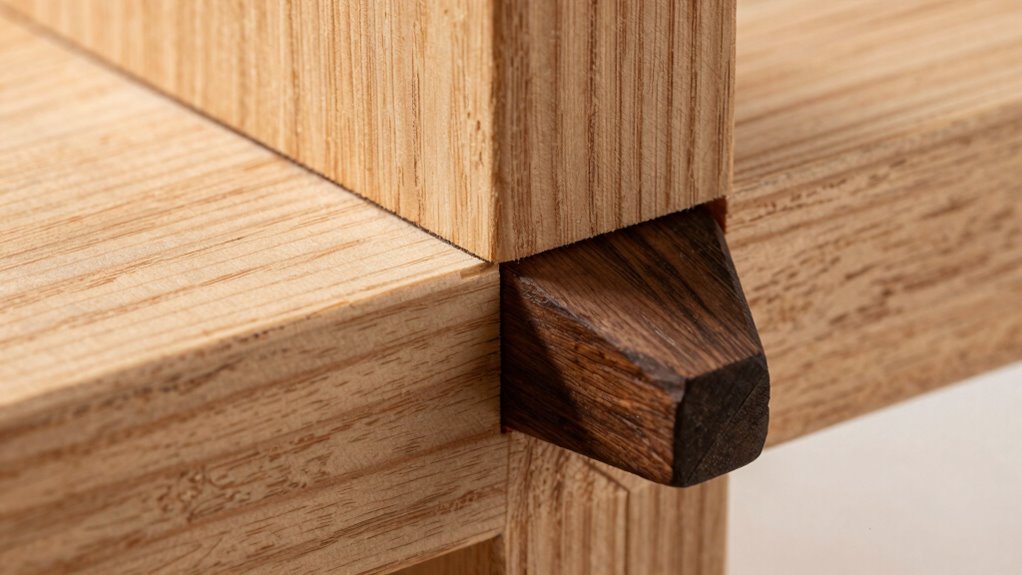
Wedged tenons stand out among joinery methods for their strength and traditional appeal, but they aren’t always the best choice depending on your project. Compared to modern options like pocket screws or metal fasteners, wedged tenons offer a timeless aesthetic appeal rooted in historical significance. They provide a durable, mechanically sound connection that ages beautifully, adding character to furniture or framing. While techniques like dowels or biscuits are quicker and easier, they often lack the visual and structural integrity of wedged tenons. If you value craftsmanship with a story—something that reflects old-world woodworking—wedged tenons give you that authenticity. Additionally, choosing this method aligns with European craftsmanship principles that emphasize durability and aesthetic integrity. However, if speed or concealment is your priority, other methods might suit your project better.
Tips for Achieving a Tight, Invisible Fit With Wedged Tenons
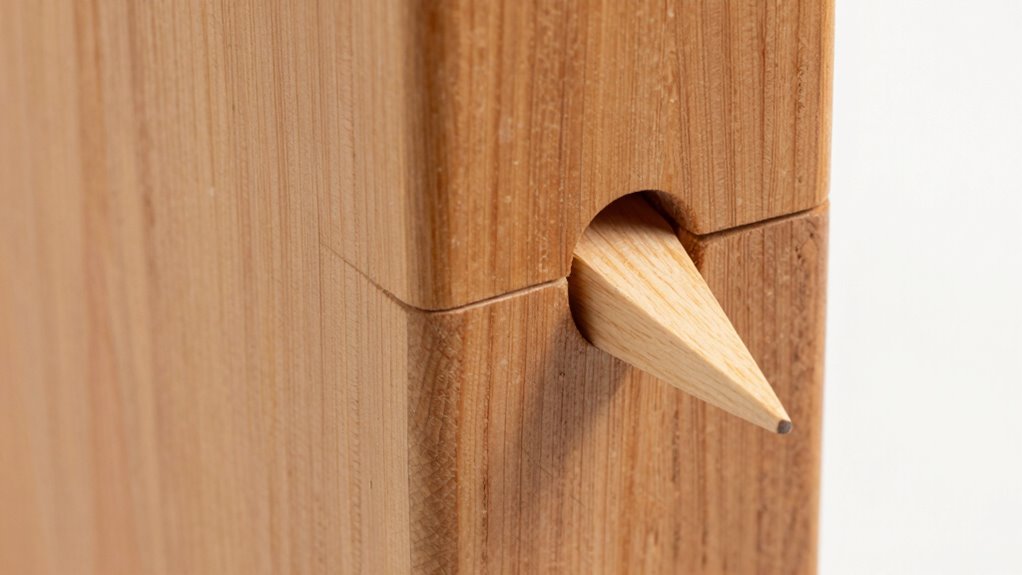
To get a tight, unseen fit with wedged tenons, focus on making precise mortise dimensions that match your tenon. Proper wedge tapering guarantees the joint stays secure without gaps, while consistent assembly techniques help you avoid misalignment. Paying attention to these points will make your joinery both strong and visually seamless. Additionally, understanding the science behind wedge tapering can help you achieve more consistent and durable results.
Precise Mortise Dimensions
Achieving a tight, invisible fit with wedged tenons starts with cutting the mortise to precise dimensions. You need to account for dovetail differences, which can affect how snug the tenon fits into the mortise. Precision ensures the joint remains strong without forcing it, preventing damage or gaps. Laminate considerations also come into play if you’re working with layered or veneered surfaces; you must avoid excessive removal that could weaken the laminate or cause splitting. Use sharp chisels and precise marking tools to carefully define the mortise boundaries. Check fit frequently as you remove material, ensuring the mortise is just wide and deep enough for the tenon. Properly dimensioned mortises create a clean, tight fit that makes wedged tenons both strong and visually seamless.
Proper Wedge Tapering
Proper wedge tapering is essential for creating a secure, nearly invisible joint with your wedged tenon. The right taper guarantees the wedge drives tightly, enhancing joint strength and improving joint aesthetics. To achieve this, start with a consistent angle that matches the desired fit—usually around 3 to 5 degrees. Use a sharp chisel or tapering jig for precision, and check often as you work. Remember, uneven tapering can cause gaps or looseness, ruining the clean look.
- Keep your taper symmetrical for even pressure distribution
- Use a tapering gauge or template for consistency
- Test fit frequently to avoid over-tapering
- Maintain a steady hand for smooth, clean cuts
- Focus on a gradual, controlled slope for the best aesthetic results
Consistent Assembly Techniques
Ensuring a tight, invisible fit with wedged tenons relies on consistent assembly techniques. Throughout joinery history, craftsmen developed methods for precision, and modern adaptations have refined these practices further. To achieve consistent results, always double-check your measurements and mark your mortise and tenon cuts carefully. Practice uniform wedge tapering to ensure each wedge seats smoothly without gaps. When assembling, tap the tenon gently but firmly, verifying that the shoulder fits flush and the wedge seats evenly. Using the same technique for each joint builds muscle memory, leading to reliable, tight fits. By maintaining consistency in your approach, you’ll create joints that are strong, seamless, and visually appealing—just like the timeless craftsmanship of joinery history, but with modern precision.
Creative Ways to Use Wedged Tenons for Visual Impact
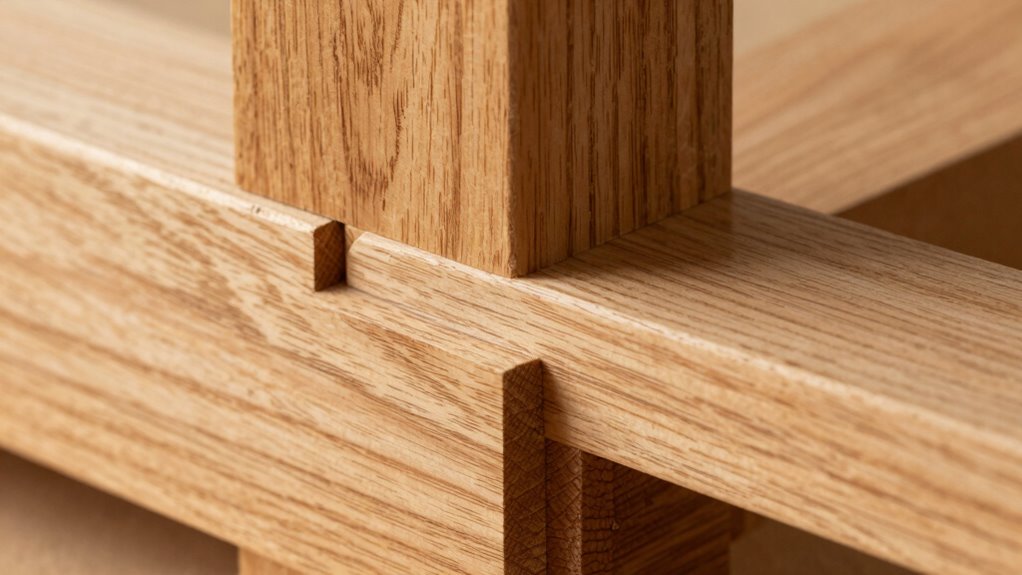
Wedged tenons offer more than just structural stability; they also open up creative possibilities for enhancing visual appeal. Their historical significance and cultural symbolism can be highlighted through design choices, making your projects stand out. You can leave the wedges exposed to showcase craftsmanship or use contrasting woods for a striking look. Incorporate decorative carvings around the tenons for added cultural symbolism, or create patterns with multiple wedges for a unique aesthetic. Playing with scale can emphasize the tenons as focal points, drawing attention to their craftsmanship. By thoughtfully integrating these techniques, you not only honor traditional woodworking but also transform functional joints into visual statements.
- Expose wedges for a rustic, handcrafted feel
- Use contrasting woods for a bold visual impact
- Add carvings that reflect cultural symbolism
- Create repeating wedge patterns for rhythm
- Scale the tenons for dramatic effect
Why Wedged Tenons Are a Timeless Choice for Craftsmanship
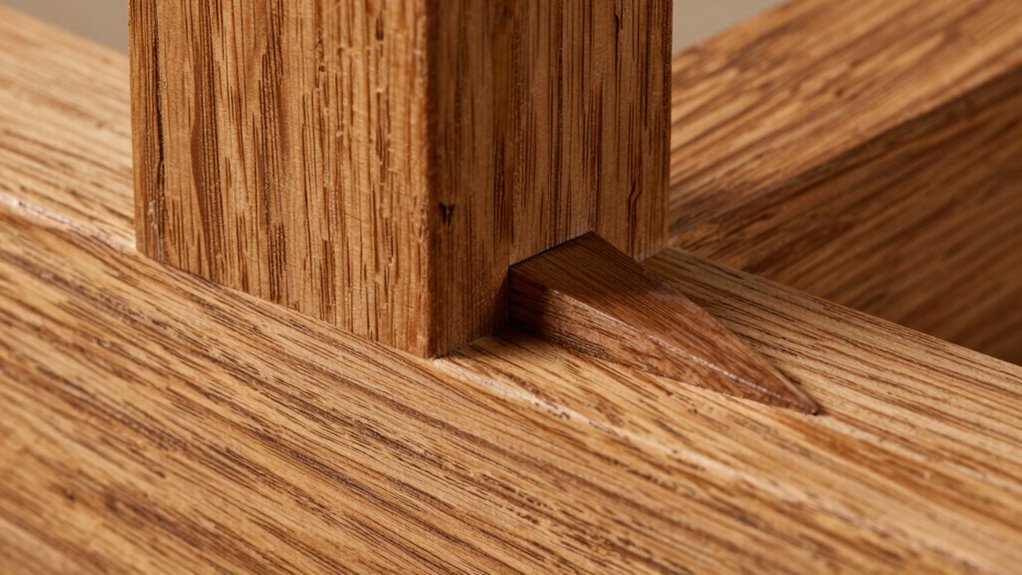
Because of their enduring strength and aesthetic appeal, wedged tenons have remained a favorite among artisans for centuries. Their historical significance lies in their proven durability, dating back to ancient woodworking traditions. These joints symbolize craftsmanship mastery and attention to detail, often representing a commitment to quality that transcends time. Culturally, wedged tenons have been associated with heritage and tradition, reflecting a deep respect for artisanal techniques. Their ability to securely join wood while adding visual interest makes them a timeless choice. Using wedged tenons connects you to a long legacy of skilled craftsmanship, emphasizing both form and function. This combination of history and symbolism ensures they remain relevant and admired in modern woodworking, making them a smart and meaningful choice for any project.
Frequently Asked Questions
How Long Does It Take to Master Making Wedged Tenons?
Mastering the making of wedged tenons takes about several months to a year, depending on your timing proficiency and dedication to skill development. You’ll want to practice consistently, focusing on precise cuts and fitting. As you gain experience, your speed and accuracy improve naturally. Keep working at it, and you’ll soon develop the expertise needed to create strong, beautiful wedged tenons that look incredible.
Can Wedged Tenons Be Used in Modern Furniture Design?
Yes, wedged tenons can definitely be used in modern furniture design. Their historical applications highlight their durability and classic aesthetic appeal, adding a timeless touch to contemporary pieces. You can incorporate wedged tenons to create a blend of traditional craftsmanship and modern style, making your furniture stand out. Plus, their unique look offers a handcrafted feel that enhances the overall aesthetic, giving your designs a distinctive, authentic charm.
Are There Alternative Tools Recommended for Cutting Wedged Tenons?
Imagine you’re in a woodworking time machine—you’ll find that alternative tools like chisels, saws, and drills are perfect for cutting wedged tenons. Modern cutting techniques, such as using a dovetail or tenon saw, can make your work precise and efficient. These tools help you achieve clean joints without needing specialized equipment, giving your furniture a classic look with a touch of modern convenience.
How Do Environmental Factors Affect the Longevity of Wedged Tenons?
Environmental factors critically impact the longevity of wedged tenons. Moisture impact causes wood expansion and contraction, which can loosen the fit over time, especially in fluctuating humidity. To guarantee durability, you should control moisture levels in your workspace and use properly seasoned wood. Sealing the joints and applying finish protect against moisture, reducing wood movement and helping your wedged tenons stay tight and secure for years.
What Are the Best Practices for Repairing Damaged Wedged Tenons?
Think of repairing damaged wedged tenons like restoring a vintage guitar—delicate but rewarding. First, carefully remove the broken tenon using precise wood repair tools. Then, clean the mortise and fit a new tenon, ensuring tightness for stability. Use wood glue and clamps during tenon restoration. This method preserves the original look while strengthening the joint, making your piece both beautiful and durable.
Conclusion
Wedged tenons are the silent craftsmen of woodworking, holding tradition and beauty together like a sturdy handshake. By mastering their technique, you’re not just building furniture—you’re forging a piece of history with your own hands. As you carve and wedge, remember that this old-school method is a timeless thread woven into the fabric of craftsmanship. Embrace it, and let your work stand as a proof to skill that endures beyond trends.
Fall yard work Picks
leaf blowers
As an affiliate, we earn on qualifying purchases.