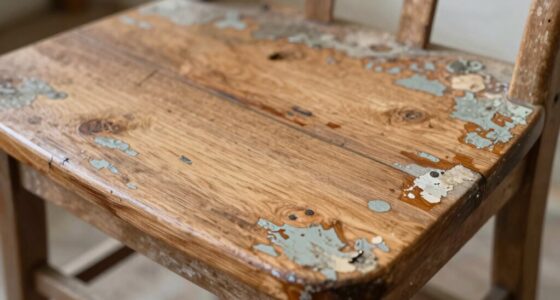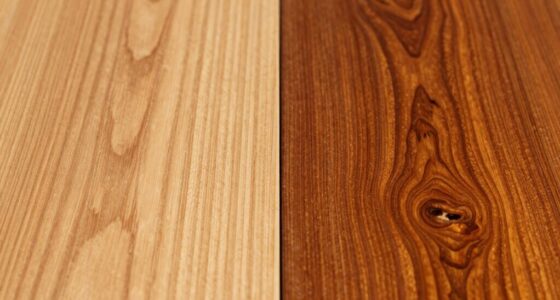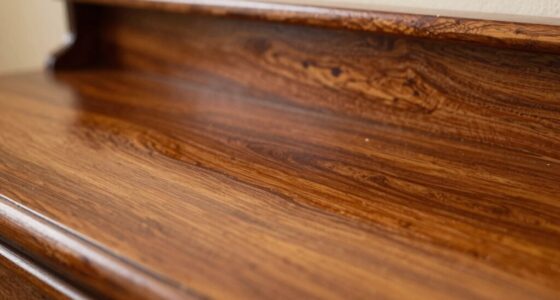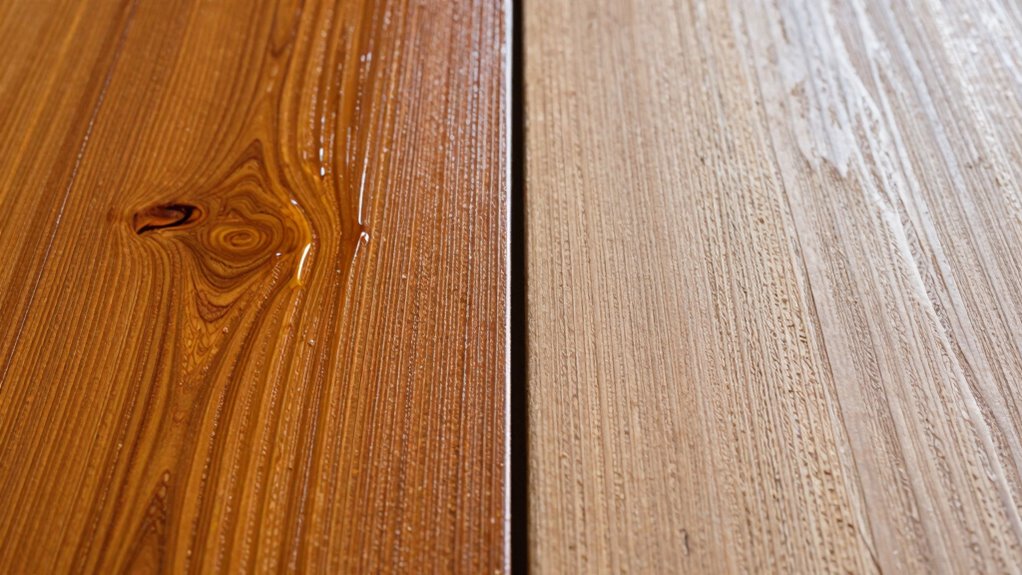

An oil finish soaks into wood fibers, enhancing its natural grain, vibrant color, and texture without creating a waterproof barrier. It deepens hues and highlights patterns, giving your piece a lively, rich look. While it offers some protection against moisture and stains, it isn’t fully waterproof or stain-proof. To optimize your results and understand which oil suits your project, keep exploring how different oils behave and are best applied.

Get business pricing on tools and workshop supplies
- Business-only prices and quantity discounts
- Tax-exempt purchasing
- Multiple users, one account, clear invoices
Key Takeaways
- Oil penetrates deeply into wood fibers, highlighting natural grain patterns and enhancing color vibrancy.
- It creates a subtle, natural-looking finish with a matte to semi-gloss sheen, emphasizing wood’s authentic personality.
- Oil finishes help protect against moisture, stains, and minor scratches but are not fully waterproof.
- They improve surface resistance and ease of maintenance but require reapplication for sustained protection.
- Common misconceptions include thinking oil finishes are fully waterproof or that they require frequent, messy reapplications.
As an affiliate, we earn on qualifying purchases.
What Does an Oil Finish Do to Wood?
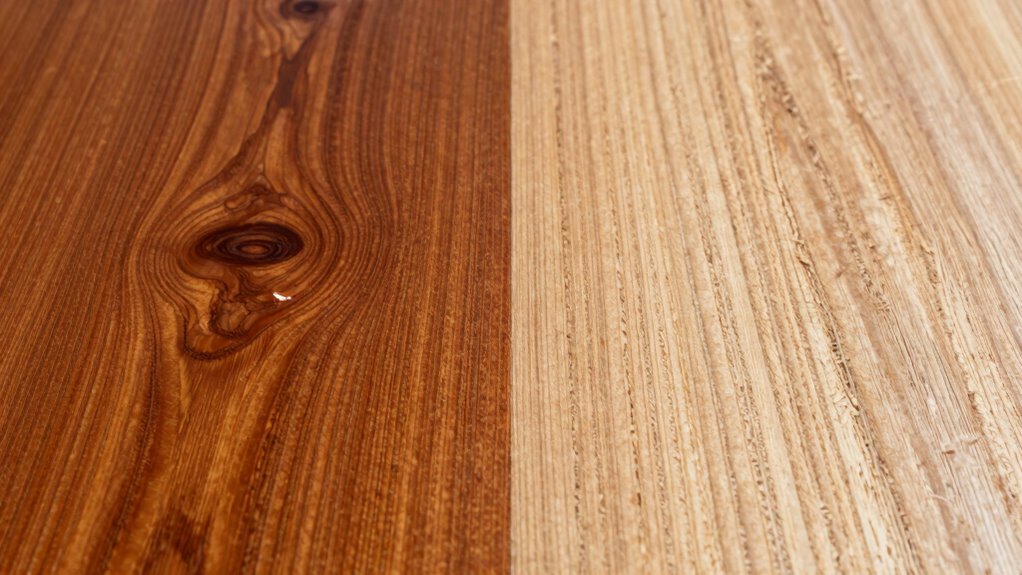
Ever wonder what an oil finish actually does to wood? When you apply oil, it penetrates deeply into the wood fibers, highlighting the natural beauty of the grain. This process enhances the wood grain, making patterns more vivid and noticeable. Additionally, oil finishes improve the surface sheen, giving your piece a subtle luster that can range from matte to semi-gloss, depending on the product used. Unlike surface coatings that sit on top, oil soaks in, providing a more natural look and feel. It also offers some protection against moisture and stains, helping your wood stay beautiful longer. To achieve the best results, proper application techniques are essential and drying time should be carefully observed. Overall, applying oil brings out the character of your wood while adding a warm, inviting finish that’s both functional and aesthetically pleasing.
As an affiliate, we earn on qualifying purchases.
Which Types of Wood Oils Are Best for Your Project?
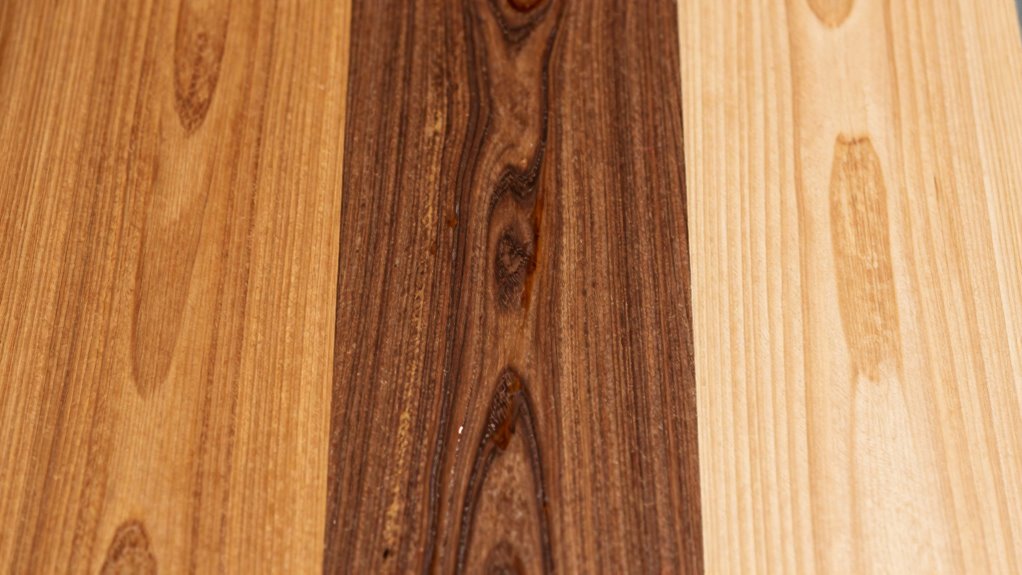
Choosing the right wood oil depends on your project’s specific needs and desired finish. Different oil types highlight the wood grain differently and offer varying levels of protection. For example, tung oil penetrates deeply, enhancing natural patterns, while linseed oil provides a warm glow. Consider the durability you need—some oils, like Danish oil, add a satin finish and are easy to apply, whereas mineral oil is best for cutting boards. Here’s a quick comparison:
| Oil Type | Best For | Finish Effect |
|---|---|---|
| Tung Oil | Fine furniture, kitchenware | Deep, rich look |
| Linseed Oil | Indoor furniture, décor | Warm, amber tone |
| Danish Oil | High-traffic furniture | Satin, protective |
| Mineral Oil | Cutting boards, utensils | Non-yellowing |
| Teak Oil | Outdoor furniture, decks | Water-resistant |
Pick the oil that aligns with your wood grain goals and project durability. Additionally, understanding the oil’s protective properties can help you select the most suitable option for outdoor or high-moisture environments.
As an affiliate, we earn on qualifying purchases.
How Oil Finishes Enhance Wood’s Natural Color and Grain
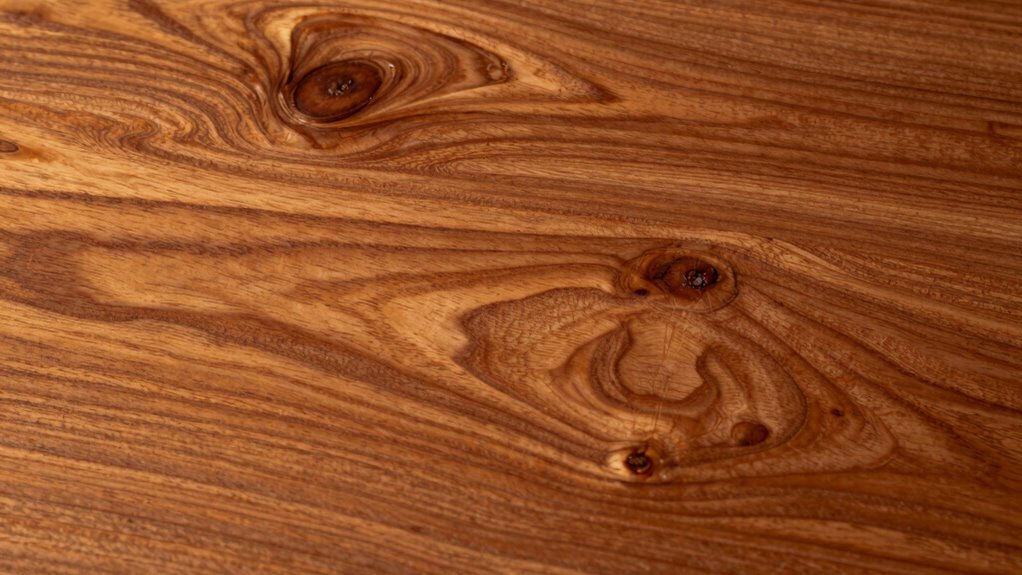
Oil finishes bring out the natural beauty of wood by penetrating the surface and highlighting its unique color and grain patterns. As the oil soaks in, it enhances the wood grain enhancement, making the intricate lines and textures more vivid. This process also results in color deepening, enriching the wood’s natural hues and giving it a warmer, more vibrant appearance. Unlike surface coatings, oils seep into the wood, emphasizing its inherent character without creating a glossy layer. This subtle enhancement allows the wood’s natural variations and beauty to shine through. By applying oil, you not only protect the wood but also bring out its authentic personality, making your project look more lively, rich, and visually appealing. Additionally, choosing the right application method ensures a smooth and even finish that maximizes the oil’s benefits.
As an affiliate, we earn on qualifying purchases.
Does an Oil Finish Protect Wood From Damage?
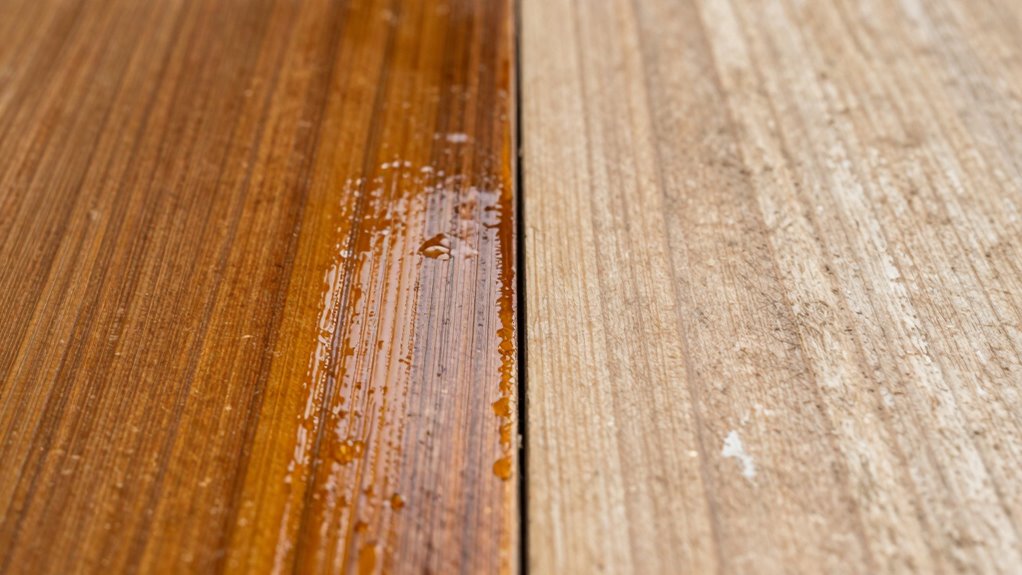
An oil finish can help prevent moisture from seeping into your wood, reducing the risk of warping or cracking. It also creates a surface that resists stains, making cleanup easier. However, it’s important to understand how well it protects against damage to keep your wood looking its best. For optimal results, understanding quality assurance practices can ensure your wood treatment maintains its protective properties over time.
Absorption of Moisture
Even though oil finishes can help protect wood, they don’t create a completely waterproof barrier. Instead, they influence wood absorption and moisture regulation. Oil penetrates the wood’s surface, filling pores and reducing how much water the wood can soak up. This slows moisture transfer, helping prevent rapid swelling or shrinking caused by humidity changes. Additionally, the effectiveness of oil depends on proper application and maintenance, which can extend the protective benefits. However, oil doesn’t make the wood completely resistant to moisture; water can still seep in if exposed over time. Proper application and maintenance are key to maximizing this benefit. You’ll notice that with an oil finish, your wood can better handle moisture fluctuations, but it’s not immune to water damage. For long-term protection, combining oil with other treatments or finishes might be necessary.
Surface Resistance to Stains
While oil finishes help regulate moisture absorption, they also influence how well your wood resists stains and damage from spills. An oil finish enhances the wood grain and smooths surface texture, but it doesn’t create a hard barrier like varnish. Instead, it penetrates deeply, offering some resistance to stains, yet spills can still seep in if left uncleaned. The surface texture affects stain resistance—smoother finishes are easier to wipe clean, while rougher textures trap liquids. Consider this table for clarity:
| Surface Texture | Stain Resistance |
|---|---|
| Smooth | Better; easier to clean and wipe spills |
| Rough | Lower; stains can penetrate more easily |
| Fine Wood Grain | More resistant; less porous |
| Coarse Wood Grain | Less resistant; more absorption potential |
An oil finish improves resistance but isn’t fully stain-proof. Understanding how surface texture impacts stain resistance can help you choose and maintain your wood surfaces more effectively.
Can Oil Finish Make Wood Waterproof or Stain-Resistant?

Oil finishes can enhance wood’s water resistance, but they don’t make it completely waterproof. They also help repel stains, making spills easier to clean up. Still, understanding their limitations helps you choose the right finish for your needs. Additionally, proper application and maintenance are crucial for maximizing their protective qualities Free Floating.
Oil’s Water Resistance Role
Oil finishes can substantially enhance wood’s resistance to water penetration, but they don’t make wood completely waterproof. The key is in how oil penetrates the wood, creating a barrier that slows moisture absorption. This helps prevent swelling, warping, and rot over time. However, oil’s water resistance isn’t absolute; heavy or prolonged exposure can still cause issues. To maximize water resistance, ensure proper application and multiple coats. Remember, oil also promotes woodgrain enhancement, highlighting natural beauty. Keep in mind these points:
- Oil’s penetration forms a partial water barrier
- It doesn’t seal all pores fully
- Regular maintenance improves longevity
- It reduces but doesn’t eliminate water damage
- Proper application is essential for best results
- Using high-quality oils designed for exterior use can significantly improve water resistance and durability.
Oil’s Stain-Repellent Capabilities
Oil finishes can help protect wood from stains, but they don’t make the surface completely stain-proof or waterproof. They create a barrier that repels some liquids and minimizes penetration, aiding in wood grain enhancement. However, their oil finish durability varies based on application and exposure. Additionally, the color accuracy of the finish can influence how natural or vibrant the wood appears over time.
Here’s a quick comparison:
| Feature | Effectiveness | Limitations |
|---|---|---|
| Stain resistance | Provides some protection | Not fully stain-proof |
| Waterproofing | Offers limited water resistance | Not suitable for prolonged exposure |
| Durability | Can last years with proper maintenance | Needs reapplication over time |
While oils improve look and resilience, they aren’t a substitute for more advanced sealers for complete waterproofing.
Debunking Common Myths About Oil Finishes
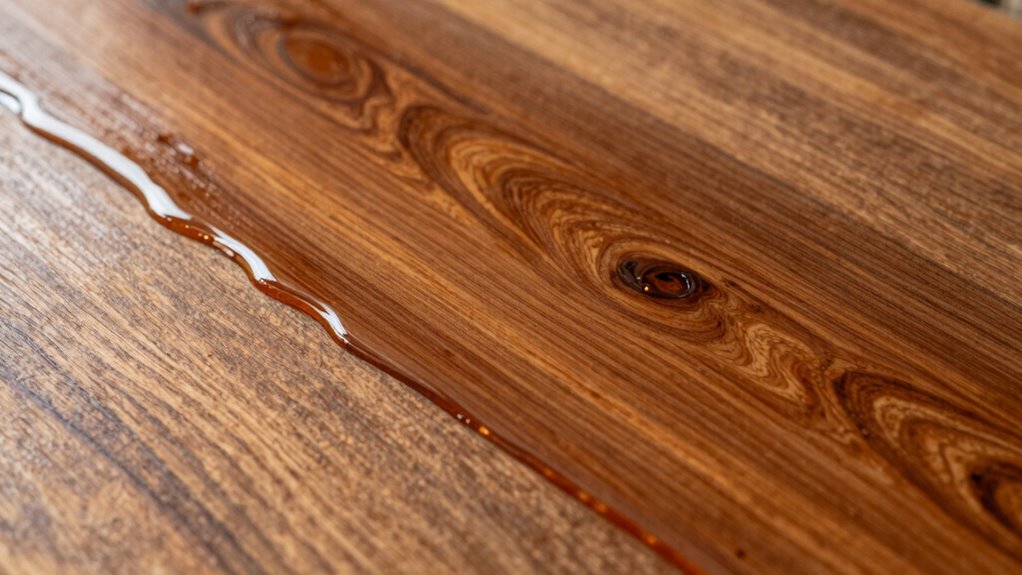
Many people believe that oil finishes are always messy, difficult to apply, or easily damaged, but these myths often oversimplify the truth. In reality, oil finishes enhance wood grain patterns and provide a natural look when you use proper oil application techniques. The truth is, with the right approach, oil finishes are straightforward and durable. Common misconceptions include that they’re prone to scratches, require frequent reapplication, or are hard to control during application. To debunk these myths, remember:
- Oil, when applied correctly, penetrates deeply without buildup
- Proper technique minimizes mess and unevenness
- Durability depends on correct maintenance, not oil type
- They don’t obscure wood grain patterns if applied properly
- Regular upkeep extends finish life and appearance
- Proper application techniques are key to achieving a smooth, even, and lasting finish.
Understanding these facts helps you avoid unnecessary worries and achieve beautiful results.
How to Apply Oil Finish for a Smooth, Even Coat
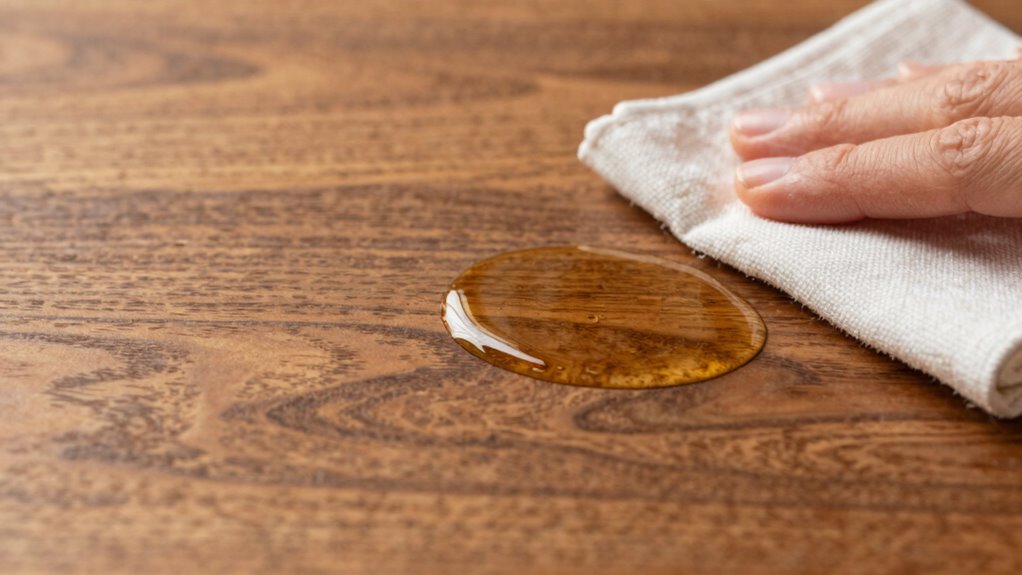
Applying an oil finish smoothly and evenly starts with proper surface preparation. Ensure your wood is clean, sanded, and free of dust to achieve a uniform application. Using a clean cloth or brush, apply the oil in thin, even coats, working along the grain. Wipe away excess oil after a few minutes to prevent uneven patches or a sticky surface. For a richer look, you can apply additional coats, allowing proper drying time between layers. Keep in mind that even application enhances the wood stain’s appearance and helps improve finish durability. Consistency is key—avoid heavy-handed strokes or pooling of oil in spots. With patience and proper technique, your wood will develop a smooth, even finish that highlights its natural beauty and resists wear over time.
Is an Oil Finish Suitable for Your Woodworking Needs?

Considering an oil finish could be a great choice if you want to highlight your wood’s natural beauty and achieve a smooth, durable surface. It’s especially suitable for projects where ease of application and maintenance matter. Think about your specific needs to determine if an oil finish aligns with your woodworking goals.
Oil Finish Benefits
An oil finish offers several advantages that make it a popular choice for woodworkers. It enhances the natural beauty of your wood grain, revealing rich colors and intricate patterns. Plus, it’s easy to apply and maintain, making it ideal for both beginners and experienced artisans. The drying time is relatively quick, allowing you to complete projects faster. With proper application, oil finishes provide a durable, protective layer that resists moisture and wear. Additionally, they’re non-toxic and environmentally friendly, perfect for indoor furniture. Here are some key benefits:
- Enhances wood grain and color
- Easy to apply and reapply
- Quick drying time
- Penetrates deeply for protection
- Non-toxic and eco-friendly
Suitability for Projects
Oil finishes are highly versatile and work well on many types of wood, making them a popular choice for various projects. They enhance the wood grain’s natural beauty, giving your project a warm, rich appearance. However, consider the drying time, which can range from a few hours to several days depending on the oil and environmental conditions. If you need a quick turnaround, oils may not be ideal because multiple coats and sufficient drying are necessary for durability. Oil finishes are suitable for furniture, cutting boards, and decorative items, especially when you want a natural look and feel. They’re less effective for high-traffic or water-exposed surfaces unless properly maintained. Assess your project’s requirements and environment before choosing an oil finish.
Key Factors to Consider When Choosing an Oil Finish

When choosing an oil finish for your wood project, it’s essential to evaluate several key factors to guarantee the best results. Consider how the oil affects the wood grain’s appearance and the overall finish durability. To make an informed decision, keep these points in mind:
- Compatibility with your wood type
- Penetration and drying time
- Ease of application
- Resistance to wear and moisture
- Desired look and sheen
A good oil enhances the natural wood grain while providing a protective layer. Prioritize options that offer the right balance of aesthetic appeal and durability for your project’s environment. Remember, the right oil not only beautifies your wood but also assures its longevity over time.
Tips for Maintaining and Rejuvenating Oil-Finished Surfaces
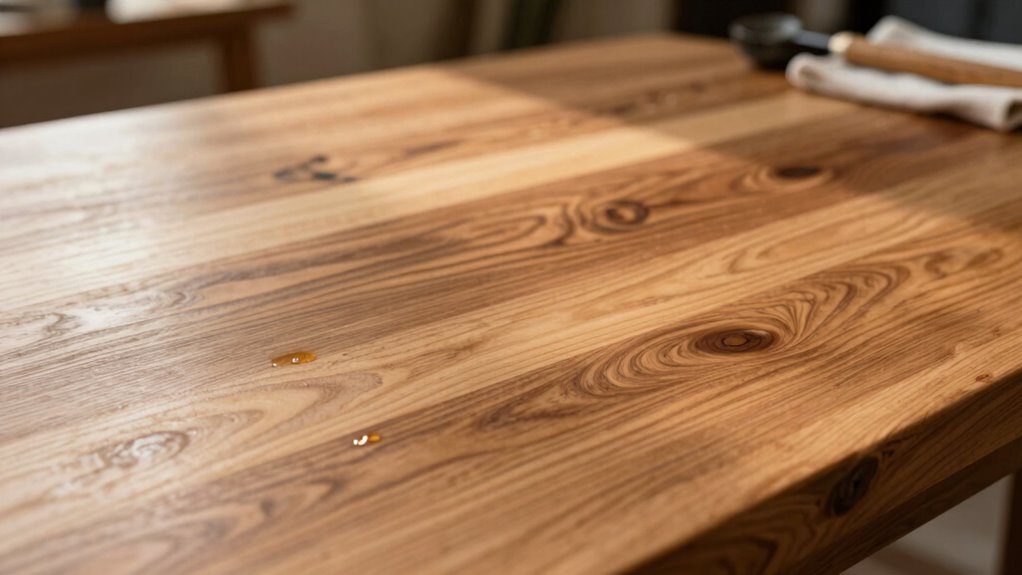
To keep your oil-finished surfaces looking their best, regular maintenance is essential. Start by thoroughly cleaning the surface with a soft cloth and mild soap to remove dust and grime. Proper surface preparation is key before applying any rejuvenating oil; verify the surface is dry, smooth, and free of old residue. When applying fresh oil, use even application techniques—dab, don’t pour—and work in the direction of the grain. Allow the oil to penetrate for a few minutes, then wipe off excess to prevent sticky buildup. For ongoing care, lightly reapply oil every few months or when the finish appears dull. This routine helps maintain the wood’s natural beauty and prolongs the life of your oil finish, keeping it nourished and protected.
Frequently Asked Questions
How Long Does an Oil Finish Typically Last on Wood Surfaces?
An oil finish typically lasts 1 to 3 years, depending on wear resistance and UV protection. If you regularly use your wood surface outdoors or in high-traffic areas, you’ll need to reapply sooner. For better longevity, choose oils with added UV protection, which helps prevent fading and damage. Maintaining your finish by reapplying when it starts to look dull will keep your wood looking great longer.
Can Oil Finishes Be Applied Over Existing Finishes or Paints?
Applying oil finishes over existing paints or finishes is like trying to fit a square peg in a round hole. Typically, oil finishes aren’t compatible with sealed or painted surfaces. You need to guarantee proper surface preparation—cleaning, sanding, or stripping—to improve application compatibility. If the surface isn’t properly prepared, the oil may not absorb well, resulting in uneven coverage or poor adhesion.
Are Certain Wood Species More Suitable for Oil Finishing?
Some wood species are more suitable for oil finishing because they naturally enhance wood grain and preserve the wood’s beauty. Hardwoods like oak, walnut, and teak respond well, showcasing their rich textures. Softwoods such as pine can also benefit, but they may require more coats for ideal results. Choosing the right species guarantees your project highlights natural wood preservation and achieves a stunning, long-lasting finish.
How Do Environmental Conditions Affect the Oil Finish’s Durability?
If you apply oil finish outdoors, high humidity can cause moisture to seep into the wood, leading to swelling and potential damage over time. UV impact from sunlight can break down the oil, causing it to fade or crack. For example, a garden bench exposed to these conditions might need reapplication more frequently. To protect your wood, consider using UV-resistant oils and maintain proper humidity levels around your project.
Is It Necessary to Sand Before Applying an Oil Finish?
Yes, you should sand before applying an oil finish. Proper sanding preparation guarantees surface smoothing, which helps the oil penetrate evenly and enhances adhesion. Start with a coarse grit to remove rough spots, then move to finer grits for a smooth finish. This process reduces blotchiness and ensures a professional-looking result, making your wood surface look its best and prolonging the durability of the oil finish.
Conclusion
Choosing the right oil finish is like giving your wood a protective hug—enhancing its beauty while guarding it from harm. Remember, no finish is a magic wand; proper application and maintenance are key. By understanding what oil does and doesn’t do, you can make smarter choices that keep your wood projects looking stunning for years to come. Treat your wood with care, and it’ll reward you with timeless beauty—like a trusted old friend.
Fall yard work Picks
leaf blowers
As an affiliate, we earn on qualifying purchases.