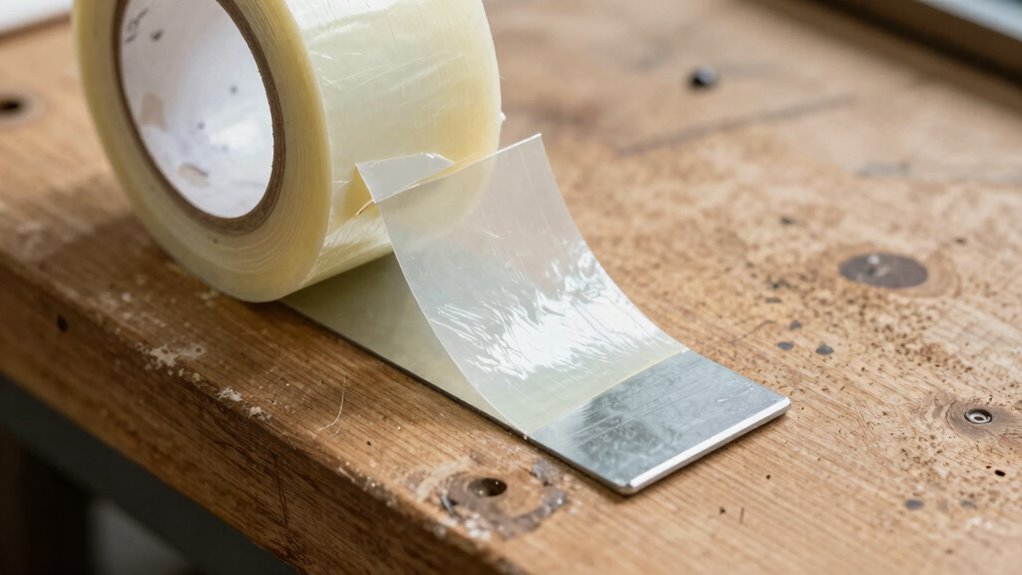
Double-sided tape workholding is a quick, clean, and precise way to secure lightweight or delicate parts during machining, especially on smooth, non-porous surfaces. It functions best when surfaces are clean, flat, and compatible with the adhesive. However, it can fail if the tape isn’t properly applied, surfaces are contaminated, or if the adhesive wears out after multiple uses. To get the most from this method, understanding ideal conditions will help you avoid common pitfalls. Further guidance can ensure your success.
Key Takeaways
- Double-sided tape provides quick, damage-free bonding ideal for lightweight, delicate, or surface-sensitive parts during machining.
- It works best on clean, smooth, non-porous surfaces with proper surface preparation and even pressure application.
- The adhesive’s strength must balance holding power and ease of removal to prevent surface damage or part slipping.
- Failures occur due to contamination, improper surface prep, incompatible surfaces, or overuse of the adhesive.
- Tape workholding is brilliant for fast setups and fragile parts but may fail under heavy loads or rough machining conditions.

HIPPIE CRAFTER 3 Pack Double Sided Tape for Woodworking, 1 Inch Wide Heavy Duty Woodworking Tape for CNC Machines and Routing Templates, 60 Feet Each,180ft Total
SUPERIOR ADHESION: This removable double sided tape offers excellent adhesion. The silicone-based 2 sided tape adhesive securely holds…
As an affiliate, we earn on qualifying purchases.
As an affiliate, we earn on qualifying purchases.
What Is Double‑Sided Tape Workholding and How Does It Work?
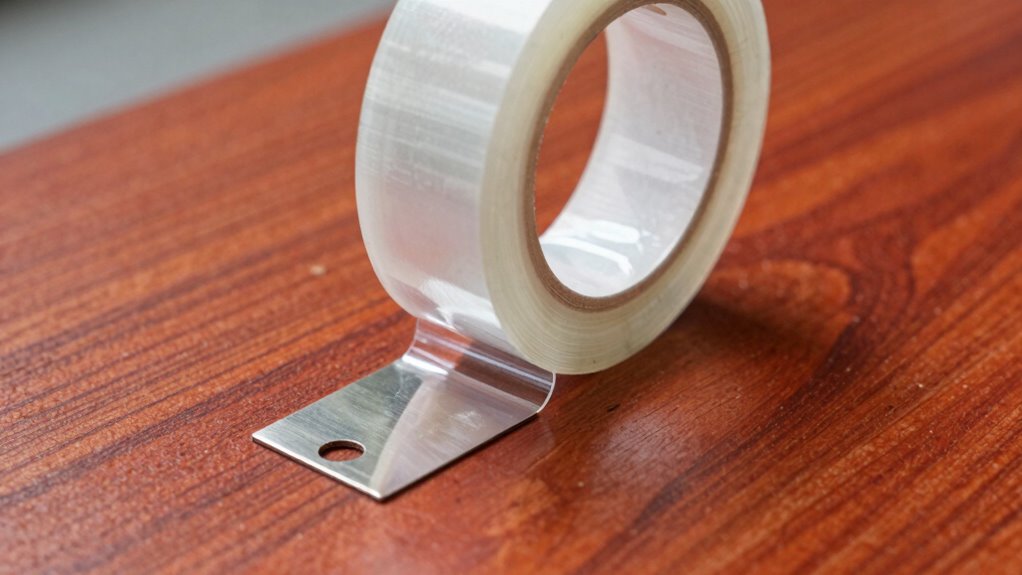
Have you ever wondered how to securely hold small or delicate parts during machining without resorting to traditional clamps? Double‑sided tape workholding offers a practical solution by leveraging adhesive properties tailored for specific surfaces. The tape’s adhesive strength must be sufficient to keep parts stable under machining forces, yet gentle enough to prevent damage upon removal. Surface compatibility plays a vital role; the tape works best on clean, smooth surfaces like metal or certain plastics, ensuring a strong bond. Properly selected double‑sided tape provides even pressure distribution, reducing the risk of part movement or distortion. This method is ideal for lightweight or fragile components where traditional clamping might cause damage. By understanding the adhesive properties and surface compatibility, you can confidently use double‑sided tape for precise, damage-free workholding. Additionally, considering contrast ratio can help in evaluating how well the workspace lighting and visual clarity support detailed work.

PHIXBEAR Double Sided Tape Heat Resistant Heavy Duty, Waterproof Outdoor Indoor Automotive Mounting Tape, Removable No Residue Super Strong Adhesion Foam Tape, 1" x 20FT
𝗦𝘂𝗽𝗲𝗿 𝗦𝘁𝗿𝗲𝗻𝗴𝘁𝗵 𝗛𝗲𝗮𝘃𝘆 𝗗𝘂𝘁𝘆 𝗧𝗮𝗽𝗲: This tape features an extremely strong adhesive, uses the same elastic bonding technology…
As an affiliate, we earn on qualifying purchases.
As an affiliate, we earn on qualifying purchases.
When Is Tape Workholding the Best Choice for Your Parts?
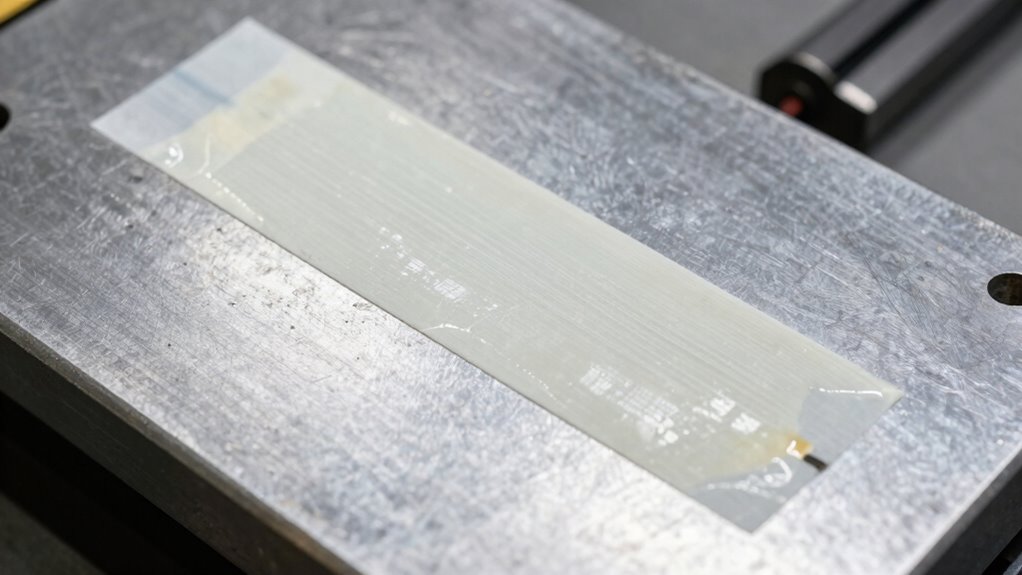
Tape workholding is an excellent choice when you need to secure lightweight or delicate parts without risking damage from traditional clamping methods. It’s especially effective when adhesive longevity is sufficient for your machining process, providing enough holding power without weakening prematurely. If your project requires quick setup or frequent repositioning, tape workholding allows for easy removal and reapplication without leaving marks or residue that could harm your parts. Keep in mind, if you need to reuse the tape multiple times, its adhesive properties may diminish over time, reducing effectiveness. In such cases, choosing a high-quality tape designed for long-term adhesion ensures stability throughout your operation. Overall, tape workholding excels when handling sensitive parts and when the convenience of easy tape removal outweighs the need for maximum clamping force. Additionally, understanding Free Floating principles can help optimize your setup for better efficiency and safety during machining.

Scotch Removable Fabric Tape, 3/4 in x 180 in, 1/Pack, Removable and Double Sided (FTR-1-CFT)
REMOVABLE DOUBLE-SIDED FABRIC TAPE: 1 roll of Scotch Removable Double-Sided Fabric Tape offers adhesive that holds fabric securely…
As an affiliate, we earn on qualifying purchases.
As an affiliate, we earn on qualifying purchases.
Which Materials and Shapes Are Ideal for Tape Clamping?
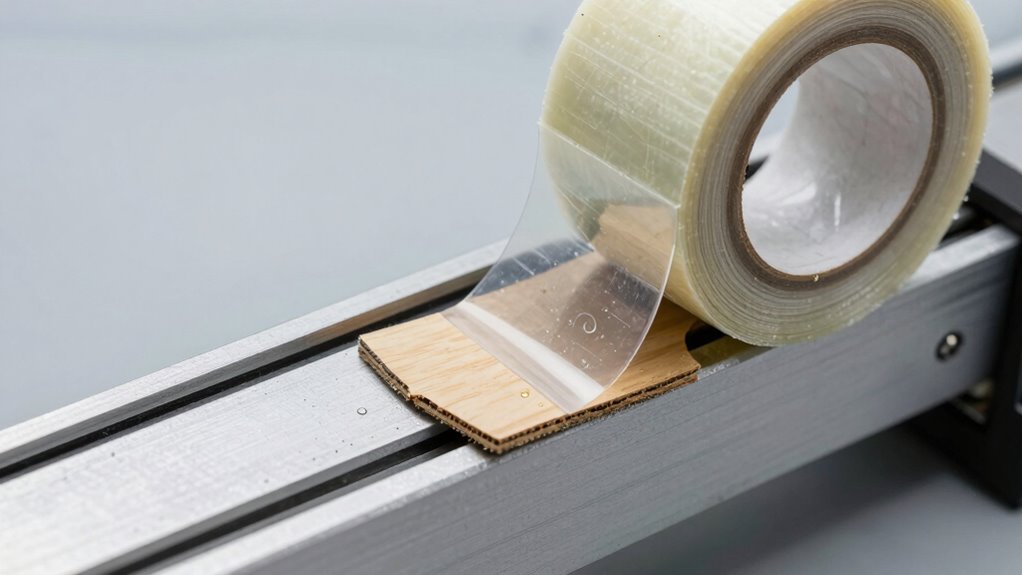
Materials with smooth, non-porous surfaces like plastics, metals, and glass are ideal for tape clamping because they allow adhesives to bond securely without slipping or peeling. Choosing the right adhesive types with sufficient tensile strength guarantees your parts stay in place during machining. The shape of your workpiece also matters; flat, even surfaces maximize contact and adhesion, reducing the risk of failure. When selecting materials and shapes, consider these key factors: perfect fit living for reliable bonding
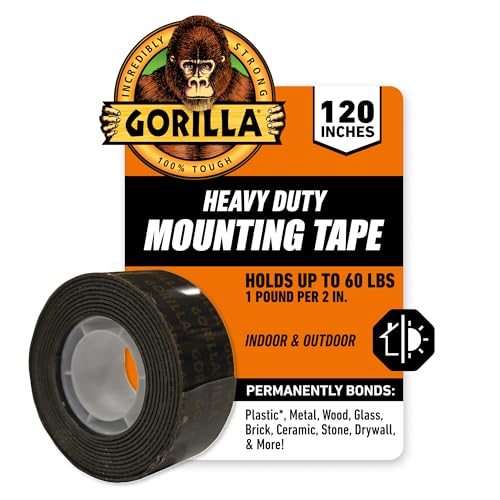
Gorilla Heavy Duty Double Sided Mounting Tape, Black Tape, 1" x 120" (Pack of 1) – Weatherproof for Indoor or Outdoor
Heavy duty: This double sided tape is designed to mount up to 60 pounds instantly
As an affiliate, we earn on qualifying purchases.
As an affiliate, we earn on qualifying purchases.
How Do You Maximize Tape Adhesion and Secure Hold?
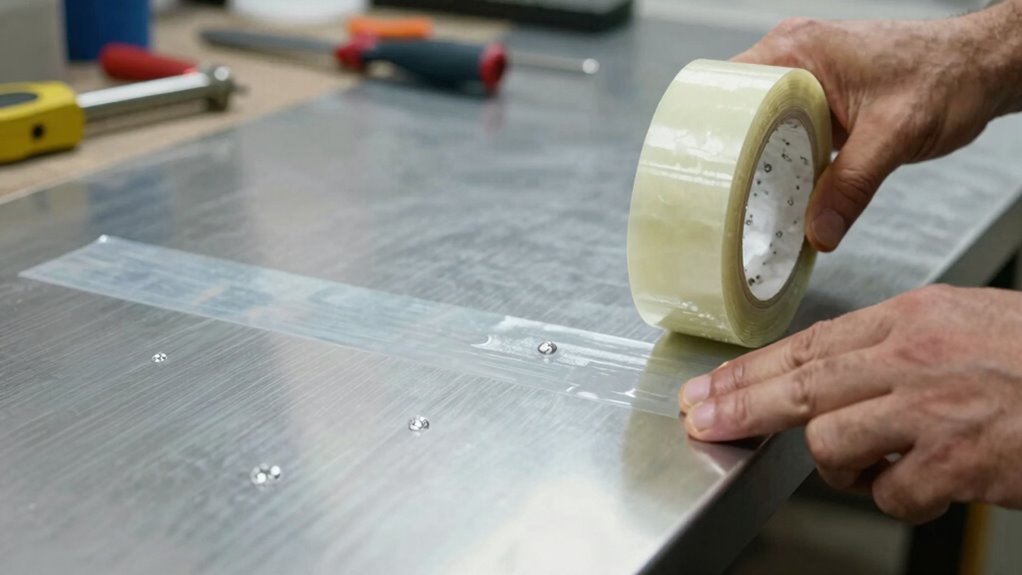
To maximize tape adhesion and guarantee a secure hold, it’s essential to thoroughly prepare both the workpiece surface and the tape itself. Clean the surface to remove dust, grease, and oil, which can hinder adhesion promotion. Use a solvent or alcohol wipe for best results. Choose the right tape for your material—consider pressure-sensitive types with strong adhesive properties. Apply the tape smoothly, avoiding air bubbles and wrinkles, and press firmly to ensure full contact. Proper surface preparation helps with tape removal later, preventing damage. Keep in mind that environmental factors like temperature and humidity also impact adhesion strength. Use the following table as a quick reference:
| Surface Prep | Tape Selection | Application Technique |
|---|---|---|
| Clean thoroughly | Match tape to surface type | Firmly press and smooth out |
| Remove oils | Check adhesive strength | Avoid air bubbles |
| Dry surfaces | Use compatible tape | Apply evenly |
| Use solvents | Consider temperature | Use a roller or squeegee |
| Minimize humidity | Test tape adhesion | Allow curing time |
Additionally, understanding the environmental factors that influence adhesion can help you select the most effective tape and application method for your project.
What Are Common Problems and How Can You Troubleshoot Tape Failures?
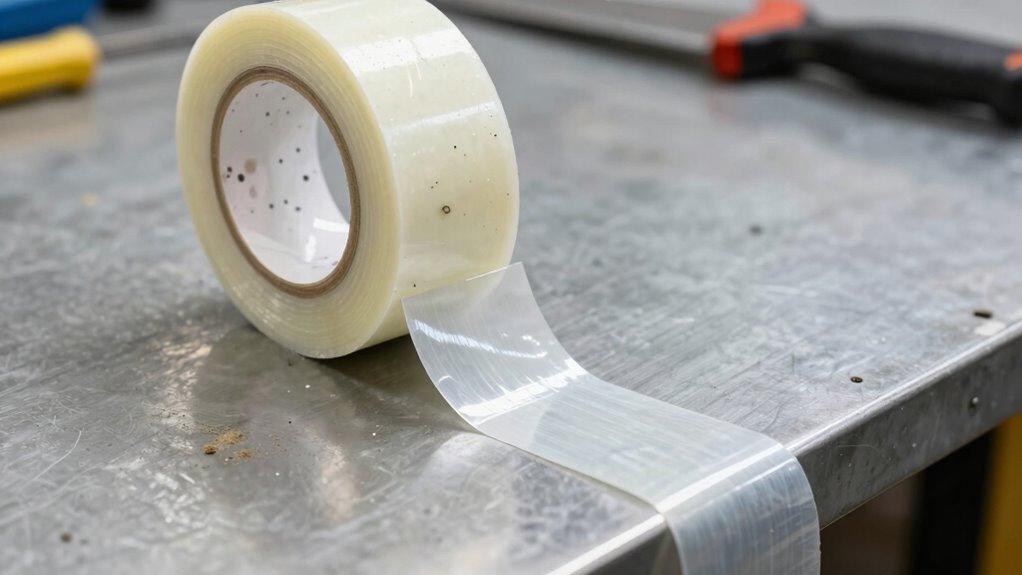
Even with proper preparation, tape failures can still occur due to common issues like poor adhesion, peeling, or inconsistent holding strength. Adhesive failure often results from surface contamination, such as dust or oil, which prevents the tape from bonding properly. To troubleshoot, start by inspecting the surface for any dirt or residue and clean it thoroughly. Ensure the tape is applied with enough pressure and at the right temperature for maximum adhesion. Watch out for these pitfalls:
Even with proper prep, tape failures often stem from surface contamination, uneven application, or outdated tape.
- Ignoring surface contamination, leading to weak bonds
- Rushing the application, causing uneven adhesion
- Using incompatible surfaces or old tape that has lost stickiness
- Not considering surface preparation to optimize adhesion and prevent failure
Addressing these issues can restore holding power and prevent future failures. Proper surface prep and careful application are key to reliable tape workholding.
When Should You Consider Alternatives to Tape Workholding?
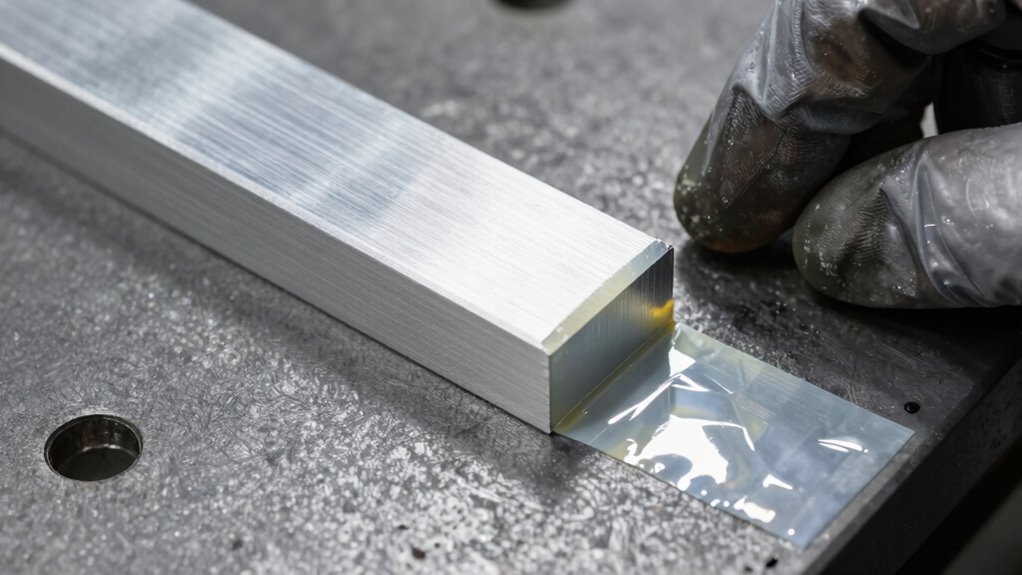
Are there times when tape workholding simply isn’t the best choice? Absolutely. If your project demands stronger, more reliable adhesion, tape limitations become clear. For instance, when working with heavy or high-precision parts, adhesive alternatives like mechanical clamps, vacuum fixtures, or custom jigs often provide better stability. Temperature, surface contamination, or exposure to solvents can weaken tape bonds, increasing the risk of failure. In these cases, relying solely on tape can lead to inaccuracies or safety issues. When durability and security are critical, exploring other workholding methods ensures your parts stay in place. Recognizing the European cloud innovation and limitations of tape helps you choose the right solution, avoiding costly setbacks and achieving more consistent, precise results.
Tips to Improve Tape Reliability and Prevent Failures
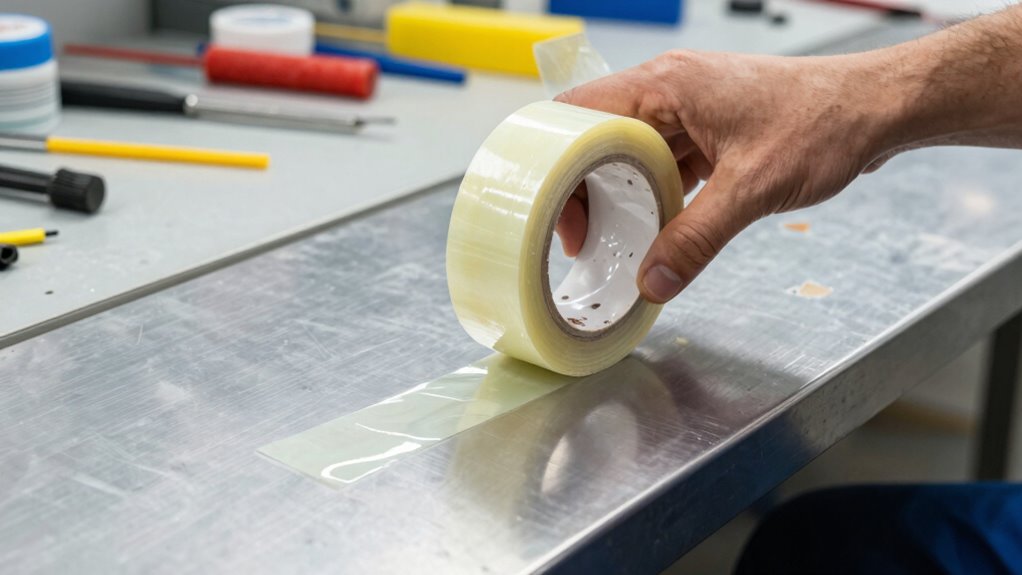
To improve tape reliability, start by guarantee the surface is clean and smooth to maximize adhesion. Choose the right tape for your specific application, considering factors like material and temperature. Finally, apply consistent pressure when attaching the tape to prevent weak spots and ensure a secure hold. Additionally, avoiding high humidity environments can help maintain the tape’s effectiveness over time air quality considerations.
Surface Preparation Techniques
You should:
- Thoroughly clean the surface with isopropyl alcohol to remove oils and debris
- Avoid touching the adhesive side with your bare hands to prevent contamination
- Make sure the surface is dry and free of moisture or residues before application
- Ensure the surface is free of dust and loose particles for optimal adhesion cleaning techniques.
These steps create a solid foundation for your tape, reducing the risk of failure. When the surface is properly prepared, your double-sided tape will hold stronger, longer, and deliver consistent results.
Proper Tape Selection
Choosing the right double-sided tape is vital for guaranteeing strong, reliable adhesion. You need to consider the adhesive strength, which determines how well the tape holds under your specific conditions. For heavy-duty applications, opt for tapes with high adhesive strength to prevent peeling or slipping. Tape thickness also plays an important role; thicker tapes can fill surface irregularities and provide better cushioning, but may add bulk that interferes with precision work. Thin tapes offer a discreet bond suited for lightweight or delicate parts. Match the tape’s adhesive strength and thickness to your material and workload. Proper selection minimizes failures, improves hold times, and increases overall workholding reliability. Always review manufacturer specifications to ensure the tape’s properties align with your project requirements. Additionally, understanding the performance characteristics of different tapes can help you select the most suitable one for your specific application.
Applying Consistent Pressure
Applying consistent pressure during tape application is essential for ensuring a strong, reliable bond. Proper pressure distribution helps maximize adhesive contact and maintains adhesive consistency across the surface, reducing the risk of weak spots. To achieve this, use a roller or a flat, firm tool to press firmly and evenly over the entire tape. Be mindful to avoid uneven pressure, which can cause gaps or lifting. When done correctly, this step improves adhesion and prevents failures. Additionally, using appropriate tools can help ensure uniform pressure and enhance overall tape performance. Remember these key points: – Maintain steady, even pressure across the entire surface – Focus on pressure distribution to avoid weak spots – Ensure adhesive consistency by pressing firmly but smoothly
Consistent pressure helps your workholding hold tight, saving time and avoiding costly setbacks.
Is Double‑Sided Tape Workholding Right for Your Manufacturing Needs?
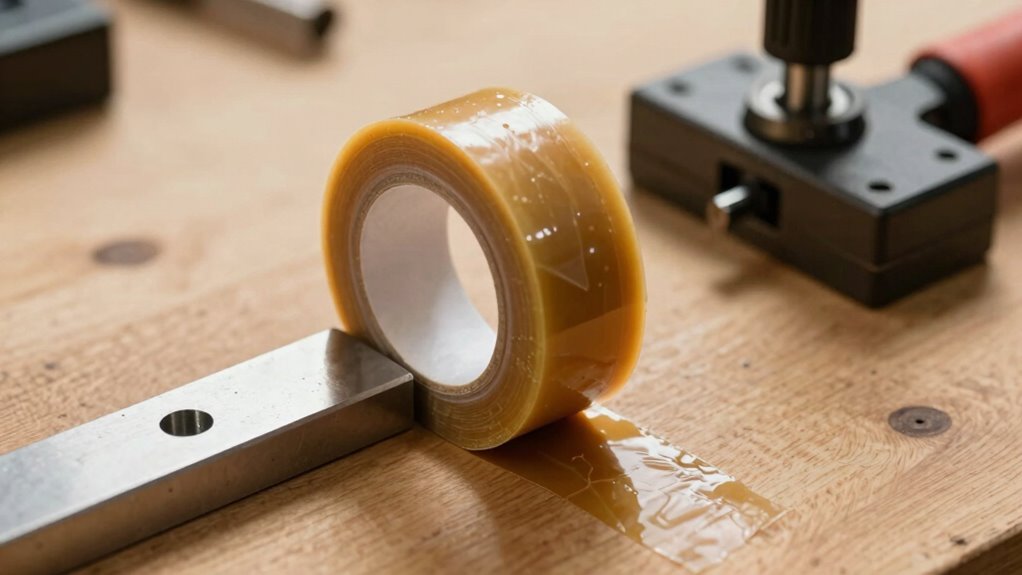
Before choosing double‑sided tape for workholding, you need to consider if your materials are compatible with the adhesive. Think about whether the tape can provide the precision and strength your process requires. If these factors align, tape workholding could be a practical solution for your manufacturing needs.
Material Compatibility Considerations
Material compatibility is a critical factor to contemplate when evaluating double-sided tape workholding for your manufacturing process. Choosing the right adhesive chemistry guarantees the tape bonds securely without damaging your materials. If the tape isn’t compatible, you risk ruining surfaces or facing unexpected failures. Before proceeding, consider:
- How different materials respond to the adhesive chemistry, avoiding costly damage or residue.
- The potential for surface contamination or deformation that could compromise part quality.
- The ease of removing the tape without leaving residue or causing surface defects.
Ensuring material compatibility helps you prevent costly errors and maintain high-quality standards. Selecting the appropriate tape based on your materials’ unique properties keeps your process smooth, reliable, and efficient. Don’t overlook compatibility—it’s the foundation of successful workholding.
Precision and Holding Strength
Double-sided tape workholding can provide impressive precision and strong holding power, but these qualities vary depending on your specific application. Adhesive chemistry plays a key role, with some tapes designed for high-strength bonds suitable for detailed machining, while others prioritize easy tape removal. The right tape guarantees your workpiece stays secure during manufacturing, maintaining accuracy. However, if the adhesive isn’t suited to your materials or operating conditions, you risk slipping or damaging surfaces when removing the tape. Additionally, strong adhesives may require careful tape removal techniques to avoid residue or surface damage. Choosing the correct tape involves balancing hold strength with ease of removal, ensuring your process remains efficient without compromising precision or surface integrity.
Frequently Asked Questions
How Long Does Double‑Sided Tape Typically Maintain Its Adhesion During Manufacturing?
You can expect double-sided tape to maintain its adhesion lifespan for several days to a few weeks during manufacturing, depending on storage conditions. To maximize adhesion, keep the tape in a cool, clean, and dry environment away from dust, moisture, and extreme temperatures. Proper storage guarantees the tape retains its tackiness, so it holds securely throughout your process, minimizing failures and rework.
Can Double‑Sided Tape Be Reused After Removal From Parts?
You generally can’t reuse double‑sided tape after removing it from parts because tape residue and loss of adhesive longevity make it ineffective. Once peeled off, the adhesive often loses its stickiness, and leftover residue can interfere with reapplication. Attempting to reuse it usually results in poor adhesion, so it’s better to substitute the tape to ensure reliable hold and avoid issues caused by compromised adhesive performance.
What Environmental Factors Affect the Performance of Tape Workholding?
Imagine your tape as a mighty anchor, but humidity effects and surface contamination are like rising tides and muddy waters. High humidity can weaken adhesive strength, causing slips, while dirt or oil on surfaces act like obstacles, preventing proper adhesion. You need to keep surfaces clean and control environmental conditions to guarantee your tape holds firm. Otherwise, unpredictable shifts can turn your workholding from reliable to unreliable.
Are There Specific Safety Considerations When Using Tape for Workholding?
When using tape for workholding, you should prioritize safety by wearing personal protective equipment like gloves and eye protection. Follow proper handling procedures to avoid skin contact with adhesives, which can cause irritation. Guarantee the work area is well-ventilated to minimize fumes. Always read tape manufacturer instructions for specific safety recommendations, and handle the tape carefully to prevent slips or accidental contact with skin or eyes.
How Does Tape Workholding Compare to Traditional Clamping Methods in Accuracy?
Like a delicate dance, tape workholding relies on adhesion strength, which can be precise but varies with material compatibility. When chosen wisely, tape offers accuracy comparable to clamping, especially for lightweight or intricate tasks, allowing for quick setups. However, unlike traditional clamps that provide consistent force, tape’s precision depends on surface properties and tension, making it less reliable for high-tolerance applications. You must weigh these factors carefully.
Conclusion
Double-sided tape workholding can be a game-changer when used correctly, offering quick and clean setups. However, it’s not foolproof; factors like surface prep and material compatibility truly impact adhesion. Believe it or not, some experts argue that with proper application, tape can rival traditional clamping methods in specific scenarios. By understanding its limits and optimizing your process, you can confidently decide if tape is the right choice for your manufacturing needs.