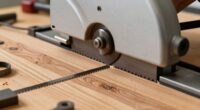
A crosscut sled helps you make precise, straight crosscuts quickly and safely. It guides your saw along a sturdy fence to keep cuts accurate and reduces the risk of slips or kickbacks. To set one up, verify the fence is square to the blade, and use a miter or stop block for repeatability. Regular maintenance keeps your sled performing well over time. Keep exploring to master the setup that makes your cuts effortless and consistent.
Listen free for 30 days with Audible
Thousands of audiobooks and originals — cancel anytime.
As an affiliate, we earn on qualifying purchases.
Key Takeaways
- Properly align and square the fence, blade, and miter stop for accurate, repeatable cuts.
- Use sturdy materials like plywood or MDF to build a stable crosscut sled.
- Install a reliable runner or T-track system to ensure smooth sled movement on the saw table.
- Regularly check and calibrate the fence, blade, and stop blocks to maintain precision.
- Keep the sled well-maintained, clean, and stored properly to ensure consistent performance over time.
As an affiliate, we earn on qualifying purchases.
What Is a Crosscut Sled and Why Should You Use One?
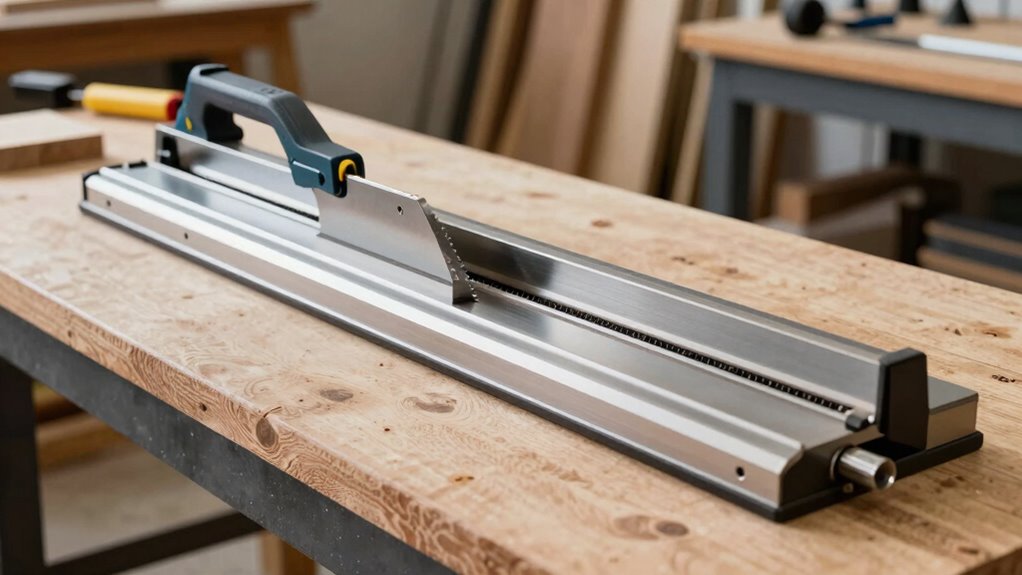
Have you ever struggled to make accurate crosscuts on your saw? That’s where a crosscut sled comes in. It’s a woodworking safety tool that helps you make precise, straight cuts without risking slips or kickbacks. By guiding your saw along a stable, flat surface, it minimizes errors and keeps your fingers safe. Proper material selection is key; choose sturdy, flat plywood or MDF for the sled to guarantee stability and smooth operation. Using a crosscut sled not only improves accuracy but also enhances safety, giving you confidence in every cut. It’s a simple setup that transforms your woodworking experience by making repeat cuts effortless and consistent, saving you time and reducing frustration. Additionally, incorporating European standards into your tools and materials can further improve safety and reliability in your woodworking projects.
As an affiliate, we earn on qualifying purchases.
What Are the Essential Parts of a Crosscut Sled?
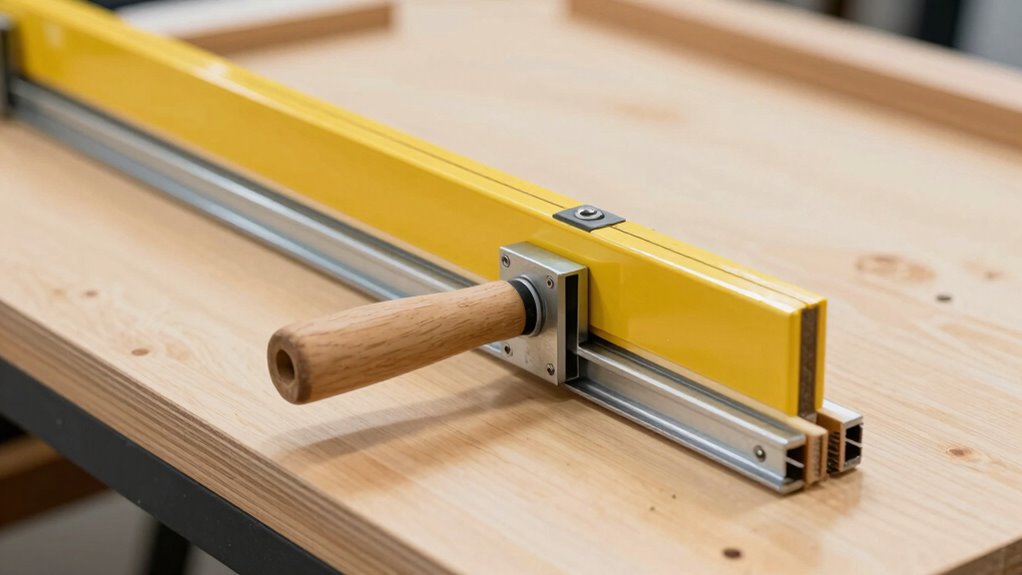
To build an effective crosscut sled, you need to understand its key components. First, the fence is vital for guiding your cuts; it must be securely attached and allow for fence adjustments to guarantee precise positioning. Second, the miter or stop block helps you make consistent cuts by acting as a repeatable stop point. Third, the runner or T-track system keeps the sled stable and aligned on the saw table. Fourth, the saw blade alignment is essential; the blade must be square and properly aligned with the fence to avoid crooked cuts. Additionally, understanding the contrast ratio of your projector can significantly improve your home cinema experience by rendering darker scenes with more depth. These parts work together, ensuring your fence adjustments are accurate and your cuts are clean and repeatable. By understanding these essential parts, you set the foundation for safe, precise crosscutting.
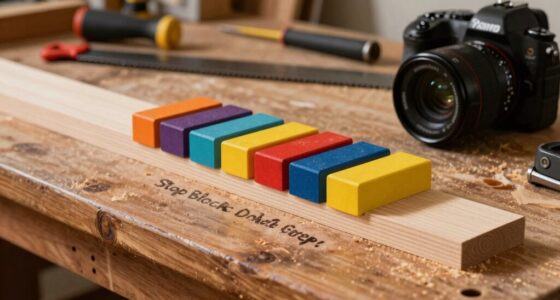
miter stop block for woodworking
As an affiliate, we earn on qualifying purchases.
As an affiliate, we earn on qualifying purchases.
How to Set Up Your Crosscut Sled for Perfectly Accurate Cuts
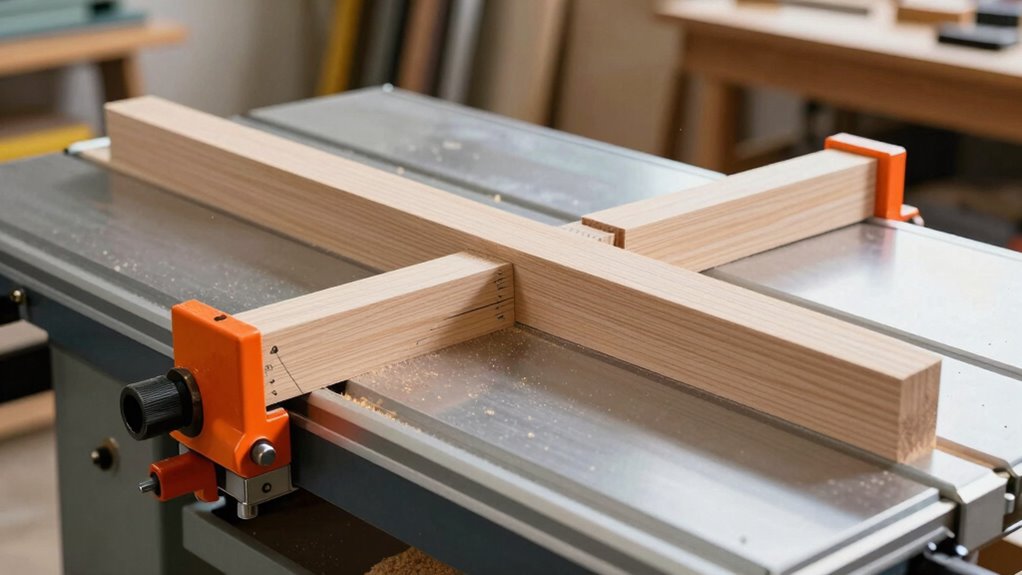
To achieve perfectly accurate cuts, start by aligning the fence properly so it’s square to the blade. Next, calibrate the blade angle to match your desired cut, ensuring precision every time. Finally, use a consistent stop to maintain uniform measurements across multiple cuts. Regularly checking the calibration helps maintain accuracy over time.
Align the Fence Properly
Ensuring your fence is properly aligned is essential for making accurate crosscuts. Proper fence alignment guarantees that each cut is precise and repeatable. Begin by checking that the fence runs parallel to the saw blade’s edge. This step is critical for sled calibration and avoiding crooked cuts. To get it right:
- Use a carpenter’s square to verify the fence’s alignment with the miter slot.
- Double-check that the fence is square to the blade at multiple points.
- Tighten all fence clamps securely to prevent movement during cuts.
- Recheck the alignment after any adjustments or transport.
Consistent fence alignment minimizes errors and makes your crosscut sled work smoothly. Taking the time to get this right ensures your cuts are accurate and your sled setup remains reliable over time.
Calibrate the Blade Angle
Calibrating the blade angle is vital for making precise crosscuts, especially when your project requires accurate miters or beveled edges. To guarantee your cuts are true, you need to verify and adjust the blade angle using a reliable calibration technique. Start by locking the blade in the zero-degree position, then use a digital angle gauge or a combination square to check its alignment. If the blade isn’t perfectly square, loosen the adjustment mechanism and carefully tweak the angle until it matches your desired setting. Recheck the calibration after each adjustment to confirm accuracy. Proper calibration ensures your crosscut sled delivers consistent, accurate cuts every time, eliminating guesswork and reducing the need for rework. This step is essential for achieving professional-quality results.
Use a Consistent Stop
Using a consistent stop is the key to making accurate, repeatable crosscuts with your sled. To achieve this, always use a stop block positioned precisely against the fence. Proper fence adjustment ensures your stop block remains in the correct location. Here are essential tips:
- Secure the stop block firmly to prevent movement during cuts.
- Adjust the fence so it’s perfectly aligned with your blade for clean cuts.
- Mark measurements on the stop block for quick, repeatable positioning.
- Check the stop position regularly to maintain consistency over time.
T-track system for crosscut sled
As an affiliate, we earn on qualifying purchases.
As an affiliate, we earn on qualifying purchases.
Tips for Making Safe, Consistent, and Repetitive Cuts
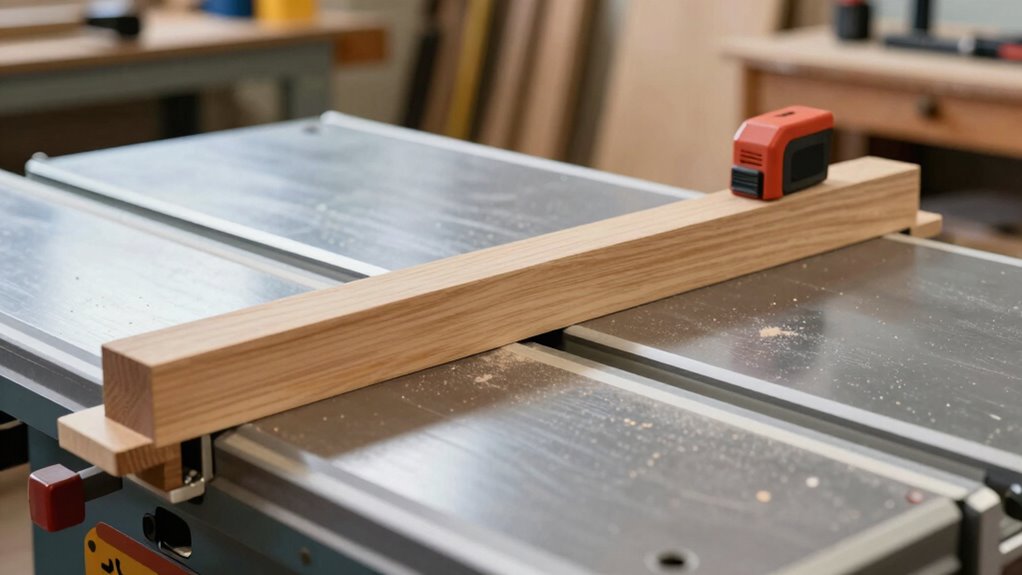
To make safe, consistent cuts, you need to focus on securing your workpiece properly. Always clamp your material firmly to prevent movement during cutting. Ensuring your fence stays aligned guarantees each cut is accurate and repetitive. Additionally, regularly checking your tool setup helps maintain safety and precision throughout your project.
Secure Workpiece Clamping
Making sure your workpiece is securely clamped is essential for safe and accurate cuts on the crosscut sled. Proper clamping techniques improve workpiece stability, reducing movement and preventing kickback. To achieve ideal clamping:
- Use clamps that firmly hold the workpiece without causing damage.
- Position clamps close to the cut line for maximum stability.
- Apply even pressure to prevent slipping during the cut.
- Double-check that the workpiece doesn’t shift when you apply pressure.
- Ensure your clamps are compatible with your work surface and support proper workpiece stabilization.
Strong clamping techniques ensure your workpiece stays steady, enabling precise, clean cuts. Secure workpiece clamping minimizes errors and enhances safety. Always verify the stability before making a cut, and adjust clamps as needed for ideal security. Proper clamping is key for repeatable, safe crosscuts.
Consistent Fence Alignment
Achieving consistent fence alignment is crucial for safe and accurate crosscuts, especially when making multiple cuts. Proper fence alignment ensures each cut is precise and reduces the risk of kickback or binding. To maintain consistency, double-check your fence position before each cut, using a reliable measuring tool. Homemade jigs can be invaluable for setting and maintaining exact fence alignment, especially if you need to repeat cuts frequently. These jigs help eliminate guesswork and ensure your fence stays square to the saw blade. Regularly verify the fence’s position during your work session, and make adjustments as needed. Consistent fence alignment not only improves safety but also results in cleaner, more precise cuts every time.
Common Mistakes to Avoid When Building or Using Your Sled
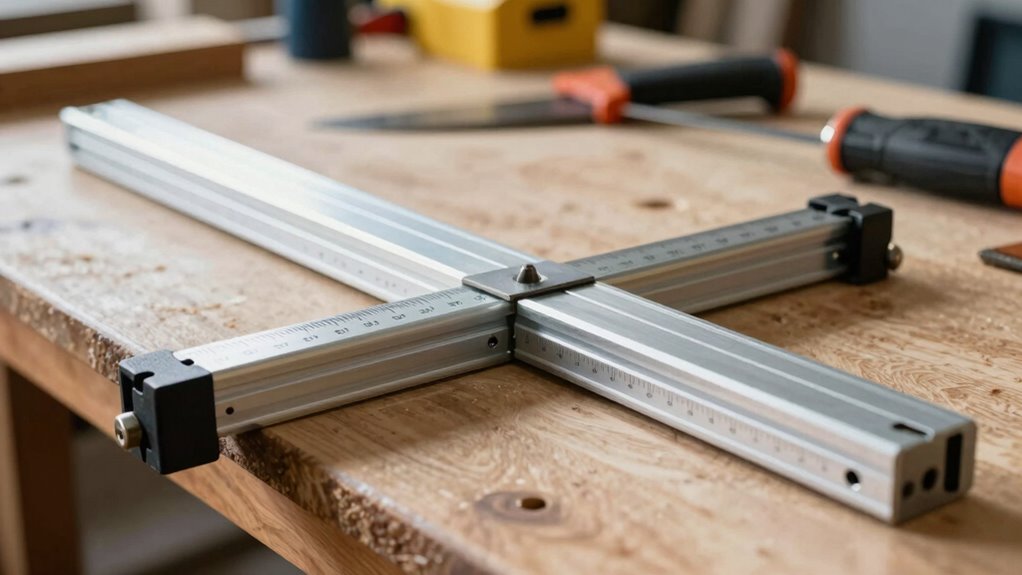
One common mistake is rushing the building process without proper planning, which can compromise measurement accuracy and create safety hazards. Skipping safety precautions or neglecting double-checking measurements can lead to misaligned cuts and dangerous situations. To avoid this, keep these tips in mind:
- Always verify measurements twice before cutting.
- Use quality tools for precise alignment.
- Follow safety precautions, such as wearing eye protection.
- Test the sled with scrap wood before making final cuts.
Taking your time ensures your sled is sturdy and accurate. Rushing may save time initially but can cause errors and safety risks later. Prioritize measurement accuracy and safety to make your crosscut sled both reliable and safe to use.
How to Maintain and Fine-Tune Your Crosscut Sled for Long-Term Precision
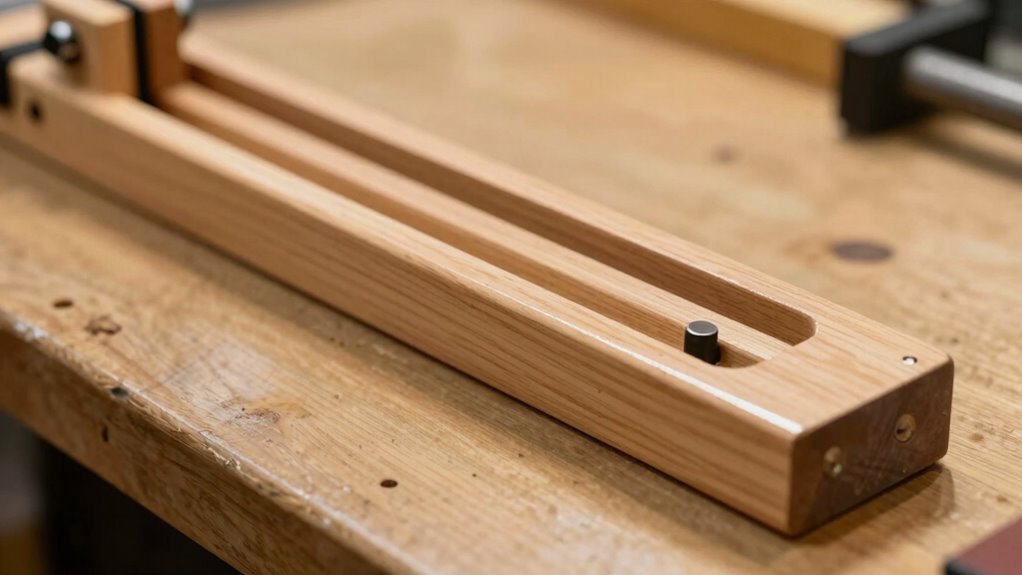
Regularly maintaining and fine-tuning your crosscut sled is essential to keep it cutting accurately over time. Start with blade maintenance by keeping the blade sharp and clean; dull blades cause inaccurate cuts and strain your saw. Check the runners and fence alignment frequently, ensuring they remain square and secure. When not in use, store your sled properly—preferably in a dedicated space away from dust and humidity—to prevent warping or damage. Inspect the sled’s runners and surface regularly for debris or nicks that could affect precision. Fine-tune by rechecking measurements and adjusting the fence if necessary. Proper sled storage and consistent blade maintenance ensure your crosscut sled stays precise, making repeat cuts effortless and reliable for years to come. Additionally, implementing a regular inspection routine can help catch potential issues early and maintain optimal performance over time.
Frequently Asked Questions
Can a Crosscut Sled Be Used on Different Types of Saws?
Yes, you can use a crosscut sled on different saws, but saw compatibility is key. You’ll need to verify if your saws have compatible fences or mounting options, and may require sled adaptations like custom mounting brackets. Adjusting the sled for each saw guarantees safe, precise cuts. With the right adjustments, your crosscut sled becomes a versatile tool, enhancing accuracy across various saw types.
What Materials Are Best for Building a Durable Crosscut Sled?
Think of building your crosscut sled as forging a sword; you want the strongest materials. Use plywood or MDF for the base because they’re stable and easy to work with. For the fences, hardwoods like oak or maple offer excellent durability factors, resisting warping and damage over time. These choices guarantee your sled remains precise and reliable, making your cuts effortless and your projects lasting longer.
How Do I Adjust My Sled for Beveled or Angled Cuts?
You can adjust your sled for beveled or angled cuts by using the sled tilting mechanism. First, loosen the bevel angle adjustment lock, then tilt the sled to your desired angle, aligning it with your marked bevel. Tighten the lock securely to maintain the position. Always double-check the angle with a square or protractor before making your cut, ensuring precise bevel cuts with ease.
Is a Crosscut Sled Suitable for Cutting Thick or Hardwood Materials?
A crosscut sled is suitable for cutting thick hardwoods, provided it offers good sled stability. You’ll want a sturdy, well-built sled with a reliable fence and secure locking mechanisms to handle dense materials safely. Confirm your saw and sled are properly aligned to prevent kickback or binding. With the right setup, your sled can make precise, clean cuts through thick hardwoods efficiently and safely.
How Often Should I Calibrate or Check My Sled’s Accuracy?
Think of calibration frequency as your secret weapon—check your sled’s accuracy after every few projects or at least once a month. Accuracy checks keep your cuts precise, preventing errors that could cost you time and material. If you notice any misalignment or uneven cuts, re-calibrate immediately. Regular calibration guarantees your crosscut sled remains dependable, so you can always trust your cuts, no matter how many epochs pass.
Conclusion
Think of your crosscut sled as the steady hand guiding your projects to perfection. When you took the time to set it up correctly, it’s like having a reliable co-pilot that makes every cut feel effortless. With practice and proper maintenance, your sled becomes a trusted partner, turning what once felt tricky into a smooth, confident process. Just like a well-tuned instrument, your sled keeps your work precise and enjoyable for years to come.
NFL season / tailgating Picks
team gear
As an affiliate, we earn on qualifying purchases.