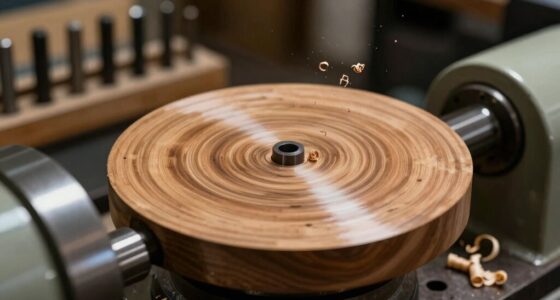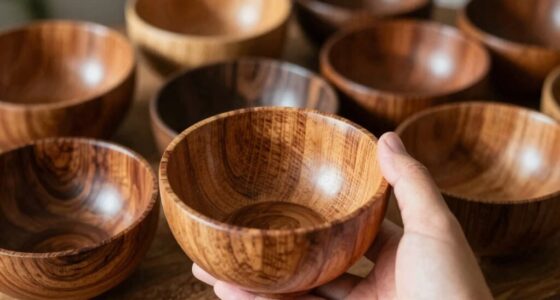
When you compare spindle turning and bowl turning, you’ll find the skills differ more than you might expect. Spindle turning focuses on elongated shapes and demands precise tool control, while bowl turning is all about hollow forms and requires specific tools like bowl gouges. Each technique has unique challenges, from grain orientation to finishing methods. Understanding these differences can elevate your woodworking projects. If you’re curious about the specifics, there’s much more to explore!

Get business pricing on tools and workshop supplies
- Business-only prices and quantity discounts
- Tax-exempt purchasing
- Multiple users, one account, clear invoices
Key Takeaways
- Spindle turning focuses on creating elongated shapes, while bowl turning emphasizes hollow forms with various designs.
- Tool selection differs significantly; spindle turning uses spindle gouges, whereas bowl turning relies on bowl gouges.
- Precision and control are paramount in spindle turning to avoid tear-out, unlike the more forgiving nature of bowl turning.
- Grain orientation is crucial for both techniques but affects finish quality differently; spindle turning requires careful alignment to prevent damage.
- Finishing methods vary; spindles need sealing to enhance grain, while bowls often require food-safe finishes for usability.
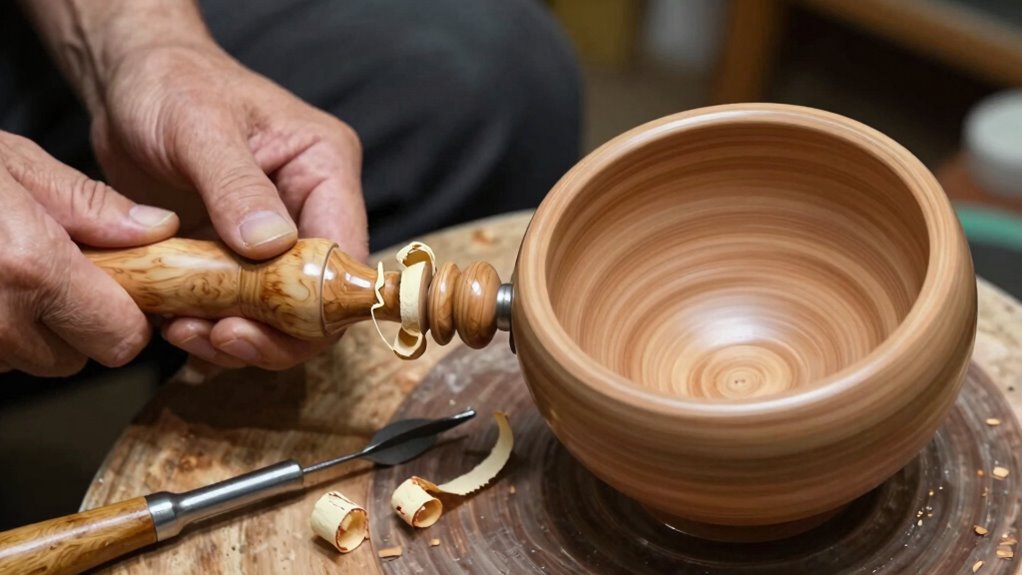
When you immerse yourself in the world of woodturning, you’ll quickly notice two main techniques: spindle turning and bowl turning. While both methods involve spinning wood on a lathe, the skills and approaches you’ll use for each are less similar than you might think. Understanding these differences can enhance your projects and improve your overall craftsmanship.
Spindle turning focuses on creating elongated shapes, such as legs for furniture or decorative spindles. The spindle techniques you employ typically require precise cuts and careful control of the lathe’s speed. You’ll find that tool selection plays a vital role here; spindle gouges and parting tools are often your best friends. When you’re shaping your spindle, remember to pay attention to grain orientation. Aligning the grain correctly can prevent tear-out and guarantee a smoother finish.
Spindle turning emphasizes precision and control, creating elongated shapes while highlighting the importance of tool selection and grain orientation for a flawless finish.
In contrast, bowl turning is all about creating hollow forms. The bowl design varies widely, from deep, wide bowls to shallow, elegant ones. For this technique, you’ll likely choose a different set of tools. A bowl gouge is essential, as it allows you to shape the interior effectively. You’ll also want to take your wood selection carefully; hardwoods like maple and walnut often provide beautiful finishes and durability. Additionally, understanding grain orientation can significantly impact the quality of your bowl, especially when working with different wood types.
As you dive deeper into these techniques, safety practices become paramount. Both methods can be hazardous if you’re not careful. Verify you’re wearing appropriate safety gear, like goggles and a dust mask. Always secure your workpiece properly and maintain a clean workspace. A moment of carelessness can lead to serious accidents.
Finishing methods also differ between spindle and bowl turning. Spindles often require sanding and sealing to highlight the grain and protect the wood. For bowls, you might experiment with food-safe finishes if the bowl will be used for serving. The finishing process can truly bring your project to life, whether it’s showcasing the intricate details of a spindle or the smooth curves of a bowl.
Finally, think about the project types you’ll want to tackle. Spindle turning might appeal to you if you’re interested in functional items like furniture components, while bowl turning could be your choice for artistic pieces or practical kitchenware. Each technique offers unique challenges and rewards, allowing you to develop your skills in distinct ways. Embracing both can elevate your woodturning journey.
As an affiliate, we earn on qualifying purchases.
Frequently Asked Questions
What Tools Are Best for Beginners in Spindle Turning?
For beginners in spindle turning, start with essential spindle tools like a roughing gouge, a spindle gouge, and a parting tool. These tools help you master beginner techniques such as shaping, smoothing, and detailing. A good set of calipers can also aid in measuring dimensions accurately. As you practice, focus on controlling your tool and maintaining consistent speeds. This foundation will set you up for success in your turning projects.
How Do I Choose the Right Wood for Bowl Turning?
Choosing the right wood for bowl turning starts with contemplating the grain patterns. Look for hardwoods like maple, cherry, or walnut, as they offer beautiful designs and durability. Avoid woods with excessive knots, as they can cause issues while turning. Don’t forget to reflect on the moisture content; well-seasoned wood reduces the risk of cracking. Experiment with different types to find what resonates with your style and preferences. Enjoy the process!
What Safety Gear Should I Use for Both Turning Techniques?
When it comes to turning, it’s better to be safe than sorry! For both spindle and bowl turning, you should wear essential equipment like safety goggles, a dust mask, and hearing protection. Additionally, consider using a face shield for extra protection against flying debris. Always follow safety precautions, ensuring your workspace is clear and your tools are in good condition. By prioritizing safety gear, you’ll keep yourself protected while enjoying your craft.
Can I Use the Same Lathe for Both Spindle and Bowl Turning?
Yes, you can use the same lathe for both spindle and bowl turning, but you should check the lathe types and confirm it’s suitable for both applications. Different turning speeds are often required; spindle turning typically needs higher speeds, while bowl turning usually requires lower speeds to maintain control and prevent damage. Make certain your lathe can handle these adjustments, and you’ll be set for both types of turning projects.
How Long Does It Take to Master Each Turning Technique?
When it comes to mastering turning techniques, you’ve got to remember that Rome wasn’t built in a day. The time commitment varies; spindle turning often has a quicker learning curve, while bowl turning can take longer due to its complexity. Expect to spend several months to years honing your skills for both. Stay patient and practice regularly, and you’ll see progress before you know it!
As an affiliate, we earn on qualifying purchases.
Conclusion
In the world of woodturning, spindle turning and bowl turning are like two dancers performing distinct, yet mesmerizing, routines. While both require finesse and creativity, the skills you hone in one don’t always translate to the other. So, as you begin your turning journey, embrace the unique challenges each style presents. Whether you’re crafting a delicate spindle or a robust bowl, let your passion guide your hands and watch your artistry take flight.
As an affiliate, we earn on qualifying purchases.
As an affiliate, we earn on qualifying purchases.
Fall yard work Picks
leaf blowers
As an affiliate, we earn on qualifying purchases.