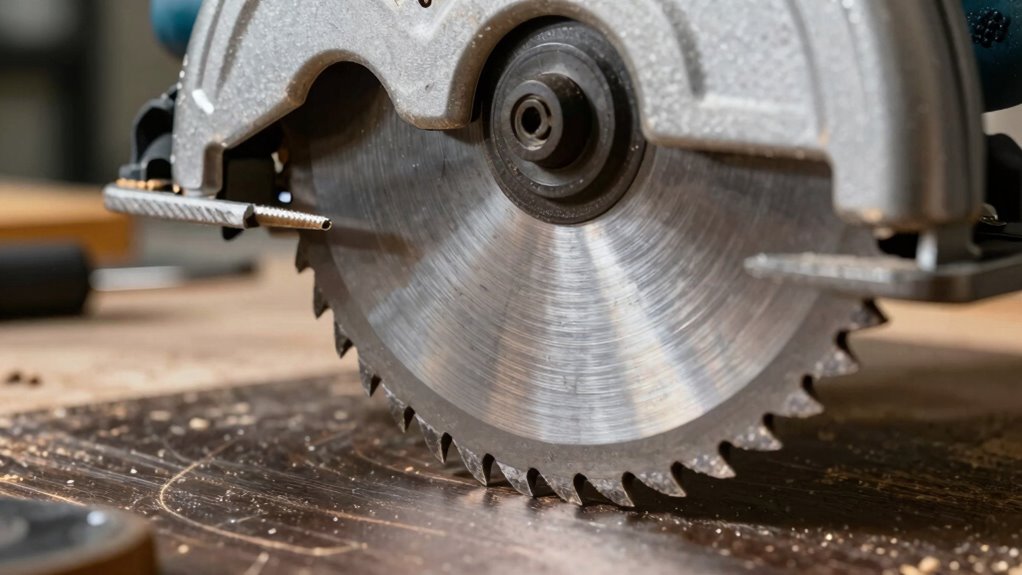

Choosing the wrong saw blade can make even the best saw feel sluggish and unreliable. An incompatible or dull blade causes poor cuts, excess vibration, and safety risks, wasting your effort and time. Proper blade selection based on your material and task is essential for smooth operation and safety. If you want to guarantee your saw performs at its best, staying aware of blade maintenance and compatibility is key—there’s more to discover on how to optimize your cuts.

Get business pricing on tools and workshop supplies
- Business-only prices and quantity discounts
- Tax-exempt purchasing
- Multiple users, one account, clear invoices
Key Takeaways
- Using the wrong blade reduces cutting efficiency, making even powerful saws feel sluggish and less effective.
- Inappropriate blades cause increased vibration and poor cut quality, diminishing overall saw performance.
- Dull or damaged blades compromise safety, leading to binding, kickback, and potential injuries.
- Proper blade selection enhances safety, accuracy, and smoother operation, maximizing saw capabilities.
- Mismatched blades increase wear and tear on the saw, decreasing its lifespan and performance.
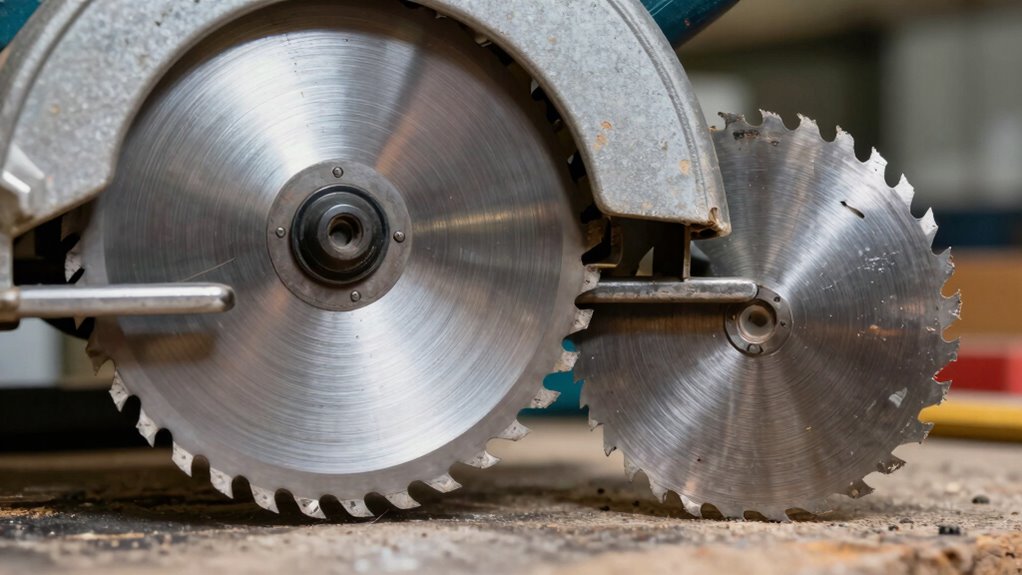
Have you ever wondered how choosing the right saw blade can make or break your project? It’s one of those details that might seem minor but has a major impact on your results. When you pick the wrong blade, even the best saws can feel mediocre, wasting your time and effort. The key is understanding that a good cut depends not just on your saw’s power but on selecting the appropriate blade for your material and task. Proper blade maintenance is essential too; dull or dirty blades can cause poor cuts, increased risk of kickback, and unnecessary wear on your equipment. Always keep blades clean and sharp, and regularly inspect them for damage or dullness. This simple step helps maintain cut quality and prolongs the life of your blades. It’s also important to understand how blade compatibility with different saws influences overall safety and efficiency. This is especially important because blade maintenance directly influences both safety and performance. Dull or damaged blades are more likely to bind or kick back, posing serious injury risks. Before every use, make sure your blade is in top condition, and never ignore signs of wear or damage. Additionally, understanding the compatibility of blades with various saws helps ensure safety and optimal performance. Selecting the wrong blade size or type can also lead to increased vibration, affecting both accuracy and safety during operation.
best saw blades for wood cutting
As an affiliate, we earn on qualifying purchases.
As an affiliate, we earn on qualifying purchases.
Frequently Asked Questions
How Often Should I Replace My Saw Blade?
You should replace your saw blade when it becomes dull or shows signs of damage. Regular blade sharpening can extend its life, but if sharpening no longer restores sharpness or if the blade is incompatible with your saw, it’s time for a new one. Always choose a blade compatible with your saw and materials, and inspect it frequently for cracks or warping to guarantee safe, efficient cuts.
Can a Dull Blade Cause Safety Hazards?
A dull blade substantially increases safety hazards, with studies showing it’s responsible for nearly 20% of saw-related injuries. A dull blade risks blade safety because it can cause kickbacks, binding, or sudden breaks, putting you in danger. Dull blade risks are often underestimated, but they compromise control and accuracy. Always keep your blades sharp to maintain safe operation, reducing the chance of accidents and ensuring cleaner, safer cuts.
What Blade Features Improve Cutting Accuracy?
To improve cutting accuracy, focus on blade features like advanced blade coatings and precise tooth design. Coatings reduce friction and heat buildup, leading to cleaner cuts. A well-designed tooth profile ensures smoother, more accurate cuts by minimizing vibrations and chatter. When you choose a blade with high-quality coatings and optimized tooth design, you’ll experience enhanced precision, making your cuts cleaner and your work more consistent.
Are More Expensive Blades Worth the Investment?
Yes, more expensive blades are worth the investment because they typically offer better blade durability and cutting precision. While they cost more upfront, they last longer and provide cleaner, more accurate cuts, saving you time and effort in the long run. Cheaper blades may wear out quickly and compromise your work quality. Investing in quality blades guarantees you get the most out of your saw and achieve professional results.
How Does Blade Material Affect Cutting Performance?
Imagine slicing through wood as if it’s butter—that’s how blade material affects your cut. Durable materials like carbide or high-speed steel resist dulling, ensuring cleaner cuts longer. The right material also boosts compatibility with your saw and the material you’re working on, preventing damage and wobble. So, choosing a blade with the proper material enhances durability, performance, and precision, turning a good saw into a great one.
As an affiliate, we earn on qualifying purchases.
Conclusion
Choosing the right saw blade transforms your saw from a mere tool into a precision instrument. I once watched a carpenter struggle with rough cuts until he swapped out his blade—suddenly, his work was smoother, faster, and more accurate. Think of your saw like a racing car; without the right tires, even the fastest engine can’t perform. Don’t settle for mediocrity—select the correct blade, and watch your projects reach new heights of quality and efficiency.
circular saw blade replacement kit
As an affiliate, we earn on qualifying purchases.
As an affiliate, we earn on qualifying purchases.
As an affiliate, we earn on qualifying purchases.
Fall Picks
fall essentials
As an affiliate, we earn on qualifying purchases.